
By Ivan L. Nagy
Special to the Columbia Journalism Review
Main Facts: The High-Stakes Reality of Exiled Russian Journalism
As Russia prepares to hold its first parliamentary elections since the full-scale invasion of Ukraine in February 2022, the domestic political landscape remains tightly controlled. For President Vladimir Putin, the immediate political stakes of these elections are functionally negligible. The nation’s sole designated pro-peace party has been barred from the ballot, and the legislature it seeks to populate serves as a rubber-stamp chamber devoid of independent legislative power.
Yet, these elections unfold during a uniquely uncomfortable period for the Kremlin. Over the past year, precision Ukrainian drone strikes have breached Russian airspace, targeting critical energy infrastructure such as oil depots and refineries. These attacks have brought the physical reality of the war directly to the doorsteps of Russian civilians, piercing the carefully curated apathy that the state has spent years cultivating.
“People stopped consuming news. They tried to escape into their private lives,” says Ivan Kolpakov, editor-in-chief of Meduza, a prominent Russian-language news outlet operating out of exile in Riga, Latvia. “Pero now people are interested in the war coverage again.”
Satisfying this renewed public curiosity requires an extraordinary operational feat. Russian independent media, operating almost entirely from abroad, faces a formidable, twofold logistical and security challenge: first, extracting verified information out of an increasingly authoritarian Russia safely, and second, getting that reporting back in to an audience cut off by state-mandated internet censorship.
With at least 29 journalists currently imprisoned inside Russia—according to data compiled by the Committee to Protect Journalists (CPJ)—the cost of independent reporting has never been higher. Yet, exile newsrooms continue to deploy innovative digital workarounds, undercover networks, and data-driven journalism to puncture the Kremlin’s information blockade.
Chronology: The Systematic Eradication of Russia’s Free Press
Understanding the current landscape of Russian exile media requires examining the steady, systematic dismantling of the country’s domestic press freedom over the past quarter-century.
- 1999–2010s: Following Vladimir Putin’s ascent to power in 1999, independent news outlets were progressively marginalized, bought out by state-aligned oligarchs, or subjected to intense regulatory pressure.
- 2014: Following the illegal annexation of Crimea, the Kremlin dramatically accelerated its control over the information space. Moscow empowered prosecutors to shutter any media entity deemed a threat to the constitutional order—a broad legal category that eventually encompassed all major independent broadcasters and publishers. The government also introduced the draconian "foreign agent" law, forcing outlets receiving foreign funding to submit to invasive public audits and carry stigmatizing disclaimers.
- February 2022: The launch of the full-scale invasion of Ukraine triggered a final, decisive crackdown. Within weeks, Moscow effectively outlawed independent online news, criminalized the use of terms like "war" or "invasion" (mandating the official euphemism "special military operation"), and blocked access to major Western social media platforms. Independent newsrooms were forced into a mass exodus to escape imminent arrest.
- 2023–Present: As the war dragged on and Ukrainian drone strikes began hitting targets deep within Russian territory, exiled outlets adapted. Moving away from traditional website publishing, newsrooms pioneered new distribution channels—such as hosting HTML files on Google and deploying apps with built-in anti-blocking tools—to counter the Kremlin’s escalating censorship apparatus.
Supporting Data: Navigating Censorship, Data Scrapes, and Surveillance
The logistics of reporting on a closed, highly surveilled authoritarian state demand unconventional journalistic methodologies. When Ukrainian drones began striking oil refineries near Moscow—such as the massive June 2026 strike on the Kapotnya refinery, which supplies half of the capital’s fuel—international media outlets frequently relied on social media posts and eyewitness accounts from gas stations.
However, exiled Russian newsrooms exercised extreme caution. Alexander Borodikhin, a reporter and editor for the exiled investigative outlet Mediazona, explains that his team deliberately avoided relying on unverified social media claims, fearing that Ukrainian channels might amplify unverified reports to destabilize Russian public morale. Instead, Mediazona turned to open-source intelligence and data science.
+---------------------------------------------------------------+
|         EXILED MEDIA DATA COLLECTION & DISTRIBUTION PIPELINE  |
+---------------------------------------------------------------+
| 1. DATA COLLECTION (In-Country)                               |
|    - Public bank registries & transaction data                |
|    - Encrypted communication with proxy reporters             |
+---------------------------------------------------------------+
                                |
                                v
+---------------------------------------------------------------+
| 2. VERIFICATION & ANALYSIS (Exile Newsrooms: Riga, etc.)      |
|    - Cross-referencing open-source intelligence               |
|    - Avoiding unverified social media noise                   |
+---------------------------------------------------------------+
                                |
                                v
+---------------------------------------------------------------+
| 3. DISTRIBUTION (Bypassing State Firewalls)                   |
|    - Mirror sites & HTML files hosted on Google               |
|    - Custom apps with anti-censorship tools                   |
|    - Telegram channels & VPN deployment guides                |
+---------------------------------------------------------------+
"The insights from the data fill in for the ability to be present," Borodikhin notes. By scraping publicly available financial registries—including transaction data from gas station networks—Mediazona successfully mapped regional fuel availability without needing boots on the ground at every affected site.
For on-the-ground human reporting, outlets like Meduza and the investigative site iStories rely on a network of "proxy reporters." These undercover freelancers operate under false identities, utilizing end-to-end encrypted messaging applications to relay sensitive information past state surveillance.
"We still work with reporters inside Russia, but I can’t disclose any details about our cooperation for security reasons—these journalists risk their freedom to do their work," says Roman Anin, founder of iStories.
Delivering this reporting back to domestic audiences has evolved into a high-stakes cat-and-mouse game with Roskomnadzor, Russia’s federal censorship agency. When the state blocks a primary news website, exile newsrooms respond by spinning up mirror sites. Over time, however, technical distribution has grown more sophisticated.
"Instead of sharing the links to our website, we share links to HTML files which are being hosted on Google," Anin explains. "And since Google is still not blocked in Russia, people can access them."
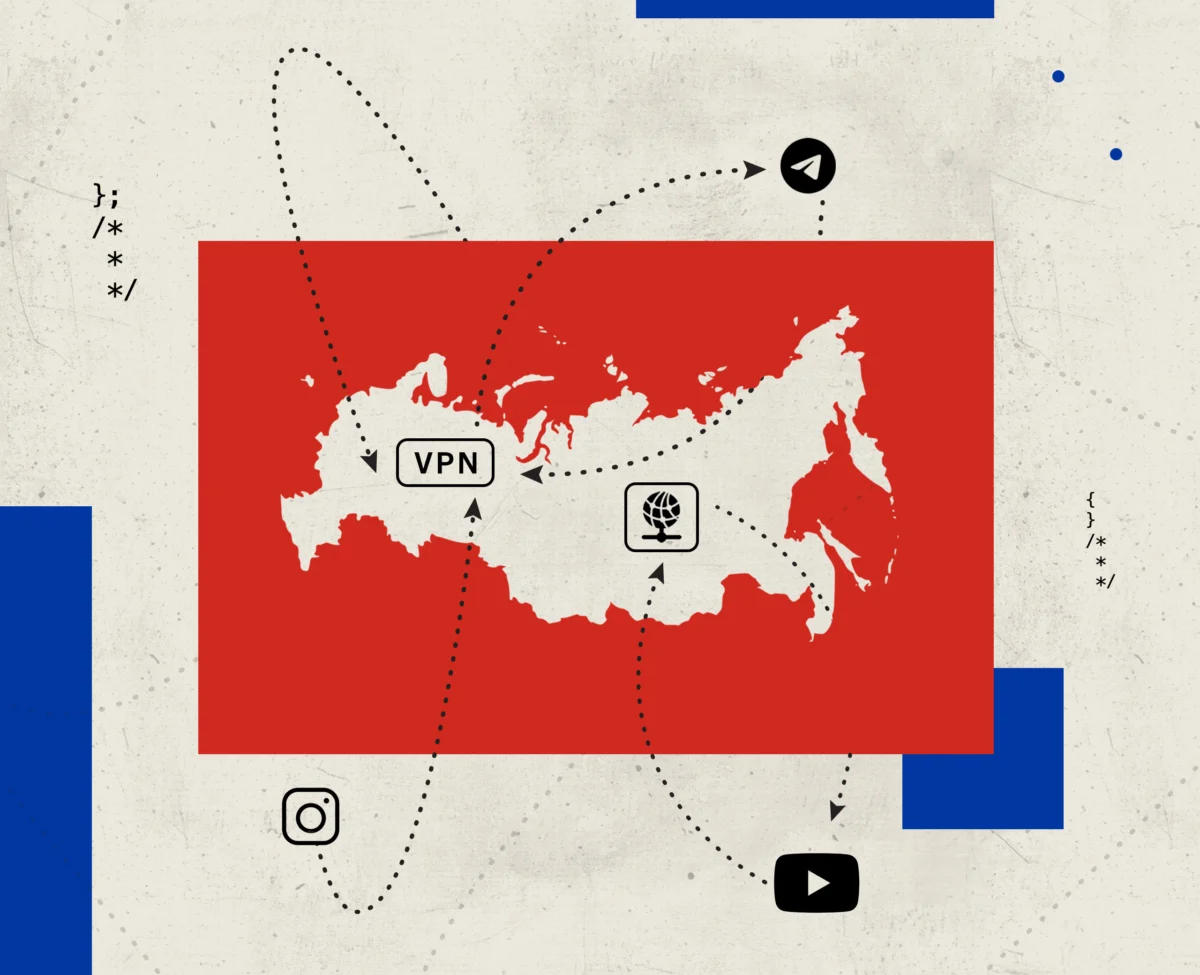
Furthermore, nearly half of all Russian internet users have learned to bypass state firewalls using Virtual Private Networks (VPNs)—a trend catalyzed by "how-to" explainers published by exiled outlets. These guides have transformed ordinary citizens into adept navigators of internet censorship, allowing them to access banned platforms such as YouTube, Instagram, and Telegram.
Official Responses: The Kremlin’s Strategy of Silence and Apathy
As the physical impacts of the war—ranging from refinery fires to strikes on online retail warehouses like Wildberries—have become impossible to conceal, the Kremlin’s propaganda apparatus has faced a severe strategic dilemma.
"The main tool they use is silence. Drone attacks are not spoken about in official government media," says Mika Golubovsky, an editor at Mediazona. State television networks frequently ignore regional explosions, focusing instead on manufactured domestic triumphs or distorted framing of the frontline.
Yet, ignoring massive infrastructural attacks on Moscow’s doorstep is increasingly untenable. According to Kolpakov, pro-Kremlin media outlets have shifted from a proactive propaganda strategy to a reactive posture. "They are losing initiative in this information war," he observes.
Rather than convincing the public of an inspiring ideological narrative, the ultimate objective of state-aligned media has shifted toward dampening civic participation. As Roman Anin argues, the Kremlin’s goal is "forcing people not to do anything and not to believe anyone."
"Apathy is the primary mood," Anin says. By encouraging total cynicism, the state ensures that even when citizens recognize official lies, they feel powerless to enact change.
Implications: A Potential Turning Point
Despite the state-engineered apathy and the farcical nature of the upcoming parliamentary elections, independent journalists believe that cumulative pressures could trigger a broader social transformation.
Anin points to recent digital analytics as a warning sign for the regime. iStories recently analyzed Google search trends among domestic Russian internet users and discovered a sharp, sustained spike in inquiries regarding real estate purchases in neighboring countries, particularly Georgia.
"People running from the country does not work well for the Kremlin’s image," Anin notes.
As the war continues to erode the boundary between the frontlines and the Russian interior, the informational lifeline maintained by exiled journalists remains crucial. By supplying verified data, investigative exposés, and censorship-circumvention tools, outlets like Meduza, Mediazona, and iStories ensure that the Russian public retains access to independent truth—proving that even across borders, totalitarian firewalls cannot permanently silence a determined press.