Measuring the heartbeat of American public life has long been an exercise in fragmentation. Whether it is voter turnout, church attendance, or the consumption of digital news, researchers have historically relied on siloed metrics to gauge how—and why—citizens engage with their communities. However, a landmark study released this month by the Pew Research Center, conducted under the auspices of the Pew-Knight Initiative, challenges these conventional boundaries, offering a holistic, data-driven map of the American civic experience.
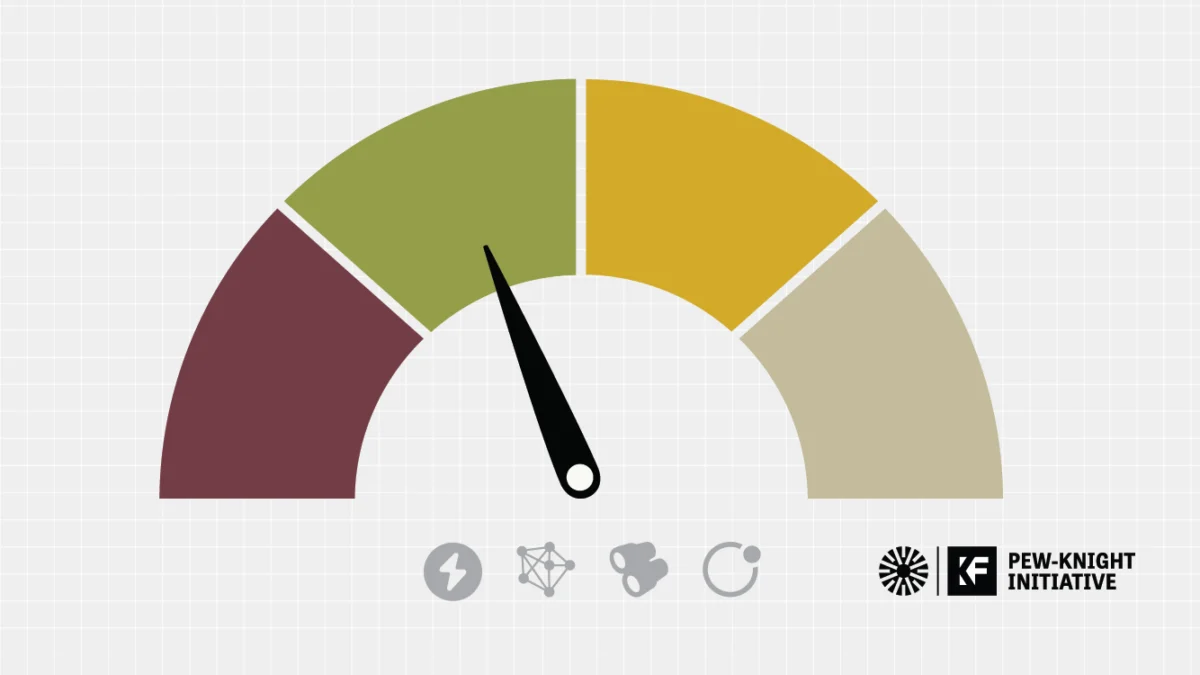
By moving away from traditional, single-metric analysis, the research introduces a sophisticated "cluster analysis" that classifies U.S. adults into four distinct archetypes of engagement. This methodological shift provides a clearer, more nuanced view of a landscape where the lines between political activism, religious participation, and news consumption are increasingly blurred.
Main Facts: The Four Pillars of Civic Life
The study’s core finding is that engagement in public life cannot be distilled into a single, linear scale. Instead, it is a mosaic of behaviors. Through a rigorous, multi-stage survey process, researchers identified four distinct groups that characterize the American populace:

- Mobilizers: The most active, albeit smallest, group. These individuals are the high-performers of civic life, displaying high levels of engagement across politics, community service, news consumption, and religious institutions.
- Connectors: Highly involved in social and civic spheres, such as charitable giving and organizational membership, but notably less inclined toward direct political activism compared to Mobilizers.
- Spectators: Defined by their role as observers. This group consumes news at a high rate but is significantly less likely to participate in direct civic actions like volunteering or campaigning.
- Outsiders: The least engaged cohort across the board. Members of this group report lower rates of voting, news consumption, and civic participation, representing a significant portion of the population that remains detached from formal public life.
Chronology: The Evolution of the Study
The journey to these findings was a deliberate, multi-phase process designed to overcome the common pitfall of "engagement bias"—the tendency for already active people to be more likely to participate in surveys, thereby skewing results.
- Preliminary Development (Early 2025): Researchers began by synthesizing vast datasets from previous Pew surveys and academic literature, constructing a massive list of potential questions to capture the complexity of modern engagement.
- The Test Phase (Mid-2025): A pilot study using an online opt-in sample of 8,000 U.S. adults was conducted. While Pew typically avoids opt-in samples for its primary reporting due to representativeness concerns, it served as an ideal, low-cost laboratory for refining questionnaire length and identifying redundant metrics.
- Final Data Collection (July – December 2025): The primary study was fielded among 5,393 U.S. adults using address-based sampling (ABS). To ensure inclusivity, the team employed a multi-mode approach—offering paper, online, and telephone options—to reach those who are traditionally underrepresented in public opinion research.
- Analysis and Synthesis (Early 2026): Researchers applied cluster analysis to the raw data, testing various models to find the most accurate grouping strategy before cross-referencing these findings with the American Trends Panel (ATP) in September 2025 to layer in deeper attitudinal data.
Supporting Data: Why Cluster Analysis?
A central challenge for the research team was deciding how to aggregate 19 disparate behavioral variables. A simple count—assigning points for every activity a person performs—was rejected early on.
"A simple count would treat all measures equally, missing the nuance that some activities require far more resources than others," the report notes. For example, the time and effort required to organize a political campaign are not equivalent to the ease of sharing a news story on social media.
By utilizing Gower’s distance—a statistical method that calculates similarity across different types of data—the team ensured that binary responses (Yes/No) and frequency scales could be analyzed side-by-side. This allowed the data to "speak for itself," letting the groups emerge organically rather than imposing predetermined definitions of what a "good citizen" looks like.
The robustness of this approach was confirmed when the team cross-applied these categories to the September 2025 American Trends Panel (ATP) survey. Despite using two different survey instruments, the resulting clusters remained remarkably consistent, validating the reliability of the four-group framework.
Official Perspectives: The Methodology Behind the Scenes
The Pew-Knight Initiative emphasizes that these groups are not static identities. Rather, they are "snapshots" of behavior. A recurring theme in the documentation provided by the researchers is the importance of humility in data science.

"Building a cluster model is an iterative process," the team explained. By testing multiple algorithms and sorting sequences, they were able to rule out models that produced statistically "clean" results but lacked real-world coherence. The final model was selected because it offered the most intuitive alignment with observed demographic and attitudinal patterns, such as the finding that higher engagement is directly correlated with higher political literacy and, paradoxically, a more critical view of news organizations.
The research also highlights a significant finding regarding trust: regardless of their engagement level, many Americans share a profound, low level of trust in federal government institutions. This suggests that while engagement levels vary wildly, a shared skepticism serves as a unifying thread across all four clusters.
Implications: The Future of Civic Participation
The implications of this study are far-reaching for policymakers, journalists, and non-profits alike. By identifying the "Spectators"—those who are informed but inactive—organizations now have a target demographic for mobilization campaigns. Conversely, the existence of the "Outsiders" group poses a fundamental challenge to the health of the republic: if a significant segment of the population is disengaged from both information and action, the representativeness of democratic processes is effectively diminished.
Furthermore, the study provides a critical warning for those who equate "following the news" with "being civically active." The data proves that while news consumption is a prerequisite for some, it does not guarantee participation. The "Spectator" category serves as a reminder that the digital age has created a class of citizens who are well-informed yet effectively passive.
As the United States moves forward in an increasingly polarized and digitized era, this research offers more than just a classification system; it provides a diagnostic tool. By understanding that Americans occupy these four distinct "engagement zones," stakeholders can move toward more targeted strategies to encourage participation, bridge the gap between information and action, and ultimately strengthen the fabric of democratic life.
For those looking to explore the full data, the Pew Research Center has made the questionnaire and the full report, How Americans Are Engaged With News, Politics, Religion and Civic Life, available as a blueprint for future academic and sociological inquiry. The takeaway is clear: the American public is not a monolith, and our efforts to engage it must be as multifaceted as the people we seek to reach.