
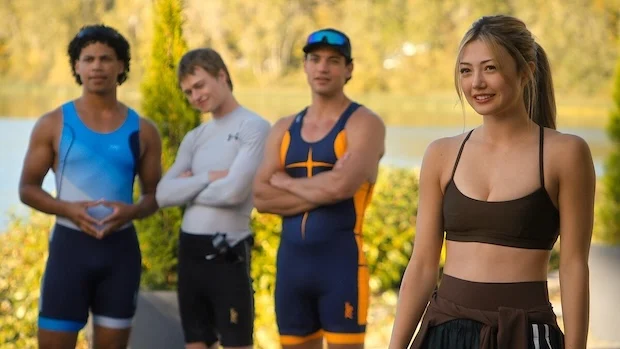
In a decisive move that underscores the continued demand for high-quality, character-driven teen dramas, Netflix has officially renewed its breakout hit Crew Girl for a second season. The announcement comes less than two weeks after the series made its global debut, defying industry expectations by securing a dominant position on the streamer’s prestigious Top 10 lists across the globe.
Produced by Blue Ant Studios, the series—which navigates the complex social hierarchies and competitive pressures of an elite Canadian prep school—has emerged as a cultural touchstone for the streamer, signaling a significant victory for Canadian television production on the global stage.
Main Facts: The Anatomy of a Breakout Success
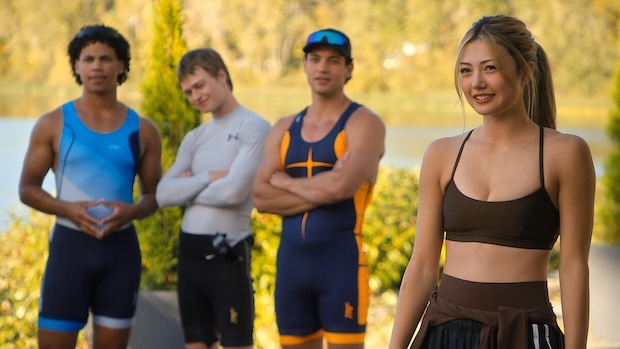
Crew Girl centers on the story of a 16-year-old female rower, portrayed by rising star Miku Martineau (Bet, Star Trek: Section 31), who finds herself navigating the hyper-masculine, dysfunctional world of an all-boys rowing team at a prestigious boarding school on Canada’s East Coast.
Since its premiere, the series has accumulated over 16 million views, a figure that continues to climb as word-of-mouth recommendations fuel its trajectory. Currently holding the number two spot on Netflix’s global TV chart, Crew Girl has achieved the rare feat of appearing in the Top 10 rankings in over 90 countries.
The series is the brainchild of creators Vivian Lin, known for her work on SkyMed and The Lake, and Morwyn Brebner, whose pedigree includes acclaimed projects like Anna Pigeon and Coroner. Their combined vision has translated the grit of high-stakes competitive rowing into a compelling coming-of-age narrative that resonates with both young adult and adult audiences.
Chronology: From Commission to Global Phenomenon
The journey of Crew Girl is one of rapid evolution within the Canadian production landscape.
- The Commission (2025): Netflix officially commissioned the series last year, signaling a major investment in local Canadian content. At the time, the production was spearheaded by the Vancouver-based powerhouse Thunderbird Entertainment.
- The Acquisition (2026): In a major industry shift, Blue Ant Media acquired Thunderbird Entertainment earlier this year, effectively bringing Crew Girl under the umbrella of Blue Ant Studios. This transition provided the project with additional resources and a robust distribution framework.
- Production (2025–2026): Filming took place throughout the previous year, primarily on location in Victoria, British Columbia. The coastal setting provided an authentic, moody backdrop for the rowing-centric drama, grounding the high-pressure environment of the prep school in a realistic, tactile world.
- The Launch (September 2026): Upon its release, the series was met with immediate critical acclaim. Critics praised the nuanced performances of the cast—which features Jessica Paré, Sam Braun, Kyle Clark, and Thomas Cadrot—and the show’s refusal to shy away from the darker elements of elite athletic culture.
- The Renewal (September 2026): Barely ten days post-launch, Netflix confirmed a second season, citing the overwhelming global viewership metrics as the primary driver for the quick turnaround.
Supporting Data: By the Numbers
The success of Crew Girl is not merely anecdotal; it is backed by a string of impressive data points that illustrate the changing habits of modern television consumers.
Viewership Velocity
The "16 million views" milestone is significant not only for the total volume but for the velocity at which it was achieved. Most series on streaming platforms experience a slow build; Crew Girl reached its current status with a steep, upward-trending curve. This indicates high completion rates and strong social media engagement, both of which are key KPIs for Netflix’s renewal algorithms.
Global Reach
The fact that the series has cracked the Top 10 in over 90 countries suggests that the themes of Crew Girl—ambition, social isolation, athletic pressure, and identity—are universal. While the show is distinctly Canadian in setting, its execution has transcended geographic boundaries, appealing to viewers in markets as diverse as Brazil, South Korea, and Germany.
Production Value and Talent
The executive production team is a "who’s who" of Canadian industry veterans. The project is steered by Vivian Lin, Jeff Norton, Lindsay Macadam, Hillary Zwick Turner, Tony Chung, and Lori Massini. Their collaboration with Blue Ant Studios’ executive suite—comprising Matthew Hornburg, Mark Bishop, and Jennifer McCarron—has created a production model that balances artistic vision with commercial viability.
Official Responses and Creative Vision
The creative team has expressed gratitude for the audience’s reception, though they remain tight-lipped regarding specific plot points for the sophomore season. In a statement following the renewal, creators Vivian Lin and Morwyn Brebner highlighted the importance of the show’s central character arc.
"We wanted to explore the cost of ambition," Lin noted in a recent roundtable. "In the world of Crew Girl, success isn’t just about winning a race; it’s about maintaining one’s integrity when everyone around you expects you to fit into a pre-defined mold. We are thrilled that the audience has connected so deeply with Miku’s journey."
The transition to Blue Ant Studios has also been met with optimism. Jennifer McCarron of Blue Ant Studios noted that the success of the show serves as a blueprint for future collaborations. "The synergy between our development team and the creative vision of Lin and Brebner was seamless," McCarron stated. "We look forward to expanding the world of Crew Girl and delving deeper into the lives of these characters."
Implications for the Industry
The rapid renewal of Crew Girl carries several important implications for the future of streaming and the Canadian production sector.
The Power of the "Canadian-Origin" Global Hit
For years, Canadian content has struggled to find a consistent foothold in the global streaming market. Crew Girl proves that Canadian stories, when given the scale and distribution power of a platform like Netflix, can compete on equal footing with U.S.-produced content. It shifts the narrative from "niche local content" to "global entertainment powerhouse."
The Consolidation Effect
The success of the series post-acquisition of Thunderbird by Blue Ant Media serves as a testament to the importance of institutional stability. By consolidating talent and resources, Blue Ant Studios was able to support the project through its launch phase with a unified strategy, ensuring that the show’s marketing and distribution were as cohesive as the writing itself.
The "Teen Drama" Renaissance
After a period of creative stagnation in the teen drama genre, Crew Girl has injected a fresh sense of realism and intensity. By focusing on the niche but high-stakes world of competitive rowing, the show avoids the clichés of typical high school dramas, opting instead for a gritty, atmospheric exploration of class, gender, and meritocracy. This success suggests a growing appetite for "prestige YA"—series that treat teenage experiences with the same narrative complexity as adult dramas.
Future Outlook
As production begins on season two, the industry will be watching closely to see if the creative team can maintain the high bar they have set. The challenge of a second season often lies in expanding the world without losing the focus that made the first season successful. With the backing of a major global platform and a proven production team, Crew Girl is well-positioned to become a long-running staple of the Netflix library.
In conclusion, the renewal of Crew Girl is more than just a win for its cast and crew; it is a landmark moment for Canadian storytelling. It validates the investment in local voices and proves that when the right story meets the right audience, the result is a global phenomenon that transcends borders. As the rowing team prepares for their next regatta, the creators are already preparing for the next chapter of a story that has clearly captured the world’s attention.