In an era where the boundary between personal experience and machine learning is increasingly blurred, Meta has taken a significant, albeit reactive, step toward transparency. The company has officially begun rolling out a new privacy feature for its line of smart glasses, allowing users to opt out of having their visual data used for the training of its artificial intelligence models. This development arrives amid heightened scrutiny regarding how tech giants harvest user data to refine their generative AI products.
For owners of Meta’s smart glasses, the update serves as a critical junction: one that requires a conscious choice between contributing to the evolution of AI capabilities and maintaining a higher degree of digital privacy.
The Core Mandate: What Is Changing?
The update, now appearing as a notification within the Meta AI application, informs users that they possess the agency to restrict how the company utilizes the visual information captured by their wearable devices. Previously, the data stream flowing from the glasses’ outward-facing cameras into Meta’s processing servers was largely viewed as an opaque pipeline, with users having little visibility into how their surroundings were being interpreted and archived by the company’s algorithms.
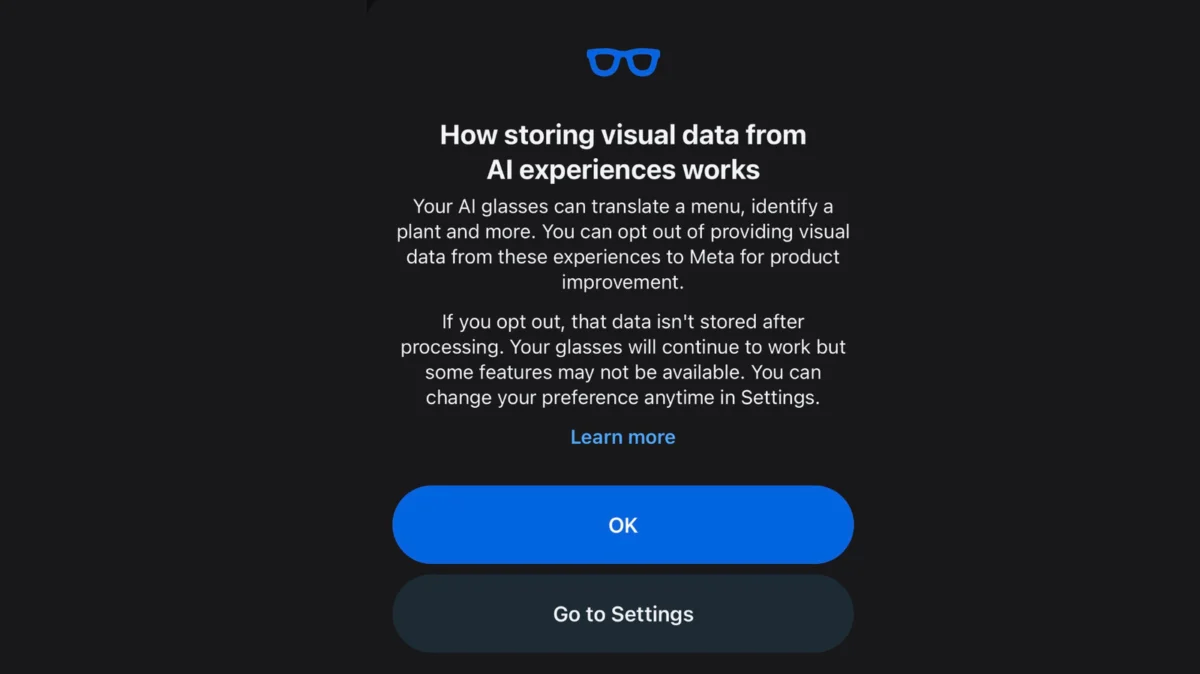
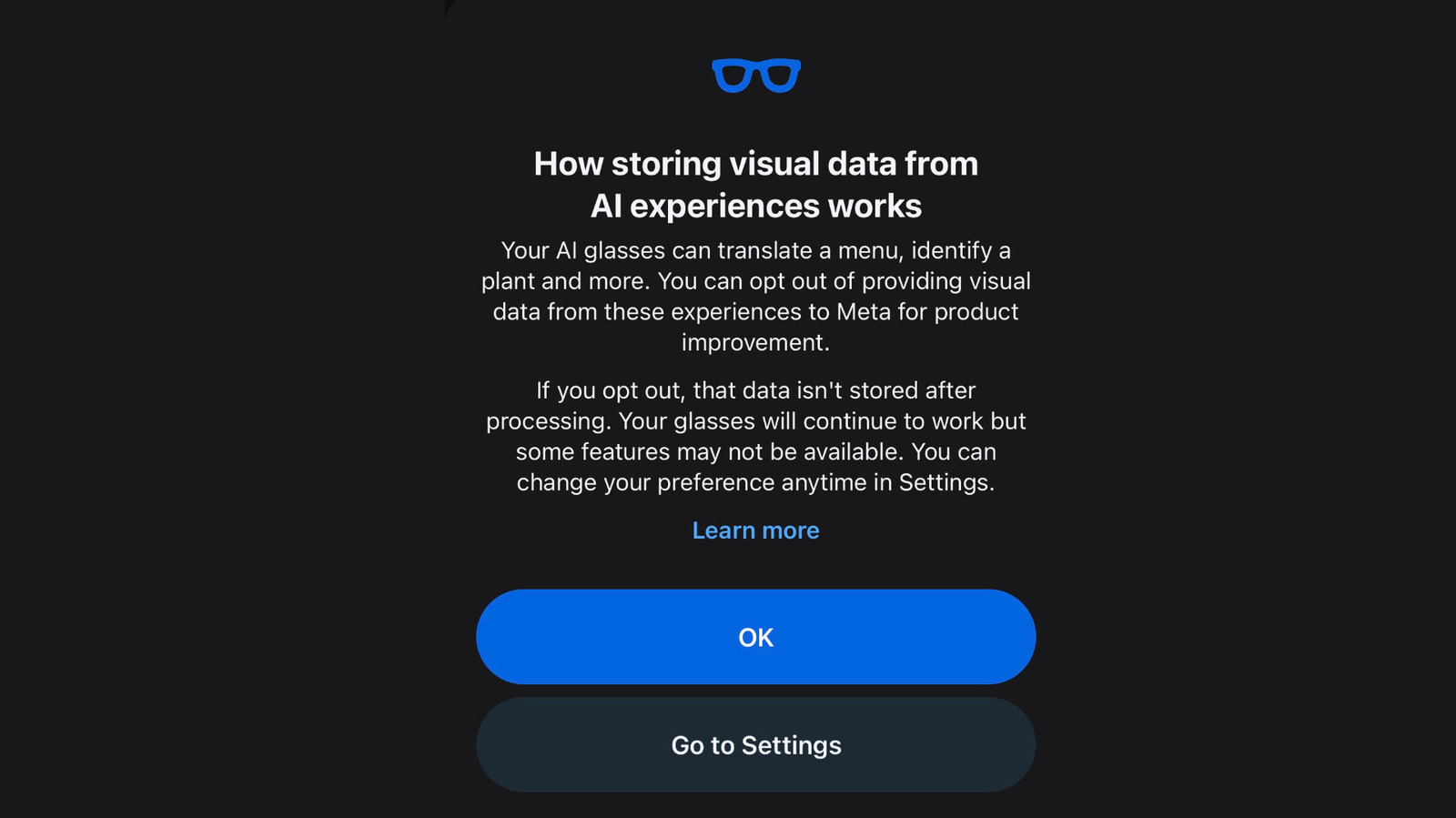
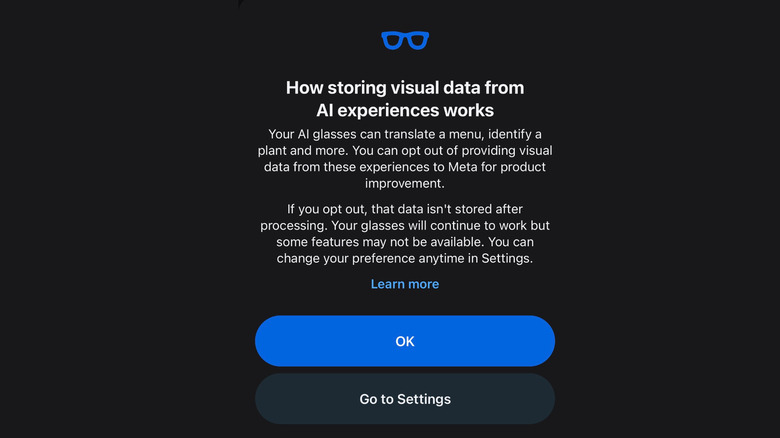
Meta’s official pop-up message to users is direct: "Your AI glasses can translate a menu, identify a plant, and more. You can opt out of providing visual data from these experiences to Meta for product improvement. If you opt out, that data isn’t stored after processing."
This distinction—whether data is stored after the immediate processing task is complete—is the crux of the privacy debate. By opting out, users are essentially instructing Meta to treat their visual input as ephemeral: once the AI identifies the plant or translates the text on a menu, the raw data is discarded rather than being added to the massive datasets used to train Meta’s foundational models.
A Chronology of Data Scrutiny
To understand why this change is occurring now, one must look at the recent trajectory of Meta’s AI strategy.
- 2023 – The Launch of Smart Glasses: Meta, in partnership with Ray-Ban, introduced a new generation of smart glasses equipped with advanced AI integration. At the time, the focus was heavily placed on the "wow factor" of features like live translation and object identification.
- Early 2024 – Increased Regulatory Pressure: As Meta intensified its push into generative AI, privacy advocates and regulatory bodies in both the European Union and the United States began questioning the provenance of the data powering these models. Concerns were specifically raised regarding the capture of non-consenting bystanders and the storage of private visual environments.
- Mid-2024 – The Pivot to Transparency: Following mounting pressure and a commitment to address "human-in-the-loop" data processing, Meta began drafting policies to allow user intervention.
- Late 2024 – The Rollout: The opt-out mechanism was pushed to the Meta AI app, providing a concrete interface for users to reclaim control over their data footprint.
How to Manage Your Privacy Settings
For users looking to adjust these settings, the process is intentional and granular. Meta has not buried the option, but it does require active participation.
- Preparation: Ensure your smart glasses are removed from their charging case and have an active, stable connection to your smartphone via Bluetooth.
- Navigation: Open the Meta AI app or the companion app for your glasses. Navigate to the "Settings" menu.
- The Specific Path: Locate the "Meta AI" section. Within this, you will find a toggle labeled "Store visual data from AI experiences."
- Device-Specific Actions: It is important to note that this is not a universal cloud-based setting that applies to your account at large. If you own multiple pairs of Meta smart glasses, you must repeat this process for each individual device.
Meta notes that this setting does not affect standard photo and video capture. "Visual data," as defined by the company, refers specifically to the information processed during AI-enabled tasks—such as Live AI interactions—where the glasses are "looking" at the world to perform a specific query. Images captured via the standard camera function, signified by the capture LED, are subject to different privacy protocols.
The Trade-off: What You Lose by Opting Out
Transparency often comes with a caveat. Meta has explicitly warned that disabling the storage of visual data may hinder the functionality of certain "smart" features.
The most prominent example provided by the company is "visual reminders." This feature allows a user to look at an object—such as a specific brand of coffee at a grocery store—and command the AI to "remind me to buy this next week." If the data is not stored, the AI may lose the context required to trigger the reminder at the appropriate time.
While Meta has not provided an exhaustive list of which features will be degraded, the implication is clear: the AI’s ability to "remember" and "learn" from your environment is inherently tied to its ability to store that environment in its database. Users must decide whether the convenience of a proactive, context-aware AI is worth the sacrifice of their visual privacy.
Behind the Curtain: Human Review and Model Training
Perhaps the most significant revelation accompanying this update is the formal acknowledgment of human-in-the-loop processing. In an updated help center article, Meta clarifies that the data collected from your glasses may be subject to both automated and manual (human) review.
"When you use AI experiences on your Meta glasses—like asking about something you’re looking at or using Live AI—Meta stores the resulting visual data and may use it to power glasses features and improve Meta products," the company explains. "This includes the process of training and improving AI models, which may be automated or manual (human)."
This acknowledgment addresses a major point of contention for privacy advocates: the idea that a private moment captured by a user could be reviewed by a human contractor to "verify" the accuracy of an AI’s identification. By opting out, users effectively remove their personal data from the pool of information that could potentially be scrutinized by Meta employees or third-party reviewers.
Implications for the Future of Wearable Tech
The move by Meta represents a broader trend in the tech industry: the "Privacy-as-a-Feature" model. As consumers become more tech-literate and skeptical of how their data is leveraged, companies are finding that they can no longer treat privacy as an afterthought.
1. The Burden of Choice
By shifting the responsibility to the user, Meta is insulating itself from future regulatory claims of "surreptitious data collection." However, this creates a "burden of choice." The average consumer may not understand the implications of toggling a setting that hides complex backend data pipelines. The question remains: is an opt-out mechanism sufficient, or should privacy be the default state for all wearable technology?
2. The Quality of AI Evolution
There is an engineering reality to consider. AI models rely on vast quantities of diverse, real-world data to become more accurate. If a significant percentage of users choose to opt out of data sharing, the pace at which Meta’s AI improves could theoretically slow down. This creates a fascinating tension: users want smarter, more capable glasses, but they also want the data that feeds those glasses to remain private.
3. Regulatory Precedent
This update is likely to be viewed by regulators as a baseline. Other manufacturers—including those currently developing smart glasses and AR headsets—will now face pressure to provide similar granular controls. The industry is moving toward a standard where the user is an active participant in the lifecycle of their data, rather than a passive source of training material.
Conclusion
Meta’s latest update is a necessary response to a changing landscape of digital ethics. By allowing users to opt out of visual data storage, Meta is attempting to rebuild trust with a user base that has grown wary of the "always-on" nature of modern technology.
While the loss of features like visual reminders may be a deterrent for some, the ability to prevent one’s private surroundings from being ingested into a massive training dataset is a trade-off that many will likely find acceptable. As wearable technology continues to integrate itself into our daily lives, the power to choose what we share—and what we keep to ourselves—will remain the most important feature of all.
For now, the message is clear: if you own a pair of Meta smart glasses, you have a new responsibility to check your settings. Your privacy is no longer a static state; it is something you must actively curate.