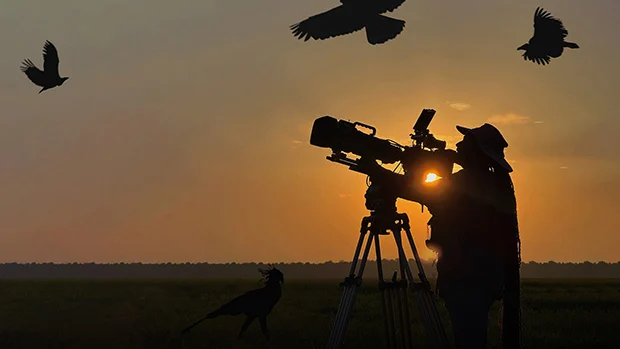
The BBC’s Specialist Factual division has officially greenlit Hamza’s African Birds of Prey, a high-stakes, one-hour natural history special that promises to redefine the landscape of avian documentary filmmaking. Produced by the industry-leading Silverback Films, the project will feature wildlife cameraman and presenter Hamza Yassin as he traverses the vast, rugged landscapes of Kenya. The documentary, slated for a premiere on BBC One and BBC iPlayer later this year, marks a significant addition to the broadcaster’s portfolio of premium wildlife programming.
Main Facts: A Journey into the Skies of Kenya
Hamza’s African Birds of Prey is a 60-minute immersive documentary that follows Yassin, a familiar face to British audiences, as he embarks on an ambitious expedition to capture the lives of Africa’s most formidable raptors. The film shifts the spotlight away from the traditional "Big Five" of the African savanna to focus on the continent’s apex aerial predators: eagles, vultures, and owls.
The project is designed to capture these creatures in unprecedented detail, utilizing the latest in cinematography technology to provide viewers with a bird’s-eye perspective on the survival strategies of these birds. For Yassin, who has built a reputation for his deep empathy toward wildlife and his technical prowess behind the lens, the project serves as a career-defining exploration of the ecological significance of raptors within the Kenyan ecosystem.
Chronology: The Development of a Natural History Event
The journey to Hamza’s African Birds of Prey began long before the commission was announced. Following Yassin’s rise to prominence as a wildlife presenter, the BBC sought to leverage his unique blend of expert field knowledge and genuine screen presence.
- Early 2025: Conceptualization of a "specialist-led" wildlife feature began within the BBC’s Specialist Factual department, aimed at reinvigorating the "one-off" documentary format.
- Spring 2025: Negotiations with Silverback Films—the production house renowned for Our Planet and The Hunt—were finalized, ensuring a visual standard that matches the BBC’s high expectations for natural history content.
- Summer 2025: Production teams and Yassin arrived in Kenya, beginning a grueling multi-month filming schedule that required patient tracking of elusive nocturnal species and high-speed aerial hunting sequences.
- July 2026: The BBC officially confirms the commission, setting the stage for an autumn or winter broadcast window.
Supporting Data: The Ecological Significance of Raptor Populations
The film is not merely a visual spectacle; it aims to underscore the critical role raptors play in maintaining environmental equilibrium. According to ornithological data, African birds of prey are currently facing unprecedented pressures due to habitat loss, climate change, and human-wildlife conflict.
- The Vulture Crisis: Recent studies suggest that several species of African vultures have seen population declines of over 80% in the last few decades. The documentary aims to shed light on why these "clean-up crews" of the savanna are essential for preventing the spread of disease.
- The Eagle’s Niche: The film explores the specialized hunting tactics of the Martial Eagle and the Bateleur, species that occupy the top of the food chain. Understanding their breeding cycles and territorial behavior is essential for modern conservation efforts in the Rift Valley.
- The Nocturnal Mystery: By focusing on African owls, the production highlights a group of birds that are historically under-documented compared to their diurnal counterparts. Advanced low-light camera technology will be utilized to reveal behavior never before captured on film.
Official Responses and Creative Vision
The collaboration between the BBC and Silverback Films is being hailed as a "marriage of expertise."
In internal communications, representatives from the BBC’s Specialist Factual division highlighted Yassin’s unique ability to connect with a broad audience. "Hamza brings a rare combination of technical skill and infectious passion," a BBC spokesperson noted. "By placing him in the heart of Kenya’s wilderness, we aren’t just showing birds; we are showing the fragile threads that hold an ecosystem together."
For Silverback Films, the project represents a return to the "intimate" style of wildlife filmmaking. "We wanted to create a narrative that felt personal," said a lead producer on the project. "When Hamza is behind the camera, you aren’t just watching a bird; you are experiencing the hunt alongside him. This film is a tribute to his patience and the sheer majesty of the avian world."
Implications: The Evolution of Wildlife Television
The commissioning of Hamza’s African Birds of Prey signals a shift in how public service broadcasters approach natural history content in a crowded streaming market.
1. The Rise of the "Specialist-Presenter"
Historically, wildlife documentaries were narrated by "voice-of-God" figures, most notably Sir David Attenborough. While the industry standard remains high, there is a growing trend toward "specialist-led" storytelling, where the presenter is also a practitioner. This fosters a deeper level of engagement, as viewers see the presenter struggle with the elements and the frustrations of field work, making the final capture of footage feel like a shared victory.
2. Kenya as a Conservation Focal Point
By focusing on Kenya, the BBC continues to cement the region’s status as the global epicenter for wildlife research. The film is expected to boost interest in conservation tourism and provide a platform for local Kenyan environmentalists who work alongside the production crews. The implication here is a move toward more collaborative filmmaking, where local knowledge is integrated into the production process to ensure authenticity.
3. The Future of the "One-Off" Documentary
In an era of multi-part mega-series like Planet Earth, the one-hour special is often overlooked. However, the BBC’s investment in this format proves that there is still a significant audience for concentrated, high-impact storytelling. Hamza’s African Birds of Prey serves as a "event television" piece, designed to capture high ratings in a single night while providing high-quality content for the iPlayer archive.
Conclusion: A New Standard for Avian Documentaries
As the broadcasting industry continues to navigate the complexities of digital transformation, Hamza’s African Birds of Prey stands as a testament to the enduring power of the natural history genre. It is a synthesis of traditional exploration and modern technological application.
For Hamza Yassin, this project is the culmination of years of study and fieldwork. For the BBC, it is a strategic move to maintain its dominance in a genre that is fundamentally tied to its brand identity. As viewers prepare for the film’s release later this year, the expectation is that they will be treated to more than just high-definition imagery; they will be invited into a world of complex predator-prey relationships, told through the lens of one of the industry’s most dedicated observers.
Whether it is the haunting cry of an eagle across the savanna or the silent swoop of an owl in the dead of night, the film promises to remind audiences of the vital importance of the skies above Africa—and the humans who work tirelessly to ensure those skies remain filled with life. As the production enters its final stages, the anticipation continues to build, marking this as one of the most significant factual commissions of the year.