In the landscape of modern cinema, the summer of 2026 was supposed to be defined by the singular, analog grandeur of Christopher Nolan. With a $250 million budget and the imprimatur of traditional Hollywood prestige, Nolan’s adaptation of The Odyssey was heralded as a bulwark against the perceived decline of the big-screen experience. Yet, a shadow has emerged from an unlikely corner: an Iran-born, London-based engineer and artist named Ash Koosha.
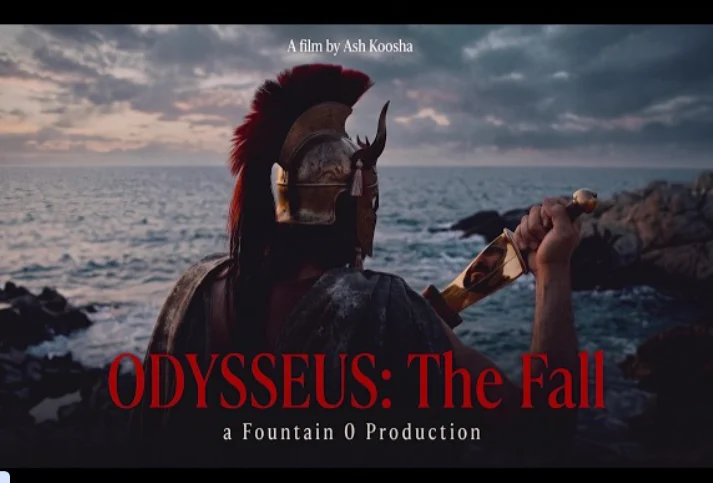
Koosha, leading the AI-centric production banner Fountain 0, announced a 135-minute feature film—also titled Odysseus: The Fall—created almost entirely through generative artificial intelligence. The project, produced for a mere fraction of the cost of a traditional blockbuster and utilizing no human actors, has sparked a firestorm of controversy. As the industry grapples with the existential threat of automation, Koosha’s project has become a lightning rod, forcing a debate on the definition of art, the democratization of media, and the potential obsolescence of the human performance.
A Chronology of Disruption
The friction began when the news broke that Koosha was pivoting from the critically acclaimed Dreams of Violet—an AI-generated film documenting Iranian democracy protests—to the same Homeric source material currently being tackled by one of the most powerful directors in the world.
The announcement followed a tense public exchange between Christopher Nolan and his lead actor, Matt Damon. Damon, reflecting on the arduous, physical process of filming The Odyssey, remarked that he felt he was witnessing "the last chance" to participate in such a large-scale, tactile production. Nolan, ever the proponent of celluloid and physical craft, dismissed the sentiment as "defeatist."
When Koosha unveiled his project shortly thereafter, the timing was perceived by many as a provocative, if not predatory, strike against the "old guard." Critics labeled it a "knockoff," a cynical attempt to piggyback on the marketing spend and cultural anticipation surrounding Nolan’s epic. However, Koosha and his partners—his brother, Pooya Koosha, and CNBC founder Tom Rogers—argue that the project was never intended as a rival, but rather as an experiment in what they term "tangential filmmaking."
The Philosophy of Tangential Filmmaking
To understand the ambition behind Odysseus: The Fall, one must look at the evolution of the internet. In the early 2000s, traditional media outlets viewed the rise of blogs and independent digital platforms with skepticism, questioning why anyone would consume content that lacked the pedigree of established institutions. Today, those platforms coexist. Koosha posits that cinema is on the precipice of a similar explosion.
"Before these AI tools, if I had a theory about Odysseus, I could write a Substack about him," Koosha explains. "Now, I can paint my opinion with images, sound, and light. I can put my take into a film. It is a discourse vehicle, not a derivative genre."
This "tangential" model suggests that multiple interpretations of a single subject can exist simultaneously in the cultural zeitgeist. Just as dozens of authors have written their own iterations of the Homeric epics, Koosha argues that AI lowers the barrier to entry so drastically that the "concentration of revenue" that currently serves as a gatekeeper to high-end filmmaking will eventually dissolve.
Supporting Data: The AI-Centric Production Model
The financial contrast between the two Odyssey projects is stark. While Nolan’s production represents the pinnacle of capital-intensive, collaborative, physical filmmaking, Fountain 0’s approach represents the nascent world of low-overhead, high-autonomy digital creation.
- Budgetary Disparity: While Nolan’s budget reaches into the hundreds of millions, requiring thousands of crew members, logistics, and location permits, Koosha’s production functions on a budget of a few thousand dollars.
- The Actor Question: The most significant shift is the absence of human performers. In Koosha’s model, the characters are generated, animated, and voiced by AI models. This raises profound questions about the future of labor in Hollywood, as the industry continues to navigate the aftermath of the 2023 SAG-AFTRA strikes.
- Production Speed: Koosha notes that his team could have released the film immediately to capitalize on the news cycle, but they opted for a deliberate delay until late summer. This strategy, they claim, is to avoid "confusing" the audience and to allow for a clearer comparison of the two distinct creative visions.
Official Responses and Industry Skepticism
The backlash to Koosha’s announcement was immediate. Critics pointed to the human rights urgency of Dreams of Violet—a project where AI was a necessity due to the impossibility of safe filming in Tehran—and contrasted it with the perceived vanity of recreating a classic story that is already being handled by a master filmmaker.
Tom Rogers, the former media executive turned producer, is quick to defend the artistic merit of the project. "We aren’t trying to trick people," Rogers stated. "We want them to clearly compare the two. Christopher Nolan is the ultimate in physical filmmaking, and what we are trying to do is be the ultimate in AI filmmaking. You cannot judge them on the same terms."
The team at Fountain 0 emphasizes that they are not looking to replace directors like Nolan, whom they describe as a master of the "old world." Instead, they seek to prove that AI can serve as a legitimate tool for narrative expression, provided the user has a specific, nuanced take on the material. Koosha, for his part, claims his version of Odysseus is rooted in his personal experience as an immigrant—a perspective on the pain of displacement that he believes will distinguish his work from the spectacle of the Hollywood blockbuster.
Implications for the Future of Media
The emergence of Odysseus: The Fall serves as a litmus test for the future of the film industry. The implications are three-fold:
1. The Democratization of Spectacle
If an independent engineer can produce a 135-minute feature for the cost of a dinner party, the traditional "studio system" loses its monopoly on the epic format. We may be entering an era where anyone with a computer and a vision can contribute to the "cultural conversation," effectively bypassing the gatekeepers of distribution and production.
2. The Value of the Human Element
Conversely, the rise of AI-only cinema may paradoxically increase the value of the human actor. As audiences are flooded with synthetic content, the tangible, emotional, and unpredictable nature of live-action performances may become a premium, luxury commodity. Actors may find themselves in a market where their "humanity" is their most marketable asset, reserved for projects that specifically require the gravitas and spontaneity that AI currently struggles to replicate.
3. The Fragmentation of Narrative
"Tangential filmmaking" implies a world where audiences are no longer tethered to a single, authoritative version of a story. Instead, we may see a "multiverse" of interpretations, where a popular theme or public-domain character spawns hundreds of competing, AI-generated narratives. While this offers unprecedented creative freedom, it also threatens to fragment the communal experience that has traditionally defined cinema.
Conclusion
Whether one views Ash Koosha as a visionary democratizing the arts or a digital provocateur hastening the end of traditional film, his work with Odysseus: The Fall is undeniable evidence of a shifting paradigm. The industry is currently divided between those who believe in the sanctity of the physical, human-centric process and those who see an inevitable evolution toward synthetic, instantaneous creation.
As the summer of 2026 unfolds, the public will have the opportunity to engage with both versions of the story. The results of that comparison will do more than just rate two films; they will provide a glimpse into whether the future of cinema is a synthesis of the two worlds, or if the "old world" of Nolan is indeed entering its final act. As Koosha puts it, the risk is low, but the potential reward—the birth of an entirely new kind of cinema—is high. For now, the world waits to see if the "fall" of Odysseus will also signal the fall of the traditional Hollywood model.