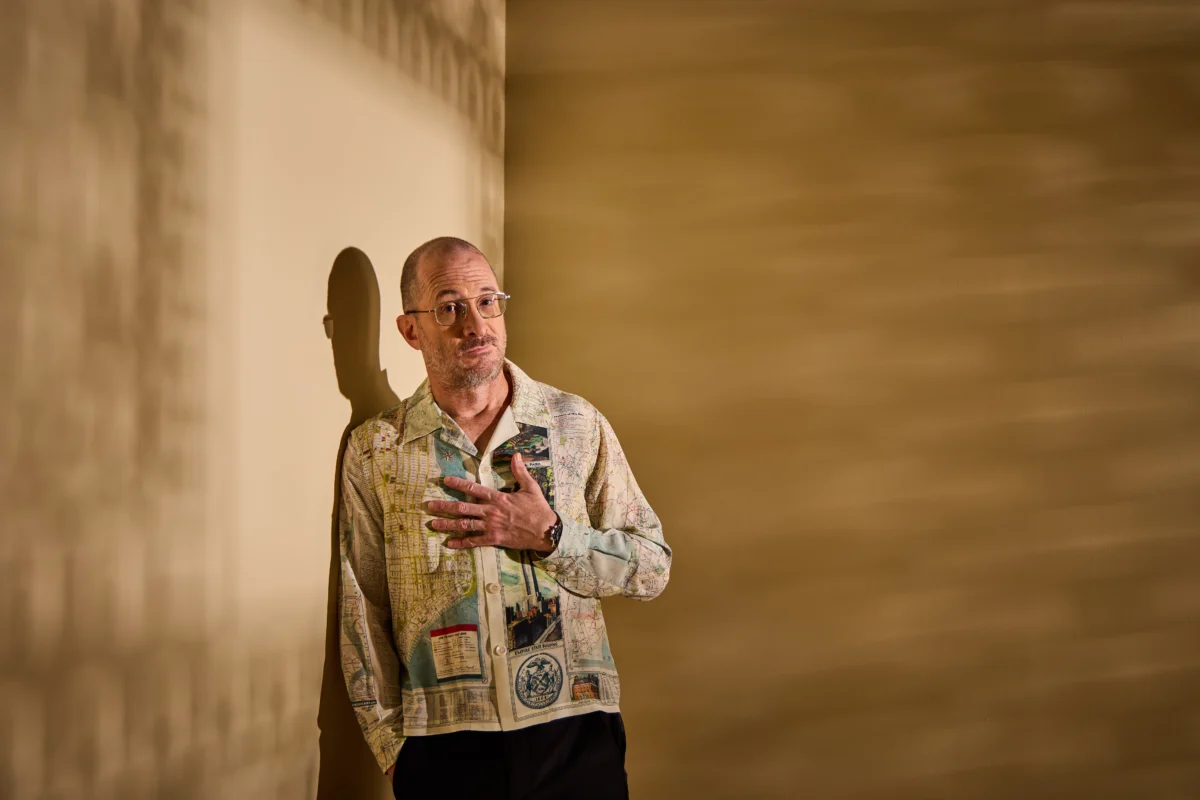
In an industry currently grappling with the existential implications of generative technology, filmmaker Darren Aronofsky—the visionary behind The Whale, Black Swan, and Requiem for a Dream—is moving from experimentation to industrialization. His AI-first production studio, Primordial Soup, has officially signaled a major expansion, filing with the Securities and Exchange Commission (SEC) to raise $15 million in equity financing.
According to the regulatory filings, the company has already secured $11 million of that target, with the initial capital infusion dating back to July 1. This significant financial vote of confidence underscores a broader, accelerating trend in Hollywood: the shift from viewing artificial intelligence as a mere post-production novelty to positioning it as the foundational architecture of modern storytelling.
The Financial Architecture of the "Soup"
The filing identifies Primordial Soup Labs, Inc. as the corporate entity, with Aronofsky and his longtime producing partner, Dylan Golden, listed as executive officers. While the company has remained tight-lipped regarding the specific allocation of these funds, the trail of breadcrumbs left on the studio’s digital recruitment portal offers a clear roadmap of their ambitions.
Primordial Soup is currently in the midst of an aggressive hiring cycle. The studio is seeking specialized talent, ranging from "generative artists" and social media strategists to a high-level "Head of Studio." The job description for the latter role is particularly telling, as it calls for an individual capable of managing the "development, production, and commercialization of our slate."
The studio’s vision, as outlined in the posting, extends far beyond the experimental short films that initially defined the company. It envisions a multi-platform ecosystem covering feature-length films, episodic television, digital-first creator content, and high-end branded advertisements. By seeking a "Head of Studio," Aronofsky is signaling a transition from an R&D lab environment to a fully operational production house designed to scale content production at a velocity previously unseen in traditional cinema.
A Chronology of Innovation and Controversy
To understand the significance of this funding, one must look at the trajectory of Aronofsky’s recent work, which has consistently pushed the boundaries of immersive and generative media.
The Early Adopter Phase
Aronofsky’s fascination with cutting-edge technology is not a recent development. In 2018, he produced the three-part virtual reality project Spheres, directed by Eliza McNitt. This project served as an early indicator of his interest in non-traditional, immersive narrative structures. This technological curiosity culminated in his work on Postcard from Earth for the Sphere in Las Vegas—a massive undertaking that demanded unprecedented technical precision and visual scale.
The DeepMind Partnership
In 2023, Primordial Soup launched with the provocative mantra: "Make soup, not slop." This signaled an intent to elevate AI-generated content beyond the "slop" of low-effort, low-quality internet output. The studio quickly formed a non-exclusive partnership with Google DeepMind, granting them early access to sophisticated generative models.
The result of this collaboration was Ancestra, a 45-minute featurette exploring themes of maternal bonds and memory. Debuting at the 2025 Tribeca Festival, the project saw Aronofsky sharing the stage with DeepMind executives. "There are a lot of ways to use these models," Aronofsky noted during the panel. "I’m mostly interested in figuring out how to use these models to tell stories."
The "On This Day" Backlash
The director’s journey has not been without significant public friction. His series On This Day, a collection of shorts featuring AI-generated historical figures, faced intense scrutiny from critics. Early iterations were criticized for "uncanny valley" aesthetics—the unsettling feeling produced by figures that appear almost, but not quite, human.
Aronofsky eventually pivoted the series toward a more stylized, animated approach. The resulting episode, featuring an anime-inspired boxing match between Thomas Jefferson and King George III, proved that the studio was willing to lean into the absurd and the surreal—a sharp departure from the prestige drama expectations usually associated with the director.
The Industry Context: A New Hollywood Paradigm
Aronofsky is far from alone in this pursuit. The "AI-first" movement is gaining traction across the upper echelons of the entertainment industry.
- Martin Scorsese: The legendary filmmaker has reportedly begun utilizing AI tools to assist in complex storyboarding processes.
- Legacy Studios: Both A24 and Lionsgate have initiated strategic partnerships with AI technology firms, exploring how generative tools can reduce overheads in visual effects and script analysis.
- Television and Animation: Veteran creators, including directors from the Doctor Who franchise, are currently developing animated features built entirely on AI-assisted pipelines.
This movement is driven by the stark economic reality of modern filmmaking. While traditional production is increasingly burdened by ballooning budgets and labor-intensive workflows, AI offers a pathway to lower production costs. However, as Primordial Soup’s capital raise suggests, "cheaper" does not mean "free." The true cost of high-quality AI filmmaking lies in the human element: the writers, the directors, the voice actors, and the creative leads who curate and shape the output.
Implications for the Future of Storytelling
The infusion of $11 million into Primordial Soup raises fundamental questions about the future of the director’s role. If a studio can "generate" a feature film, what happens to the traditional department heads?
Aronofsky’s approach suggests a hybrid model. Rather than replacing the human touch, he appears to be betting on a system where human creativity is amplified by machine efficiency. The "Head of Studio" role is key here; it implies that despite the generative nature of the work, there is a massive need for traditional executive oversight to manage "commercialization" and "slate development."
Furthermore, the studio’s pivot toward "creator content" and "branded content" suggests that they intend to monetize their technology in ways that traditional film studios have struggled to replicate. By creating a pipeline that can churn out high-quality visuals for social media and advertising at a rapid pace, Primordial Soup is positioning itself as a hybrid agency-studio, blending the prestige of auteur cinema with the agility of a tech startup.
Challenges and Official Stance
Despite the ambition, significant hurdles remain. The legal and ethical landscape of AI-generated content is in constant flux, with ongoing litigation regarding copyright and training data looming over the entire sector. Furthermore, the "backlash" experienced during the On This Day project serves as a reminder that audiences remain skeptical of AI’s ability to replicate the emotional depth of traditional human performances.
Aronofsky and his representatives have remained characteristically silent regarding the specifics of this funding round, declining requests for comment. This silence is typical for the director, who often prefers his work to speak for itself, even when that work invites intense public debate.
As the industry watches, Primordial Soup stands at the intersection of Silicon Valley ambition and Hollywood tradition. Whether they can truly "make soup, not slop" will depend on their ability to move beyond the technical novelty of generative models and deliver narratives that resonate with the same emotional power as the director’s past work. With $11 million now in the bank, the experiment has officially moved into its high-stakes, professionalized phase. The question for the rest of the industry is no longer whether AI will play a part in filmmaking, but rather, who will be the first to build a sustainable, scalable, and critically acclaimed model for the era of generative cinema.