In the upper echelons of documentary filmmaking, few accolades carry the prestige, financial backing, or historic weight of the Library of Congress Lavine/Ken Burns Prize for Film. Now in its eighth year, the nation’s richest nonfiction film award has been granted to Once Upon a Time in Harlem, an Oscar-contending cinematic achievement directed by David Greaves. Built upon rare, decades-old 16mm footage shot by his late father, pioneering filmmaker William Greaves, the project received the prize’s top honor—a transformative $200,000 cash grant.
The announcement, made jointly by the Library of Congress, The Better Angels Society, documentary icon Ken Burns, and the Crimson Lion/Lavine Family Foundation, highlights a film that national jurors have already anointed as a seminal work of American preservation. Featuring an intimate look at the legends of the Harlem Renaissance gathered in one room, the documentary is poised to redefine our understanding of a golden era in Black American art and culture.
Main Facts: The Record-Breaking Win and Historic Footage
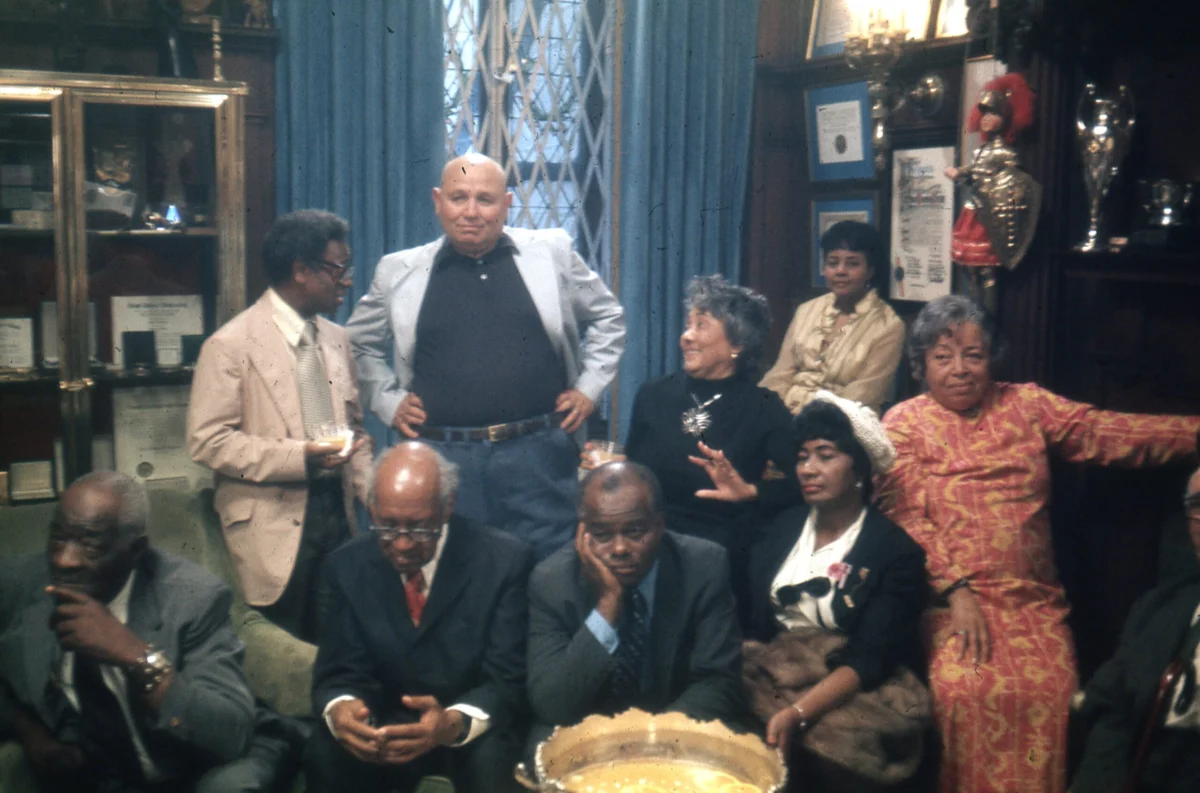
At its core, Once Upon a Time in Harlem chronicles a singular, miraculous moment in cultural history: a 1972 gathering at the Harlem townhouse of jazz royalty Duke Ellington. William Greaves, known for his visionary contributions to independent cinema, used his cameras to capture nearly every surviving creator, thinker, and icon of the Harlem Renaissance that he could track down.
The guest list reads like a pantheon of American literary and artistic greatness:
Aaron Douglas, the foundational painter and graphic artist known as the "Father of Black American Art."
Romare Bearden, the celebrated modernist and collage artist.
Arna Bontemps, the influential poet, novelist, and librarian.
Richard Bruce Nugent, the avant-garde writer, painter, and actor.
James Van Der Zee, the legendary portrait photographer whose lens documented the soul of Harlem for decades.
Ida Mae Cullen, the widow of quintessential Harlem Renaissance poet Countee Cullen.
For many of these creative giants, the evening at Ellington’s home marked the first time they had seen one another in half a century. Using his 16mm cameras, William Greaves captured them reminiscing, debating, and passionately wrestling with the heavy question of how culture survives across generations.
Though the footage sat uncompleted for decades, William’s son, director David Greaves, alongside producer and granddaughter Liani Greaves, painstakingly restored and finished the film. The resulting documentary functions not merely as a historical record, but as a living archive that transports viewers directly into the room.
Chronology: From a 1972 Townhouse to the 2026 Festival Circuit
To understand the magnitude of Once Upon a Time in Harlem, one must trace a timeline spanning more than fifty years of dedication, preservation, and eventual triumph.
Spring 1972: William Greaves coordinates and films the historic gathering of Harlem Renaissance survivors at Duke Ellington’s Harlem townhouse, capturing raw conversations on 16mm film.
Decades in the Vault: The footage remains largely unedited and unseen by the broader public, preserved carefully as part of the Greaves family’s extensive archival legacy following William Greaves’ passing.
The Restoration Era: Director David Greaves takes up the mantle left by his father, working alongside producer Liani Greaves and producer Anne de Mare to meticulously restore the audio and visual elements of the historic 16mm tape.
January 25, 2026:Once Upon a Time in Harlem makes its high-profile premiere at the Sundance Film Festival in Park City, Utah, immediately generating intense critical buzz and establishing itself as an early Oscar contender.
September 2026: The filmmakers bring the project to the Camden International Film Festival in Maine, where it receives widespread acclaim from audiences and industry professionals alike.
October 2026: The Library of Congress announces the film as the winner of the eighth annual Lavine/Ken Burns Prize, cementing its status as a masterwork of historical nonfiction.
October 22, 2026: David Greaves, Liani Greaves, and runner-up filmmaker Deborah Riley Draper are officially honored alongside Ken Burns at a premier gala ceremony in New York City.
Supporting Data: The Lavine/Ken Burns Prize Ecosystem
The Library of Congress Lavine/Ken Burns Prize for Film has quickly evolved into one of the most vital institutional pillars supporting American historical documentaries. Since its inception in 2019, the prize has injected a staggering $2.6 million directly into the independent nonfiction film ecosystem, championing projects that dive deep into the complexities of United States history.
This year’s competition was exceptionally fierce. According to David Greaves, the national jury had to comb through over a thousand applications from filmmakers across the globe before narrowing the field down to a winner, a runner-up, and four distinguished finalists.
The Runner-Up
The runner-up for the 2026 prize, receiving a $50,000 cash award, shares a direct thematic link with the champion. Romare Bearden: A Life in Collage, directed by Deborah Riley Draper and produced under Coffee Bluff Pictures, shines a spotlight on modernist artist Romare Bearden—one of the very figures featured in the archival footage of Once Upon a Time in Harlem. Told primarily through Bearden’s own words and personal archives, the film elevates an underrecognized athlete, activist, and artistic titan.
The 2026 Finalists
In addition to the winner and runner-up, four exceptional finalists each walked away with $25,000 cash prizes to aid in the completion or distribution of their historical features:
THE ANIMATED MIND OF OLIVER SACKS (Directed by Dempsey Rice): Utilizes immersive animation and newly unearthed personal audio recordings to trace the young neurologist’s groundbreaking early work and the internal conflicts that defined his humanity.
BARRIO TELEVISION (Directed by Christina DiPasquale): Documents how Puerto Rican activists in 1970s New York disrupted conventional broadcasting to launch Realidades, the first bilingual Latino series in U.S. history.
THE DAY FREEDOM DIED (Directed by Joseph Dorman and Kelly Williams): Examines the tragic 1873 Colfax massacre in Louisiana—the single bloodiest day of racial violence during the Reconstruction era—and the subsequent Supreme Court rulings that dismantled civil rights protections.
ZENÓN AND THE REBEL BOATS (Directed by Juan C. Dávila Santiago): Chronicles the life of Carlos "Taso" Zenón, a Puerto Rican fisherman who spearheaded the grassroots resistance against the U.S. Navy’s six-decade military occupation of Vieques.
Official Responses: What Industry Leaders and Filmmakers Are Saying
The prestige of the Lavine/Ken Burns Prize draws statements from some of the most respected voices in American arts, preservation, and filmmaking.
Renowned documentarian Ken Burns expressed his unvarnished enthusiasm for the winning film, noting:
"I was won over from the moment the camera started rolling. It’s literally the best party I have ever been to, a festive time travel through the memory of these extraordinary individuals. Once Upon a Time in Harlem is a celebration of the Harlem Renaissance but just as important—and riveting—it’s an intimate conversation about the meaning of art and life and how we share ideas across generations. We are all indebted to William Greaves for curating and capturing this moment and to David Greaves for bringing to life what his father so lovingly started more than 50 years ago."
Acting Librarian of Congress Robert R. Newlen echoed these sentiments, emphasizing the transformative nature of the archival medium:
"Once Upon a Time in Harlem is a revelation. It reintroduces us to a range of personalities and perspectives and invites us to participate. It embodies how compelling archival footage can be—not only does it make this history feel alive in the present, but it is a great deal of fun to watch."
Speaking with Deadline at the Camden International Film Festival, producer Liani Greaves shared her gratitude:
"It’s tremendous. We’re honored that they chose this film… and looking forward to having people see it."
Director David Greaves reflected on the overwhelming scale of the competition and his family’s legacy:
"They had over a thousand applications, so it’s wonderful that we were considered. I’m sure my father and my stepmother [Louise Greaves] would be absolutely delighted."
The distinguished national jury for the 2026 award featured an elite panel of film critics, educators, and cultural stewards, including:
Yoruba Richen (Documentarian)
Betsy West (Documentarian)
Peter Yost (Documentarian)
Annie Polland (President, Tenement Museum)
Claudrena Harold (University of Virginia History Professor and Film Director)
Jaie Laplante (Artistic Director, DOC NYC)
Jacqueline Glover (Executive Director, Harvard Black Film Project)
Rachael Stoeltje (Chief, Library of Congress National Audio-Visual Conservation Center)
Implications: Securing the Legacy of Nonfiction Cinema
The victory of Once Upon a Time in Harlem at the Library of Congress Lavine/Ken Burns Prize arrives at a crucial juncture for historical documentary filmmaking. In an era where cultural archives are increasingly vulnerable to digital fragmentation or institutional neglect, this film proves the irreplaceable value of physical film preservation.
By taking raw 16mm footage shot by William Greaves in 1972 and transforming it into a polished, urgent theatrical experience for 2026, David and Liani Greaves have demonstrated how multi-generational artistic collaboration can rescue history from obscurity. Furthermore, the $200,000 prize provides vital financial momentum for the film’s ongoing Oscar campaign, ensuring that independent Black history reaches a wide, mainstream theatrical and streaming audience.
As the filmmaking community prepares for the official award ceremony in New York City on October 22, Once Upon a Time in Harlem stands as a towering reminder of what happens when cinematic vision transcends generations. It does not just document history—it invites us to pull up a chair at Duke Ellington’s table and listen in as the architects of modern culture debate the very soul of America.