By the CJR Editorial Desk
Sign up for the daily CJR newsletter.
If you were suddenly handed an immense fortune with the explicit charge of saving or reinventing the press, where would your checkbook open first? Would you bankroll traditional civic watchdogs—relentless city hall reporters holding local power brokers to account? Would you finance monumental, resource-heavy investigative projects capable of toppling corrupt regimes? Perhaps you would fund hyper-detailed, data-driven coverage of your favorite professional sports franchise, or underwrite the glossy, avant-garde literary magazine of every young narrative writer’s midnight daydreams?
For nearly three decades, professional philanthropist Ruth Ann Harnisch has confronted these exact questions. Her answers, however, rarely fit neatly into the traditional philanthropic buckets that have historically defined media support.
Rather than funding legacy institutions with bloated overheads or bureaucratic structures, Harnisch has deployed her capital as a venture-style fairy godmother to the fringes, the independent thinkers, the internet-obsessed, and the culturally vital. She is the invisible financial engine behind Deez Links, Delia Cai’s reliably hilarious culture and online fixation report; Oldster Magazine, Sari Botton’s intellectually rigorous and deeply empathetic newsletter exploring the nuances of aging; and The Rumpus, the storied literary sanctuary recently revitalized under the stewardship of Roxane Gay and Debbie Millman.
By conservative estimates, Harnisch has served as a foundational supporter of more than a hundred newsletters, podcasts, and independent digital blogs. Crucially, the vast majority of these infusions are delivered not as equity investments with strings attached, corporate milestones, or board seats, but as unconditional, no-strings-attached financial gifts. The unifying thread across this eclectic portfolio is deceptively simple: she funds publications that she believes the world would be demonstrably worse off without—ranging from hard-hitting, serious journalism to delightfully silly cultural dispatches.
Main Facts: The Anatomy of Unconditional Media Philanthropy
The traditional landscape of journalism philanthropy has long been dominated by legacy foundations, wealthy newspaper heirs, and tech billionaires who favor structural continuity, institutional prestige, and measurable metrics of civic impact. Harnisch’s model stands in stark, refreshing opposition to this legacy ecosystem.
- No-Strings-Attached Capital: Unlike venture capitalists or traditional grant-makers who demand extensive impact reports, metrics tracking, or editorial oversight, Harnisch’s contributions are primarily straight gifts designed to give creators runway and peace of mind.
- Volume and Diversity: Having supported over a hundred independent digital ventures, her portfolio spans literary magazines, niche newsletters, audio documentaries, and cultural commentary.
- The Philosophy of Essentialism: Her giving is guided by a singular, intuitive metric: Does this publication enrich the cultural ecosystem in a way that nothing else does?
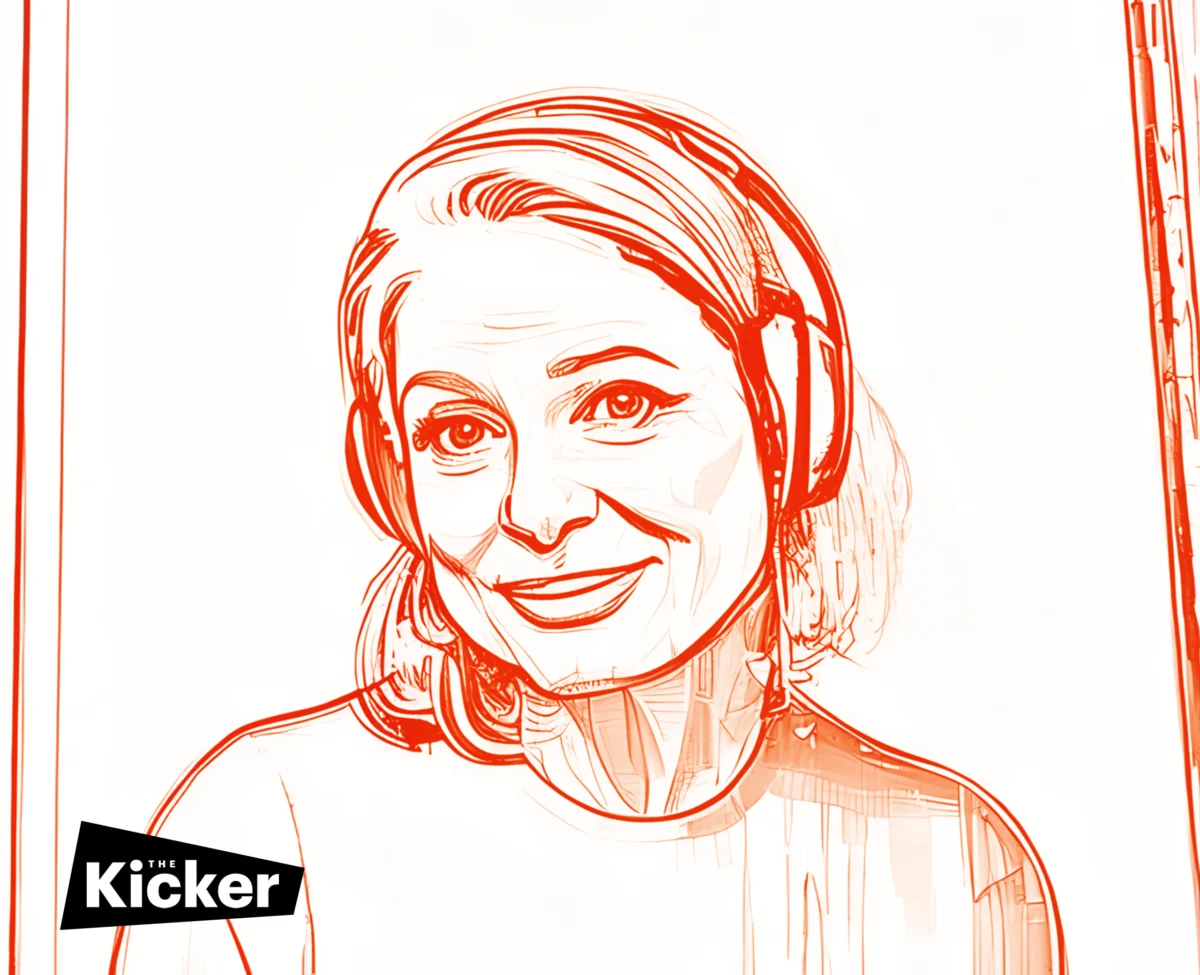
- Public Recognition: Recently featured on The Kicker podcast, hosted by Megan Greenwell and produced by Amanda Darrach, Harnisch discussed her unconventional career path, her decision-making framework, and why more ultra-high-net-worth individuals refuse to adopt her radically trusting approach to giving.
Chronology: From Talk Radio Pioneer to Media’s Greatest Benefactor
To understand how Ruth Ann Harnisch developed her unique perspective on media funding, one must look backward through a remarkably unconventional career path that bridges traditional mass media, broadcast journalism, and grassroots activism.
The Early Years in Broadcasting and Journalism
Before she became a foundational name in media philanthropy, Harnisch spent decades embedded in the machinery of commercial media. She built a formidable reputation as a broadcast journalist, talk show host, and media professional. Operating inside the traditional media ecosystem afforded her a front-row seat to its structural vulnerabilities: the tightening grip of corporate ownership, the shrinking newsrooms, and the systematic undervaluing of women’s voices, niche cultural reporting, and alternative perspectives.
Transition to Professional Philanthropy
Over the course of nearly thirty years, Harnisch transitioned from media practitioner to professional philanthropist. This evolution coincided with a massive tectonic shift in the media landscape—the decline of legacy print advertising models and the simultaneous rise of the internet, blogging, and independent audio.
As traditional outlets began retreating from regional reporting, cultural criticism, and long-form narrative, Harnisch recognized that the future of vital journalism would not be saved by preserving dying dinosaurs. Instead, it would be built from the ground up by independent creators utilizing emerging technologies like blogging platforms, podcast networks, and eventually, newsletter infrastructure.
The Rise of the Substack and Indie Boom
In the past decade, Harnisch’s philanthropic footprint has scaled alongside the creator economy. As platforms like Substack, Patreon, and Ghost lowered the technical barrier to entry for independent writers, Harnisch acted as an early-stage angel investor without the commercial demands of traditional angel investing. When creators like Delia Cai (Deez Links) or Sari Botton (Oldster Magazine) were testing the waters of independent publishing, Harnisch’s early financial backstopping provided the vital safety net required to transform side projects into sustainable, full-time independent media operations.
Supporting Data: The Fragility of Independent Media
The necessity of Harnisch’s no-strings-attached funding model is underscored by broader economic realities facing contemporary independent journalism. Data from media research organizations paint a stark picture of an industry in transition.
| Metric / Indicator | Industry Reality | The Harnisch Intervention |
|---|---|---|
| Traditional Newsroom Employment | Plummeting local and regional newsroom jobs over the last two decades. | Bypasses legacy gatekeepers to fund hyper-targeted, nimble creators directly. |
| Monetization Barriers | High churn rates for digital subscriptions; ad revenue dominated by tech monopolies. | Direct financial gifts eliminate early-stage financial panic, allowing creators to build audiences. |
| Creative Autonomy | Institutional funders often dictate editorial focus or impose restrictive Key Performance Indicators (KPIs). | Unconditional gifting preserves absolute editorial independence and creative freedom. |
According to industry surveys, the single greatest point of failure for independent newsletters and podcasts is not a lack of audience demand, but rather the "valley of death"—the initial months or years where a creator must produce high-volume work for free or low pay while trying to scale a subscriber base. Harnisch’s grants function precisely as a bridge across this valley, keeping vital cultural voices alive before they achieve commercial self-sufficiency.
Official Responses and Expert Perspectives
The impact of Harnisch’s philosophy has garnered widespread acclaim across the literary and journalistic communities. Her work was recently the subject of an in-depth conversation on PRINT magazine’s Design Matters podcast, hosted by legendary designer and writer Debbie Millman, where they explored the psychology of giving and the profound responsibility of supporting creative voices.
"If you had lots of money to give away, what kind of journalism would you fund? City hall reporting? Big-swing investigative projects? Detailed coverage of your favorite sports team? The magazine of every narrative writer’s dreams?" — Megan Greenwell, host of The Kicker and author of Bad Company: Private Equity and the Death of the American Dream.
Media analysts note that Harnisch’s approach represents a vital democratization of philanthropy. Too often, institutional philanthropy insists on top-down metrics that force creative writers and journalists to spend more time filling out grant reports and measuring ROI than actually reporting, writing, or creating. By placing absolute trust in the creators she backs, Harnisch models a deeply respectful form of patronage that honors the unpredictable, organic nature of artistic and journalistic creation.
Implications: The Future of Media Patronage
As the traditional advertising-supported media model continues to fracture under the weight of algorithmic changes, platform dominance, and economic uncertainty, the lessons of Ruth Ann Harnisch’s philanthropic career carry profound implications for the future of the press.
- The Rise of Micro-Patronage: Harnisch proves that funding the ecosystem does not require multi-million-dollar grants to monolithic institutions. Small, targeted, unconditional infusions of capital into niche publications can yield an extraordinarily high cultural return on investment.
- Redefining "Civic Importance": While accountability journalism remains essential to democracy, cultural criticism, personal essays, humor, and literary magazines are equally vital to maintaining a healthy, empathetic, and intellectually vibrant society. Harnisch’s portfolio demonstrates that silliness and seriousness are not mutually exclusive; both are necessary components of the human experience.
- A Challenge to Wealthy Donors: Harnisch’s career poses an uncomfortable question to contemporary billionaires and high-net-worth individuals: Why do so few wealthy donors trust creators the way she does? The prevailing corporate culture of philanthropy—obsessed with control, metrics, and legacy branding—often stifles the very innovation it claims to support.
Listen to the full interview with Ruth Ann Harnisch on The Kicker below, or wherever you get your podcasts, to dive deeper into her remarkable journey as media’s most unorthodox fairy godmother.
Show Notes & Further Reading
- Debbie Millman, “Design Matters: Ruth Ann Harnisch”, PRINT.
- “Ruth Ann Harnisch”, IMDb Profile.
- “About the Harnisch Foundation”, Official Organizational Overview.
- Tracy Gary, Inspired Philanthropy.
Production Credits
- Host: Megan Greenwell
- Producer: Amanda Darrach
Has America ever needed a media defender more than now? Help us defend the press and secure the future of independent journalism by joining CJR today.