"The era of link in bio is finally over."
This bold proclamation, delivered by Nicola Mendelsohn, Meta’s Head of Global Business Group, at this year’s Shoptalk conference, serves as the manifesto for a seismic shift in social commerce. For years, the "link in bio" has been the necessary friction point of the creator economy—a digital bottleneck that forced users to navigate away from engaging content to complete a purchase. Meta has now decided that this journey is too long, and they are dismantling it piece by piece.
At the Cannes Lions 2026, Meta unveiled a comprehensive suite of updates across Facebook and Instagram that effectively turn the entire social experience into a storefront. By collapsing the distance between discovery and conversion, Meta is not merely updating its app; it is re-architecting how billions of users interact with products.
The Evolution of Social Shopping: A Chronology of Change
To understand the magnitude of this shift, one must look at the trajectory of Meta’s commerce strategy over the last few years.
- The Early Days (2018–2020): Meta introduced basic shopping tags, allowing businesses to tag products in posts. However, the experience was siloed, often leading to slow-loading external web pages.
- The Creator Pivot (2021–2023): As the creator economy exploded, Meta doubled down on influencer-led marketing. Yet, the reliance on third-party "link-in-bio" tools (like Linktree) remained, highlighting a massive leakage in the sales funnel.
- The AI Integration (2024–2025): Meta began testing AI-driven product recommendations, learning which users were likely to purchase specific items based on their interaction with creator content.
- The "Cannes 2026" Breakthrough: Meta officially launched deep-level affiliate integration, enabling eligible creators in 22 countries to tag products directly from business catalogs. This marked the death knell for the redirect-heavy user experience.
The Mechanics of Frictionless Commerce: How It Works
The core of this update lies in the elimination of the "abandonment gap." Previously, a consumer might watch an influencer’s "Get Ready With Me" (GRWM) video, find a product they like, click the creator’s profile, find the link, navigate to the site, and then decide against the purchase due to the cumbersome multi-step process.
The Power of Native Tagging
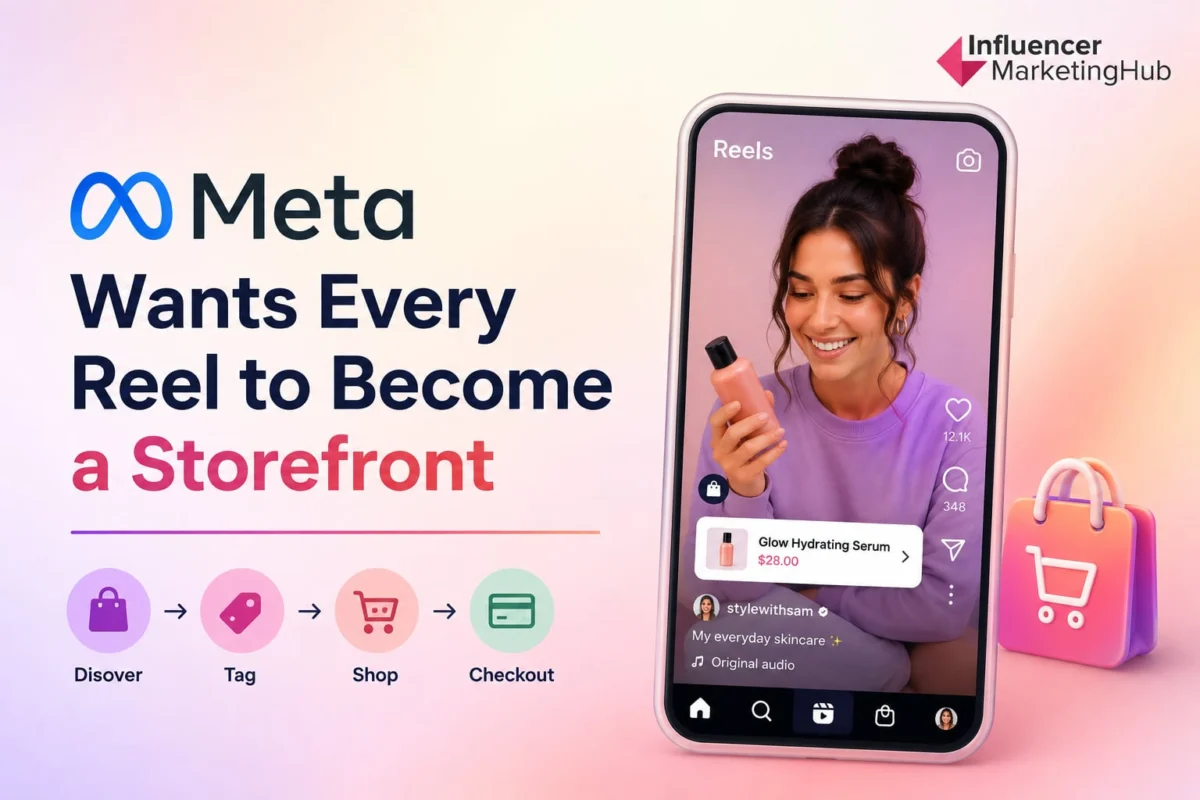
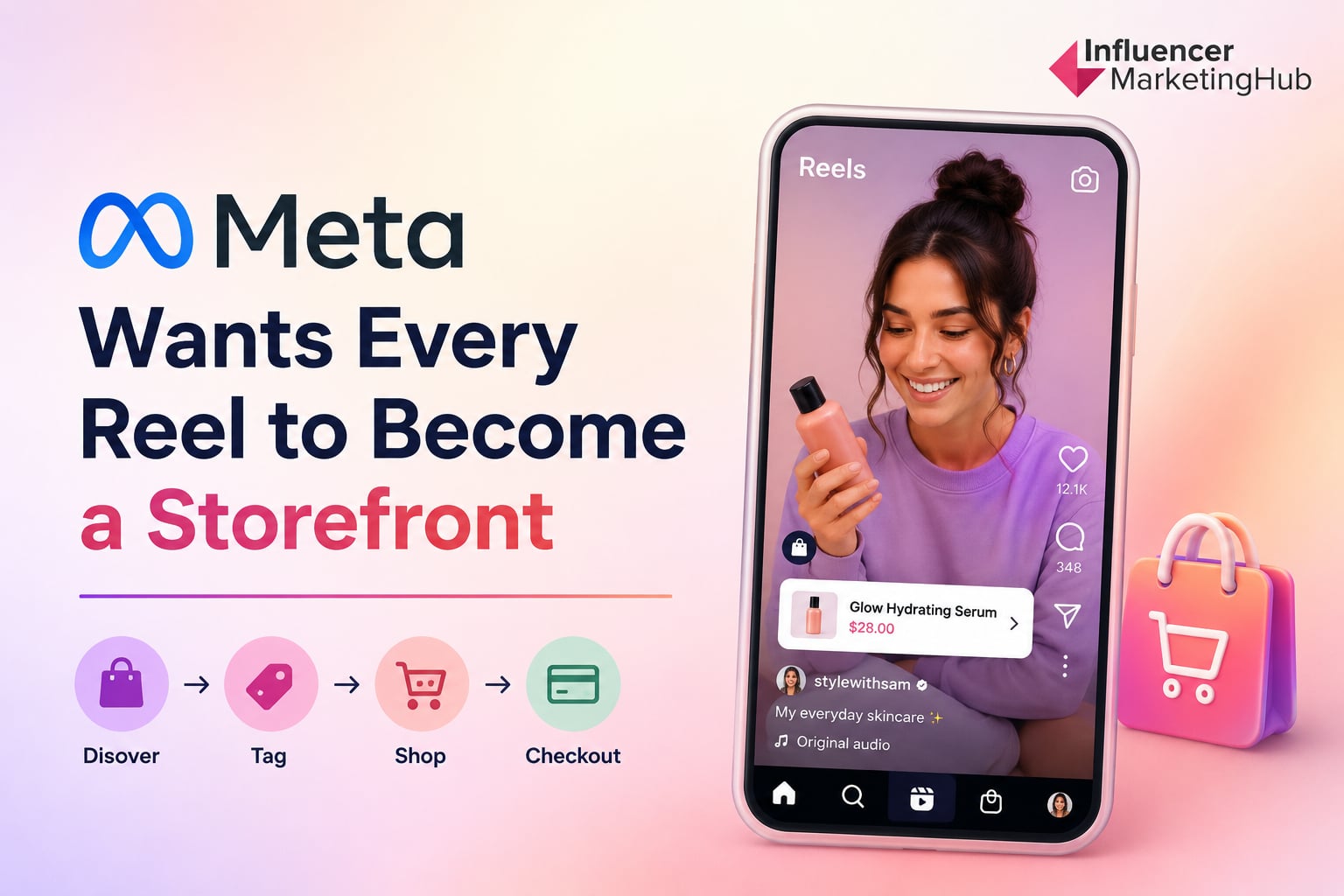
Under the new framework, eligible creators can now tag up to 30 products in a single Instagram Reel or Feed post. These tags pull directly from a participating brand’s product catalog. When a user taps the product, they are presented with a streamlined, in-app view of the item, complete with pricing and availability.
For the creator, this is a monetization windfall. By using affiliate links, they earn direct commissions on sales facilitated through their content. For the brand, it provides a "closed-loop" attribution model—a rarity in the often-murky world of influencer marketing. Every click, view, and purchase is tracked within Meta’s ecosystem, providing clear ROI data that was previously hidden behind external website analytics.
Supporting Data: Why Influencer Trust is the New Currency
The move to integrate commerce into content is backed by compelling consumer behavior data. According to recent industry reports, as much as 27% of all beauty and luxury shoppers now rely exclusively on influencer recommendations to make their purchasing decisions.
Social media has effectively replaced the "department store floor" of the 20th century. However, whereas the department store was a physical space where products were adjacent to the customer, social media was previously a digital space where products were hidden behind barriers. By removing these barriers, Meta is capitalizing on the high conversion rates associated with "social proof." When a creator—a person the audience trusts—recommends a product, the "trust-to-transaction" latency is significantly reduced.
The Broader Ecosystem: Beyond the Reel
While Reels represent the most visible change, Meta’s strategy is far more systemic. The company is simultaneously rolling out several backend upgrades designed to create a "commerce-first" social environment:
1. The Global Expansion of Live Shopping
Meta is expanding Live Video Ads on both Facebook and Instagram. These ads allow brands to promote real-time shopping events, where viewers can browse products, compare prices, and check out without ever leaving the livestream interface. This brings the QVC-style sales model into the modern, algorithm-driven era.
2. Strategic Affiliate Partnerships
Recognizing that commerce is global, Meta is deepening its integration with regional e-commerce giants, including Flipkart, Mercado Libre, and Lazada. By syncing with these local powerhouses, Meta ensures that creators in emerging markets have a robust infrastructure to support their affiliate efforts, further cementing its position as the global hub for social commerce.
3. The Future of Checkout: Virtual Cards
Perhaps the most ambitious move is the introduction of virtual cards developed in partnership with Mastercard and Visa. This feature solves one of the biggest consumer pain points: security anxiety. By allowing users to complete purchases without sharing actual card details with individual merchants, Meta reduces the "security friction" that often causes shoppers to abandon carts at the final step.
Behind the Scenes: The AI-Driven Revolution
The most significant change for advertisers is arguably the most invisible. Starting this summer, Meta will mandate that product catalog data serve as the "foundational input" for all Sales campaigns.

Historically, advertisers had to manually manage creative assets and match them to specific ad formats. Now, Meta’s AI will ingest the brand’s entire product catalog and automatically assemble the most relevant shopping experience for each unique user. If a user has shown an affinity for minimalist watches, the AI will prioritize displaying those specific items from the catalog in the ad, effectively creating a bespoke shopping experience for every single impression.
Official Responses and Industry Implications
Meta’s leadership has been clear: the goal is to make discovery and purchase synonymous. By integrating these tools, Meta is positioning itself to capture a larger share of the global digital advertising spend, which is increasingly shifting toward performance-based commerce.
For marketers, the implications are profound:
- The Rise of the Product Data Architect: Brands can no longer treat their product catalogs as mere spreadsheets. Because the AI relies on this data to show products to consumers, the accuracy, imagery, and descriptions within these catalogs are now a critical component of the creative strategy.
- Influencer Partnerships as Performance Marketing: Influencer marketing is graduating from an awareness-based play to a direct-sales channel. Brands should look for creators who are not just "content influencers," but "commerce partners" who understand how to drive conversions through tagging and affiliate links.
- The End of the Silo: Brands that rely on driving traffic to their own standalone websites may find themselves fighting an uphill battle against the seamless experience offered by Meta. The future belongs to those who meet the customer where they are—in the middle of their scrolling experience.
Conclusion: A New Frontier for Retail
The "link in bio" was a relic of a time when the internet was a series of disconnected destinations. Today, the internet is becoming a series of interconnected experiences. By consolidating discovery, recommendations, and checkout into a single, frictionless flow, Meta has signaled that the next stage of e-commerce will not be about "going shopping"—it will be about shopping while you do everything else.
For the modern brand, the message is clear: adapt to the ecosystem or risk irrelevance. The barrier between a "like" and a "buy" has been lowered, and the race to capture the consumer’s attention—and their wallet—has officially entered a new, high-speed phase. The era of the link in bio is dead; long live the era of the shoppable feed.