In the high-stakes world of marketing services, the traditional playbook for growth has long been a "roll-up": acquire independent agencies, strip out redundant back-office functions, centralize operations, and prepare for a swift exit to a larger conglomerate. However, 617 Collective, a New York-based acquisition platform, is attempting to rewrite this narrative. By hiring veteran investment banker Victor Martinez to lead its capital markets division, the firm is signaling a departure from the status quo—aiming to scale a decentralized, "founder-friendly" model using the sophisticated financial muscle typically reserved for industry titans.
The Strategic Hire: Institutionalizing the "Anti-Roll-Up"
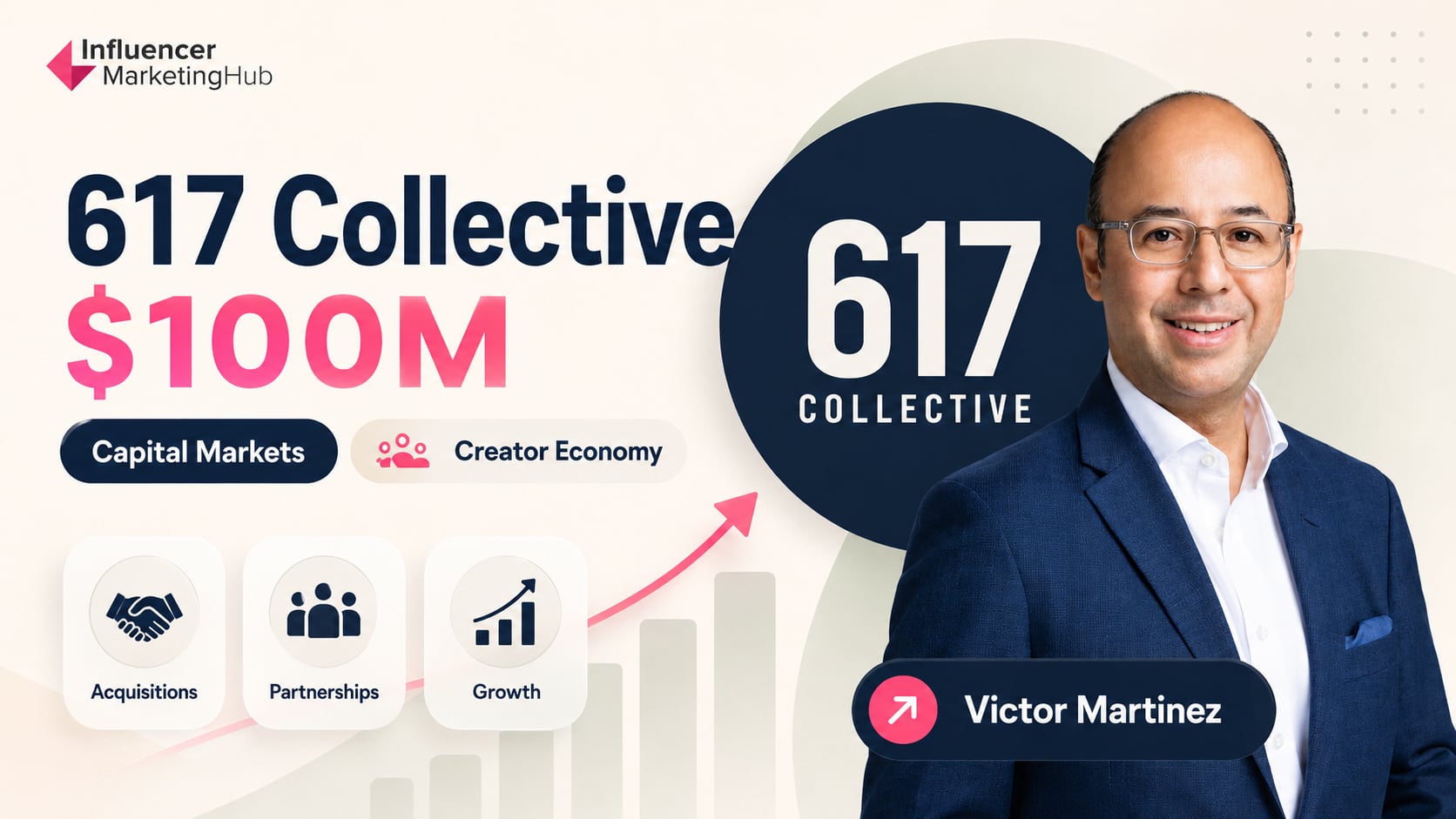
617 Collective has formally appointed Victor Martinez as Partner and Head of Capital Markets, a move that serves as a bridge between the firm’s niche agency-buying philosophy and the institutional realities of the global financial markets. Martinez arrives with a formidable pedigree, boasting over two decades of experience at Citi and JPMorgan. Throughout his tenure at these institutions, he specialized in capital formation, financing structures, and public-market positioning for high-growth sectors, including technology, media, and consumer goods.
His mandate is clear and ambitious: to secure the lender relationships and financing infrastructure necessary to deploy $100 million in capital acquisitions throughout 2026. This move represents a pivot from the firm’s earlier, more conservative growth phases to a high-velocity expansion strategy. By bringing in a seasoned banker, 617 Collective is not merely adding personnel; it is establishing a "Wall Street-grade" foundation that will allow it to compete for high-quality agency acquisitions against better-capitalized incumbents.
A Chronology of Growth: From Concept to Capitalization
To understand the weight of this hire, one must look at the rapid evolution of 617 Collective since its inception in August 2025.
- August 2025: 617 Collective launches as a private holding company, backed by a syndicate of family offices and private investors. Its initial mission focuses on the Northeast, targeting boutique agencies generating between $1 million and $5 million in annual revenue.
- January 2026: The firm makes its first significant move, acquiring Nominee Design, an Oklahoma-based creative studio with a decade-long track record. Simultaneously, the firm appoints Cynthia Monroy, a veteran CPA and former CFO of Band of Insiders, as Managing Partner to oversee operational integration.
- April 2026: Expanding its geographic and service footprint, 617 Collective acquires Zanahoria Azul, a Miami-based influencer talent agency specializing in the U.S. Hispanic and Latin American markets.
- June 2026: The firm announces the appointment of Victor Martinez, signaling that the platform is moving from an experimental phase into a period of aggressive, institutional-backed scaling.
This timeline illustrates a deliberate transition. By mid-2026, 617 Collective successfully positioned itself as a dual-threat entity: one that provides operational support through Monroy’s financial oversight and capital access through Martinez’s banking expertise.
The Data Driving the Strategy: Why Now?
617 Collective’s aggressive expansion is predicated on a cold, hard look at the creator economy’s growth trajectory. According to recent industry estimates, the creator economy is valued between $250 billion and $320 billion as of 2026, with projections by the Influencer Marketing Hub suggesting the market could reach $480 billion by 2027. This sector is not only expanding at a compound annual growth rate (CAGR) of over 20%, but it remains structurally fragmented. Thousands of small-to-mid-sized agencies currently vie for attention, creating a ripe environment for consolidation.
The deal flow reflects this fragmentation. Quartermast Advisors reported 81 creator-economy transactions in 2025, marking a 17.4% increase from the previous year. Furthermore, while broader U.S. market activity slowed, marketing services M&A activity rose by 14% year-to-date in 2025, underscoring a flight to quality and stability within the marketing sector.
However, the "competitive set" for 617 Collective is formidable. The landscape is dominated by massive consolidation events, such as the $13.5 billion merger between Omnicom and Interpublic Group, which created a $25 billion revenue behemoth. Publicis Groupe has also spent the last 24 months aggressively assembling a creator-economy "stack," highlighted by the $500 million acquisition of the platform Influential and the purchase of Latin American giant BR Media Group. In this climate, 617 Collective’s $100 million war chest is not just a growth budget; it is a survival requirement to ensure they remain a relevant player in a market dominated by "Big Agency" capital.
Official Stance: The "Partner-Holdco" Philosophy
The leadership at 617 Collective remains adamant that their model is fundamentally different from the "roll-up" approach. Managing Partner Cynthia Monroy has repeatedly articulated that the firm intends to avoid the pitfalls of over-integration.
"We built 617 Collective to be the opposite of a roll-up," Monroy stated following the Nominee Design acquisition. The firm’s "Partner-Holdco" model prioritizes the retention of agency culture, local leadership, and existing client relationships. Rather than forcing agencies into a homogenized, centralized structure, 617 Collective acts as a supportive layer, providing the capital, shared back-office infrastructure, and strategic guidance that smaller agencies often lack.
In her comments regarding the hire of Victor Martinez, Monroy described the move as a critical step in "the continued institutionalization of 617 Collective." This statement acknowledges the inherent tension between maintaining a founder-friendly, boutique atmosphere and building the rigorous, scalable financial framework required to satisfy institutional investors.
Implications: The Risks and Rewards of "Permanent Capital"
The "permanent capital" model—an approach popularized by firms like Constellation Software and Andrew Wilkinson’s Tiny—seeks to hold assets indefinitely rather than flipping them for a profit in three to five years. For agency founders, this is an alluring proposition. It promises the security of a parent company without the loss of agency identity.
However, industry analysts, including those at Ebiquity, warn that the "founder-friendly" promise may face significant friction as the platform grows. The risks are threefold:
- Conflict of Interest: As a holding company accumulates multiple agencies within the same niche (e.g., influencer marketing), brand clients may worry about the sharing of sensitive data or competing strategies across the portfolio.
- Operational Creep: Even with a decentralized philosophy, the temptation to centralize shared services (HR, legal, IT) to maximize efficiency is high. Once those functions are consolidated, the "independent" nature of the agencies becomes purely cosmetic.
- Market Perception: As 617 Collective scales, it will inevitably look more like the consolidated networks it claims to oppose. The challenge will be proving that they can maintain the "soul" of their acquisitions while managing a massive portfolio of diverse, independent creative teams.
The Road Ahead: Competing for the Future
For 617 Collective, the immediate future will be defined by their ability to deploy their $100 million fund effectively without diluting the value of their existing portfolio. The decision to bring in Victor Martinez is a clear signal that the firm is prepared to play the long game.
The industry is currently in a state of flux, with a surge of capital chasing a limited pool of high-performing, independent agencies. As 617 Collective moves into the second half of 2026, the market will be watching closely to see if their "founder-first" script holds up against the pressures of scale. If successful, they may well prove that institutional finance and boutique creative culture are not mutually exclusive—but rather two sides of the same coin in the modern, consolidated agency landscape.
Whether this strategy results in a new paradigm for agency holding companies or simply a more sophisticated version of the traditional roll-up remains the industry’s most significant open question. As the creator economy continues its rapid maturation, 617 Collective has firmly planted its flag in the middle of this debate, armed with a banker, a plan, and a growing list of partners.