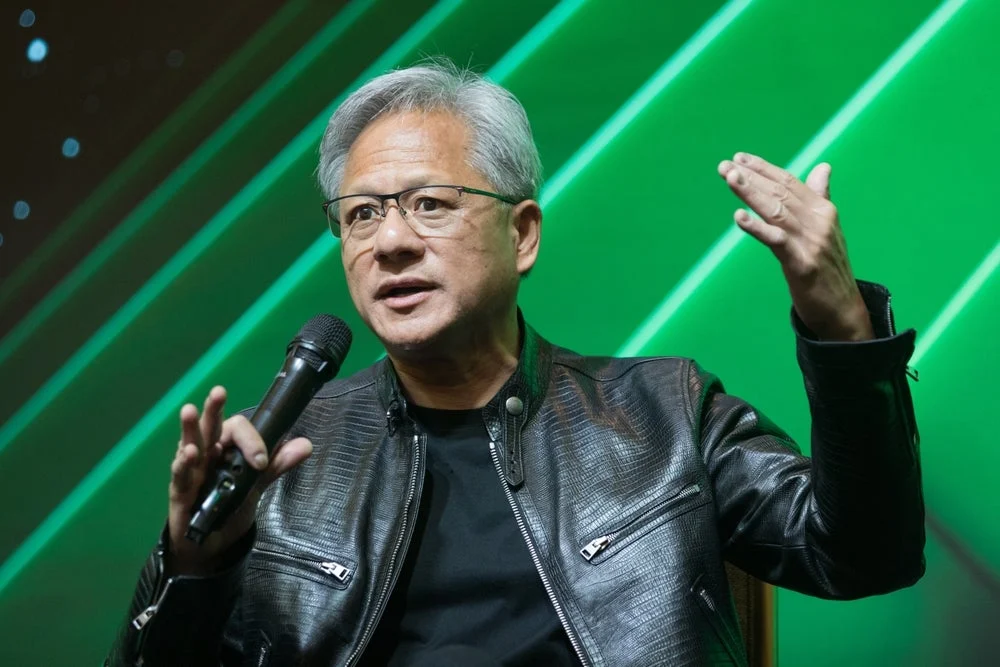
In a stunning turn of events that has sent shockwaves through the global technology sector, Jensen Huang—the visionary founder who transformed Nvidia from a niche graphics card manufacturer into the backbone of the global artificial intelligence economy—has officially resigned as CEO, President, and board member. The departure follows a cascade of revelations involving personal indiscretions and, more critically, an investigation into potential breaches of national security protocols.
For over three decades, Huang has been the face of the AI revolution. His departure marks the end of an era, leaving behind a company that is no longer just a hardware manufacturer, but a geopolitical cornerstone. As federal investigators and internal auditors begin to peel back the layers of a complex corporate and personal crisis, the tech world is left to grapple with the fragility of leadership at the pinnacle of innovation.
The Chronology of a Collapse
The crisis did not emerge overnight, but it culminated with startling speed. The timeline of the events leading to Huang’s resignation reflects the compounding pressure of a high-stakes investigation.
- Initial Revelations: The sequence began with a public admission of infidelity by Huang. While personal in nature, the acknowledgment immediately triggered intense scrutiny into whether these personal entanglements crossed into professional misconduct.
- The Escalation: As the media spotlight intensified, subsequent reporting unveiled allegations of a secondary relationship involving another senior Nvidia executive. This transformed the situation from a "personal matter" into a potential systemic issue regarding corporate culture and oversight.
- The National Security Inquiry: The most grave development surfaced when federal agencies initiated an inquiry into whether any proprietary or classified information—potentially tied to the company’s sensitive work with government agencies—was compromised during the period of the alleged indiscretions.
- The Resignation: Recognizing that his presence had become an untenable liability, Huang stepped down from all official capacities, acknowledging that the organization’s integrity outweighed his individual tenure.
The Weight of Accountability: Personal vs. Corporate
Huang is currently navigating a defining moment that extends far beyond the boardroom. His challenge is twofold: managing the fallout within his family and addressing the legal complexities of the national security investigation.
Family Comes First: The Myth of the Public Apology
History is littered with the remnants of leaders who attempted to "manage" their way through a family scandal. The common pitfall is the attempt to use the spouse or family members as stage props to project unity. From Eliot Spitzer’s infamous press conference with his wife to Jim McGreevey’s "gay American" announcement, the optics of a public, performative apology have rarely yielded the desired result.
Huang’s path forward, if he is to preserve his personal legacy, must be characterized by absolute silence in the public square. True reconciliation with one’s spouse and children cannot be negotiated through press releases or choreographed appearances. When leaders prioritize public relations over private healing, they inadvertently signal that their priority is the preservation of their image rather than the sanctity of their commitments.
Accountability and the "Explainers’ Trap"
In the realm of corporate crisis management, there is an old adage: If you are explaining, you are losing. When the media began reporting on additional relationships within the company, the temptation for leadership—or their PR handlers—is often to deflect, cite stress, or blame the "culture of Silicon Valley."
However, accountability is not a flexible concept. Tiger Woods’s trajectory in the aftermath of his 2010 scandal provides a stark, albeit imperfect, blueprint. Woods’s initial, highly scripted apology failed to resonate. It was only through years of consistent professional performance and a refusal to offer further excuses that he managed to reclaim a measure of respect. Huang’s situation is more complex, given the potential for criminal exposure, but the principle remains: credibility is not spoken; it is built through sustained, quiet, and verifiable conduct.
The Institutional Imperative: Nvidia Beyond Huang
The resignation of a founder is always a traumatic event, but in the case of Nvidia, it is a necessary corrective. The company has outgrown the individual. When a leader’s personal life becomes a focal point for regulatory and national security scrutiny, they cease to be an asset and become a systemic risk.
The Petraeus Precedent
The resignation of David Petraeus as CIA Director in 2012 serves as the gold standard for how a leader should handle a compromise of integrity. By stepping down immediately upon the discovery of an affair that potentially threatened national security, Petraeus prioritized the institution over his own career.
For Nvidia, the lesson is clear: the company’s role in the global supply chain, its partnerships with defense contractors, and its influence on national AI strategy are far more significant than the legacy of any single executive. If the board of directors is to salvage the company’s reputation, they must demonstrate that internal policies regarding executive conduct are not merely suggestions, but iron-clad mandates.
Implications for the Tech Sector
The fallout from the Huang scandal will likely force a broad re-evaluation of executive governance in the tech industry.
- Increased Oversight: Boards of directors will face mounting pressure to implement more rigorous monitoring of executive behavior, particularly regarding relationships that could create conflicts of interest or security vulnerabilities.
- The "Key Person" Risk: Investors have long known that founder-led companies carry specific risks. This event will likely lead to a "founder discount" or, at the very least, more stringent contractual clauses regarding moral turpitude and corporate transparency.
- National Security Alignment: As tech firms move closer to the center of government operations, they will be increasingly treated as quasi-public entities. The threshold for what constitutes a "private matter" will shrink to near zero.
A Legacy on the Brink
The ultimate question facing Jensen Huang is one of historical legacy. Will he be remembered as the man who built the infrastructure of the future, or the man whose personal lapses threatened to undermine the very institution he created?
Communications professionals often make the mistake of believing that a sufficiently clever PR strategy can insulate a leader from the consequences of their actions. This is a fallacy. No amount of narrative control can repair a marriage, restore the trust of shareholders, or shield an individual from the consequences of poor judgment.
The role of the advisor has shifted from "wordsmithing" to "truth-telling." The most vital service a counselor can provide to a leader in crisis is the cold, hard reality check: telling the leader when to stop talking, when to stop fighting, and when to step aside.
For Jensen Huang, the period of public defense is over. The period of personal and professional reckoning has begun. He must now choose whether to prioritize his own ego or the institution he founded. In the final analysis, the most responsible action for a leader is often the one that requires the most humility: acknowledging that the organization is larger than the individual and accepting that the time to lead has passed.
As Nvidia looks toward a future without its most prominent figure, the focus must shift to structural integrity and ethical governance. The company will survive; whether Huang’s legacy remains intact depends entirely on his ability to embrace the silence, accept accountability, and allow the institution to move forward without him.