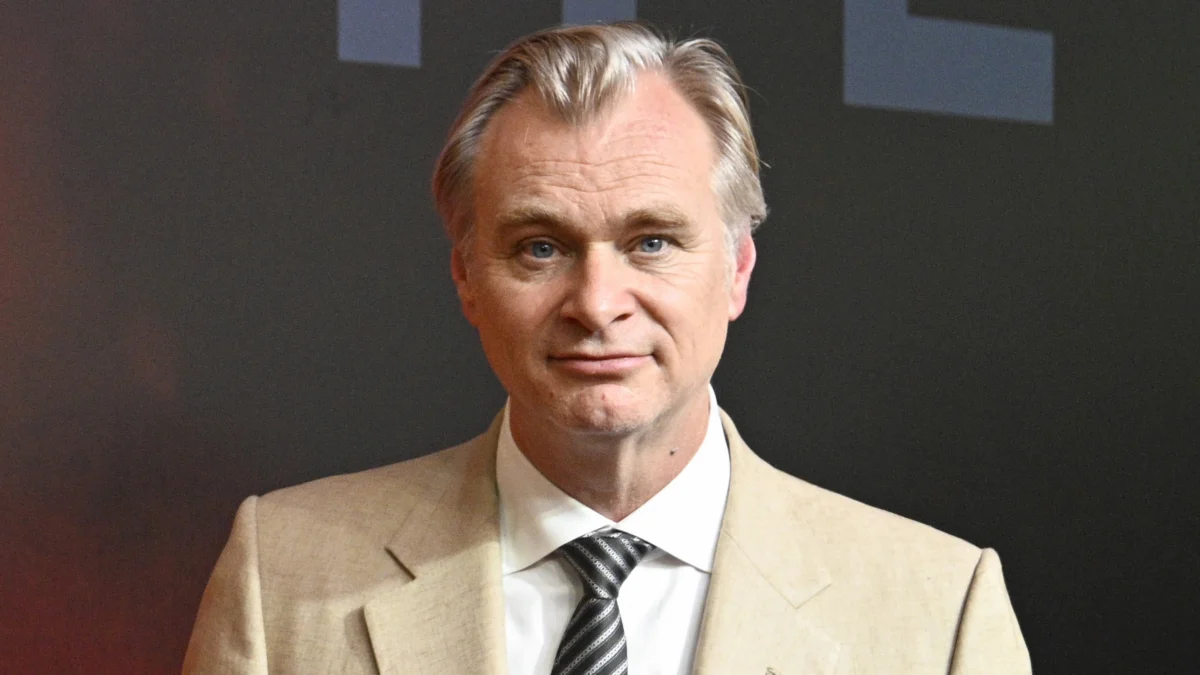
In the rapidly evolving landscape of digital creation, a profound ideological rift has opened between the traditional titans of cinema and the disruptors of Silicon Valley. At the center of this debate stands Christopher Nolan, the two-time Academy Award-winning director of Oppenheimer and The Dark Knight, who has emerged as one of the most articulate skeptics of the generative artificial intelligence revolution.
While tech billionaire Elon Musk attempts to bypass the traditional Hollywood machine by producing an AI-generated adaptation of Homer’s The Odyssey, Nolan has offered a stark, metaphorical warning. To Nolan, AI is not a mystery or a miracle, but a "Trojan horse made of glass"—a technology whose intentions are transparently disruptive, yet which is being ushered into the cultural gates despite widespread public apprehension.
This conflict represents more than a disagreement over filmmaking techniques; it is a battle over the definition of artistic truth, the value of human labor, and the future of historical narrative in an era of algorithmic generation.
Main Facts: The Metaphor of the Glass Horse
In a recent and widely circulated interview on the Hugo Décrypte YouTube channel, Christopher Nolan addressed the meteoric rise of generative AI. His critique was rooted in classical mythology, specifically the Trojan War, but with a modern, cynical twist. Nolan agreed with the comparison of AI to a Trojan horse, but noted a crucial difference: the horse is transparent.
"I think AI is a Trojan horse that everybody knows the Greeks are inside," Nolan remarked. "It’s a transparent horse; it’s made of glass. Everybody can see what’s going on inside of there."
Nolan’s point is that the "gift" of AI—the promise of efficiency, cost-reduction, and infinite content—comes with clearly visible consequences. Unlike the original Trojan horse, which relied on deception, the AI "horse" is being pushed forward while its potential for displacement and the "slop" of its output are in plain view.
The director’s comments come at a time when Elon Musk’s X (formerly Twitter) is aggressively promoting its "Grok Imagine" tool. Musk has publicly challenged Nolan’s upcoming live-action adaptation of The Odyssey, claiming that his AI tool will produce a version of the epic that is "historically accurate and true to the art of Homer" by the end of 2024. This sets the stage for a unique cultural experiment: a human-led, big-budget historical epic versus an AI-generated vision of the same foundational text.
Chronology: From Casting Controversies to Technological Tensions
The friction between Nolan and the tech-utopian wing of the industry has been building for several months, centered largely on the production of The Odyssey.
- May 2026: Reports surfaced regarding the casting of Christopher Nolan’s The Odyssey. The announcement of a diverse cast, including rumors surrounding Lupita Nyong’o, sparked a "culture war" backlash on social media. Critics, including Elon Musk, argued that the casting choices deviated from "historical accuracy," despite the source material being a mythological poem.
- June 2026: Elon Musk escalated the rhetoric, announcing that his AI platform, Grok, would create its own version of The Odyssey. Musk framed this as a corrective measure against "woke" Hollywood, promising a version that adheres strictly to his interpretation of Homer’s text.
- Early July 2026: Nolan officially dismissed the casting backlash as "irrelevant," emphasizing that the power of the epic lies in its universal themes and cinematic interpretation rather than rigid, often misguided notions of historical purity.
- Late July 2026: During his interview with Hugo Décrypte, Nolan expanded his critique beyond his own film, praising Gen Z for their "healthy skepticism" and their rejection of "AI slop."
- Present: As the U.S. government begins to formalize AI regulations, the film industry finds itself at a crossroads, with major unions like SAG-AFTRA weighing in on the political frameworks that will govern the use of digital likenesses and generated content.
Supporting Data: The Rise of "AI Slop" and Gen Z Skepticism
Nolan’s praise for Gen Z’s "very healthy skepticism" is backed by emerging cultural trends. The term "AI slop" has gained significant traction among younger internet users to describe the influx of low-quality, uncurated, and often uncanny AI-generated images and videos flooding social media feeds.
Nolan noted that while technology often advances through a period of blind public fascination, AI has met a wall of immediate resistance. "I’ve never seen a technology advancing so rapidly, so completely rejected by the public," Nolan explained. "The reaction to AI videos online and people my children’s age immediately calling it ‘AI slop’… is a very healthy skepticism."
This skepticism is rooted in several factors:
- The Uncanny Valley: AI-generated video often suffers from temporal instability and "hallucinations" (e.g., extra limbs, melting backgrounds) that trigger a visceral rejection in viewers.
- Economic Anxiety: Younger generations are acutely aware that AI is being positioned as a tool to replace entry-level creative jobs, from graphic design to junior copywriting.
- Data Saturation: As Nolan pointed out, AI has already "taken over Wall Street," where algorithmic trading dominates. The public’s wariness stems from seeing how automated systems can prioritize efficiency over human stability or artistic nuance.
The director argued that "blind faith" in technology is dangerous. Instead, he suggested that the best results come when the motives of those providing the technology are viewed with the same scrutiny as the technology itself.
Official Responses: Regulation and Industry Stance
The debate has moved beyond the realm of artistic philosophy and into the halls of government and union headquarters. The use of AI was a central pillar of the 2023 Hollywood strikes, and the fallout continues to shape policy in 2024 and beyond.
SAG-AFTRA and the Trump Administration
In a surprising move, SAG-AFTRA recently endorsed the Trump administration’s AI policy framework. This framework seeks to balance innovation with protection, calling for:
- Parental Controls: Protecting minors from AI-generated explicit content or deepfakes.
- Intellectual Property Rights: Ensuring that actors and creators are compensated when their likeness or work is used to train AI models.
- First Amendment Protections: Balancing the right to create with the right to one’s own identity.
- Workforce Development: Preparing the labor force for a transition where AI acts as a tool rather than a replacement.
Executive Orders and Oversight
In June 2026, President Trump signed an executive order establishing a voluntary framework for AI safety. Under this order, major AI companies agree to provide the government with a 30-day review period for new models before they are released to the public. This "red-teaming" process is designed to identify potential risks to national security or public safety. However, critics argue that "voluntary" frameworks lack the teeth necessary to rein in companies like Musk’s xAI or OpenAI, which are locked in a high-stakes arms race for dominance.
Implications: The Future of the Historical Epic
The clash between Nolan and Musk over The Odyssey serves as a microcosm for the future of storytelling.
Musk’s assertion that AI can produce a "historically accurate" version of a myth highlights a fundamental misunderstanding of art. History and myth are interpreted through the human lens; Nolan’s career has been defined by his insistence on practical effects, celluloid film, and the subjective human experience of time and memory. For Nolan, the "slop" of AI is not just a technical failure, but a failure of intent.
If Musk’s Grok-generated Odyssey succeeds, it could signal a shift toward "on-demand" cinema, where audiences generate their own versions of classic stories to fit their personal biases. If it fails—or is dismissed as "AI slop" by the very audience it seeks to capture—it will validate Nolan’s belief that the public values the "glass horse" for what it is: a hollow shell.
The "skepticism" Nolan praises in the youth may be the only thing standing between a future of high-art cinema and a digital landscape cluttered with algorithmically perfect, yet soulless, reconstructions of our past. As Nolan concluded, viewing the motives of tech providers with suspicion is the only way to ensure that technology serves humanity, rather than the other way around.
In the coming months, as Nolan’s cameras roll and Musk’s servers hum, the world will witness which version of the "Odyssey" resonates: the one crafted by a human hand, or the one assembled by a machine in a glass horse.