As the 2026 election cycle reaches its fever pitch, the American public is once again being bombarded by a deluge of survey data. Headlines scream of narrow leads, shifting demographics, and potential landslides. Yet, for many observers, these numbers feel increasingly untethered from reality. The reflexive reaction—a common one in recent decades—is to declare the death of polling. But to dismiss the entire industry is to misunderstand the fundamental evolution of data collection in the digital age. The truth is more nuanced: polling is not dying, but it is undergoing a profound and often painful transformation.
A convergence of systemic issues, technological disruption, and an increasingly complex electoral landscape has created a "perfect storm" for pollsters. Understanding why these metrics are struggling requires us to look beyond the top-line numbers and into the machinery of modern political science.
The Core Problem: Measuring Attitudes vs. Predicting Behavior
At the heart of the confusion lies a categorical error in how the public perceives surveys. Polling was designed to measure sentiment—what people believe, how they feel about the economy, or where they stand on specific policies. In this arena, rigorous methodology still yields highly reliable insights.
However, the public has increasingly demanded that polls serve as a predictive tool for voter turnout. This is where the discipline hits a structural ceiling. Predicting who will show up to vote is fundamentally different from measuring what people think. Voters are notoriously poor at predicting their own future actions; they often report their aspirations (who they want to vote for or their intent to show up) rather than their likely behavior.
This challenge is significantly magnified in midterm and primary election cycles. Unlike presidential elections, which benefit from massive national attention and high mobilization, midterms often involve lower turnout, localized political dynamics, and low-information environments. When the electorate is smaller and more specific, the margin for error in modeling who will actually cast a ballot becomes razor-thin, and the traditional tools of the trade are often insufficient to bridge that gap.
A Decade of Decay: The Rise of Opt-In and the Erosion of Quality
The polling industry has seen a massive proliferation of new entrants over the last ten years, driven by the emergence of low-cost, online "opt-in" polling. While traditional, high-quality probability-based polling—which selects respondents randomly from the entire population—has become prohibitively expensive, opt-in surveys have flooded the market.
The Transparency Gap
The danger lies in the lack of industry standards for these newer, cheaper models. Some opt-in firms have developed sophisticated, proprietary modeling techniques that yield decent results. The problem is that these methodologies are frequently opaque. When a polling organization refuses to disclose how it reached its conclusions, the consumer is left with no way to verify the validity of the data.
In many states and local jurisdictions, high-quality, transparent polling has essentially vanished, replaced by a vacuum filled by firms that may have a "dog in the fight." This makes it increasingly difficult for the average voter, or even the professional journalist, to distinguish between a rigorous study and a marketing exercise designed to influence public opinion rather than measure it.
The New Frontier: AI, Bots, and Synthetic Surveys
If the structural issues of the last decade weren’t enough, 2026 has introduced a suite of "wild card" threats that are fundamentally altering the polling landscape.
1. The Threat of "Bogus" Respondents
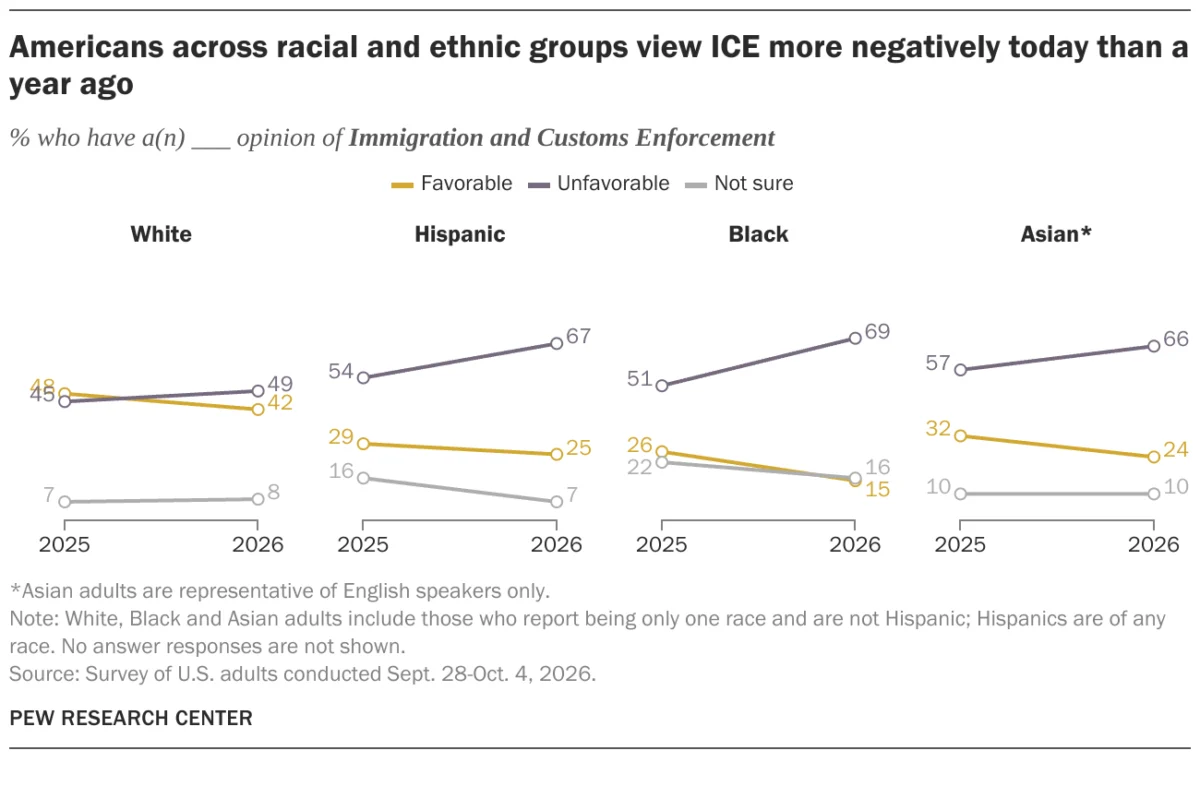
Perhaps the most alarming development is the infiltration of automated fraud into online surveys. Research from organizations like the Pew Research Center has documented a surge in "bogus respondents"—individuals, or more often, AI-enabled bot farms, designed to manipulate data. These actors are becoming increasingly sophisticated, making them difficult to detect. This phenomenon does not hit all demographics equally; it has been shown to disproportionately skew estimates regarding Hispanic adults and younger voters, potentially rendering data about these critical, and often decisive, voting blocs unreliable.
2. The Rise of "Synthetic" Polling
We are now seeing the emergence of "synthetic surveys." These are not surveys in any traditional sense; they do not involve interviewing humans. Instead, these models use Artificial Intelligence to simulate what a population would say based on existing datasets. While AI can process vast amounts of information, it is not a substitute for human intuition, changing social dynamics, or the complex, irrational nature of individual voter behavior. To rely on synthetic data is to mistake a simulation for reality.
3. Fabricated Data
Beyond AI models, there have been documented cases of entirely fabricated polls being disseminated by partisan actors. In an era where news travels instantly across social media, a fake poll can set a narrative for days before it is debunked. This environment of "information warfare" makes the average citizen’s job of parsing truth from fiction nearly impossible.
The 2026 Electoral Context: A Landscape in Flux
Beyond the technical failures of polling, the electoral environment itself is uniquely hostile to traditional predictive modeling this year.
- Shifting Mechanics: Voting rules—including mail-in ballot deadlines, drop-box availability, and ID requirements—have changed significantly across various jurisdictions.
- Redistricting and Turnover: Widespread midcycle redistricting has left many voters confused about who is on their ballot. Furthermore, the 2026 cycle has seen the lowest number of incumbents on the ballot since 1992, creating a landscape with fewer known variables and more volatile outcomes.
- The Polarization of New Issues: Issues like AI regulation and the construction of massive data centers have entered the national dialogue. Unlike taxes or healthcare, these issues have not yet fully crystallized along partisan lines. Their electoral impact is hyper-local, depending on whether a voter lives near a data center or works in an industry affected by automation. Standard national polls are simply too blunt an instrument to capture these nuances.
Implications: How to Consume Polling Responsibly
Given this landscape of uncertainty, how should the public interact with poll data? The goal should be to shift from passive consumption to active, critical evaluation.
Smart Questions for the Informed Citizen
When presented with a new polling headline, ask the following:
- Who conducted the poll? Does this organization have a long-standing, reputable track record, or are they a fly-by-night operation?
- Is the methodology transparent? If a firm refuses to share their question wording or how they weighted their sample, treat the results with extreme skepticism.
- Is the poll surveying humans? Does the organization have robust protections against bot farms and AI-generated responses?
- What is the context? Is this an outlier, or does it align with the broader consensus of reputable, high-quality polling?
The Value of Polling
Despite these challenges, we must avoid "throwing the baby out with the bathwater." Polling remains the best tool we have to understand the mood of the country, the issues that keep people up at night, and the factors that divide or unite us. If we abandon the attempt to measure public opinion, we cede the narrative entirely to politicians and partisan organizations who will inevitably claim to speak for the public without any data to back those claims up.
The 2026 cycle is a stark reminder that data is not an oracle. It is a snapshot, and in a year as turbulent as this one, even the clearest photographs can be blurred by the motion of the world around us. We must demand higher standards of transparency from the industry, but we must also temper our expectations of what the numbers can provide. Polling is a guide, not a prophecy; in an era of bots, AI, and political volatility, it is the responsibility of the citizen to treat it as such.