
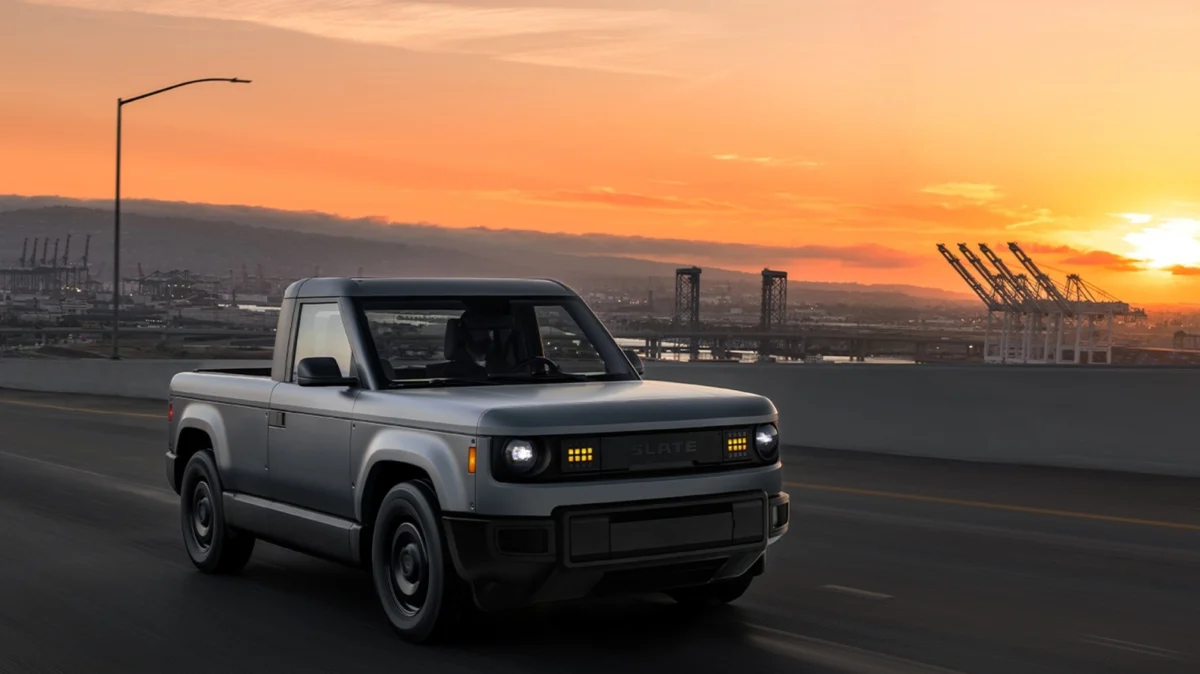
In an automotive market where the average new vehicle price has ballooned past $50,000, the electric vehicle (EV) transition has increasingly felt like a luxury pursuit. While established legacy automakers and high-end tech giants chase longer ranges and increasingly complex digital cockpits, a Michigan-based startup, Slate Auto, is charting a radically different course. Their proposition is simple, perhaps even provocative: strip away the excess, focus on utility, and slash the price tag.
The result is the "Blank Slate," a modular, US-made electric truck and SUV platform that starts at a base price of just $24,950. By eschewing creature comforts like automatic windows and integrated luxury sound systems in favor of a DIY-centric, customizable architecture, Slate Auto is betting that the biggest barrier to widespread EV adoption is not charging anxiety, but sticker shock.
Main Facts: The "Blank Slate" Philosophy
The Blank Slate is designed as a "barebones" utility vehicle, available in both pickup truck and SUV configurations. Its engineering philosophy is rooted in the concept of "essentialism." By removing unnecessary electronic subsystems that often contribute to both vehicle weight and maintenance costs, Slate has created a platform that prioritizes raw utility.
Under the hood—or rather, beneath the chassis—the vehicle features a 135 kW rear-mounted motor. This powertrain produces 181 horsepower and 195 lb-ft of torque, with a towing capacity of 2,000 pounds. While these figures will not challenge high-performance electric trucks like the Rivian R1T or the Tesla Cybertruck, they are functionally competitive with entry-level internal combustion engine (ICE) workhorses like the 2026 Ford Maverick.
The vehicle’s performance metrics are intentional. With a 0-to-60 mph time of approximately 8 seconds, the Blank Slate is not designed for the racetrack; it is designed for the job site, the grocery run, and the rural commute. The core trade-off, however, is the battery. The vehicle utilizes a 63 kWh battery pack, yielding an estimated range of 205 miles. While this falls short of the 300-to-450-mile benchmarks set by luxury EV manufacturers, Slate argues that this decision is a calculated effort to reduce weight, lower costs, and minimize environmental impact during production.
Chronology: From Concept to Production Line
The rise of Slate Auto represents a rapid pivot in the EV manufacturing space. While the company has kept its internal development timeline relatively lean, the trajectory toward production has been defined by strategic partnerships and a focus on domestic manufacturing.
- Initial Concept Phase: Slate Auto identified a massive gap in the market for a "utilitarian EV" that avoided the bloat of modern tech-heavy vehicles.
- Engineering and Prototyping: The startup focused on a modular chassis design that allows for over 200 optional accessories, effectively allowing owners to build their vehicles based on their specific lifestyle needs.
- Manufacturing Partnership: To maintain its low cost, the company opted for a streamlined assembly process based in Warsaw, Indiana.
- Pre-order Launch: Opening its doors to the public with a $300 reservation fee, the company began allowing prospective buyers to utilize its online "design tool," a digital configurator that serves as both a marketing hook and an educational platform for the modular nature of the truck.
- Imminent Delivery: As of mid-2024, Slate Auto is on track to begin deliveries from its Indiana facility before the end of the year, signaling a transition from startup project to legitimate automotive player.
Supporting Data: Efficiency, Charging, and Real-World Use
A common critique of entry-level EVs is the fear of being "stranded" by lower ranges. However, data from organizations like Consumer Affairs suggests that the average driver in the United States travels only 37 miles per day. For these drivers, a 205-mile range is not a limitation; it is an excess that adds unnecessary weight and cost to the vehicle.
Charging Dynamics
Slate Auto has structured its charging ecosystem to align with modern infrastructure, ensuring that while the range is conservative, the downtime is minimal:
- Level 3 DC Fast Charging: For long-distance needs, the Blank Slate can regain 80 percent of its charge in approximately 30 minutes, keeping it on par with the standard industry expectation for road-tripping.
- Level 2 Charging: Utilizing common 240V outlets—often found in residential garages or workplaces—the vehicle achieves a full charge in just 5 hours.
- Level 1 Charging: For those without specialized infrastructure, a standard wall outlet provides 20 to 50 miles of range overnight, sufficient for the average daily commute.
To address the hurdle of residential installation, Slate has partnered with Treehouse, a home charging firm, to streamline the process of setting up Level 2 chargers for new owners. This partnership is a critical piece of the company’s infrastructure strategy, acknowledging that the biggest barrier to EV ownership is often the "installation friction" at home.
Official Responses and Strategic Rationale
Slate Auto’s leadership has been transparent about the vehicle’s limitations, framing them not as flaws, but as deliberate engineering choices. According to their official documentation, the company is "focused on practical, everyday driving that balances range with affordability, efficiency, and capability."
By reducing the size of the battery pack, the company achieves two objectives: it keeps the price point firmly in the "affordable" category, and it reduces the raw material demand—specifically lithium and cobalt—required for each vehicle. This makes the Blank Slate a more sustainable option from a manufacturing perspective compared to "long-range" EVs that require massive, resource-heavy battery arrays.
The company’s design philosophy extends to the aesthetic. The vehicle features a "kaleidoscope" of vinyl-wrap exterior options, moving away from expensive paint processes and allowing for easy, cost-effective customization and repair. If a panel is damaged, a simple vinyl wrap replacement is significantly cheaper than traditional bodywork, further lowering the total cost of ownership.
Implications for the Automotive Market
The arrival of the Blank Slate could signal a significant shift in the electric vehicle market. For years, the industry has been obsessed with "range anxiety," leading to a technological arms race to build the biggest battery possible. Slate Auto is challenging this narrative, suggesting that if the price is low enough, consumers will be happy to trade 200 miles of range for a vehicle that costs half as much as the current market average.
The "DIY" Demographic
The target market for the Blank Slate is not necessarily the tech enthusiast looking for autonomous driving features and high-definition cabin screens. Instead, it is the small business owner, the rural commuter, and the DIY hobbyist. By allowing owners to choose their own accessories—from storage configurations to specialized utility racks—Slate is shifting the power dynamic from the manufacturer to the user.
Impact on Legacy Manufacturers
If the Blank Slate succeeds in capturing a significant market share, it could force legacy manufacturers to reconsider their strategy. Currently, major automakers are struggling to reach profitability with their entry-level EVs. If Slate can prove that a profitable, $25,000 EV is possible through extreme modularity and the removal of "luxury" electronics, it may set a new standard for what a budget-conscious vehicle should look like.
The Sustainability Paradox
While the lower range might seem less "green" in terms of raw capability, the environmental footprint of producing a smaller battery is substantially lower. As the industry grapples with the environmental cost of mining for battery minerals, Slate’s model of "right-sizing" the battery to the user’s actual needs may emerge as a more sustainable path forward than the current trend of "bigger is better."
Conclusion: A New Horizon or a Niche Experiment?
Whether the Blank Slate becomes a mainstream staple or remains a niche choice for the pragmatist depends on the execution of its production ramp-up. The automotive industry is littered with startups that promised affordability and failed to deliver. However, by keeping the design simple and relying on a modular, accessory-heavy ecosystem, Slate Auto has minimized the points of failure that typically plague new vehicle launches.
For the potential buyer, the decision comes down to a fundamental question: Do you value the ability to drive 400 miles on a single charge with heated seats and a touchscreen, or do you value the ability to own a brand-new, US-made, electric utility vehicle for under $25,000?
As the company prepares to ship its first units from Indiana, the Blank Slate stands as a litmus test for the American consumer. If the market embraces this minimalist ethos, we may be witnessing the beginning of a second, more accessible wave of the EV revolution—one where the goal isn’t just to replace the engine, but to redefine the very purpose of the automobile.