For over a decade, marketing budgets have aggressively marched toward digital channels. As e-commerce boomed, connected TV (CTV) evolved, and social media algorithms grew increasingly sophisticated, brands poured billions into chasing consumers through screens in their living rooms and pockets. Yet, the physical retail store has stubbornly refused to fade into irrelevance. In fact, it remains one of the most powerful, influential environments on the path to purchase.
According to Grocery TV’s 2026 In-Store Shopper Perception Report, an astounding 95% of grocery shoppers make at least half of their purchase decisions while physically inside the store. Younger demographics—often presumed to live entirely online—frequent physical retail with surprising regularity: 55% of Gen Z consumers visit a grocery store at least once a week.
Despite this undeniable foot traffic, marketers have historically treated the physical storefront as little more than a passive retail backdrop. Digital media buyers, accustomed to unified inventory, real-time optimization, and seamless closed-loop attribution, traditionally avoided the physical store. They viewed it as a fragmented, retailer-by-retailer negotiation maze devoid of standardized metrics.
That dynamic is undergoing a rapid evolution. Modern in-store media can now be bought through single programmatic platforms, targeted with the precision of digital campaigns, and measured across the entire marketing funnel. As infrastructure matures, industry investments are following suit. Projections from eMarketer estimate that U.S. in-store retail media spending will cross the billion-dollar milestone, reaching $1.15 billion by 2029.
The Chronology of In-Store Media: From Static Signage to Programmatic Power
To understand how in-store retail media arrived at this inflection point, it helps to examine its operational evolution over the last several years:
The Era of Static Displays (Pre-2020): Physical retail advertising was dominated by static cardboard end-caps, shelf-talkers, and print circulars. While ubiquitous, these assets suffered from long lead times, high production costs, and zero real-time flexibility. Measurement was largely restricted to retrospective, multi-week sales bumps calculated long after campaigns ended.
The Digitization Phase (2020–2023): As digital out-of-home (DOOH) screens began popping up above grocery aisles and checkout lanes, retailers realized the monetization potential of their physical real estate. However, buying inventory remained siloed. Advertisers had to negotiate directly with individual supermarket chains, creating fragmented planning cycles.
The Convergence and Platform Era (2024–Present): Driven by software integration and unified networks like Grocery TV, in-store inventory became accessible via centralized platforms. Marketers could finally apply programmatic targeting parameters—such as ZIP codes, demographics, and behavioral data—to physical screens, marrying the immediacy of brick-and-mortar retail with digital-grade efficiency.
The Multi-Touch Horizon (2026 and Beyond): With billions projected in annual spend by the end of the decade, the industry is transitioning into full-funnel activation. Advertisers are no longer just looking for immediate product sales; they are tracking brand lift, cross-category halo effects, and post-purchase loyalty metrics initiated by physical screen exposure.
Supporting Data: What the Metrics Reveal
Data-driven insights from recent studies by Grocery TV, the IAB, and eMarketer illuminate why brands are aggressively reallocating budgets toward the physical shopping environment:
95%: The percentage of grocery shoppers who make at least half of their purchasing decisions inside the store, according to the 2026 In-Store Shopper Perception Report.
55%: The share of Gen Z consumers who shop in physical grocery stores at least once a week, dismantling the myth that younger cohorts are exclusively digital shoppers.
32% & 78%: According to industry research, nearly a third of shoppers (32%) enter a grocery store without a definitive shopping list, and 78% make at least one impulse purchase during their trip.
62%: The percentage of shoppers who report purchasing an item directly after seeing it featured on an in-store digital screen.
51%: Positive customer experience ratings for digital display formats in 2026—representing a significant 10-percentage-point increase from 41% in 2023.
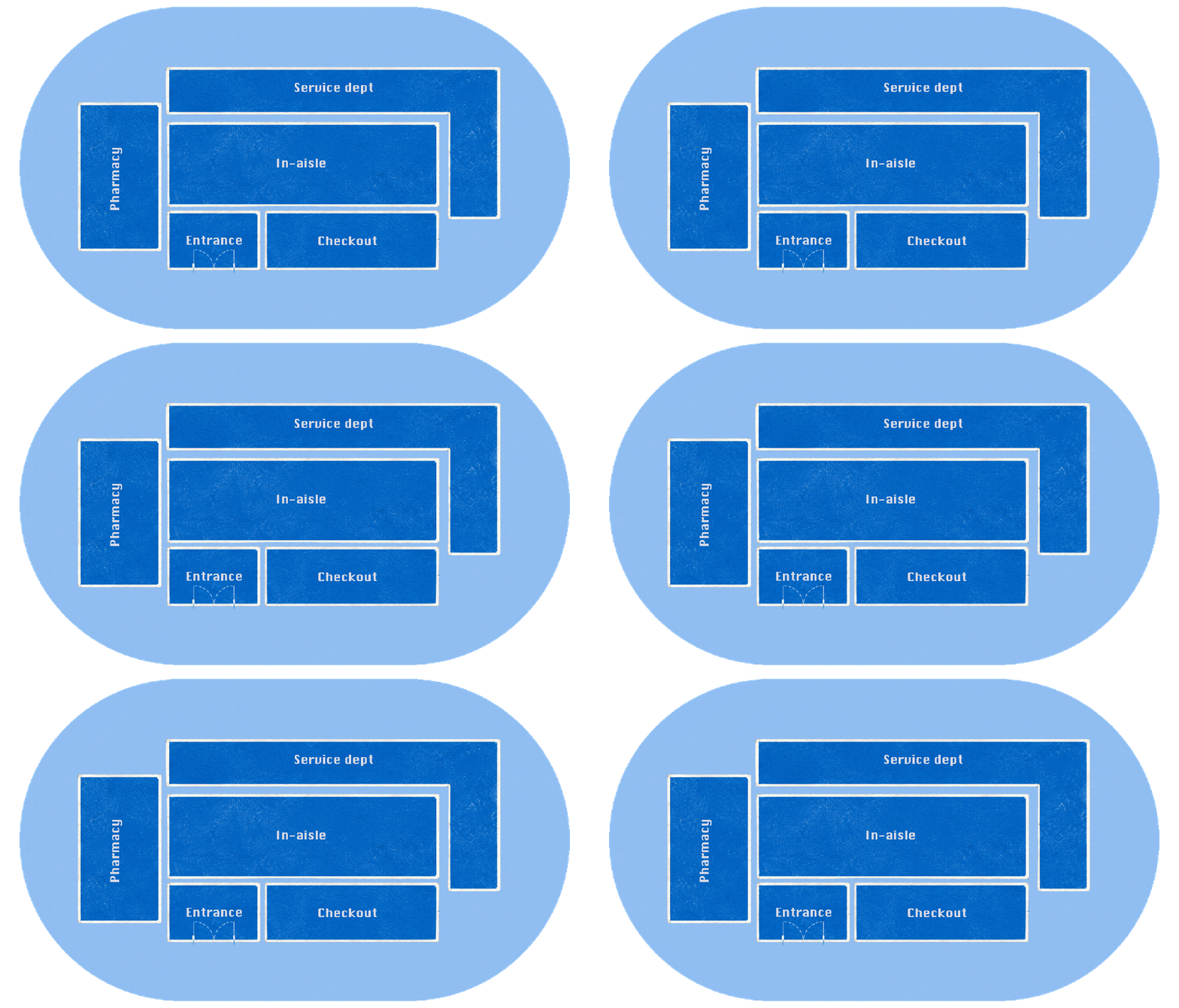
84%: Consumer favorability ratings for screens placed in high-dwell areas such as pharmacies, delis, and checkout lanes, where shoppers naturally pause.
49%: The average incremental reach delivered by in-store media beyond existing digital and CTV media plans, as uncovered in a joint study by Grocery TV and MFour.
Official Responses and Industry Perspectives
Industry leaders point out that bridging the gap between digital precision and physical proximity requires a fundamental shift in how brands view the grocery store environment.
"We’re seeing advertisers lean in, testing and learning what works now that the infrastructure and measurement capabilities are in place," said Marlow Nickell, co-founder and CEO of Grocery TV. "There’s a lot of opportunity ahead as more retailers launch their in-store networks."
Nickell emphasizes that proximity to the purchase decision is what separates in-store media from standard digital out-of-home (DOOH) channels.
"With digital out-of-home, it’s often more on-the-go media, like a billboard you’re driving past," Nickell explained. "In-store retail media is much closer to the point of purchase, where shoppers are making decisions and considering different products."
Agencies are also grappling with how to properly categorize and fund this emerging medium. Chelsea Monaco, SVP of Commerce Media at Digitas North America, notes that organizational structures often dictate where in-store budgets originate.
"In-store retail media today can be categorized multiple ways, and it varies by the organization," Monaco said. "The intersection of digital and in-store blurs in the retail media space, and the investment sources are so unique. I’ve typically seen it most categorized as shopper marketing, but investment source and where it sits in the organization depict the true categorization."
Monaco cautions brands against viewing in-store media in a silo, stressing the importance of the overarching consumer journey.
"As an industry, we often focus on the capability or the creative, but we forget about the overall experience," Monaco added. "The biggest miss that I’ve seen is not connecting the entire shopper journey or that experience in how that shopper is going to engage with your brand in-store."
Strategic Implications for Marketers
As in-store retail media matures into a sophisticated, full-funnel channel, its emergence carries profound implications for non-endemic brands, CPG manufacturers, and media planners alike.
1. Rethinking Budget Allocations and Incrementality
The traditional media mix has long over-indexed on digital formats that suffer from ad fatigue, banner blindness, and ad blockers. By integrating physical screens into media plans, brands gain an average of 49% incremental reach. Savvy media planners are learning to trim underperforming digital display budgets and reallocate those dollars into high-dwell retail environments where ad blocking is physically impossible.
2. Tailoring Creative for Contextual Relevance
Context is king in the physical aisle. Studies show that shoppers are 2.5 times more considerate of a brand when an ad is contextually relevant to its environment. Whether it is a financial services app running ads at checkout—when consumers are physically handling their wallets—or a snack brand leveraging game-day messaging near the deli counter, creative must speak directly to the mindset of the shopper at that exact location and time of day.
3. Expanding Measurement Beyond Direct Sales
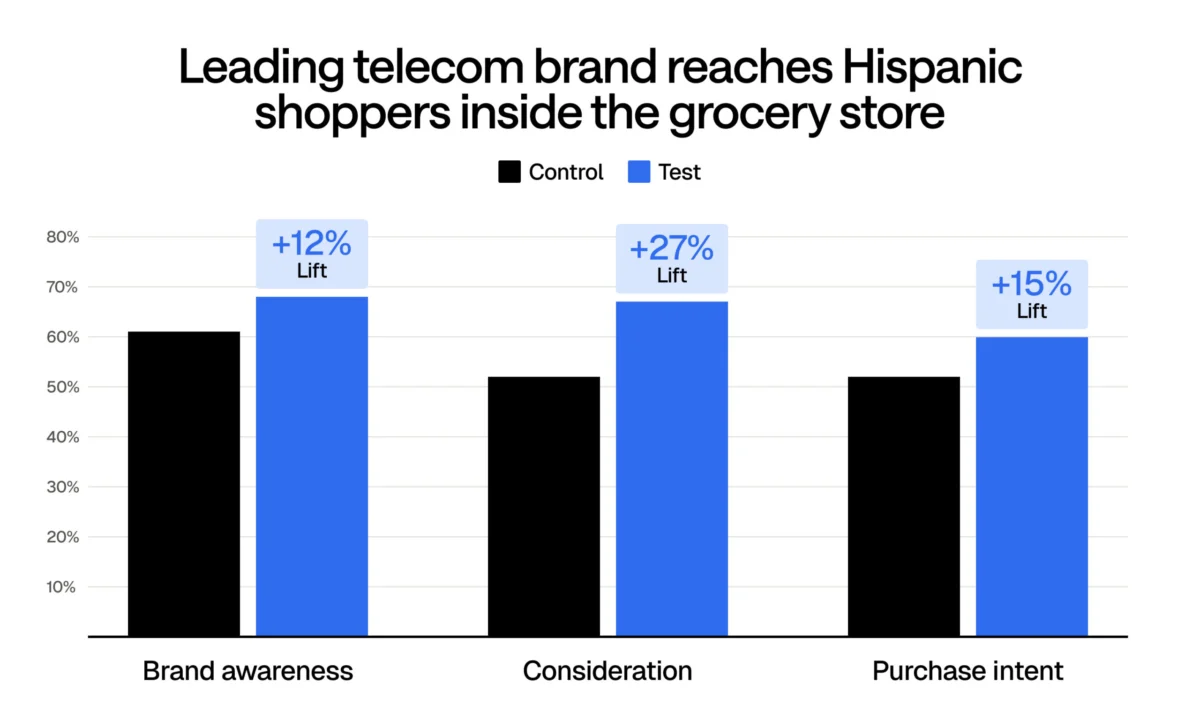
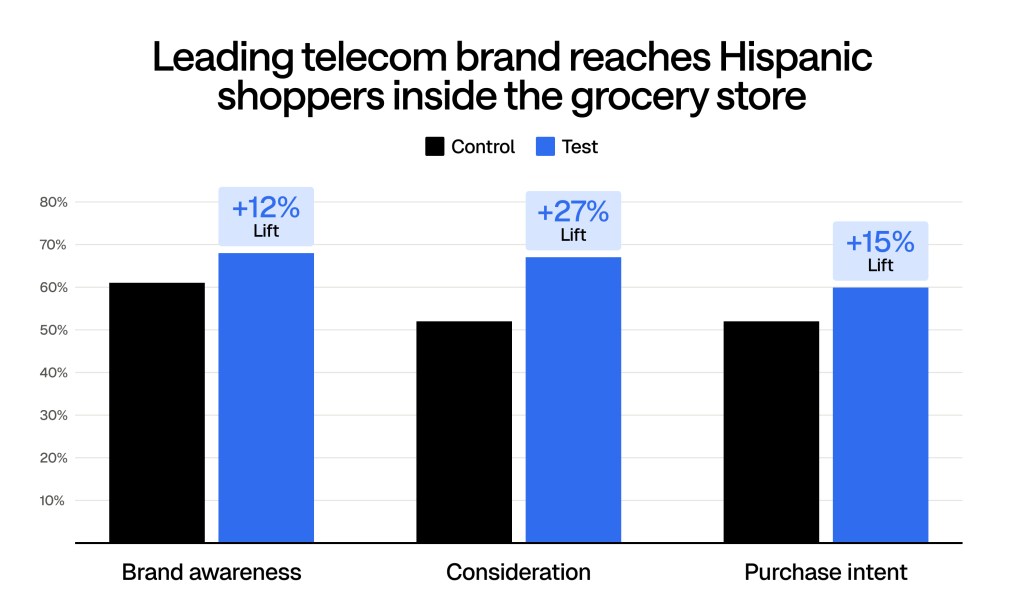
While closed-loop sales lift remains a gold standard (demonstrated by case studies showing a $7.94 return on ad spend for brands like Frito-Lay), forward-thinking marketers are tracking broader funnel metrics. Post-purchase outcomes, customer retention, brand awareness, and cross-category halo effects (such as a 12% lift across complementary product portfolios) prove that in-store screens do more than just move immediate inventory—they build long-term brand equity.
4. Gaining an Early-Adopter Advantage
In-store retail media is scaling rapidly, but it is not yet fully saturated. Brands that invest in testing, learning, and refining their in-store creative strategies today will secure a distinct competitive advantage. As Marlow Nickell notes, building internal alignment and mastering in-store measurement takes time. For modern marketers looking to break through the noise, the physical aisle represents the final frontier of high-impact advertising—and the best time to enter is right now.