In an era where the digital landscape serves as both a town square and a marketplace, social media feeds have become ground zero for health and advice. While traditional healthcare providers—such as doctors, nurses, and registered clinicians—remain the most trusted and primary source of medical guidance for the public, millions of Americans increasingly turn to online personalities for daily wellness tips.
A comprehensive new data analysis released by the Pew Research Center sheds light on the commercial engine driving this phenomenon. The findings reveal that product and service promotions are deeply embedded in the health and wellness content ecosystem. More than one-third of all posts from prominent health and wellness influencers actively promote a commercial offering. Simultaneously, the study highlights how powerfully these digital endorsements sway public behavior, altering everything from daily diet and fitness routines to medical consultations.
Main Facts: The Scale of Commercial Wellness
The Pew Research Center’s multi-part investigation provides a rare, data-driven window into the monetization strategies of online wellness creators. Analyzing over half a million posts published by more than 6,000 health and wellness influencers across Instagram, TikTok, and YouTube between February and April 2026, researchers mapped out the sheer volume of commercial messaging consumers encounter.
Key takeaways from the report include:
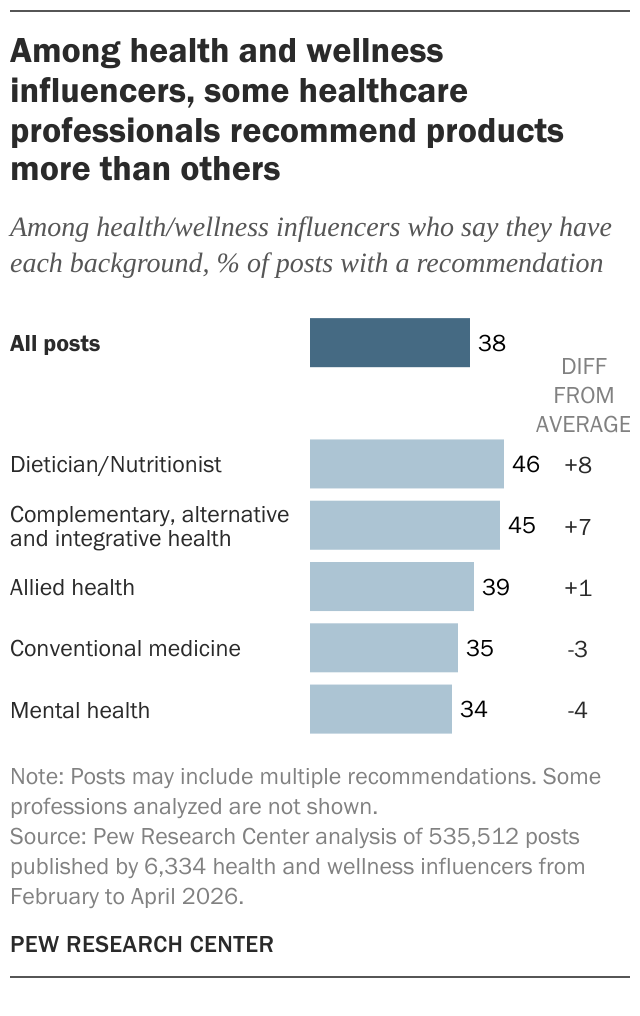
- Pervasive Promotion: Approximately 38% of all posts published by health and wellness influencers include a recommendation for a product, service, or digital resource.
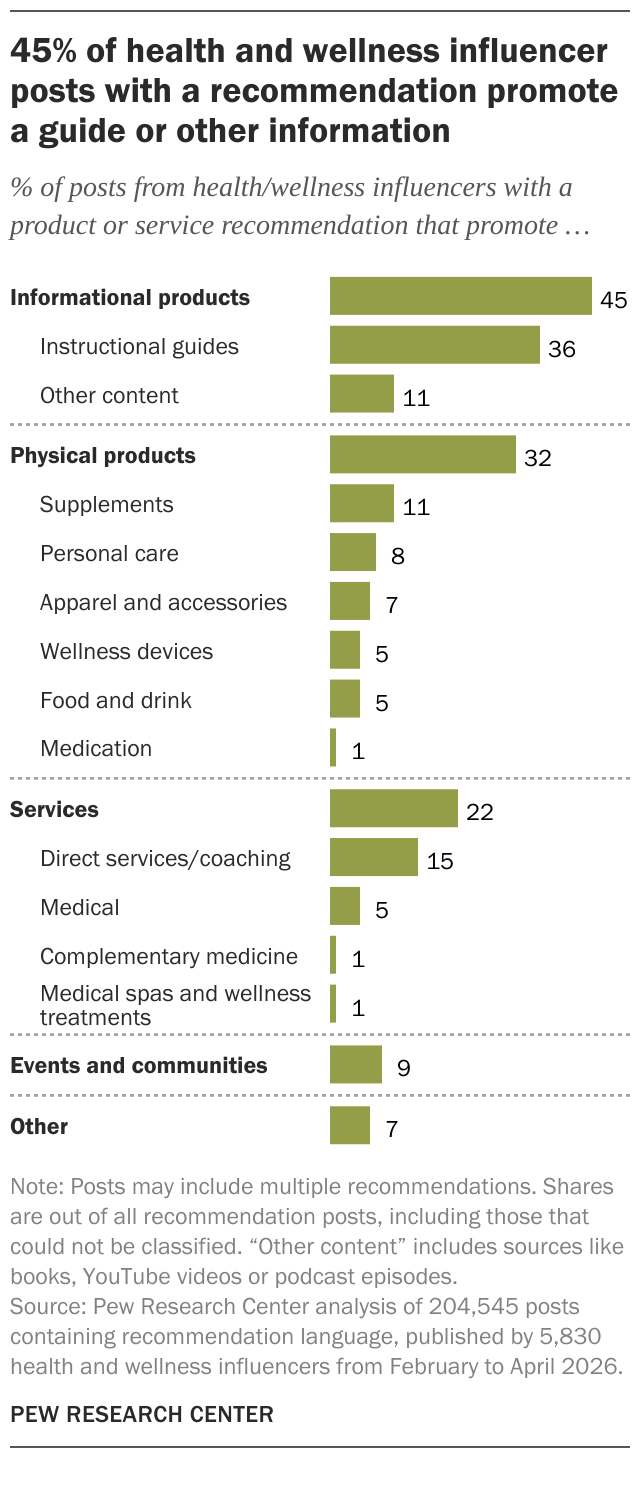
- The Dominance of Information: The single most common category of promotion is informational resources. Instructional guides, fitness apps, workout blueprints, and recipes account for 36% of all posts containing promotional material.
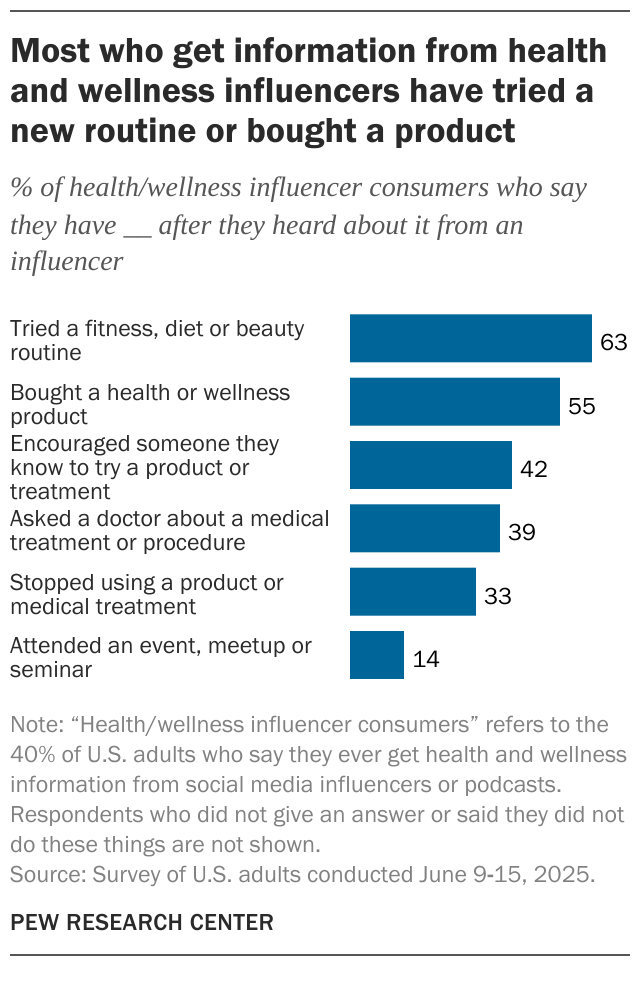
- Profound Audience Impact: Among the 40% of U.S. adults who consume health and wellness influencer content, the public response is substantial. Roughly 63% report trying a new fitness, diet, or beauty routine based on an influencer’s recommendation, while 55% have purchased an actual physical product.
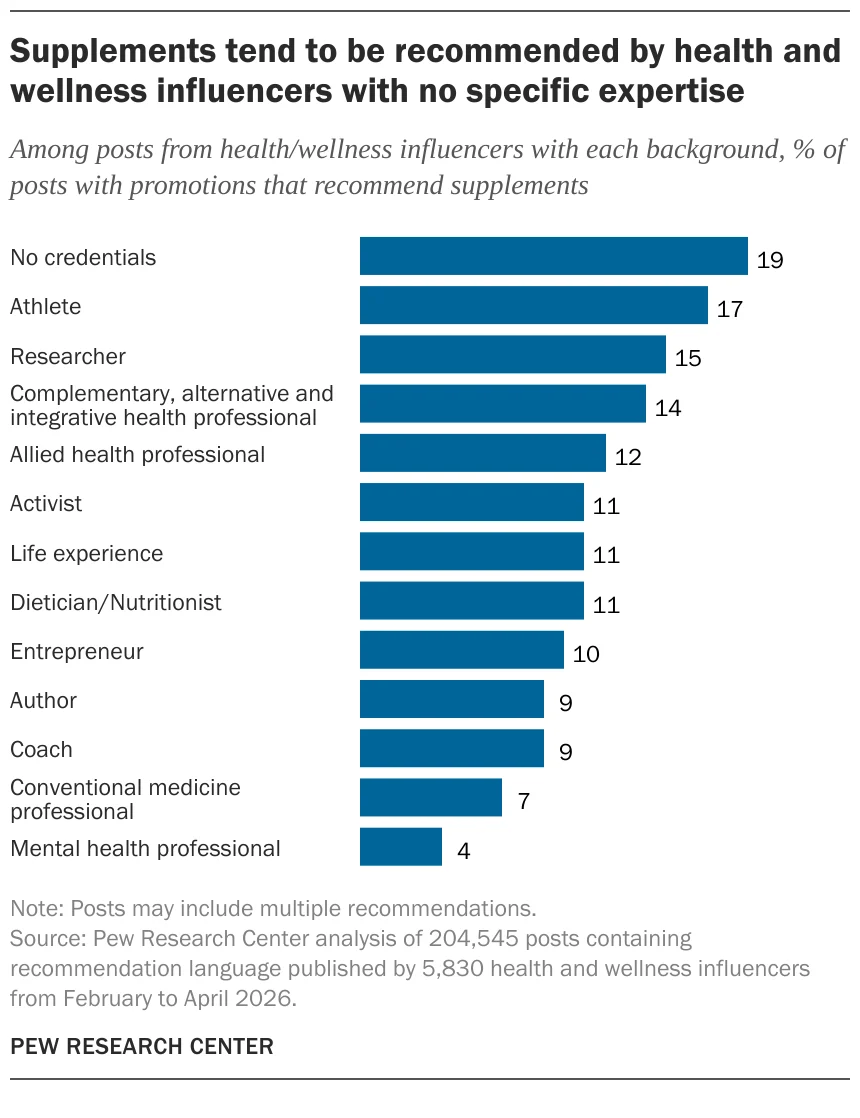
- The Power of Uncredentialed Voices: Supplements—frequently scrutinized by traditional medical experts—are most heavily pushed by influencers who list no specific professional credentials or who identify primarily as athletes, rather than by conventional medicine professionals.
Chronology and Context: Tracing the Rise of the Digital Wellness Economy
To understand how the social media wellness market reached its current scale, it is helpful to look at the timeline of digital health consumption and the sequence of the Pew Research Center’s ongoing investigations:
- Pre-2025 (The Expansion of Digital Health): As social media platforms pivoted toward short-form video and algorithmic feeds, health and wellness content surged. Creators capitalized on pandemic-era anxieties around health, longevity, and self-care, quickly building massive, highly trusting audiences.
- June 2025 (Public Survey Fieldwork): Pew researchers surveyed a nationally representative panel of 5,033 U.S. adults through the American Trends Panel. This survey captured baseline data on how ordinary Americans interact with health influencers, discovering that 40% of U.S. adults regularly look to influencers and podcasts for health information.
- May 2026 (Defining the Influencer Class): Pew published its initial baseline study, categorizing who America’s health and wellness influencers are—ranging from mainstream doctors and nutritionists to lifestyle coaches, entrepreneurs, and individuals sharing purely lived experiences.
- February to April 2026 (Content Capture Window): Researchers collected and analyzed 535,512 multi-format posts (audio, video, and captions) from 6,334 distinct health and wellness influencers to capture real-time monetization behaviors.
- October 2026 (Initial Post-Topic Findings): Pew released preliminary findings mapping out the general thematic landscape of what these influencers post about, setting the stage for deep-dive product analyses.
- November 2026 (Comprehensive Product & Service Release): The release of the definitive data lab analysis detailing exact product categories, promotional frequencies, and audience conversion metrics.
Supporting Data: What Are Influencers Selling, and Who Buys It?
The data reveals sharp distinctions in what gets promoted, who is doing the promoting, and how audiences react.
The Breakdown of Promoted Categories
Out of the more than 204,545 posts that contained explicit recommendation language, offerings were distributed across several primary pillars:
- Informational Products (45% of promotional posts): This includes instructional guides (36%) as well as books, podcast episodes, and YouTube videos (11%).
- Physical Products (32%): Among physical goods, dietary supplements lead the pack (appearing in 11% of promotional posts), followed by personal care and beauty items (8%), apparel and accessories (7%), wellness and tracking devices (5%), food and beverages (5%), and over-the-counter medications (1%).
- Services (22%): Direct coaching and consultation services make up 15% of promotional posts, while traditional medical services, complementary medicine, and medical spas each account for smaller shares.
- Events and Communities (9%): Virtual webinars, retreats, and community memberships round out the commercial landscape.
Hyper-Promoters and Professional Splits
Not all influencers monetize at the same rate. The data shows that a tiny fraction—just 10% of all promoting influencers—are responsible for nearly half (46%) of all promotional content. For this ultra-prolific group, recommendations appear in roughly two-thirds of their total output.
Backgrounds also dictate strategy. Conventional medical professionals (doctors and nurses) and mental health professionals are among the least likely to feature promotions in their content (35% and 34% of their posts, respectively). Conversely, dietitians, nutritionists, and alternative/integrative health practitioners (such as functional medicine providers and chiropractors) are the most prolific promoters, with 46% and 45% of their posts containing commercial recommendations.
Furthermore, when examining supplement recommendations specifically, influencers with no credentials (19%) and athletes (17%) are far more likely to push these products than conventional medicine professionals (7%) or mental health experts (4%).
Demographic Variations in Audience Action
Consumer response varies across demographic lines. Women who consume influencer content are significantly more likely than men to try new routines, purchase recommended products, or pass recommendations along to friends and family. Meanwhile, Black consumers exhibit higher rates of purchasing products or encouraging others to try treatments based on influencer advice compared to White consumers.
Crucially, the influence is not purely additive; it can be subtractive. One-third (33%) of adults who follow these influencers report that they have completely stopped using a product or medical treatment because an influencer spoke critically about it.
Official Responses and Methodology
Maintaining rigorous research standards, the Pew Research Center constructed this multi-method study to provide an objective look at a largely unregulated digital ecosystem.
The analysis utilized advanced Large Language Models (LLMs) to scan and classify audio transcripts, captions, and visual elements across half a million posts to isolate explicit and implicit product recommendations. This was paired with a robust public opinion survey administered via the American Trends Panel to measure real-world behavioral changes among American adults.
While the study successfully captures sponsored content, brand partnerships, affiliate links, and direct sales pitches, researchers note that it likely undercounts the most subtle, undisclosed forms of product placement embedded within lifestyle content.
Implications: Navigating the Intersection of Health and Commerce
The blurring lines between medical education and digital marketing carry profound implications for public health, consumer safety, and health literacy.
1. The Erosion of Evidence-Based Authority
With millions of citizens turning to social media for quick-fix solutions, the high volume of supplement and alternative wellness promotions—often driven by uncredentialed creators—poses potential health risks. When commercial incentives dictate the narrative, consumers may mistake charismatic delivery and aesthetic branding for clinical efficacy.
2. Behavioral Shifts and Clinical Conversations
On a positive note, influencer content often acts as a catalyst for health engagement. The fact that 39% of consumers have asked a doctor about a medical treatment or procedure after seeing it online indicates that social media drives active health curiosity. However, this places a heavy burden on primary care physicians, who must constantly manage and fact-check viral wellness trends during brief clinical appointments.
3. The Need for Digital Health Literacy
As the creator economy continues to mature, public health advocates emphasize the growing urgency for digital literacy programs. Consumers must be equipped to distinguish between evidence-based medical advice and monetized lifestyle marketing, ensuring that wellness remains a tool for genuine health rather than a target for unchecked commercial exploitation.