Main Facts
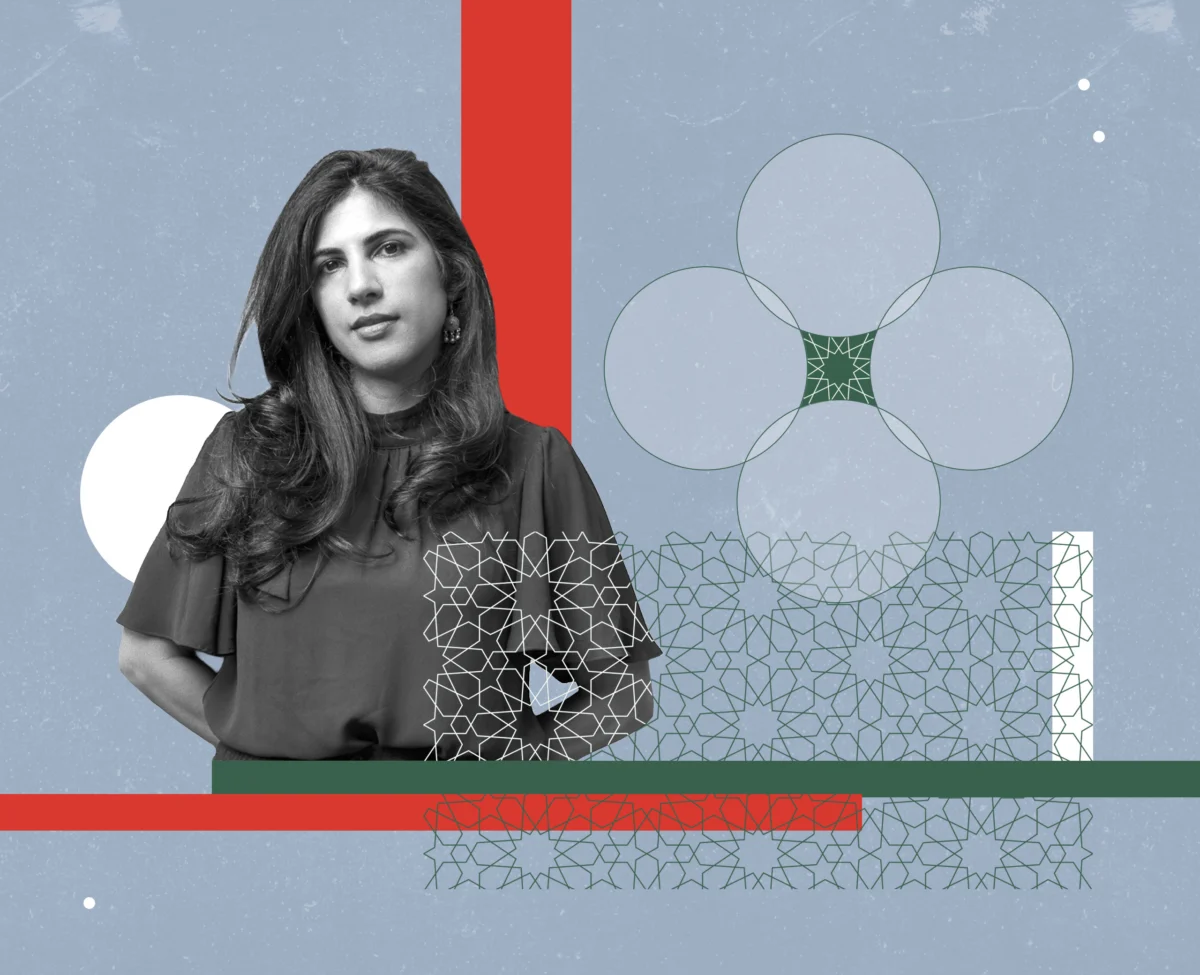
In the devastating aftermath of September 11, 2001, a teenager of Pakistani descent living in Central California was given a chilling piece of advice by her father: “Don’t tell anyone you’re Muslim.” That teenager was Rozina Ali, now an acclaimed journalist and contributing writer for The New York Times Magazine, who won a National Magazine Award for Reporting in 2023. Two decades later, Ali has drawn upon her personal history and extensive investigative career to write Seasons of Fury, published by Crown.
The book offers a searing examination of Islamophobia in American politics, culture, and media, arguing that prejudice against Muslims did not begin with the attacks on the World Trade Center, nor was it a temporary spike born of panic. Instead, Ali demonstrates that Islamophobia is the product of a long, deliberate historical trajectory shaped by government policies, national-security agendas, and—crucially—a compliant press.
Rather than viewing the post-9/11 "War on Terror" as an isolated phenomenon, Ali’s work positions it as a systemic policy decision that many journalists subconsciously treated as an inevitable world order. Through deep-dive portraits of four vastly different American Muslim families, the book unmasks how the machinery of the state and the framing of the media have subjected American Muslims to a perpetual state of suspicion, surveillance, and othering.
Chronology: From Early Orientalism to Modern-Day Surveillance
To fully understand the architecture of modern American Islamophobia, one must look beyond the immediate shock of 2001 and examine the historical timeline of media and political conditioning:
- Pre-9/11 Roots: Long before the towers fell, the federal government heavily monitored Muslim civil rights and pro-Palestine activists. Cultural exports, such as the 1991 Hollywood film Not Without My Daughter, routinely depicted Middle Eastern characters as sinister, reinforcing a monolithic trope of menacing foreigners. Print media similarly stoked these flames, notably through The Atlantic’s early-nineties essay "The Roots of Muslim Rage," featuring a cover illustration of a turbaned man whose eyes reflected the American flag.
- The 1995 Oklahoma City Bombing: When domestic terrorists Timothy McVeigh and Nichols bombed the Alfred P. Murrah Federal Building, early news reports instinctively attributed the atrocity to Middle Eastern Islamic terrorism, highlighting a deep-seated domestic impulse to immediately associate large-scale violence with Muslim perpetrators.
- Post-9/11 Panic: The immediate aftermath of 2001 brought a wave of mass surveillance, detentions, and Islamophobic violence, effectively barring Pakistani-Americans and other Muslim communities from grieving alongside their fellow citizens.
- The Obama and Trump Eras: As successive administrations navigated foreign and domestic security, "Muslim" frequently morphed into a political slur. When Donald Trump assumed office, public discourse often framed his administration as a unique epicenter of Islamophobia, inadvertently practicing historical amnesia by erasing the decades of structural groundwork laid before him.
- Present Day: Contemporary Muslim public figures and politicians—such as Zohran Mamdani and Abdul El-Sayed—continue to face hostile media interrogations that demand they constantly account for global conflicts, terrorism, or unrelated public figures, proving that the presumption of guilt remains deeply entrenched.
Supporting Data and Media Complicity
One of the most uncomfortable truths unearthed in Seasons of Fury is the complicity of the mainstream media. While reporters frequently exposed government overreach and civil rights abuses, they simultaneously adopted national-security terminology, platformed bad-faith experts, and disproportionately focused on violence within Muslim communities.
Statistical research underscores this pervasive bias. A comprehensive examination of American news coverage concerning terrorist attacks between 2006 and 2015 revealed a staggering disparity: attacks committed by Muslims received 357 percent more coverage than attacks committed by non-Muslims.
This hyper-focus has warped the public imagination, cementing terrorism as an inherently "Muslim story" despite the vast majority of domestic violence and terror being perpetrated by non-Muslim actors, such as the white supremacists radicalized by literature like The Turner Diaries.
Furthermore, media representation has historically trapped Muslims in a false binary: they are either depicted as threatening villains or forced into the "model citizen" or "look at this Muslim eating a cookie" genres of journalism. These tropes, while ostensibly meant to humanize, still demand that the subject perform their humanity and Americanness for an imagined non-Muslim audience, subtly reinforcing the premise that a Muslim’s baseline is dangerous until proven otherwise.
Official Responses and Institutional Reactions
Political institutions and media organizations have largely maintained the status quo, reacting defensively when accused of systemic bias. Politicians targeted by identity-based questioning—such as democratic nominees and progressive local leaders—are frequently subjected to rigorous, asymmetrical vetting regarding their faith, foreign policy stances, and historical controversies.
Recent media output highlights this ongoing trend. Outlets like the Wall Street Journal and The New York Post have faced severe criticism for opinion pieces and reporting that deploy inflammatory imagery—such as digitally altering photos to depict Muslim politicians wearing militant headbands—effectively weaponizing their religious background for political damage. Meanwhile, standard profiles in legacy outlets like CBS continue to frame Muslim political candidates through the tired, reductive lens of 9/11 anxieties and antiquated security concerns.
Institutions have been slow to reckon with how their everyday newsroom decisions—ranging from photography choices and editorial framing to story selection—perpetuate the myth that Islam is fundamentally incompatible with Western values.
Implications
The long-term implications of this systemic Islamophobia extend far beyond policy debates; they fundamentally alter the lived reality of millions of Americans. As Rozina Ali notes, the true legacy of the War on Terror is not simply mass arrests and surveillance, but an enduring, institutionalized racism that insists Islam is too foreign to tolerate.
When journalists consistently fail to interrogate the underpinnings of national-security narratives, they perpetuate an environment where Muslim Americans are denied the right to exist simply as individuals. Instead, they are forced into narrow archetypes: either perpetual suspects who must constantly apologize and condemn violence, or pristine, flawless exemplars who dare not show anger or frustration.
Moving forward, the imperative for modern journalism is clear. It must abandon the lazy shorthand of the "clash of civilizations" narrative. It must stop treating Muslims as a monolith or a perpetual security threat, and instead allow them the basic dignity of complexity, individuality, and unvarnished humanity. Only by confronting its own historical complicity can the press begin to dismantle the architecture of a prejudice that has poisoned American public life for generations.