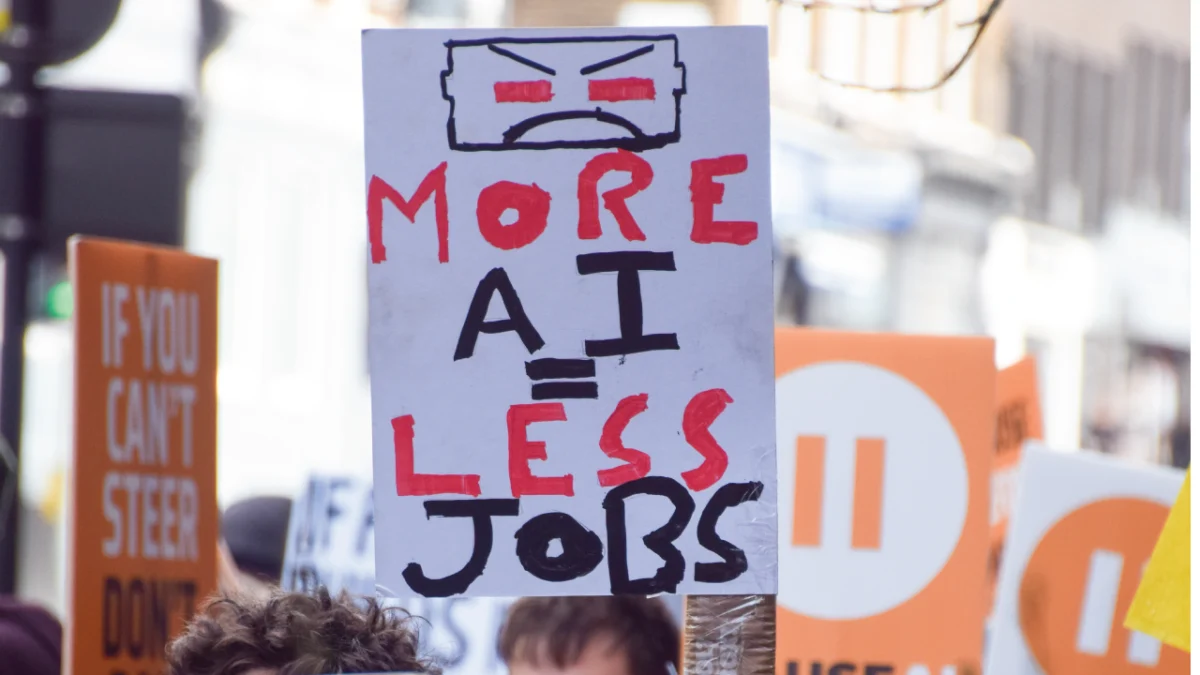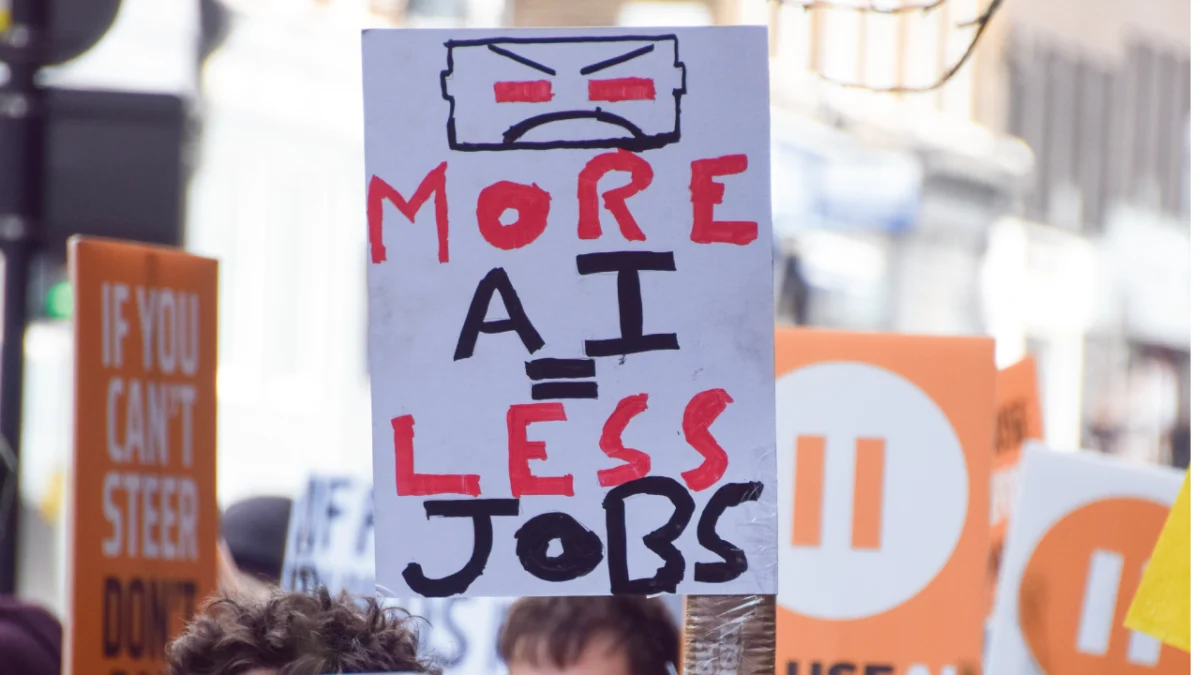
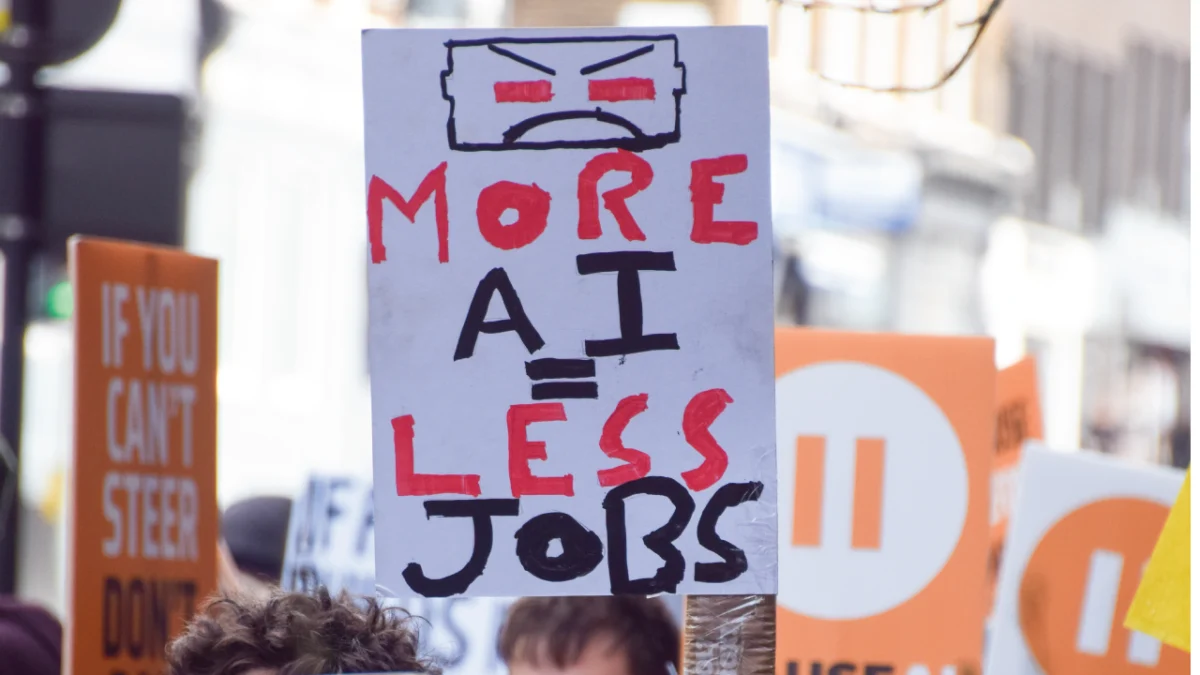
As artificial intelligence rapidly reshapes industries, education systems, and daily routines, a critical demographic is watching the evolution unfold with a unique mix of high hopes and deep anxiety. A massive, multi-nation study conducted by the Pew Research Center paints a vivid picture of how young adults worldwide perceive the dawn of the AI era. While they stand out as the demographic most familiar with the technology, they are also increasingly grappling with the fear that the digital future might threaten their livelihoods.
The comprehensive research, which surveyed 42,151 adults across 36 countries between February and May 2026—supplemented by targeted U.S. polling through the American Trends Panel—provides a definitive look at generational divides in technology adoption and sentiment. The findings suggest that while youth are poised to lead the AI transition, they are also bearing the brunt of its psychological and economic uncertainties.
Main Facts: The Generational Divide in the AI Landscape
The Pew Research Center’s global data reveals a stark contrast between how younger generations (ages 18 to 34) and older populations (ages 50 and older) interact with and understand artificial intelligence. Far from being passive consumers, young people are at the forefront of the AI wave, demonstrating significantly higher awareness, more complex emotional reactions, and sharper anxieties regarding future employment.
Across all 36 surveyed nations, adults aged 18 to 34 are substantially more likely than their older counterparts to report having heard or read a lot about artificial intelligence. This awareness gap is not merely a byproduct of general media consumption; it reflects a fundamental integration of AI tools—such as generative chatbots, automated study aids, and creative software—into the daily educational and professional lives of youth.

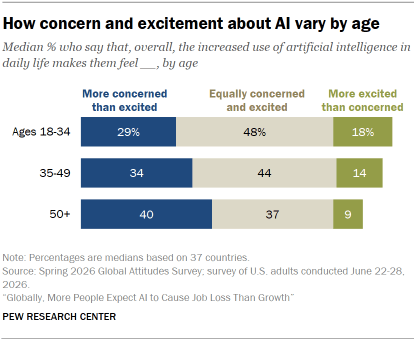
However, familiarity has bred complexity. Rather than dividing neatly into unconditional optimists or outright technophobes, young people overwhelmingly occupy a middle ground of mixed feelings. They are uniquely capable of seeing both the revolutionary potential of machine learning and its darker, disruptive consequences. This duality defines the global youth experience in the mid-2020s: they are excited about what AI can build, yet deeply concerned about what it might dismantle.
Chronology: The Evolution of Global and Domestic AI Attitudes
To understand how youth sentiment has shifted, it is necessary to trace the trajectory of polling data collected over recent years, tracking the rapid acceleration of both AI capabilities and public apprehension.
- 2022: As consumer-facing generative AI tools first burst into the public consciousness, polling organizations like Pew began systematically tracking American attitudes. Even in these early stages, a nascent awareness gap emerged, with younger demographics quickly adopting chatbots and smart devices at higher rates than older generations.
- 2024: Concerns regarding AI began to crystallize. In the United States, tracking data showed a notable upward tick in apprehension among younger cohorts. Specifically, the share of Americans aged 18 to 34 who expressed more concern than excitement about AI stood at 40%.
- 2025: The Pew Research Center expanded its scope internationally, conducting baseline surveys across 25 countries to map global attitudes. These studies revealed that anxiety about AI was not uniquely American; rather, it was becoming a shared global phenomenon, though views heavily depended on a nation’s economic tier.
- February – May 2026: Pew executed its largest international undertaking to date, surveying 42,151 adults across 36 countries—including nations spanning North and South America, Europe, Africa, and the Asia-Pacific region. U.S. data was refreshed through intensive panels in February and June 2026. This monumental effort captured a sharp hardening of youth anxiety, particularly regarding long-term job security, marking a distinct turning point in public sentiment.
Supporting Data: Numbers Behind the Narrative
The empirical evidence compiled by the research center provides granular proof of these generational and international shifts. The data can be broken down into four core empirical pillars:
1. The Global Awareness Gap
The disparity in AI awareness between young and old is nothing short of striking. In 19 of the 36 countries surveyed, the gap in awareness between 18-to-34-year-olds and those 50 and older stood at a massive 30 percentage points or higher.
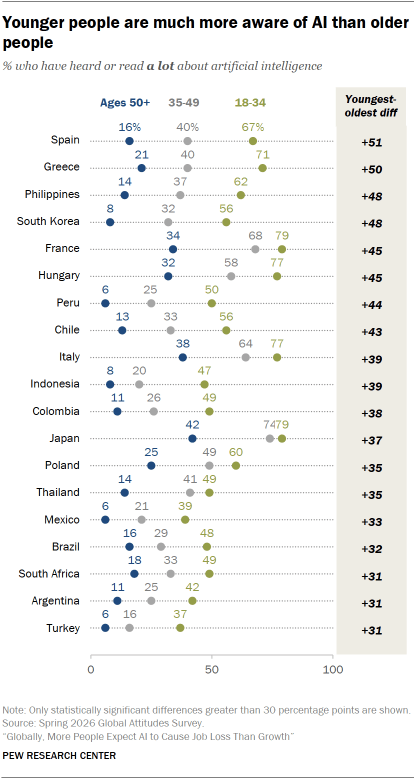
- Spain: Represents one of the starkest examples, where 67% of young adults have heard a lot about AI, compared to just 16% of those 50 and older—a staggering 51-point gap.
- United States: While the U.S. boasts higher baseline awareness across all age groups, a persistent 19-percentage-point gap remains between the youngest and oldest demographics.
- Growth Trends: In countries like Indonesia, Kenya, South Africa, and Spain, the awareness gap has widened since the previous year, driven by faster information and tool adoption among the young.
2. The Prevalence of Mixed Feelings
In more than half of the countries surveyed, the dominant emotional stance among adults under 35 is neither pure excitement nor pure dread, but a nuanced ambivalence. When forced to choose, young respondents frequently reported being equally concerned and excited. This juxtaposition underscores their dual position as both digital natives ready to leverage new tools and pragmatic realists aware of the societal risks.
3. Surging Youth Concern
Longitudinal data highlights a sharp rise in outright worry among young adults.
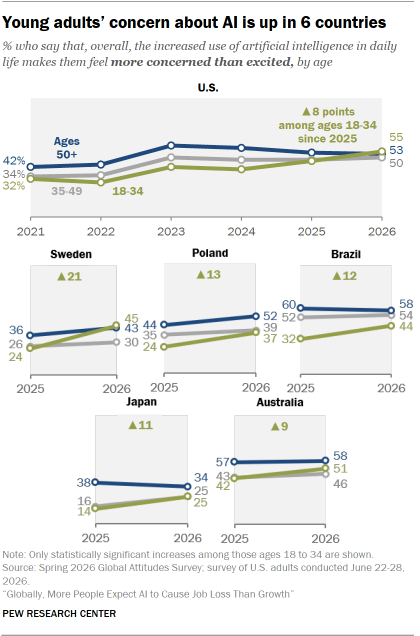
- In the U.S.: The proportion of Americans aged 18 to 34 who are more concerned than excited about AI jumped dramatically from 40% in 2024 to 55% in the 2026 surveys. Conversely, sentiment among older age groups remained relatively stable.
- International Spikes: In Sweden, the percentage of under-35s who were more concerned than excited surged from 24% in the previous study to 45%. Similar upward trajectories in youth apprehension were recorded in Poland, Brazil, Japan, and Australia.
4. The Employment Anxiety Index
Perhaps the most economically consequential finding relates to job displacement. Globally, majorities fear AI will reduce overall job availability, but youth frequently outpace older demographics in this pessimism.
- The Philippines: A striking 36% of adults under 35 believe AI will lead to fewer jobs over the next two decades, compared to only 11% of those 50 and older. Significant age divides on this issue were recorded in 12 other nations.
- The Nuance of Older Generations: Interestingly, older adults do not necessarily view AI as a net job creator; rather, their higher rates of optimism in some metrics often stem from uncertainty or a lack of direct engagement with the labor market implications of the technology.
Official Responses and Stakeholder Perspectives
As the implications of these global surveys reverberate through policy circles, labor unions, and technology boardrooms, institutional stakeholders have begun responding to the anxieties voiced by the younger generation.
Tech industry leaders, while continuing to champion the productivity and creative advantages of artificial intelligence, have increasingly acknowledged the psychological toll and economic uncertainty rapid automation inflicts on entry-level workers. Representatives from major development firms have pointed toward the necessity of robust reskilling programs, arguing that technological revolutions historically destroy old jobs while creating entirely new categories of employment. However, executives concede that the transition period requires deliberate intervention to prevent youth marginalization.
Labor economists and policymakers worldwide have seized upon the Pew data to demand proactive regulatory frameworks. In the European Union, where awareness and concern run exceptionally high, regulators are emphasizing the enforcement of the EU Artificial Intelligence Act, paying special attention to automated workplace monitoring and algorithmic hiring practices. Meanwhile, educational authorities in countries like South Korea, Japan, and the United States are facing mounting pressure from student bodies and youth advocates to overhaul curricula, ensuring that the next generation is not merely trained to use AI tools, but is equipped to critically evaluate, govern, and regulate them.
Implications: Navigating a Generational Trust Deficit
The findings of the 2026 Pew Research Center study carry profound implications for the future of global society, governance, and the digital economy.
First, the widening awareness and concern gaps threaten to create a generational trust deficit. If young people—the primary demographic expected to build and inhabit the AI-driven future—view that future with growing trepidation and economic insecurity, social cohesion could fracture. The fear that entry-level professional tracks, creative industries, and administrative careers will be hollowed out by automated systems risks breeding widespread cynicism toward technological progress.
Second, these insights signal an urgent mandate for policymakers and corporate leaders. Addressing youth anxiety cannot be achieved through generic reassurances or superficial marketing campaigns about innovation. It requires tangible structural investments: safety nets for workers displaced by automation, transparent guidelines for ethical AI deployment, and educational reforms that position human ingenuity not as a competitor to artificial intelligence, but as its irreplaceable director.
Ultimately, the global youth are sending a clear, empirical message to the architects of the digital age. They are ready to embrace the promise of artificial intelligence, but they demand a future where human value is preserved, protected, and prioritized above raw algorithmic efficiency. Whether global institutions rise to meet this challenge will determine whether the AI revolution fulfills its promise of human empowerment or deepens societal divides.