Main Facts
In the golden era of 1990s television, ABC’s Friday night programming block—affectionately and enduringly known as TGIF—stood as an undisputed cultural titan. Drawing roughly 20 million viewers every single week from the late 1980s through the early 2000s, the lineup was a rite of passage for American families and a cornerstone of weekend entertainment. It delivered some of the most beloved and enduring family-friendly sitcoms in television history, launching iconic series such as Boy Meets World, Family Matters, Full House, and Step By Step.
Yet, even the most infallible programming strategies experience miscalculations. In March 1996, ABC introduced a high-concept sci-fi sitcom titled Aliens in the Family into the coveted TGIF rotation. The premise attempted to merge two historically successful television tropes: the comforting, suburban domestic sitcom and the fish-out-of-water extraterrestrial comedy, following in the footsteps of predecessors like ALF, Mork & Mindy, and My Favorite Martian.
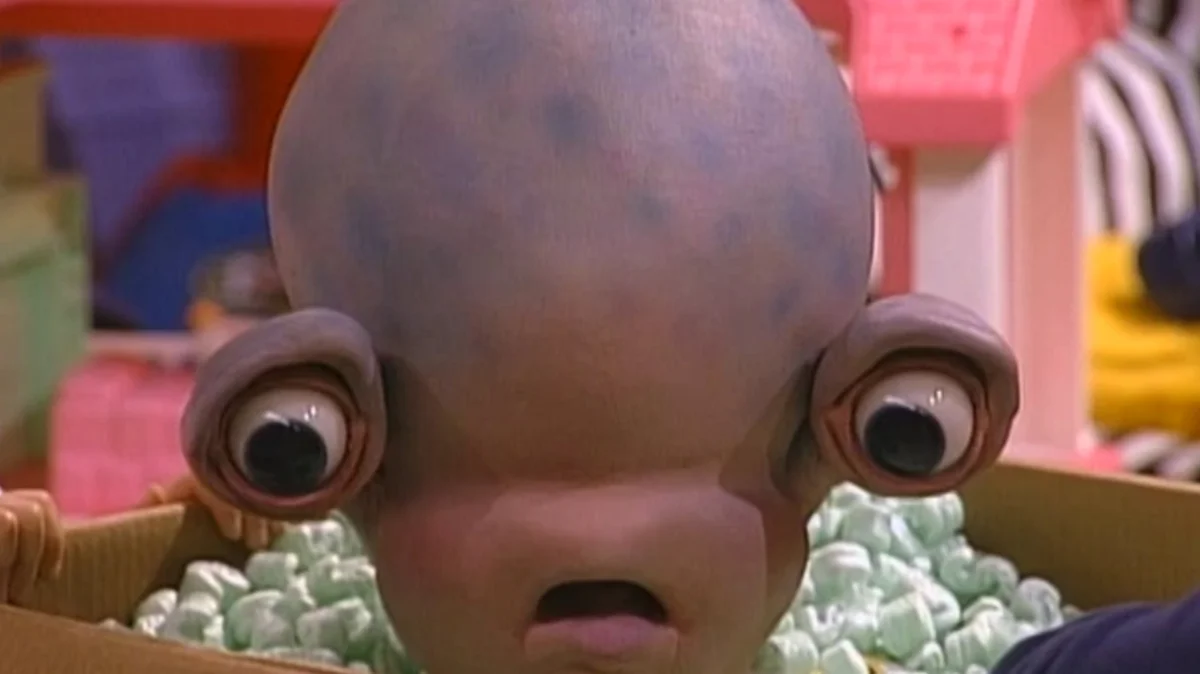
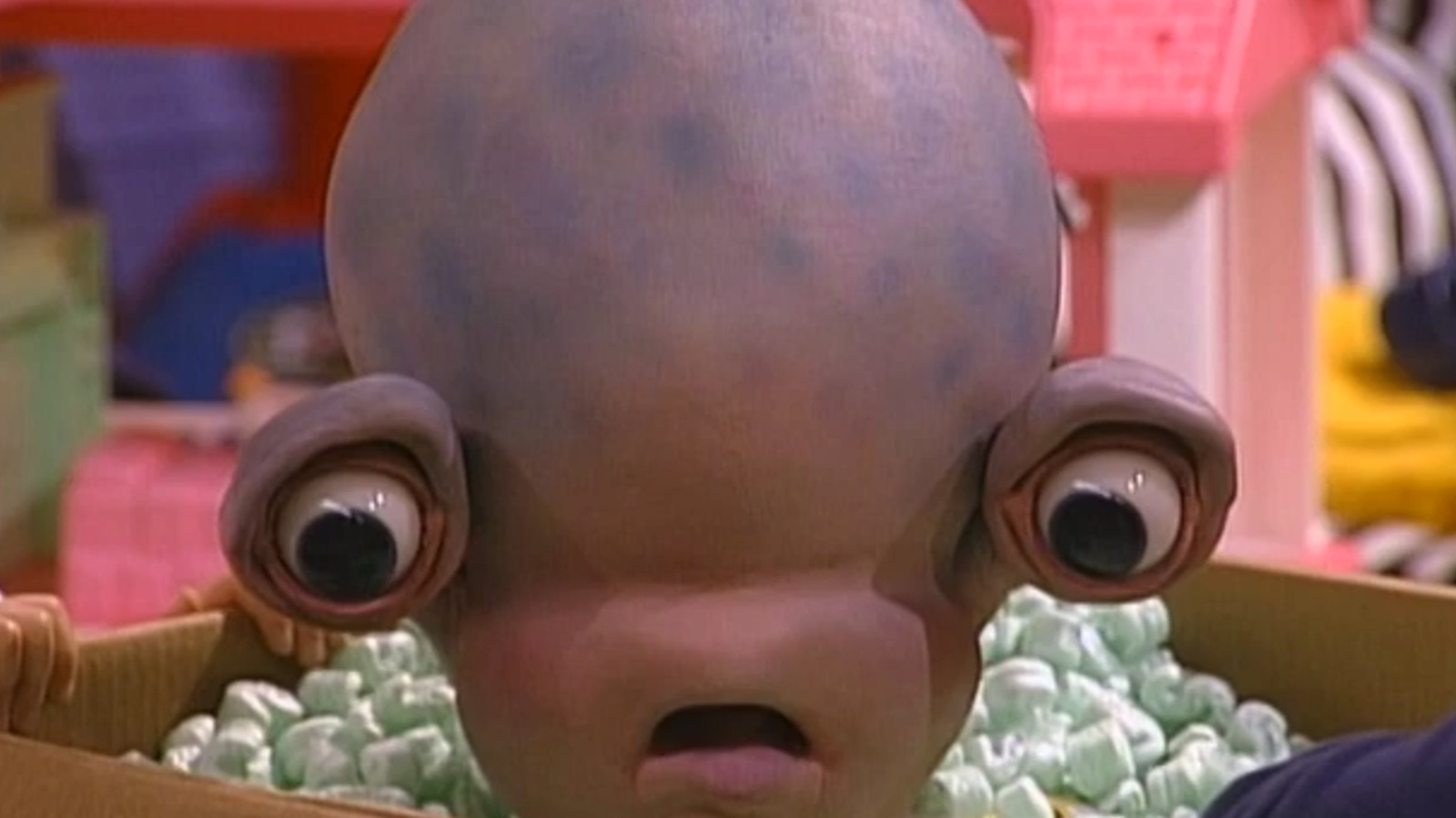
The creative execution, however, proved to be an entirely different beast. The series centered on a blended family trying to navigate the mundane hurdles of suburban life, with a radical twist: half of the household—the father and two of his children—were human, while the mother and her three children were aliens. While the mother was played by live-action actress Margaret Trigg, the remaining extraterrestrial family members were physical puppets brought to life by the legendary artisans at Jim Henson’s Creature Shop.
Despite the pedigree of the Henson workshop and ABC’s promotional muscle, the experiment was an unmitigated disaster. Aliens in the Family failed to resonate with audiences, endured scathing critical reviews, and was unceremoniously yanked from the TGIF schedule after airing a mere two episodes. Today, the show survives primarily as a fascinating historical footnote—a bizarre blip on the radar of ’90s pop culture that also quietly served as a surprising early stepping stone for future mainstream stars like Hayden Panettiere and James Van Der Beek.
Chronology
To understand how Aliens in the Family became one of the fastest cancellations in TGIF history, it is necessary to examine the timeline of its development, brief broadcast, and subsequent quiet burn-off.
Development and Pre-Production (Mid-1990s)
During the mid-1990s, ABC was locked in a fierce battle for prime-time dominance and continually sought innovative ways to capture the family demographic. The network greenlit Aliens in the Family, placing immense faith in the visual appeal and comedic potential of Jim Henson’s Creature Shop puppets interacting with a live-action human cast. The production brought together veteran writers and directors to craft a sitcom format around complex, bulky puppet rigs, setting high hopes for a fresh addition to the powerhouse Friday lineup.
March 1996: The Ill-Fated TGIF Premiere
Aliens in the Family made its highly anticipated debut on ABC’s TGIF block in March 1996. While initial curiosity generated a respectable premiere audience, the tonal disconnect between traditional family comedy and bizarre sci-fi puppetry immediately alienated viewers. The network’s patience wore thin almost instantly. Falling drastically short of the lofty ratings expectations established by anchors like Full House and Family Matters, ABC executives pulled the plug after just two episodes aired on Friday nights.
Late 1996: The Quiet Burn-Off
Because production on several additional episodes had already been completed prior to the series premiere, ABC faced a financial dilemma: completely writing off the unaired footage or finding a way to recoup costs. Choosing the latter, the network quietly burned off the remaining episodes months later, moving them out of the prestigious Friday night family block and into off-peak scheduling slots where expectations—and viewer numbers—were minimal.
Post-Cancellation Legacy and Retrospective (2014–Present)
As the years passed, Aliens in the Family faded from the public consciousness, preserved only in the deep-cut memories of dedicated ’90s television historians and internet archivists. In 2014, former guest star James Van Der Beek brought renewed attention to the forgotten sitcom via a widely shared social media post, injecting humor into his brief encounter with the failed series. As the show approaches its 30th anniversary, media retrospectives have reappraised its strange production history, transforming it from an embarrassing network blunder into a celebrated piece of nostalgic television trivia.
Supporting Data
While Aliens in the Family is largely remembered today as a punchline, the hard data surrounding its brief existence highlights the immense pressure and high stakes of the 1990s broadcast television landscape.
- Audience Reach: During its peak years, the TGIF block routinely commanded an audience of approximately 20 million viewers weekly, serving as a critical anchor for ABC’s Friday night dominance.
- The Premiere Metric: In its March 1996 series premiere, Aliens in the Family drew a respectable curiosity-driven audience of 8 million viewers. While this figure might seem reasonable for modern cable or streaming standards, by the rigorous metrics of mid-’90s network television—and specifically the high-water mark of the TGIF brand—it was deemed a severe underperformance.
- Episode Longevity: Out of a standard initial episode order, only 2 episodes actually made it to air within the coveted TGIF Friday night time slot before network executives intervened.
- Star Power Milestones: The production featured extremely early career appearances for future heavyweights. For Hayden Panettiere, the show marked her official acting debut as a toddler long before she headlined series like Heroes and Nashville. For James Van Der Beek, his role as Ethan represented his fourth onscreen acting role, arriving just prior to his breakout stardom in Dawson’s Creek.
Official Responses and Critical Reception
The critical panning of Aliens in the Family was swift, brutal, and entirely unanimous. Entertainment journalists and television critics of the era did not mince words when evaluating ABC’s ill-fated programming choice.
Most famously, The Washington Post delivered a devastating verdict, bluntly describing the sitcom as "dumber than a rock." The review went on to criticize the foundational concept of the series, noting that the premise was "too unwieldy, the characters (and actors) too unappealing, and the writing too darn dumb for this to become a cherished habit."
On the performer side, decades later, James Van Der Beek offered a much more comedic, self-deprecating retrospective regarding his involvement with the show. In a 2014 post on his official Facebook account, the actor reflected on playing Ethan—a brief boyfriend character who nearly gets consumed by the family’s bizarre alien pet in episode three:
"The best part about it, (aside from the hair, of course), was the job I had to turn down because I was contractually obligated to this gem — a scene in The Devil’s Own in which I would have gotten to improv with Brad Pitt and Harrison Ford. This sitcom was so stellar it was pulled off the air after two episodes. I was in episode three. Too bad, too… I think I narrowly missed out on my first Emmy nod."
The stark contrast between the scathing contemporary reviews and the affectionate, ironic distance with which former cast members and fans now view the show illustrates a broader shift in how television failures are digested in the digital age.
Implications
The rise and rapid fall of Aliens in the Family offers several compelling implications regarding the evolution of television programming, network risk management, and the unique cultural footprint of 1990s media.
The Limits of High-Concept Experimentation
In the 1990s, broadcast networks were willing to take massive narrative risks within established programming blocks. However, the immediate rejection of Aliens in the Family demonstrated that brand consistency was paramount for blocks like TGIF. Audiences tuned in on Friday nights for relatable, grounded family dynamics, heartwarming moral lessons, and conventional multi-cam setups. Injecting Jim Henson puppets into a sci-fi domestic hybrid crossed a boundary of surrealism that mainstream family audiences simply were not willing to accept at the end of a long work and school week.
The Shift in How Television Failures are Preserved
In the pre-streaming era, a show canceled after two episodes was typically destined for total obscurity—a financial write-off locked away in a studio vault. Today, the internet, social media retrospectives, and deep-dive pop culture journalism have given these forgotten misfires a second life. Programs like Aliens in the Family are no longer just embarrassing operational errors; they are celebrated as camp artifacts, nostalgic curiosities, and vital pieces of television history that highlight the chaotic, trial-and-error nature of the golden age of network television. Furthermore, the show’s accidental role as a training ground for future luminaries like Hayden Panettiere and James Van Der Beek underscores an enduring Hollywood truth: even the most catastrophic television flops can inadvertently launch legendary careers.