By Jem Bartholomew
Around 10:00 AM on August 21, a police sergeant in Washington, New Jersey, received a radio dispatch that carried a distinctly modern political tension: a trespasser was allegedly refusing to leave a high-profile Republican fundraiser at the Hawk Pointe Golf Club.
Inside the clubhouse, Mike Johnson, the Speaker of the House of Representatives, was headlining an exclusive event alongside Representative Thomas Kean Jr., who represents New Jersey’s seventh congressional district in a fiercely contested, closely watched reelection race. Arriving at the scene, the responding officer anticipated a confrontation. He weighed whether to call for backup, bracing himself to physically escort an unwelcome individual off the premises.
Instead, the officer encountered a scene that was equal parts surreal and revealing. Reviewing police bodycam footage of the incident, the officer can be heard asking Harrison Neely, a spokesman for Kean, to explain the situation.
"Basically what happened," Neely replied, "is there’s a reporter who is not invited."
The officer walked out to the parking lot to investigate. There, he found Tracey Tully, a New York Times reporter covering New Jersey, standing quietly with a pen and a notepad. Tully had requested entry to the event earlier but was told it was private and that members of the media were barred—even though journalists from Fox News and local station WFMZ were permitted inside. Contrary to Neely’s assertions to law enforcement, Tully noted that no one had ever asked her to leave the property; she was simply waiting for an opportunity to secure an interview.
In the bodycam footage, the officer lets out an awkward laugh, visibly confounded that local police had been summoned to deal with a reporter doing her job. Back inside, Neely attempted to justify the call, admitting to the officer that he had initially described Tully as "lurking."
" Lurking is a harsh word," Neely conceded on the video. "She was on the premises looking to do an interview, and that she was not welcome, and we think that some of the folks were uncomfortable having her here. It just kind of escalated into: let’s get rid of her."
Tully ultimately wrote about the episode for the Times, characterizing it as an "unusual police intervention." Yet, as media observers noted, it was entirely characteristic of Kean’s notoriously media-avoidant office. Kean famously refuses to publish a public schedule and had recently vanished from the public eye for nearly four months—an absence he later attributed to hospitalization for depression. But weaponizing local law enforcement to remove a reporter from a public-facing political fundraiser represented a staggering escalation.
What happened on the greens of Hawk Pointe that August morning is far from an isolated occurrence. Across the United States, at the national, state, and local levels, politicians are increasingly treating standard journalistic inquiry as a civil disruption, a security threat, or outright criminal behavior.
A Chronology of Escalating Hostility Toward the Press
The weaponization of security, law enforcement, and administrative bans against journalists has accelerated into a systematic pattern over the past year.
- February 2026: In Washington, D.C., Texas Representative and Senate candidate Jasmine Crockett called the U.S. Capitol Police on CNN reporter Edward-Isaac Dovere, accusing him of trespassing when he attempted to visit one of her congressional offices. Later that month, The Atlantic’s Elaine Godfrey was physically ejected from a Crockett campaign rally by armed security guards. Audio published by The Atlantic captured campaign staffers dismissing Godfrey: "She’s a top-notch hater and will spin. She needs to leave."
- July 9, 2026: In Raleigh, North Carolina, several reporters were barred entry from a campaign event for Republican Senate candidate Michael Whatley. Campaign handlers dismissed the press corp as "left-wing activists… posing as ‘journalists.’"
- July 18, 2026: Just days later in Waynesville, North Carolina, a reporter for the Asheville Citizen-Times—part of the USA Today Network—was physically blocked from entering a public, non-ticketed campaign event for Whatley. The campaign called 911 on the reporter and threatened legal action, forcing the journalist to retreat once police arrived to avoid a dangerous escalation.
- August 21, 2026: The Hawk Pointe Golf Club incident in New Jersey, where police were called on New York Times reporter Tracey Tully.
- October 13, 2026: At a public briefing in Cambridge, Maryland, Republican Representative Andy Harris pointed directly at Cat Murphy, a University of Maryland journalism graduate student credentialed with the Capital News Service, and announced, "I’m disinviting you." Citing Maryland’s two-party-consent wiretapping law—which legally applies only to private conversations—Harris accused Murphy of a crime for recording him and demanded a police officer remove her and her camera. Harris ultimately stormed out of the venue.
- October 20, 2026: In Mobile, Alabama, a reporter attempting to ask a question at a public campaign event for gubernatorial candidate Tommy Tuberville was singled out by campaign staff, who gestured to county sheriff’s deputies to have the journalist summarily removed from the property.
Supporting Data and the Trumpian Blueprint
While these hostile tactics have occasionally been adopted by figures across the political spectrum—as demonstrated by the actions of Texas Representative Jasmine Crockett—the overwhelming majority of these incidents are driven by the Republican Party. This adversarial posture toward the fourth estate does not exist in a vacuum; it is the direct downstream effect of a broader political culture engineered by Donald Trump and his enablers.
Since returning to the White House at the start of last year, the Trump administration has engaged in a relentless campaign to pressure, bully, sue, and block journalists whose reporting challenges the administration’s official narratives. Independent outlets and mainstream networks have faced unprecedented administrative hurdles. Reporters have experienced targeted arrests and federal investigative raids, while partisan content creators who offer uncritical coverage are granted preferential access.
The consequences for American democracy are quantifiable. In 2016, the United States ranked 41st out of 180 countries on the Reporters Without Borders global press freedom index. Ten years later, the nation has slid precipitously to 64th place—sandwiched between Botswana and Panama.
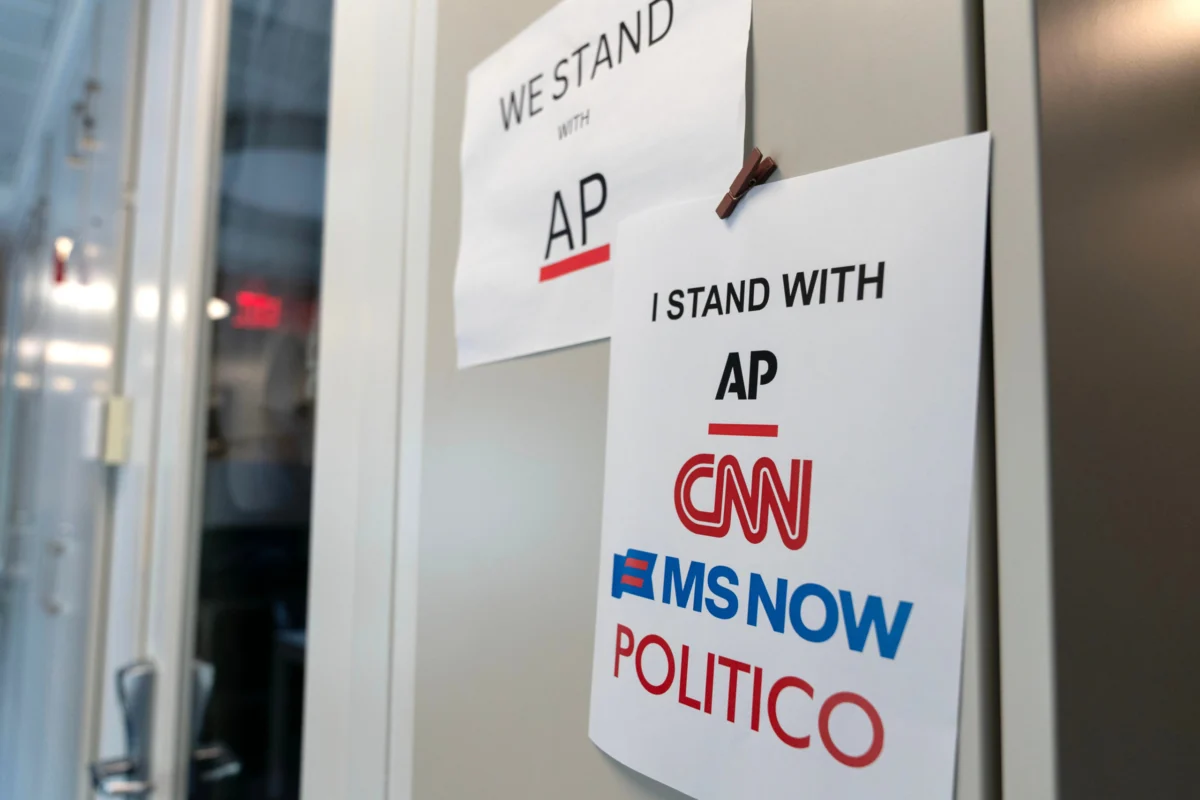
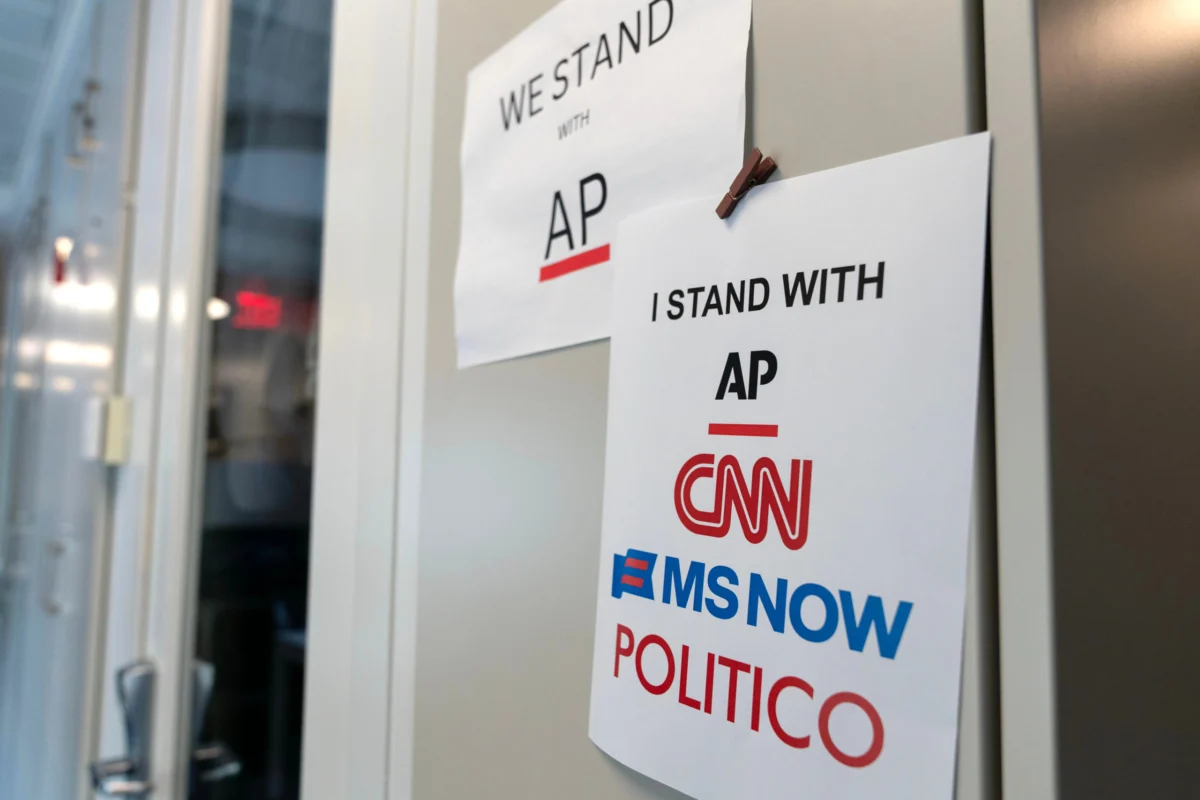
The administration’s recent efforts have crossed into overt defiance of democratic norms. The White House attempted to entirely ban CNN, MS Now, and Politico from the White House press corps, while simultaneously floating proposals to dismantle the White House press briefing room altogether.
Official Responses and Legal Retaliation
As government officials increasingly treat journalists as public enemies, the legal and constitutional defense of the press has shifted to the federal courts.
Last month, Columbia University’s Knight First Amendment Institute and Yale’s Media Freedom and Information Access Clinic filed a landmark lawsuit in the U.S. District Court for the Southern District of New York. Filed on behalf of six individual readers of White House coverage, the lawsuit directly challenges the Trump administration’s press bans as a blatant violation of the First Amendment.
This action runs parallel to an ongoing suit brought by CNN, MS Now, and Politico, which seeks to restore permanent access for the 78 journalists targeted by the administration’s expulsion orders. That litigation was recently expanded to combat sweeping restrictions that have crippled pooled television and print reporting for disfavored news organizations.
Yet, despite these legal battles, local officials continue to take their cues from Washington. In New Jersey, Tracey Tully’s afternoon ended with an ironic twist. After the local police sergeant realized the "unwanted party" was simply a reporter trying to secure an interview, the tone softened. The officer expressed mild amusement at the mix-up, and Kean’s spokesman, Harrison Neely, ultimately apologized to law enforcement, conceding that Tully was permitted to wait in the parking lot.
When Speaker Mike Johnson finally emerged from the Hawk Pointe clubhouse, Tully managed to flag him down. In a rare victory for on-the-ground reporting, the Speaker stopped and answered a few questions.
Implications for the Future of Democracy
The recurring spectacle of police cruisers rolling up to campaign rallies because a reporter asked a difficult question points to a grim reality: reporting on public political events is increasingly treated as a civil infraction or a criminal offense. Even when police aren’t called, basic transparency is treated by politicians as an optional courtesy rather than a constitutional obligation.
When millions of Americans head to the ballot boxes, the outcome may well deliver sharp legislative rebukes to the architects of this political climate. But when the votes are tallied, the country will still wake up in the political and journalistic reality that the current administration—and the politicians who mimic its disdain for accountability—helped construct.
The criminalization of curiosity poses an existential threat to an informed electorate. If asking questions in public spaces is reframed as "lurking" and journalistic persistence is met with 911 calls, the boundary between a free society and an authoritarian state narrows dangerously. Defending the right to report has never been more urgent.