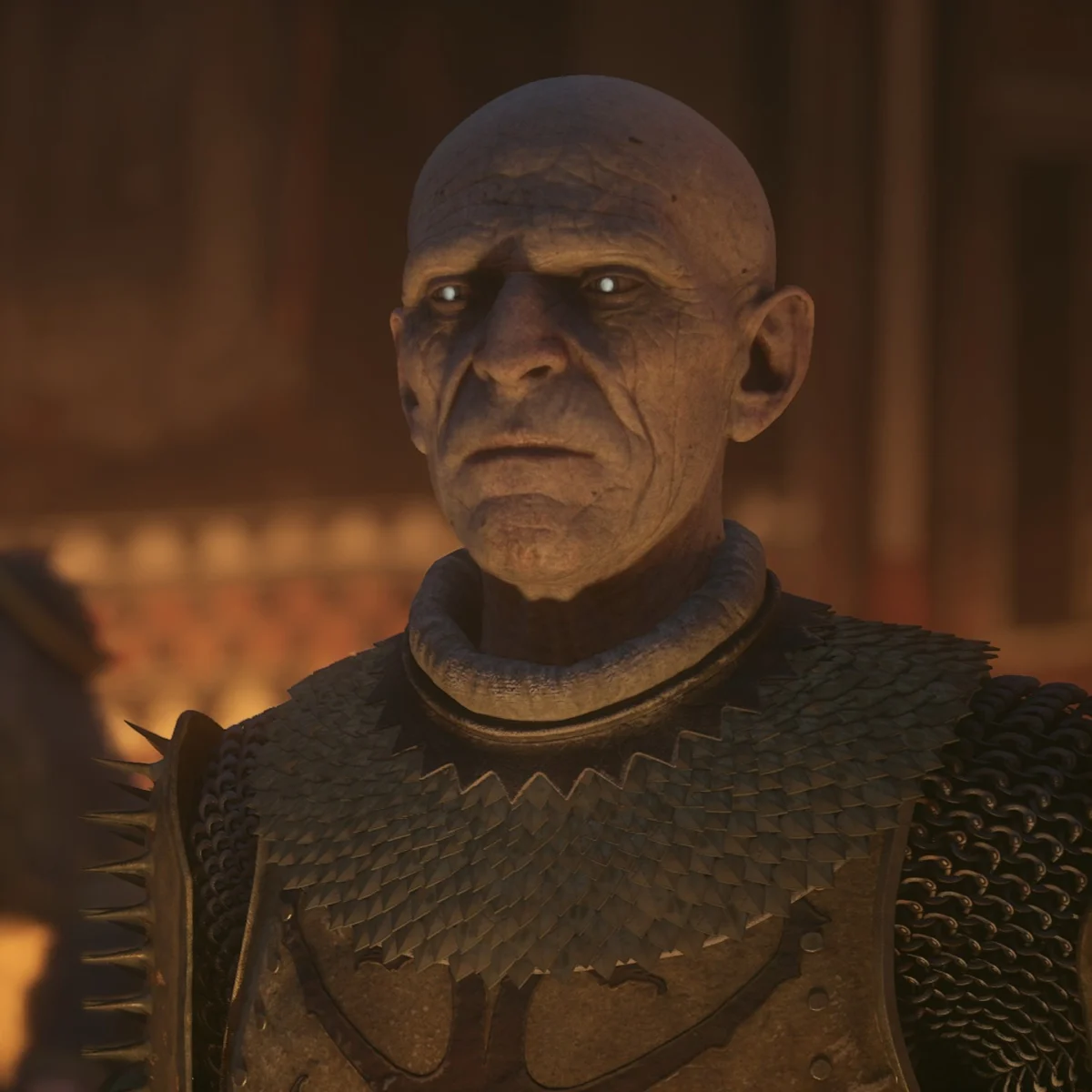
Just two months after the highly anticipated release of Zero Parades: For Dead Spies, the latest title from the studio behind the genre-defining Disco Elysium, developer ZA/UM has announced a major restructuring effort. The studio confirmed that it is laying off up to 32 employees, citing commercial performance that failed to meet the sustainability requirements of the company’s current operational scale.
The news marks yet another chapter in the turbulent history of a studio that was once the darling of the independent game industry, only to find itself embroiled in internal litigation, public controversy, and a fracturing of its creative identity.
A Stalled Momentum: The Commercial Reality
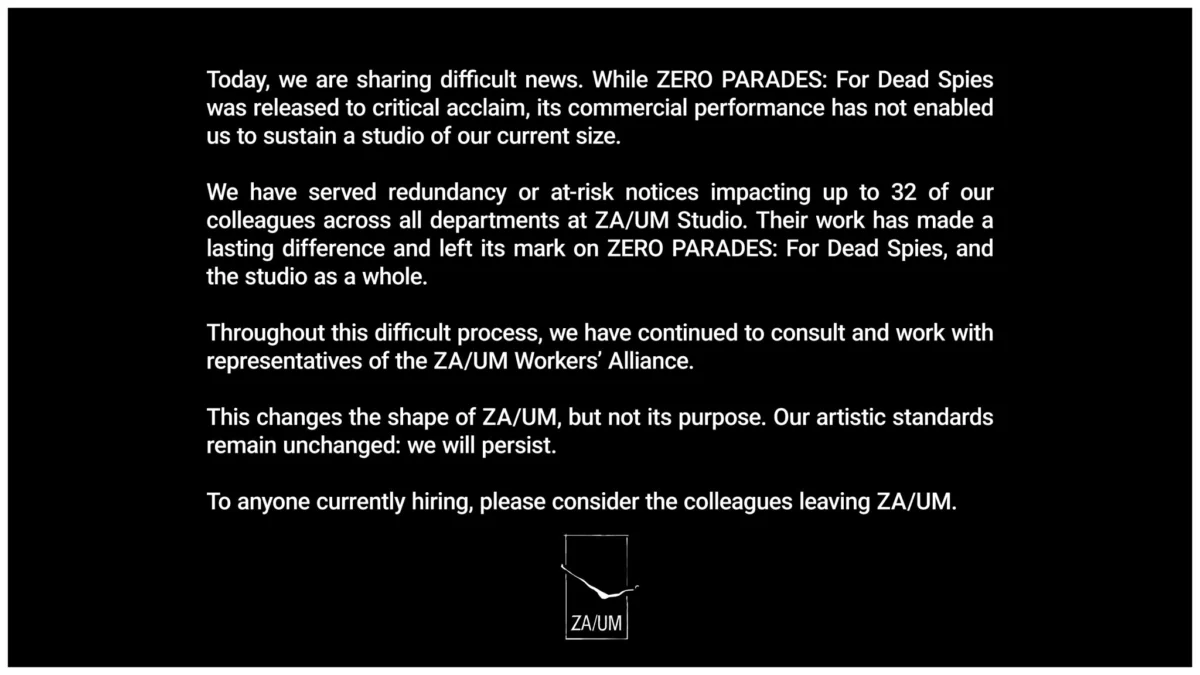
In a formal statement released via social media, ZA/UM addressed the difficult decision to reduce its workforce. "While Zero Parades: For Dead Spies was released to critical acclaim, its commercial performance has not enabled us to sustain a studio of our current size," the company stated. "We have served redundancy or at-risk notices impacting up to 32 of our colleagues across all departments. Their work has made a lasting difference and left its mark on Zero Parades, and the studio as a whole."
While the studio highlighted "critical acclaim," the reality on the ground—and on the digital storefronts—appears to be a different story. Zero Parades faced a lukewarm reception from both critics and consumers, a significant departure from the near-universal praise heaped upon Disco Elysium.
In his pre-launch analysis, industry expert Ted Litchfield noted the Herculean task the studio faced: "Zero Parades would have to be spectacular to win back a hostile fanbase." The result, however, was a polarized reaction. Some reviewers lauded the game’s ambition, while others, such as PC Gamer’s Maddi Chilton, noted in her 66% review that the game struggled to justify its mechanics. "It’s jarring to have a little sister spy walking around rambling and blustering in exactly the same way as a big brother cop," Chilton wrote, pointing to a sense of unearned structural mimicry that failed to resonate with the Disco Elysium experience.
A Chronology of Decline: From Zenith to Strife
To understand the current crisis at ZA/UM, one must look back at the meteoric rise and subsequent implosion of the team behind Disco Elysium.
- 2019: Disco Elysium is released to immense acclaim, winning multiple Game of the Year awards and establishing ZA/UM as a powerhouse of narrative-driven RPG design.
- 2021-2022: Tensions within the studio reach a breaking point. Key creative leads, including director Robert Kurvitz, art director Aleksander Rostov, and writer Helen Hindpere, are pushed out of the company under controversial circumstances.
- 2023: Legal battles dominate the headlines. Former members allege that the studio’s leadership, including major investors, orchestrated a "false-premise" firing to seize control of the intellectual property.
- 2024: The studio faces a series of layoffs, cutting nearly 25% of its staff. This period effectively signals the total departure of the original creative visionaries who built the studio’s foundation.
- 2026 (May): Zero Parades: For Dead Spies is released. The game is viewed by much of the community not as a fresh start, but as a test of the "new" ZA/UM.
- 2026 (July): ZA/UM announces it is cutting another 32 staff members as the game fails to achieve the financial benchmarks required to maintain operations.
The Weight of History: A Hostile Fanbase
The core of ZA/UM’s current struggle is not merely the quality of Zero Parades, but the "brand damage" incurred by the systematic removal of the Disco Elysium creators. The community, deeply protective of the original game’s legacy, has largely viewed the studio’s recent output through a lens of cynicism.
Social media reactions to the recent layoff announcement have been notably devoid of sympathy for the studio’s leadership. The consensus among many former fans is that the studio effectively cannibalized its own reputation by alienating the very people who created its identity. One user on Bluesky summarized the sentiment: "Zero Parades likely failed to perform to their desired financial standards because the key audience… were Disco Elysium fans—an audience already primed to hate ZA/UM and too principled to give them money for a game that is built on what was stolen from Disco Elysium."
This cultural framing has turned Zero Parades into a "signifier of industry drama." It is rarely discussed solely as a game, but rather as a product of a corporate entity that many fans no longer recognize as the artistic collective they once admired.
The Human Cost: Implications for the Industry
The layoff of 32 employees is a human tragedy within the gaming industry, particularly for those developers who remained with the studio in the hopes of producing meaningful work despite the corporate toxicity surrounding them.
The discourse surrounding these layoffs highlights a growing divide between studio management and the rank-and-file developers. As noted by industry observers, there is a clear distinction being drawn between the "artistic vision" of the developers and the "corporate mismanagement" of the studio heads. Developers who stayed to work on Zero Parades are now being punished for a failure that many believe was baked into the project by the studio’s leadership from day one.
The implications for the broader industry are sobering. The "ZA/UM model"—of a small, fiercely creative team being bought out or taken over by interests that do not prioritize the original creative vision—is becoming a cautionary tale. It serves as a reminder that brand equity in the gaming space is intrinsically linked to the people who build it, and that replacing a creative team with a "studio name" is rarely a viable long-term strategy.
Looking Forward: What Remains of ZA/UM?
As the studio enters this new period of contraction, the question remains: what is the path forward? With the original creative core gone and a new title failing to capture the market, the studio’s future is precarious.
The reliance on the "DNA" of their previous success has proved insufficient. By attempting to replicate the structure of Disco Elysium without the original voices that gave it life, ZA/UM may have inadvertently proven that their past success was not a repeatable formula, but a unique convergence of individuals.
The industry now waits to see if ZA/UM can pivot, or if this latest round of layoffs is merely a precursor to the studio’s dissolution. For the 32 employees affected, the news is a harsh conclusion to their tenure. For the gaming world, it is a sad coda to one of the most brilliant—and most broken—success stories of the last decade.
In the words of one observer, the situation is "incredibly disheartening." As the dust settles on another round of layoffs, the legacy of ZA/UM remains a fractured one, split between the brilliance of its past and the disillusionment of its present. Whether the studio can ever recover its standing—or if it is destined to be a cautionary tale for future developers—remains to be seen. What is clear, however, is that in the high-stakes world of modern game development, "critical acclaim" is no longer enough to insulate a studio from the consequences of its own fractured history.