Introduction
Across the globe, the architecture of independent journalism is experiencing an unprecedented stress test. From the authoritarian crackdowns in Central America to shifting legal and political landscapes in Western democracies, reporters who once fled state-sponsored terror are finding themselves ensnared in new webs of institutional hostility.
In a convergence of alarming press-freedom violations last September, the detention of exiled Nicaraguan journalist Luis Galeano by United States immigration authorities coincided with an aggressive administrative push by the Trump administration to ban major news outlets from the White House. Paired with similar authoritarian tactics abroad—such as threats of citizenship stripping in Israel against documentary filmmakers—the events have triggered an urgent debate over democratic backsliding, the complicity of major corporate newsrooms, and the weaponization of state apparatuses to silence dissenting voices.
Main Facts: The Double Front of Press Suppression
The crisis of mid-September crystallized around two major fronts: the physical detention of exiled journalists on US soil and direct executive retaliation against domestic media organizations.
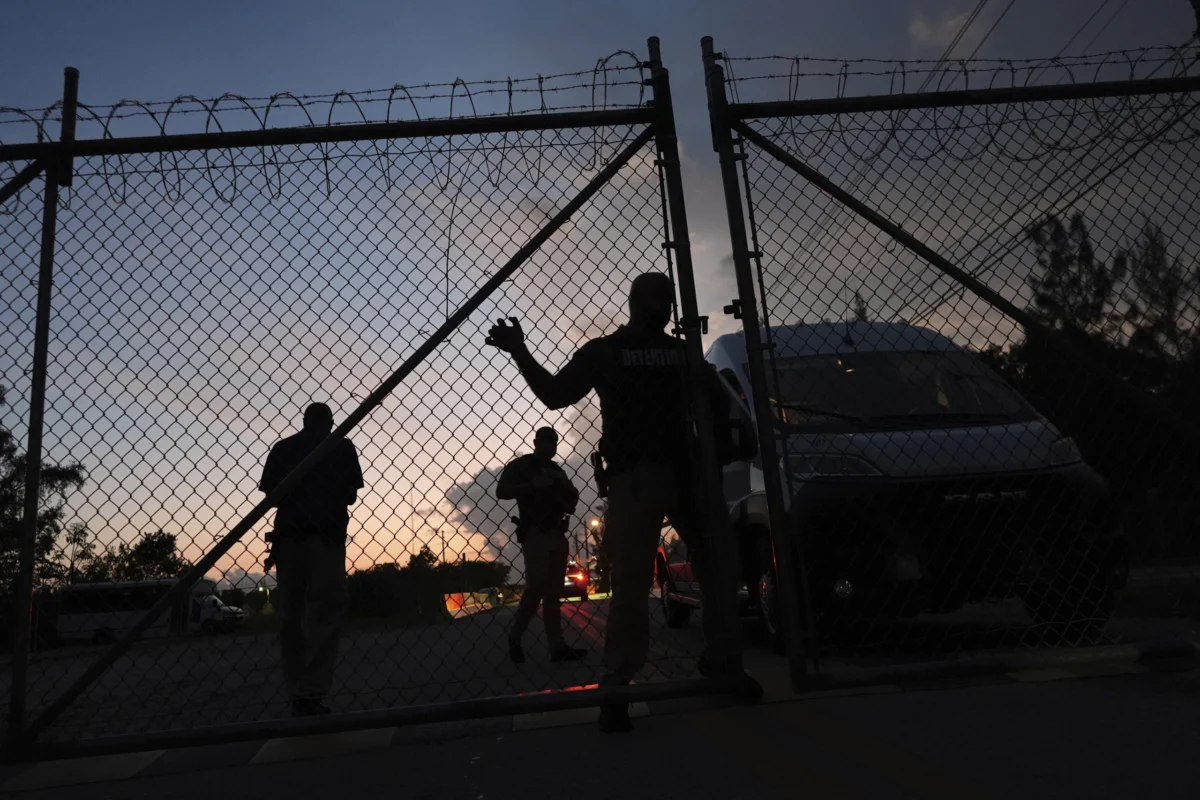
On September 14, Luis Galeano—a prominent 48-year-old Nicaraguan journalist who fled his homeland after being targeted by Daniel Ortega’s regime—was arrested by US Immigration and Customs Enforcement (ICE) agents while working his shift as an Uber and Lyft driver in Orlando, Florida. Galeano, who operated the YouTube-based news program Café con Voz after having his citizenship revoked and assets seized by the Ortega government, was subsequently transferred to the Krome North Service Processing Center in West Miami.
Simultaneously, the domestic press corps faced a severe constitutional challenge. On Friday, September 19, the Trump administration announced it was arbitrarily revoking White House access for reporters representing MS Now, CNN, and Politico, branding their coverage as "fiction and lies." President Trump later extended similar threats to The New York Times and The Washington Post, even posting an AI-generated meme depicting the expelled outlets as trash bags sitting outside the White House gates.
These simultaneous developments underscored what media watchdogs have diagnosed as a coordinated, multi-pronged assault on journalistic independence, utilizing both immigration enforcement and executive privilege to suppress critical reporting.
Chronology: From Nicaraguan Newsrooms to Florida Detention Cells
The path leading to Galeano’s detention is deeply rooted in the broader collapse of democratic institutions and freedom of the press in Nicaragua.
- December 21, 2018: As part of a brutal crackdown on anti-government protests, Nicaraguan police raided the offices of 100% Noticias, a cable and online news station that had been reporting on state-backed paramilitary forces spreading terror. Authorities arrested station director Miguel Mora and news director Lucía Pineda, charging them with "inciting hate and violence." Both spent 172 days in abysmal prison conditions.
- December 21, 2018: By sheer coincidence, Luis Galeano—whose show Café con Voz was broadcast on 100% Noticias—landed in the United States with his wife, Deykel Santamaría, on a pre-planned vacation, narrowly escaping the dragnet that imprisoned his colleagues.
- 2019: Galeano formally applied for political asylum in the United States and re-established Café con Voz on YouTube from Florida, maintaining a fierce editorial line against the Ortega dictatorship.
- February 2023: The Ortega regime officially stripped Galeano and 93 other prominent Nicaraguan critics of their citizenship, declaring them "traitors to the homeland" and confiscating all of their remaining property and assets in the country.
- July 26, 2025: In a parallel case highlighting vulnerabilities in the US asylum system, Venezuelan journalist Wilmer Solano—who had been attacked by supporters of the Hugo Chávez regime in 2011—was detained off the streets of Miami by US Customs and Border Protection (CBP) agents while his asylum application remained pending. He was later released on bond with an ankle monitor after spending weeks in Krome.
- September 14, 2025: Deykel Santamaría received a morning phone call informing her that Galeano had been arrested by ICE in Orlando while working in the gig economy.
- September 16, 2025: Café con Voz went live on YouTube with Galeano’s empty black swivel chair, small Nicaraguan flag, and coffee mug, signaling that the program—and its journalistic mission—would continue despite his detention.
- September 19, 2025: The White House announced its ban on MS Now, CNN, and Politico, prompting widespread condemnation and plans for a joint legal challenge by the affected networks.
Supporting Data: The Human Cost and Institutional Fallout
The detention of journalists like Galeano and Solano exposes the harrowing conditions within American immigration detention facilities and the administrative precariousness faced by political exiles.
According to ICE’s online records, Galeano was held at the Krome North Service Processing Center, a facility with a long history of documented human rights abuses. Organizations such as Human Rights Watch and Amnesty International have repeatedly flagged conditions at Florida immigration centers, reporting practices that include forcing detainees to kneel for food, holding them in overcrowded, freezing cells, and subjecting them to severe psychological distress.
Wilmer Solano, reflecting on his time inside Krome prior to his August release on a $5,000 bond, described conditions marked by extreme cold, poor-quality food, contaminated air, moldy mattresses, and a complete absence of basic safety infrastructure such as smoke detectors and accessible emergency exits.
Furthermore, the economic precarity forced upon exiled journalists cannot be overstated. Because the backlogged US immigration and asylum systems often delay work authorizations or fail to provide adequate safety nets, high-profile journalists forced to flee authoritarian regimes—including Galeano, Solano, and others—frequently rely on the gig economy, driving for rideshare services like Uber and Lyft to survive. It was during these vulnerable off-hours working commercial transit that both Galeano and Solano were targeted and apprehended by immigration agents.
Official Responses: Justifications and Condemnations
The official narrative provided by the Department of Homeland Security (DHS) stood in stark contrast to the accounts offered by press freedom organizations and family members.
A DHS spokesperson stated that Galeano was an "illegal alien from Nicaragua" who was arrested during "routine enforcement operations" after having "overstayed his welcome" in violation of federal laws. The spokesperson added that Galeano would remain in ICE custody pending removal proceedings, noting dismissively that "being in detention is a choice" because the United States is "offering illegal aliens three thousand dollars and a free flight to self-deport now."
José Zamora, the regional director for the Americas at the Committee to Protect Journalists (CPJ), flatly rejected the government’s characterization. "What they are stating there, it’s not true," Zamora emphasized. "Galeano fled Nicaragua because of persecution connected to his journalism. He came to the US seeking protection. He followed the right process; he did everything correctly."
CPJ, along with groups like the Reporters Committee for Freedom of the Press, condemned both Galeano’s detention and the White House press ban. Independent journalist Georgia Fort, who herself faced arrest earlier in the year while covering ICE deployments in Minnesota, warned that the escalating attacks on the press must be viewed as a systematic dismantling of democratic norms. She cautioned that corporate media institutions that have historically tolerated the erosion of independent reporting rights are now reaping the consequences of institutional neutrality.
Domestically, the White House Correspondents’ Association, led by Fox News anchor Jacqui Heinrich, demanded the immediate restoration of press access. The collective pressure soon yielded results: reports surfaced that the five major TV networks responsible for pool broadcasting duties—Fox News, ABC News, CBS News, CNN, and NBC News—were declining to participate in White House pool rotations in solidarity with the banned outlets. Simultaneously, MS Now, CNN, and Politico prepared a joint lawsuit to defend the principle that the government holds no constitutional authority to dictate what the independent press may report or publish.
Implications: Global Democratic Backsliding
The dual crises facing journalists in the United States and abroad point to a broader, global pattern of democratic backsliding. The tactics deployed by the Ortega regime in Nicaragua—such as revoking citizenship, branding reporters as "traitors to the homeland," and seizing assets—find ideological echoes in other nations.
For instance, concurrent with Galeano’s detention, Israeli officials including Culture Minister Miki Zohar and Prime Minister Benjamin Netanyahu called for the citizenship revocation and legal prosecution of documentary filmmakers Yuval Abraham and Rachel Szor, labeling their critical coverage of military campaigns in Gaza as "treason against the state." Outside the filmmakers’ family homes, crowds chanted extremist slogans, demonstrating how state-sanctioned rhetoric directly endangers media workers.
In the United States, while stripping naturalized citizens of their legal status faces high constitutional hurdles, the administration has pivoted to administrative levers, regulatory pressure, visa threats, and physical immigration enforcement to create a deeply hostile environment for critical watchdogs. Legal experts note that while federal courts will likely strike down the White House press ban as a blatant violation of the First Amendment, the immediate objective of such measures is political signaling: intimidating independent newsrooms, chilling critical investigations, and feeding a narrative of hostility toward journalism ahead of high-stakes midterm elections.
Despite these escalating pressures, the journalistic community has signaled a refusal to be silenced. Whether through exiled broadcasters maintaining their digital programs from empty chairs in Florida, independent reporters continuing to broadcast from outside White House gates, or major networks staging cooperative pushbacks, the message remains clear. As Zamora of the CPJ warned, the tools of administrative silencing are expanding, but the resolve of those dedicated to public accountability continues to test the limits of authoritarian overreach.