Introduction: The Dual Crises of Exposure and Erasure
In an era defined by an overwhelming deluge of digital information, the paradox of modern media is sharply revealed: while local investigative reporting can still uncover hidden public health crises that threaten human lives, the digital infrastructure designed to record and preserve that very history is quietly collapsing.
Recent developments across the media landscape highlight this precarious dichotomy. In New Jersey, tenacious local journalism has brought a potential environmental disaster and public health catastrophe to light, forcing state agencies to act where they previously looked away. Simultaneously, however, major corporate media entities are systematically deleting decades of digital memory, leaving the preservation of our cultural and historical record to overburdened institutions like the Internet Archive—institutions that now face unprecedented legal and technological threats.
Complementing these struggles, new accounts of daring journalistic extractions during the fall of Kabul remind us that the human cost of reporting the news often extends far beyond the printed page. Together, these events paint a complex picture of a profession striving to protect communities and preserve history while fighting a multi-front war against apathy, corporate cost-cutting, and systemic entropy.
Part I: Main Facts — The Keyport Cancer Cluster Investigation
In February, what began as a personal anxiety for Rusty Morris transformed into a burgeoning public health investigation. Growing up in Keyport, New Jersey, Morris watched as his father underwent treatment for prostate cancer. During phone calls with his mother, he noticed a recurring, unsettling pattern: she constantly mentioned yet another neighbor receiving a cancer diagnosis.
Driven by intuition and concern, Morris decided to map the cases on his parents’ street. The results were startling. He uncovered at least twenty-eight cancer cases on a single block. Expanding his informal survey across the wider neighborhood, the count climbed to forty-one.
"I started asking friends I grew up with around the neighborhood," Morris later recounted to NJ.com. "It just kept freaking snowballing."
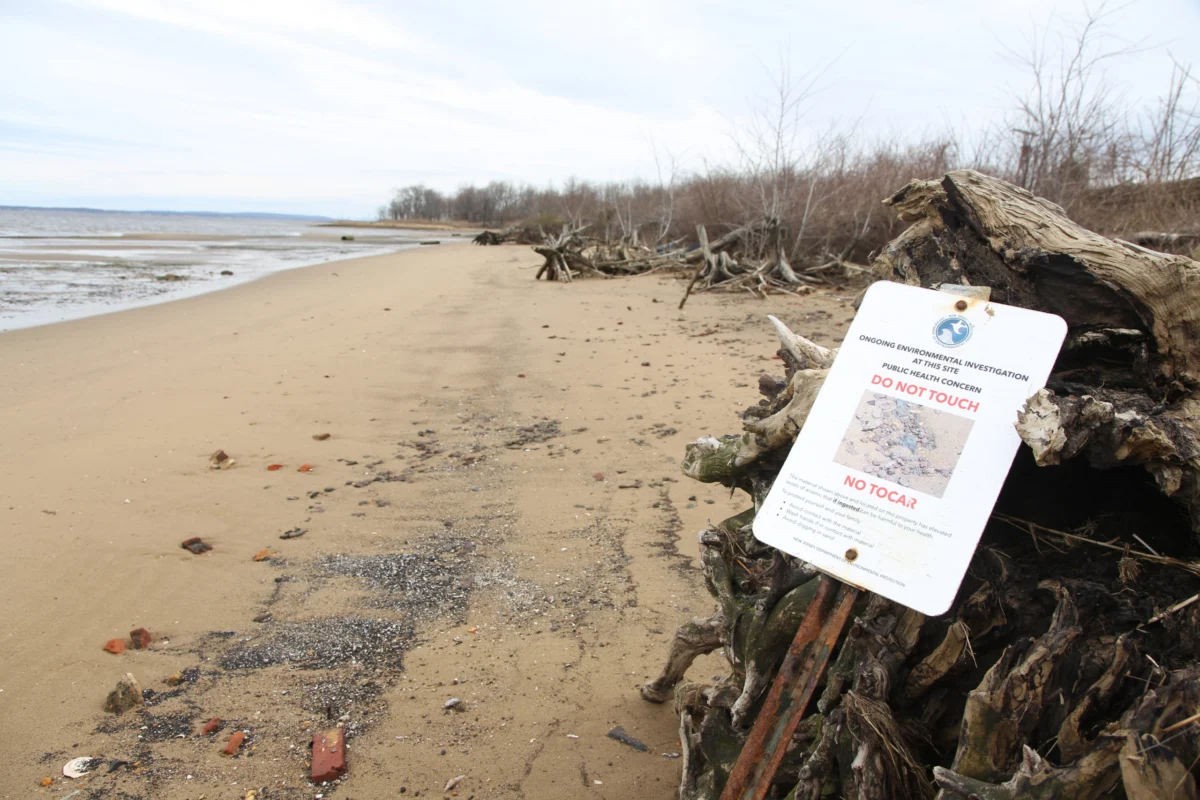
Morris brought his alarming findings to NJ.com. Reporters Karin Price Mueller and Steven Rodas recognized the gravity of the data and launched a comprehensive investigation, publishing a special report in April. Their reporting revealed that the affected neighborhood was "chillingly close" to a 50-acre, shuttered municipal landfill. Limited testing indicated that the site had leached toxic waste and harmful chemicals into the surrounding air and water near the Morris home for at least half a century.
The publication of the initial report acted as a catalyst, opening the floodgates for affected residents. "Once that first story ran, we got so many calls and Facebook messages and emails from people with cancer cases near the landfill concerned and wanting their case to be counted too," Price Mueller explained. As the community response swelled, the verified number of reported cancer cases in the vicinity skyrocketed to 485.
Part II: Chronology of the Crisis and Newsroom Response
The unfolding investigation followed a rapid trajectory, fueled by aggressive journalism and an unprecedented local outcry:
- February: Rusty Morris begins mapping cancer cases in his Keyport neighborhood, identifying dozens of diagnoses on a single street.
- April: NJ.com reporters Karin Price Mueller and Steven Rodas publish their bombshell special report, linking the neighborhood’s high cancer incidence to a nearby, long-shuttered landfill.
- May–June: As community engagement intensifies, NJ.com leadership commits extensive resources. Over a span of five months, Karin Price Mueller publishes more than twenty follow-up pieces, earning the deep trust of local residents.
- June: Seeking empirical backing for the residents’ fears, the newsroom commissions a preliminary cancer incidence study. The data reveals that individuals living near the landfill are 15 percent more likely to have cancer than other county residents, with risk escalating closer to the site.
- August: New environmental testing, also commissioned by NJ.com, confirms that the neighborhood surrounding the landfill—which was first closed in 1979—is a severe "hot spot" of toxins linked to serious diseases.
- Late Summer: Yielding to sustained public pressure and media scrutiny, the New Jersey Department of Environmental Protection announces an official investigation, deploying teams to collect soil and water samples for independent testing.
Part III: Supporting Data and Environmental Findings
The journalistic endeavor by NJ.com was notably bolstered by independent data collection, moving the narrative from anecdotal neighborhood fear to quantifiable public health risk.
Christopher Kelly, vice president of content at NJ.com, noted that the community reaction was unlike anything he had witnessed in his twelve years with the publication. Recognizing the stakes, the newsroom invested financially and editorially in independent scientific validation.

The preliminary cancer incidence study commissioned in June provided statistical weight to the residents’ claims. It established a clear statistical variance: living within the shadow of the 50-acre landfill correlated with a 15 percent higher cancer rate compared to the broader county demographic. Furthermore, spatial analysis indicated a gradient effect—the closer residents lived to the perimeter of the dump site, the higher their statistical risk of developing severe illnesses.
Complementing the epidemiological findings, the August environmental testing painted a grim picture of industrial legacy. The tests confirmed that the ground surrounding the landfill functioned as a concentrated reservoir of hazardous toxins. These chemical agents, left unchecked since the site’s nominal closure in 1979, had persisted in the local ecosystem for decades, directly contradicting long-held assumptions of containment.
Part IV: Official Responses and Institutional Resistance
The trajectory of the Keyport investigation illustrates a familiar friction point between investigative journalism and bureaucratic inertia. When confronted with suspected cancer clusters, government and regulatory bodies have historically offered a defensive wall of skepticism.
"When you report on potential cancer clusters historically, there is a strong tendency for government agencies to tell you there is nothing to see here," Christopher Kelly observed. "Cancer clusters are notoriously impossible to prove."
Rather than accepting preliminary dismissals, the newsroom adopted a posture of active persistence. By funding independent scientific studies and maintaining a steady drumbeat of coverage, NJ.com effectively trapped regulatory bodies in a corner where inaction became politically untenable.
Consequently, the New Jersey Department of Environmental Protection reversed its passive stance. Last month, state inspectors initiated comprehensive sample collections at the site. For the reporting team, this shift validated a core philosophy of modern local journalism: to "rattle that cage and keep putting the ball back in their court."
Part V: Implications — The Digital Erasure Crisis
While local reporting successfully exposed physical toxicity in New Jersey, a parallel toxicity was unfolding in the digital ether—the deliberate erasure of cultural and historical records by corporate media conglomerates.
In a striking reminder that modern archival preservation cannot be taken for granted, BET Digital permanently deleted its entire online news archive. Philip Lewis, deputy editor at HuffPost, broke the story, revealing that parent company Paramount justified the purge as a strategic shift to "prioritize video content." The casualty of this corporate pivot was definitive: years of specialized journalism and cultural commentary vanished overnight.
This move mirrors Paramount’s recent gutting of the MTV News archive, demonstrating a broader corporate indifference to institutional memory. In the contemporary digital ecosystem, publishing content online is inexpensive, but maintaining long-term archival infrastructure is costly. When media outlets change hands, consolidate, or shift business models, accumulated digital history is routinely sacrificed.
Maria Bustillos, editor of Flaming Hydra and an information activist, describes this vulnerability as a losing battle against institutional entropy. "There’s a certain tension—big institutions and governments aren’t fully committed to creating digital libraries that are maintained with a view to preserving digital posterity," she notes. "It’s a fight against entropy. All kinds of entropy: political entropy, academic entropy, cultural entropy, news entropy."
The Battle Over the Internet Archive
Amidst corporate vandalism, the Internet Archive has served as a vital digital lifeboat. Following the BET shutdown, the Internet Archive announced it had successfully preserved more than 199,000 BET articles, accessible via its Wayback Machine. Similar interventions were made when MTV News shuttered in 2024, rescuing over 470,000 archived pages.

However, the Internet Archive itself faces an existential threat. Major publishers—including The Guardian, The New York Times, and USA Today—have begun restricting the Archive’s web-crawling access, citing concerns over artificial intelligence scraping.
This defensive maneuver by corporate publishers has drawn fierce criticism from press freedom advocates. A coalition of journalists and advocacy groups recently published an open petition defending the Archive’s role as an indispensable public library. As Joe Mullin, senior policy analyst at the Electronic Frontier Foundation, warned: "Turning off that preservation in an effort to control AI access could essentially torch decades of historical documentation over a fight that libraries like the Archive didn’t start, and didn’t ask for."
Bustillos argues that preserving digital history is more urgent precisely because of the rise of generative AI. As original contexts blur and data is harvested or deleted, the raw materials of history risk permanent distortion. Safeguarding these archives, she contends, requires ironclad security that places historical records permanently out of reach of both corporate whims and hostile actors.
Part VI: Human Cost — Journalism Beyond the Screen
The cost of reporting the news is measured not only in lost digital archives, but sometimes in human survival. On August 15, 2021, the Taliban seized control of Kabul, precipitating a frantic evacuation as American forces prepared to withdraw. For Afghan journalists and local contributors who worked alongside Western media organizations, the takeover represented an immediate, mortal threat.
In a new book, The Last Free Women: A Daring Escape from Afghanistan and Coming of Age in America (Grand Central Publishing), authors Rebecca Blumenstein and Diana Kapp chronicle the extraordinary, high-stakes rescue operations orchestrated by the New York Times. Blumenstein—then a deputy managing editor at the Times and now president of editorial at NBC News—oversaw the extraction of bureau staffers and their families, creating one of the largest privately sponsored refugee groups in modern U.S. history.
The operation forced the newsroom to navigate complex ethical boundaries, balancing strict policies against seeking favors from news subjects with a moral imperative to protect contributors in mortal danger. Amidst the chaos of the Hamid Karzai International Airport—witnessing desperate citizens clinging to departing aircraft—Times reporter Mujib Mashal guided the group on foot through perilous checkpoints to safety.
Arriving in Houston sixteen days after the fall of Kabul, the refugees faced a different kind of trial: the arduous process of cultural adaptation. Blumenstein personally managed their resettlement, securing housing by delivering a letter from Times publisher A.G. Sulzberger guaranteeing rent. Following four young women over the subsequent years, Blumenstein and Kapp document the difficult intersections of culture shock, survivor’s guilt, and the jarring realities of navigating a sometimes hostile American social landscape—marked by occasional encounters with xenophobia and Islamophobia.
Ultimately, the narrative highlights the imperfect nature of freedom, contrasted against the grim alternative of what awaited those left behind.
Conclusion: The Imperative of Preservation and Persistence
Whether exposing hidden toxins leaching into a New Jersey suburb, rescuing endangered journalists from the ruins of Kabul, or fighting to preserve the vanishing digital archives of cultural journalism, the underlying thread remains the same: the defense of truth and memory requires active, deliberate intervention.
As corporate entities prioritize short-term monetization over historical accountability, and as regulatory bodies default to institutional denial, the burden falls back on tenacious local reporters, dedicated information activists, and independent archives. The events in Keyport and the ongoing battles over digital posterity serve as a stark warning. Without robust infrastructure to safeguard our records and fearless reporting to challenge institutional apathy, both our physical environments and our collective history will quietly erode.