By Susie Banikarim
Main Facts
Chris Hansen stands outside a Regal movie theater in Times Square, feeling visibly ambushed. Around him, tourists mill about unaware as a camera crew captures the surreal moment. He has just walked out of Primetime, a new A24 feature film loosely based on his career and starring Robert Pattinson.
"I’m not objective, because the character is, you know, me," Hansen says, shaking his head. "But it was so detached from reality. I’m not sure what the point of it was."
To test his reaction, Hansen begins interviewing ordinary moviegoers on the street.
"I watch a lot of your stuff on YouTube. I felt like it was very overdramatized," one man tells him.
"Overdramatized," Hansen emphasizes back. "I happen to agree with you."
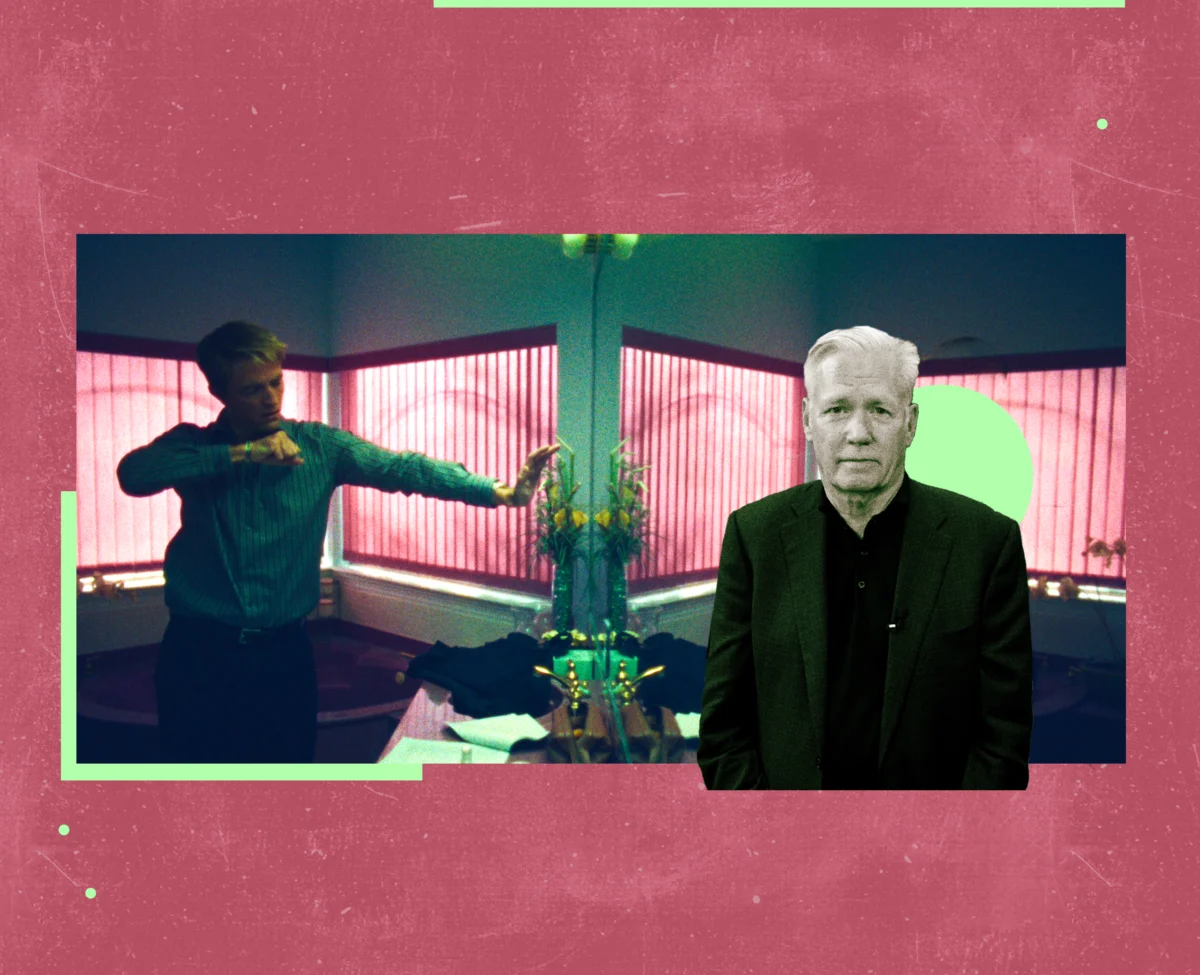
Two decades after To Catch a Predator first gripped American television screens as a segment on NBC’s Dateline, Hansen finds himself wrestling with his own cinematic ghost. Directed by Lance Oppenheim—known for visually inventive documentaries like Some Kind of Heaven and Spermworld—Primetime applies a hyper-stylized, surreal aesthetic to the mythos of the cyber-vigilante journalist.
Yet, the subject of the film feels alienated by it. What was meant to be a cinematic exploration of cultural obsession has instead reignited a bitter real-world conflict over consent, narrative control, and the ethics of public shaming. While Primetime has broken out as a box-office hit—particularly among Gen Z audiences—Hansen is fighting back on his own terms, leveraging the controversy to boost his streaming network, secure a new book deal with Simon & Schuster, and announce his own upcoming documentary, I Am Chris Hansen.
Chronology: From NBC Stings to Hollywood Surrealism
To understand the friction between Hansen and Hollywood, one must trace the timeline of how To Catch a Predator transformed from a television broadcast into an inescapable cultural mythos.
- 2004: To Catch a Predator debuts on NBC’s Dateline. Developed in collaboration with the controversial cyber-vigilante group Perverted-Justice, the segment uses adult decoys posing as minors in online chat rooms to lure prospective sex offenders to suburban homes outfitted with hidden cameras.
- November 2006: A tragic turning point occurs. Bill Conradt, an assistant district attorney in Texas, is caught in a sting operation. After failing to show up at the designated house, Hansen and his crew accompany police to raid Conradt’s home—a departure from the show’s standard format. Conradt fatally shoots himself before police can execute an arrest. A subsequent investigation reveals child sexual abuse material on his devices, but the incident sparks intense legal and ethical fallout.
- 2007–2008: Media critics roundly condemn the show’s theatrical approach to justice. Conradt’s sister sues NBC, alleging that the network pressured law enforcement into aggressive tactics for dramatic effect. NBC settles out of court in 2008, and the franchise eventually concludes its network run, though reruns find a permanent digital afterlife on MSNBC and YouTube.
- Late 2023 – January 2024: Director Lance Oppenheim begins conceptualizing Primetime, inspired in part by a Cameo video his wife purchased from Hansen. Through a mutual acquaintance, Hansen inquires about the film’s tone and is allegedly told it will be "a love letter to Chris"—a claim Oppenheim disputes.
- May 26, 2025: A24 contacts Hansen for the first time, just a day before releasing the film’s teaser trailer. Studio representatives express a desire to "touch base" about his involvement in the rollout, providing few details.
- August 2025: Frustrated by what he views as a "sneaky, disingenuous Hollywood method," Hansen refuses to sign A24’s nondisclosure agreements after being blocked from a private screening without surrendering his legal rights and name/image/likeness rights. He takes his grievances public, appearing on Fox News’s Jesse Watters Primetime.
- Present: Primetime hits theaters, drawing massive crowds of younger viewers. Hansen capitalizes on the media cycle, launching podcast response episodes, promoting his TruBlu streaming service, and announcing a new thriller book deal and his own documentary project.
Supporting Data: The Statistics of Child Sexual Abuse
Beneath the cinematic debate lies a stark sociological reality regarding the true nature of child sexual exploitation—one that media critics argue was fundamentally distorted by Hansen’s television empire.
At its peak, To Catch a Predator drew more than ten million weekly viewers, a staggering metric for unscripted television in an era preceding widespread social media use.
"The internet was ubiquitous, but we didn’t socialize on it yet. Social media didn’t exist yet in 2004," notes David Osit, director of the documentary Predators.
The show relied on a rigid, highly performative formula: a decoy invited the suspect into a kitchen; Hansen emerged to confront them with printed chat logs; the suspect cycled through denial, bargaining, and realization; and police officers waited outside to make the arrest. The iconic prompt—"Have a seat"—and the interrogation line—"You see how this looks, right?"—became part of the national lexicon, parodied everywhere from The Simpsons to late-night comedy.
However, criminologists and sociologists point out that the show fostered a dangerous misconception about who actually commits these crimes.
- The "Stranger Danger" Fallacy: Research by David Finkelhor, director of the Crimes Against Children Research Center, demonstrates that roughly 90 percent of perpetrators of child sexual abuse are individuals already known to the victim.
- Online Perpetrators: Even within digital spaces, stranger danger is the exception rather than the rule. A 2023 analysis published in the journal Trauma, Violence, & Abuse found that 68 percent of online offenders were acquaintances or family members.
Critics argue that the hyper-fixation on predatory strangers lurking in online chat rooms obscured the far more prevalent, insidious threat of abuse occurring within homes and trusted circles.
"What this show and many of the versions after it do is keep us in this antiquated idea that threats come from outside the home, from complete strangers," says Luke Malone, coauthor of the abuse-prevention book One in Five. "We’ve been dealt a collective miseducation about who is the most at risk of harming kids… and I think Hansen’s a huge driver of that miseducation."
Hansen defends his legacy, acknowledging that abuse often occurs within families while maintaining that the external threat remains severe: "Maybe the majority of the times it happens in the family, but it doesn’t make it happen any less between strangers. The danger is everywhere."
Official Responses and Industry Friction
The collision between a real-world journalist and an independent prestige film studio has exposed deep cultural disagreements over ownership and artistic license.
Chris Hansen’s Position
Hansen remains fiercely protective of his brand and deeply critical of A24’s approach. He maintains that studio executives attempted to trap him into signing away his legal rights during private screening negotiations.
"The lawyers at A24 wanted me to sign away my rights to my name, image, and, you know, brand, essentially, as well as any potential legal rights that would come out of the movie," Hansen said. "It might be standard if you’re a film critic or if you’re the wife of a Hollywood producer. But if you’re Chris Hansen, there’s nothing standard about it."
He accuses the filmmakers of hypocrisy, arguing that their artistic deconstruction of his work trivializes the very real dangers of child exploitation.
"They’re criticizing the way that we went after people who prey on children. They’re just as big of predators as the people who get caught in these investigations. It’s dirty. It’s disingenuous," Hansen stated. "Fuck Chris Hansen, and we’ll do whatever the fuck we want. That’s their attitude."
Studio and Filmmaker Responses
A24 has defended its release strategy as standard industry practice, noting that feature films based on public figures do not legally require individual permission or consultation during production.
Director Lance Oppenheim rejects the accusation that his film is a malicious takedown, framing Robert Pattinson’s character not as a monster, but as a complex, haunted hero navigating an impossible environment.
"He’s a hero, and a complicated hero at that. What makes him complicated is not the fact that he’s going after these guys. These guys are mentally disturbed, and they’re there to do something horrific," Oppenheim explains. "I wanted to show what the effects were on someone who does this work… I’ve made a film that visually and spiritually and stylistically attempts to own that and is not intending to be representational of reality in any way."
Oppenheim emphasizes that the movie reflects a broader cultural mythology rather than a biographical attack. "There’s a mythology that does not belong to Chris Hansen, that has grown from underneath him."
Implications: Who Owns a Cultural Phenomenon?
The cultural fallout of Primetime raises profound questions about the intersection of journalism, entertainment, and public memory in the digital age.
At its core, the friction between Hansen and Hollywood highlights a modern paradox: when a journalist becomes a pop-culture icon, they lose ownership of their own narrative. To Catch a Predator was never just a news segment; it was an early iteration of participatory, voyeuristic reality television that fed society’s deep-seated appetite for moral certainty.
"The reason it’s endured is that it’s linked to a sort of performance of good versus evil that is deeply appealing in a stratified time," David Osit observes. "And many people need those stories to feel like they can survive in the world."
The commercial success of Primetime—drawing an overwhelmingly young demographic where 69 percent of ticket buyers are under thirty—proves that the appetite for this mythology remains ravenous. Gen Z viewers, many of whom were toddlers when the original broadcasts aired, are consuming the story through a lens of internet irony, true-crime obsession, and cinematic pastiche.
Meanwhile, Chris Hansen continues to adapt. Far from fading into obscurity, he has turned the A24 controversy into a marketing engine for his own brand, driving massive traffic to his streaming network, locking in a major book deal, and preparing his own definitive documentary.
Ultimately, as media analyst Susie Banikarim notes, the media landscape reflects back whatever society projects onto it. Whether Primetime is viewed as a brilliant surrealist masterpiece or a disingenuous cinematic ambush, the enduring fascination with Chris Hansen proves that the public’s obsession with crime, punishment, and public shaming is far from over.