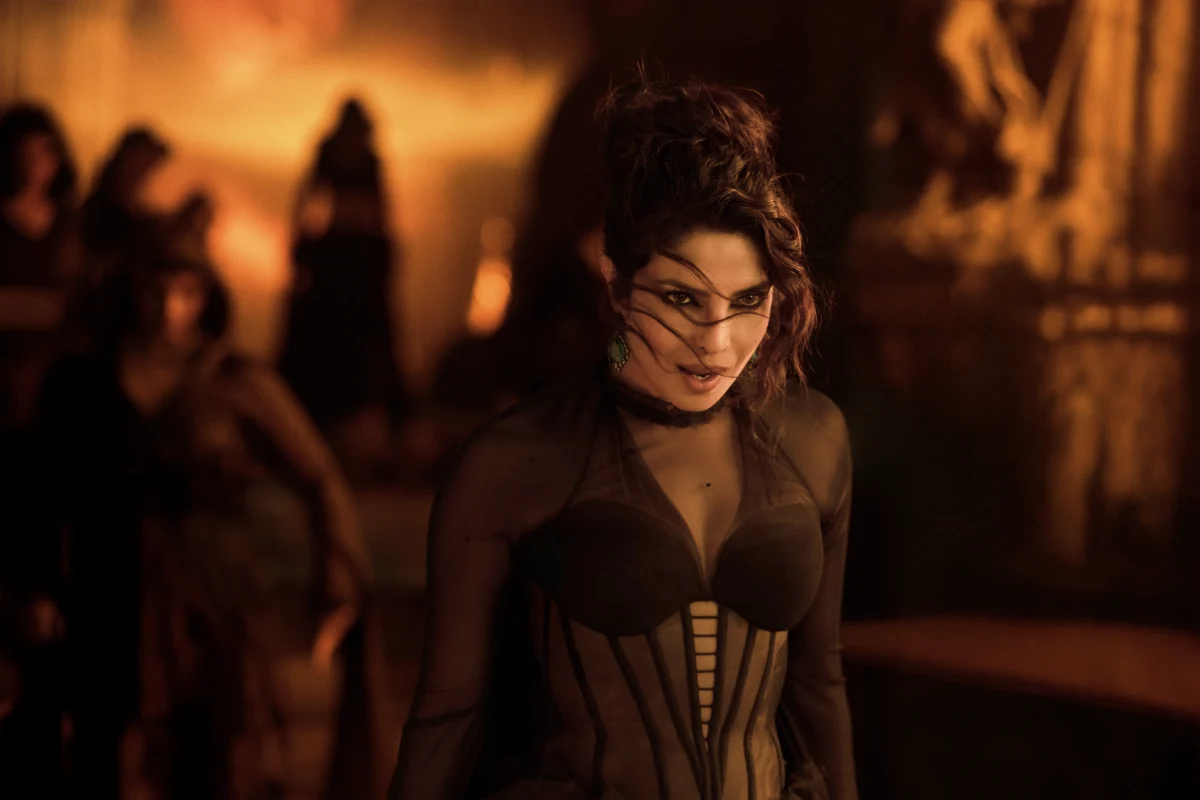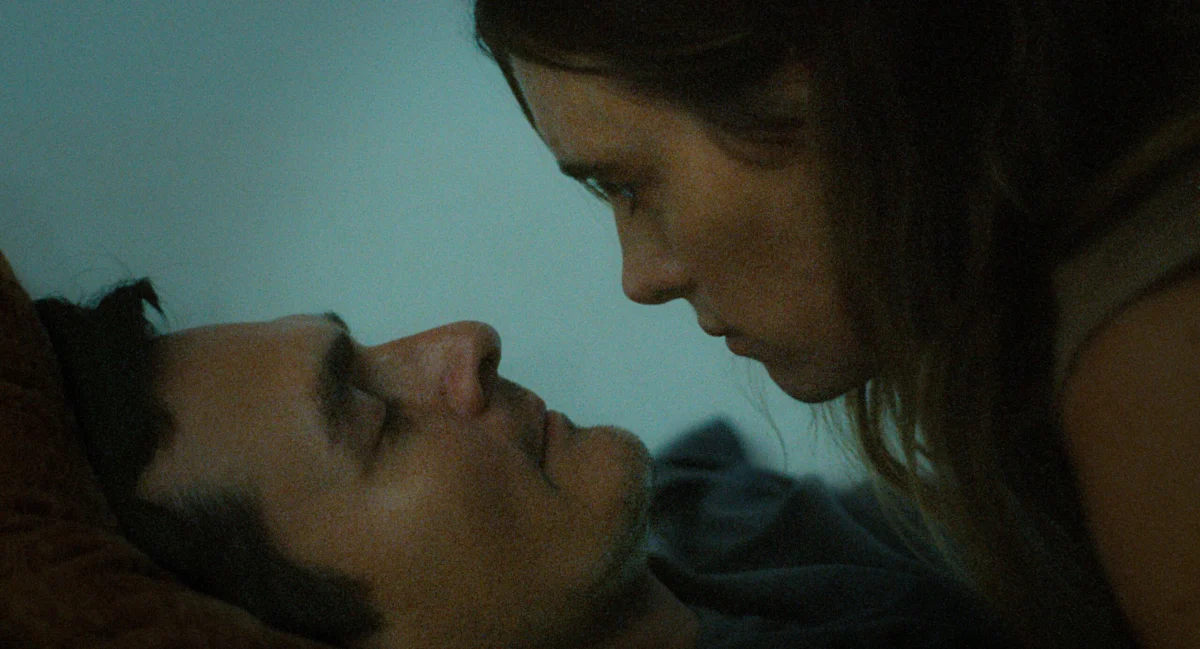

TORONTO — Ten years after mesmerizing cult cinema devotees with her vibrant, feminist 1960s-pastiche sophomore feature The Love Witch, auteur Anna Biller has returned from an entirely different cinematic era. Premiering in the prestigious Midnight Madness section of the Toronto International Film Festival (TIFF), Biller’s latest creation, The Face of Horror, is a dazzling, visceral, and unapologetically stylized Technicolor fever dream.
Clocking in at a rich, immersive two-hour runtime, the film adapts and updates the classic Japanese Kabuki ghost story Yotsuya Kaidan, transposing its haunting themes of betrayal, rot, and retribution into a meticulously crafted medieval landscape. Driven by a stellar ensemble cast featuring Kristine Frøseth, Jonah Hauer-King, Ellie Bamber, and Bella Heathcote, Biller’s third feature is already cementing its place as one of the most talked-about genre events of the festival season.
Main Facts: A Bold Return to Form
At its core, The Face of Horror is a masterclass in atmospheric genre-bending, capturing the aesthetic high of classic Hollywood Technicolor while plunging headfirst into the macabre. Written, directed, and stylized by Biller—whose keen eye for historical costume, set design, and chromatic tension defined The Love Witch—the film explores the timeless horrors of misogyny, gaslighting, and female rage.
The narrative framework reimagines the legendary Yotsuya Kaidan ghost tale, stripping away its original Edo-period Japanese setting to reconstruct a medieval European world governed by rigid patriarchal hierarchies, knights, and noble courts. Yet, Biller retains the spiritual DNA of the original story: a treacherous husband, a discarded and abused wife, and a horrifying, supernatural haunting that demands absolute retribution.
Sales agent Embankment Films is handling international sales for the project, which boasts an impressive supporting cast alongside its leads, including Leo Suter and Ben Radcliffe. For cinephiles who have spent the last decade waiting for Biller to follow up on her modern classic, The Face of Horror delivers an intoxicating blend of camp, operatic tragedy, and uncompromising feminist critique.
Chronology: A Tale of Deceit, Disgust, and Descent
The tragedy of The Face of Horror unfolds in a deliberate, agonizing escalation of moral decay and supernatural terror.
The film opens in a rigid medieval setting, introducing the ambitious and morally bankrupt knight Edward, played with caddish charisma by Jonah Hauer-King. Edward approaches the patriarch of Eleanor (Kristine Frøseth) to ask for her hand in marriage. However, the father fiercely rejects the union, fully aware of Edward’s reputation as a scoundrel and a thief.
Refusing to accept rejection, Edward takes matters into his own hands. He murders Eleanor’s father in cold blood. In a display of chilling manipulation, Edward then approaches the grieving and naive Eleanor, deceitfully promising to hunt down the "killer" of her father. Exploiting her vulnerability, he convinces her to marry him under the guise of offering protection.
As the months press on, the illusion of protection shatters against the harsh realities of medieval domesticity. Edward quickly grows disgusted with Eleanor following her postpartum recovery, viewing her changing body and maternal burdens as obstacles to his social ambitions. He soon begins openly courting the recently widowed, wealthy, and equally ruthless noblewoman Isabel (Bella Heathcote). Together, Edward and Isabel concoct a malicious plot to eliminate Eleanor so they can freely unite their fortunes and status.
With Edward’s conscience hanging by a thread and Eleanor’s livelihood—and very life—in grave peril, the film shifts gears in its final act. Driven by Edward’s unspeakable cruelty and the spectral forces awakened by his actions, the narrative culminates in a bloody, cathartic finale defined by ghostly horror and righteous vengeance.
Supporting Data and Character Breakdowns
Biller’s direction is heavily elevated by the performances of her principal cast, each bringing distinct emotional textures to the operatic proceedings.

Kristine Frøseth as Eleanor
Frøseth anchors the film with a deeply understated and tragic performance. As Eleanor, she embodies the archetypal sweet, naive maiden desperately seeking the affection of the man who vowed to protect her. Frøseth captures the heartbreaking desperation of a woman willing to endure physical and psychological torment—going to extreme lengths to fit her husband’s impossible, shifting vision of beauty. Her transition from a hopeful young bride to a haunting vessel of vengeance is handled with subtle, heartbreaking precision.
Jonah Hauer-King as Edward
Hauer-King delivers a career-redefining turn as Edward, painting a portrait of a medieval "fuckboy" devoid of traditional redeeming qualities. Yet, Biller and Hauer-King avoid making him a one-dimensional caricature. As the psychological weight of his crimes—compounded by relentless haunting—drives him toward the brink of madness, Edward becomes a tortured, pathetic figure. Plagued by the very real threat of eternal damnation, his struggle to outrun his toxic nature forms the psychological core of the film’s second half.
Ellie Bamber as Beatrice
In a true breakout performance, Bamber steals scenes as Eleanor’s strong-willed sister, Beatrice. While Eleanor suffers silently under Edward’s thumb, Beatrice possesses a fierce, protective spirit. Her unyielding love for her sister sparks a quest for vengeance that serves as the emotional beating heart of the film’s horrific climax, leaving audiences cheering through tears.
Bella Heathcote as Isabel
Heathcote rounds out the central conflicts as the cunning and wealthy noblewoman Isabel. Serving as the catalyst for Edward’s final descent into cruelty, Heathcote plays the scheming widow with cool, calculating elegance, seamlessly fitting into Biller’s heightened aesthetic universe.
Official Responses and Festival Reception
Premiering within the notoriously raucous Midnight Madness section at TIFF, The Face of Horror drew immediate praise for its audacity, artistic ambition, and thematic relevance. Festival programmers and early reviewers have lauded Biller for maintaining her distinct authorial voice while expanding her thematic and aesthetic scope into medieval territory.
Critics have noted that Biller’s decade-long absence from the feature film landscape has done nothing to blunt her edge. If anything, The Face of Horror showcases a more confident, mature filmmaker who understands how to weaponize cinematic history against contemporary anxieties.
Industry insiders have expressed strong interest in how the film will perform upon its broader theatrical rollout, particularly given the passionate, cross-demographic fanbase Biller cultivated with The Love Witch. Embankment Films anticipates robust international distribution deals, driven by the star power of Hauer-King (fresh off Disney’s The Little Mermaid) and Frøseth, alongside the enduring market appeal of elevated, feminist horror.
Implications: The Evolution of Feminist Genre Cinema
The Face of Horror arrives at a fascinating cultural and industrial juncture. Over the past decade, "elevated horror" has become a dominant box-office force, with many studios attempting to mine trauma and societal critique for cheap thrills. However, Anna Biller’s approach stands entirely apart from contemporary trends.
While many modern horror films lean into stark, muted realism or gritty handheld aesthetics, Biller doubles down on artificiality, high-contrast Technicolor palettes, and theatrical framing. By utilizing the visual grammar of 20th-century Hollywood melodramas to tell a medieval ghost story, she bridges the gap between old-school cinematic craftsmanship and modern feminist deconstruction.
Furthermore, the film’s exploration of postpartum depression, domestic abuse, and gaslighting within a historical framework offers profound contemporary resonance. By highlighting how patriarchal structures have historically isolated and discarded women, Biller reminds audiences that the horrors of the past are deeply intertwined with the battles of the present.
For cinephiles starving for intelligent, visually resplendent, and uncompromised filmmaking, The Face of Horror is more than just a late-night festival thrill—it is a triumphant validation of Anna Biller’s singular vision, proving once and for all that female rage, when channeled through art, is an eternal and terrifying force.