It is rarely a reassuring sign when a standards editor fires off an urgent email at the end of the business day. It is doubly ominous when that correspondence arrives moments after a reporter has published a high-profile "scoop" resting upon a shaky, anonymous foundation—a piece that is instantly and aggressively denied by virtually every key figure involved.
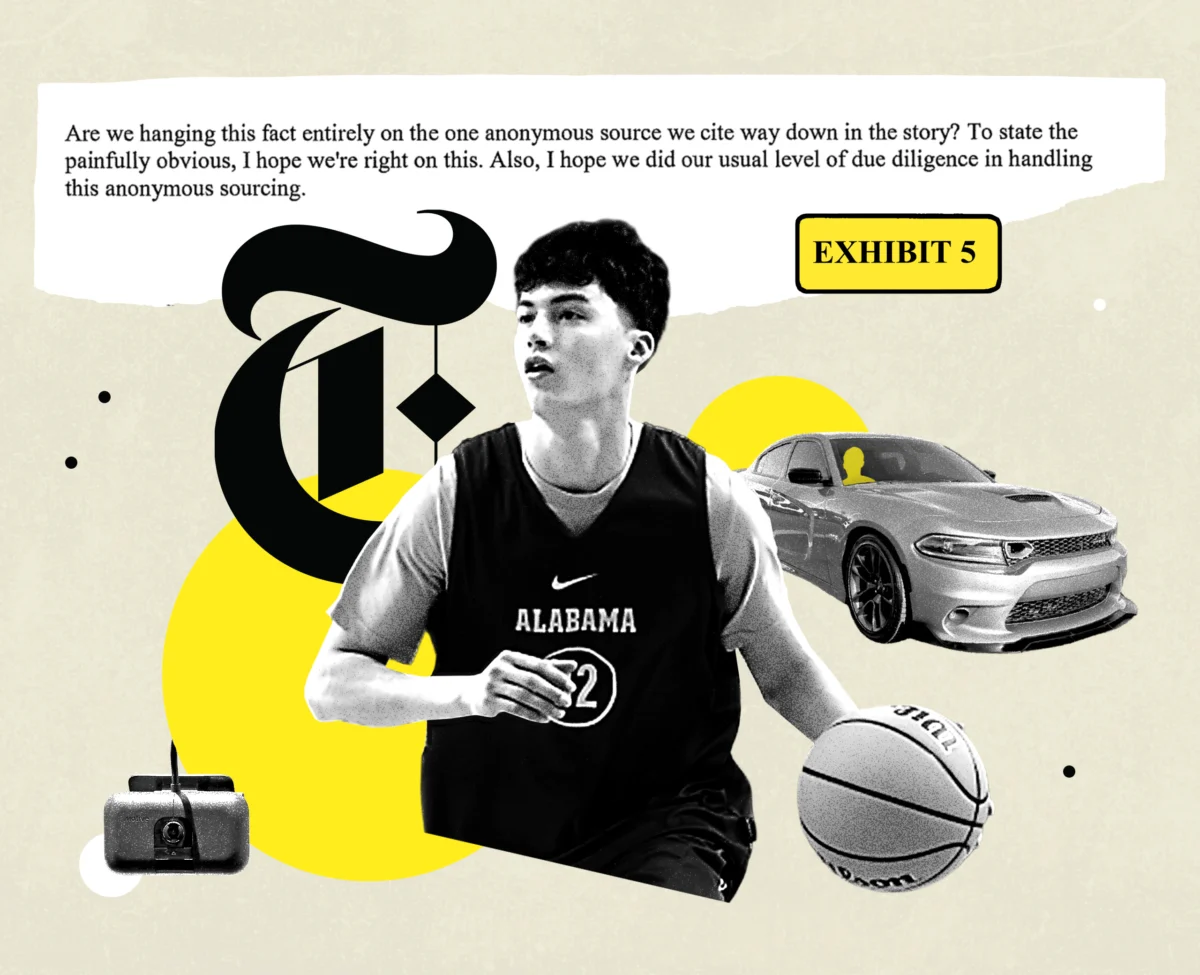
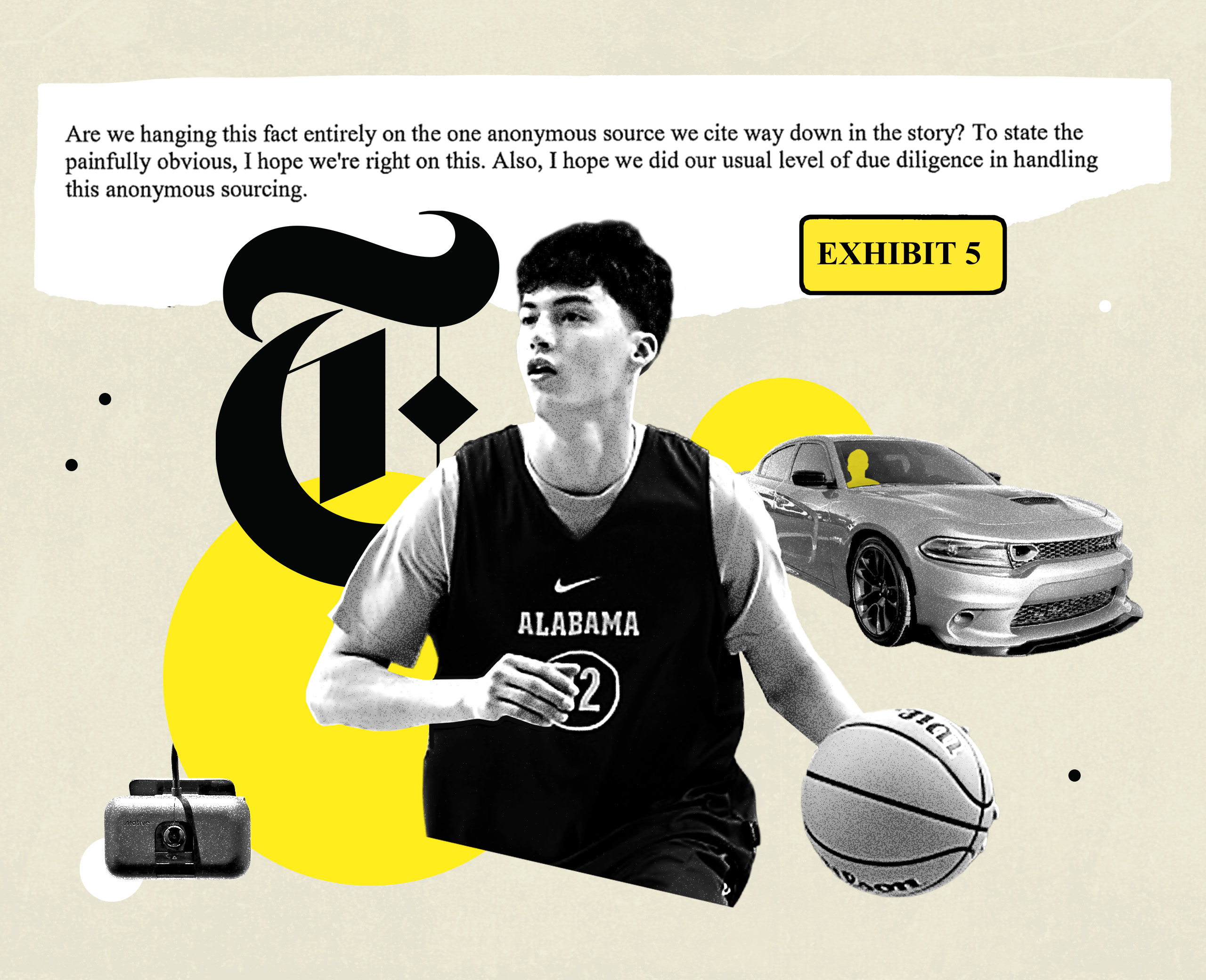
Yet, that was the grim reality on the evening of March 16, 2023. Phil Corbett, then the associate managing editor and standards editor for the New York Times, wrote a fateful message to the leaders of the paper’s sports section: "To state the painfully obvious, I hope we’re right on this. Also, I hope we did our usual level of due diligence in handling this anonymous sourcing."
Corbett’s institutional instincts were entirely justified. What followed was a catastrophic journalistic misfire—one that culminated in the New York Times suffering its first defamation trial loss in a United States court in more than fifty years. When the legal battle concluded in the U.S. District Court for the Northern District of Alabama, a federal jury handed down a stinging verdict, awarding $9.25 million to Kai Spears, a former University of Alabama basketball player. The paper had mistakenly, and falsely, placed Spears as a passenger in a vehicle present at the scene of a tragic, fatal shooting.
Examining hundreds of pages of court briefs, depositions, and news archives reveals a cascading series of miscalculations by Times journalists. From a botched locker room interview to a stubborn, seventy-nine-day delay in correcting the record, the paper’s handling of the crisis has sparked a profound debate over reporting ethics, anonymous sourcing, and accountability in modern American journalism.
Main Facts of the Case
The core of the litigation stems from a catastrophic error in a March 2023 article. The Times published a front-page-style report claiming that a fourth University of Alabama basketball player—identified unequivocally as freshman walk-on Kai Spears—was inside a car riddled with bullets on the night of a deadly Tuscaloosa shooting.
In reality, Spears was nowhere near the vehicle. Investigative reports later confirmed that the individual in the car was actually Cooper Lee, a student manager for the basketball program who had already been thoroughly cleared by local law enforcement.
The repercussions for Spears were immediate and severe. As a member of a top-ranked collegiate basketball team thrust suddenly into a national murder scandal, Spears faced severe public vitriol. During games, opposing fans hurled devastating accusations, taunting him as a "murderer" and a "killer." The emotional and reputational toll prompted Spears and his legal team to file a defamation lawsuit against the New York Times Company on May 30, 2023.
While the Times has defended the original publication as an "honest error" rooted in aggressive reporting, a federal jury found otherwise, concluding that the paper acted with reckless disregard for the truth. Though U.S. District Judge Annemarie Carney Axon later trimmed the jury’s punitive-damage award nearly in half to $4.75 million, finding the initial figure excessive, the financial and reputational penalty remains historic.
Chronology of Events
January 2023: The Tragedy in Tuscaloosa
The events leading to the legal fallout began in the early morning hours of January 15, 2023, following a night out in downtown Tuscaloosa. After players and associates visited local spots including the Houndstooth Bar and a Waffle House, a dispute broke out near the strip. The altercation tragically escalated into gunfire, resulting in the death of a twenty-three-year-old mother who was an innocent passenger in a passing vehicle.
The actual gunman was swiftly apprehended and subsequently convicted of murder. Meanwhile, Darius Miles, a member of the Alabama basketball team, was accused of supplying the weapon used in the crime; Miles pleaded not guilty and awaited trial on capital murder charges.
March 2023: The Times Runs the Scoop
Local journalists in Alabama quickly pieced together the identities of those in the vehicles that night. Ryan Phillips, a reporter for the local Patch, investigated the claims and quickly established that the individual in the car alongside star player Brandon Miller was a basketball manager, not a player.
However, as the NCAA tournament approached in mid-March, veteran Times sports reporter Billy Witz traveled to Tuscaloosa to review case documents. During his trip, Witz met with an anonymous informant—dubbed "Source A" in court records—who claimed Spears was in the vehicle.
Witz then traveled to Birmingham to confront the team. Armed with a recording device, he cornered eighteen-year-old Kai Spears in the locker room:
Witz:"Kai? Hey, I’m Billy Witz with the New York Times."
Spears:"Nice to meet you."
Witz:"Hey, I know this is a touchy subject, but I understand you were in the car on the night of the shooting, and I could only imagine—I saw the video of it—I mean, I could only imagine, like, how terrifying that must have been… can you just describe, like, kind of what—"
Spears:"I’m sorry. I’m not going to be able to speak on that matter."
At no point did Witz directly ask Spears if he was in the car, relying instead on a leading premise. Hours later, the Times published the story under the headline: "A Fourth Alabama Player Was at a Deadly Shooting, in a Car Hit by Bullets."
March to May 2023: The Stonewall and the Backlash
Immediately following publication, a storm of denials hit the newsroom. Lawyers, athletic directors, and university officials called the story false and libelous. Yet, editors and reporters doubled down. Texts surfaced showing internal doubt—with Witz noting his source was "steadfast but there’s some equivocation"—yet the paper publicly maintained its stance: "We’re confident in our story and we stand by it."
It was not until June 2, 2023—days after the lawsuit was filed—that the Times finally published a retraction and correction written by investigative reporter Steve Eder, revealing that Cooper Lee, not Spears, was the manager in the car.
Supporting Data and Evidence
The judicial proceedings brought hidden editorial communications into the public light, offering a rare window into the Times‘ internal mechanics:
The Privilege Breach: Phil Corbett’s cautionary email became part of the public court record solely because he omitted the paper’s legal staff from the email chain, inadvertently stripping the message of attorney-client privilege.
The Deposition Grilling: During a grueling ten-hour deposition, plaintiff’s attorney Stephen New dismantled Witz’s interview methodology, forcing the reporter to admit he never directly asked Spears if he was in the vehicle. Witz conceded under oath: "I don’t think we would have run the story" if Spears had explicitly denied it.
Traffic and Reach: The original March 15 report generated nearly 160,000 page views within twenty-four hours, rapidly syndicating across national sports and news platforms and compounding the reputational damage.
Financial Penalties: The initial $9.25 million jury award represented a staggering payout for a libel suit against a premier media outlet, reduced by Judge Axon to $4.75 million on August 31, 2026.
Official Responses
The positions taken by both sides highlight a widening chasm between institutional self-preservation and accountability:
The New York Times: Representatives characterized the incident as an "honest mistake" made by hardworking journalists chasing a complex, high-stakes story. Speaking through defense attorney Michael Bell and corporate spokesperson Charlie Stadtlander, the paper argued that despite aggressive outreach, university officials and Spears’s representatives refused to provide alibis or verify facts during the critical window following publication, making an immediate correction impossible. Editor Oskar Garcia testified that getting a fact wrong did not invalidate the rigor of their pre-publication process.
The Spears Family: Standing outside the courthouse following the verdict, Kai Spears’s father, Christian Spears, voiced profound frustration. He noted that the family’s initial goal was simply a prompt and clean retraction. Instead, he argued, the Times chose to aggressively defend falsehoods, attack its critics, and compound the emotional trauma inflicted upon an eighteen-year-old student-athlete.
Implications for Modern Journalism
The fallout from Spears v. The New York Times Company extends far beyond a courtroom in Alabama. It serves as a cautionary tale for modern newsrooms operating in an era of hyper-fast digital publishing cycles.
First, the case underscores the perilous reliance on solitary, unverified anonymous sources when reporting on fast-moving criminal investigations. When a newsroom’s internal standards editor feels compelled to ask, "I hope we’re right on this," it is a flashing red light that should prompt an immediate pause, not a rush to publish.
Second, the trial highlights the ethical hazard of weaponizing institutional stubbornness. When major universities, legal representatives, and subjects universally deny a report, the burden of proof shifts back to the newsroom. Treating blanket denials merely as defensive stonewalling—rather than triggers for intensive re-verification—can turn a correctable error into a catastrophic legal liability.
Ultimately, the verdict reminds media organizations that maintaining public trust requires more than issuing delayed corrections or standing by flawed reporting under the banner of institutional infallibility. It requires humility, rigorous due diligence, and a willingness to own up to mistakes before a jury is forced to do it for them.