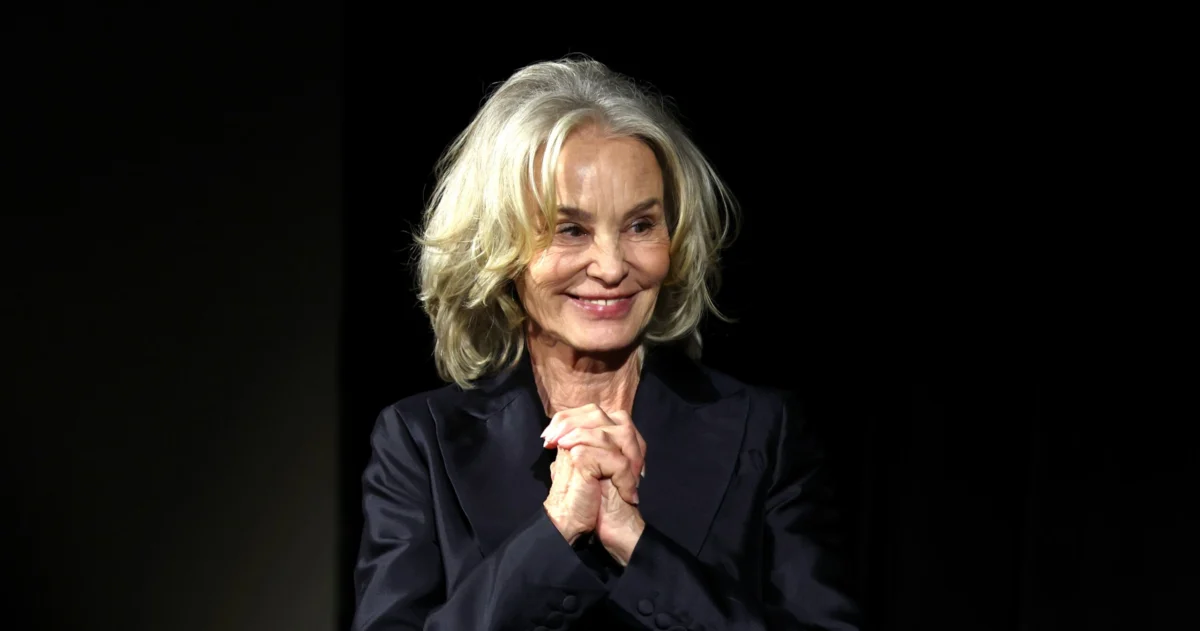
LOS ANGELES — In a revealing and reflective new interview, legendary actress Jessica Lange has signaled that the twilight of her legendary acting career may finally be on the horizon. The two-time Academy Award winner, whose indelible footprint on American cinema and theater spans over five decades, recently sat down with Rolling Stone to discuss her storied legacy. During the conversation, Lange candidly addressed her future in the industry, pointing to her acclaimed film adaptation of Eugene O’Neill’s Long Day’s Journey Into Night as a fitting and poignant potential capstone to a masterclass career.
Lange’s remarks arrive fresh off her recent television work—including a dual role in Ryan Murphy’s juggernaut anthology series American Horror Story 13—and coincide with the recent theatrical release of Long Day’s Journey Into Night. Yet, even as her latest cinematic endeavor reaches audiences, the celebrated star is confronting the stark realities of an entertainment landscape that has notoriously struggled to accommodate aging female performers.
Main Facts: The Curtain Call for a Legend
The central revelation of Lange’s recent media tour is her growing sense of professional finality. When asked by Rolling Stone about the roles she still hopes to tackle, the actress pivoted to a more introspective assessment of her trajectory.
"I actually feel like I’m coming to an end," Lange told the publication. "And maybe it’s not a bad way to end, you know, the last film being Long Day’s Journey Into Night and playing Mary Tyrone."
Key takeaways from Lange’s candid assessment include:
- The Potential Retirement: Lange views her film adaptation of Long Day’s Journey Into Night as a spiritually and artistically satisfying final project.
- Industry Barriers: The actress openly cited the chronic dearth of complex roles for older women and the increasingly prohibitive hurdles of financing auteur-driven projects as primary reasons for her step back.
- Unrealized Passions: Among her stalled pursuits is a long-gestating biopic about the legendary Marlene Dietrich, a project that explores the icon’s later life and reinvention after Hollywood effectively discarded her.
- Recent Projects: Lange’s latest cinematic effort, directed by Jonathan Kent, hit U.S. theaters last month, arriving six years after she and her co-stars first brought the production to Broadway.
Chronology: From the Silver Screen to the Stage and Beyond
To understand the weight of Jessica Lange’s potential retirement, one must look back at a monumental career built on fearlessness, emotional depth, and a steadfast refusal to be pigeonholed.
The Breakthrough Era (1976–1982)
Lange burst into the public consciousness with a thunderous Hollywood debut in John Guillermin’s 1976 monster movie King Kong. Though initially dismissed by some critics as a mere glamour prop, Lange quickly silenced skeptics. Just six years later, she achieved a historic milestone by earning two Academy Award nominations in the same year—Best Actress for her searing portrayal of actress Frances Farmer in Frances, and Best Supporting Actress for her role in Sydney Pollack’s comedy Tootsie. She won the Oscar for Tootsie, cementing her status as a dramatic and comedic powerhouse.
Critical Accolades and Cinematic Mastery (1984–1999)
Throughout the 1980s and 1990s, Lange cemented her reputation as one of the definitive dramatic actresses of her generation. She secured additional Oscar nominations for Country (1984), Sweet Dreams (1985), and Music Box (1989), before capturing her second Academy Award—this time for Best Actress—for her breathtaking performance as the manic-depressive matriarch Carly Marshall in Blue Sky (1994).
The Television Renaissance (2011–2026)
Rather than fading away as traditional Hollywood roles dried up, Lange experienced a monumental career resurgence in television, largely through her creative partnership with showrunner Ryan Murphy. Her work in American Horror Story introduced her to an entirely new generation of fans, earning her multiple Emmy Awards. She later collaborated with Murphy on Feud: Bette and Joan, exploring the exact themes of systemic ageism that she now fights against in her own career choices.
The Return of Mary Tyrone (2016–2026)
In 2016, Lange conquered Broadway, winning a Tony Award for her towering performance as Mary Tyrone in Jonathan Kent’s revival of Long Day’s Journey Into Night. Six years later, in 2022, Lange reunited with Kent—alongside an all-star cast featuring Ed Harris, Ben Foster, and Colin Morgan—to film a cinematic adaptation of the production. Following years in post-production limbo, the film finally secured a U.S. theatrical release in September 2026, setting the stage for Lange’s recent reflections.
Supporting Data: The Persistent Crisis of Ageism in Hollywood
Lange’s frank admission does not exist in a vacuum; it highlights a systemic, well-documented issue within the entertainment industry. For decades, studies, industry reports, and the lived experiences of veteran actresses have pointed to a steep precipice women face upon crossing the threshold into their 40s, 50s, and beyond.
- The Gender and Age Gap in Film: Data compiled by sociological researchers tracking top-grossing films consistently shows that male actors enjoy lucrative, high-profile leading roles well into their 70s and 80s (witness the enduring box-office viability of actors like Harrison Ford, Liam Neeson, and Tom Cruise). Conversely, prominent female actors face a dramatic cliff in project availability once they reach their late 40s.
- The Feud Parallel: Lange’s invocation of her work in Feud: Bette and Joan underscores how art imitates life. Playing Joan Crawford opposite Susan Sarandon’s Bette Davis, Lange explored the psychological toll exacted on Hollywood royalty when the studio system deemed them "box office poison" purely because of their birth certificates.
- The Financing Bottleneck: Lange noted that her dream project—a biopic chronicling Marlene Dietrich’s post-Hollywood evolution—remains unmade because securing funding for character-driven historical dramas centered on older women has become nearly impossible in today’s IP-obsessed, franchise-driven marketplace.
Official Responses and Industry Reactions
Following the release of the Rolling Stone interview, figures across the film and theater communities have spoken out, expressing a mixture of profound gratitude for Lange’s contributions and shared frustration over the state of the industry.
Colleagues and critics alike have rushed to social media and trade publications to honor the actress. Theater producers who worked with Lange on her historic Broadway runs pointed out that her commitment to heavyweight dramatic material has consistently elevated American theater.
While neither Ryan Murphy nor studio executives have formally commented on Lange’s specific retirement timeline, industry analysts note that her remarks serve as a wake-up call regarding Hollywood’s failure to retain its most decorated talent. "When an artist of Jessica Lange’s caliber feels the industry has effectively locked the doors to the kinds of stories she wants to tell, it is a loss for global culture," noted one prominent independent film producer.
Furthermore, fans have rallied around her body of work, transforming clips of her iconic performances—ranging from her television monologues in American Horror Story to her shattering cinematic breakdowns—into viral tributes across social media platforms.
Implications: What Lange’s Departure Means for Film and Theater
Should Jessica Lange officially close the book on her acting career, the implications for the artistic landscape will be profound, touching on cultural loss, the state of mature storytelling, and the future of older women in media.
1. The Loss of Fearless Character Portrayals
Lange has always specialized in playing complicated, messy, brilliant, and deeply human women—characters who refuse to be sanitized for the comfort of audiences. Her departure removes one of the few remaining cinematic anchors capable of investing high-art gravity into mainstream projects.
2. A Damning Indictment of Studio Priorities
That an actor with two Oscars, three Emmys, and a Tony Award—an elite member of the Triple Crown of Acting—struggles to get mid-budget dramatic films financed should alarm studio executives. If Hollywood cannot find a sustainable business model for a Jessica Lange vehicle, it signals a systemic failure in audience cultivation and risk-averse corporate filmmaking.
3. The Legacy of Mary Tyrone as a Final Bow
If Long Day’s Journey Into Night proves to be Lange’s cinematic swan song, it represents a poetic symmetry. Mary Tyrone—a woman trapped by addiction, memory, and the ghosts of her past—allows Lange to exercise the full breadth of her tragic, towering capabilities. It is a fittingly monumental monument to leave behind.
As the industry digests her words, Jessica Lange leaves behind a legacy that transcends awards shelves. Whether she steps away entirely or surprises audiences with one final, unexpected project, her place in the pantheon of cinema and theater remains eternally secure.