Main Facts
In the landscape of modern independent cinema, few projects generate as much immediate intrigue as A24’s Primetime. Directed by Lance Oppenheim, the film tackles the harrowing, bizarre, and profoundly influential cultural phenomenon of investigative stings popularized by television programs like To Catch a Predator. Central to the picture is its striking reimagining of a classic internet-era confrontation, featuring newly minted James Bond star Robert Pattinson stepping into the iconic shoes of investigator Chris Hansen. Opposite Pattinson is actor Tony Revolori, portraying a man arriving at a brightly lit suburban home under the false impression that he is meeting a teenage girl.
Rather than relying on the traditional, gritty, low-light aesthetic usually associated with true-crime thrillers or sting operations, Oppenheim and his creative team made a bold stylistic choice. They staged this psychological reckoning inside a vibrant, colorful, brightly lit residence. According to cinematographer David Bolen and editor Daniel Garber, this deliberate juxtaposition of stark terror against a backdrop of domestic normalcy forms the emotional and visual bedrock of the movie.
The film not only dissects the mechanics of public shaming and internet culture but also showcases a masterclass in modern filmmaking collaboration. Through careful camera placement, harsh daylighting, precise rhythmic editing, and a meme-literate performance by Pattinson, Primetime redefines how cinematic tension can be constructed in the digital age.
Chronology and Production Insights: Crafting the Tone
Setting the Standard: The First Predator Encounter
From the inception of the project, the creative team recognized the immense weight resting on the very first predator confrontation in the film. Because it establishes the visual grammar, pacing, and overall atmosphere for everything that follows, the sequence demanded absolute precision.
"This was like, we all felt a lot of anxiety about shooting this because we were like, ‘OK, this is the first predator encounter. This sets the tone for everything. So we have to make sure it’s good,’" cinematographer David Bolen revealed in an interview.
Director Lance Oppenheim was uniquely drawn to the inherent dissonance of high-stakes, life-altering psychological trauma unfolding within pristine, welcoming environments. "Someone’s life is kind of over, but it’s happening in this really bright, colorful space. So there’s an interesting dynamic there," Bolen noted.
The Architecture of Exposure
The choice to flood the scene with bright light was more than just an aesthetic preference; it served as a narrative weapon. In traditional filmmaking, shadows and darkness are deployed to build suspense or hide threats. In Primetime, the opposite occurs.
When Chris Hansen emerges to confront the suspect played by Revolori, the blazing light strips away any possibility of refuge. "The light is shining directly on him, and no matter what, the cameras are going to capture him," Bolen explained. "There’s an uneasiness about this happening that there’s no place for this predator to hide. Right now, Chris Hansen has him exactly where he wants him."
Engineering the "Superhero" Entrance
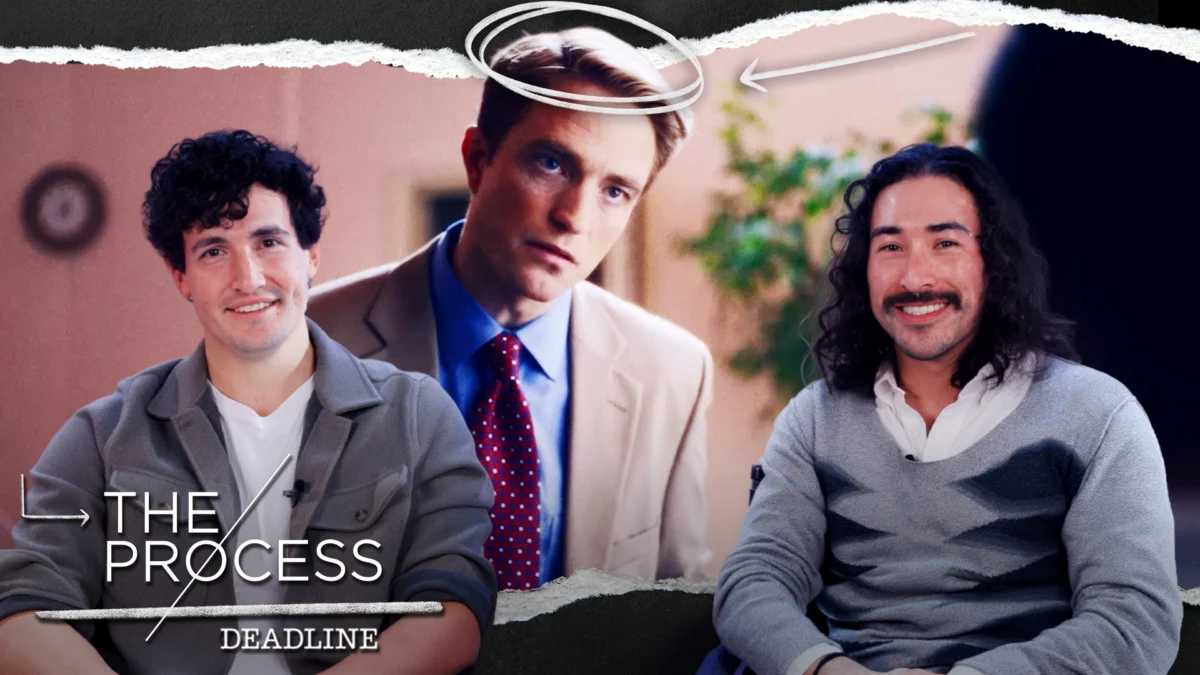
One of the most visually arresting moments of the sequence occurs as Hansen descends a flight of stairs to face the predator. To elevate the character from a standard television journalist into a mythic, larger-than-life figure of internet lore, Bolen and his gaffer engineered a striking lighting setup.
Working with windows positioned above the staircase, the crew forced massive, direct beams of sunlight down onto Pattinson, casting him in a radiant, almost angelic halo.
"This in many ways is his superhero shot," Bolen said. "He’s coming down from the stairs; he’s presenting himself as the full Chris Hansen for the first time. So early on with my gaffer, I decided, ‘OK, we’re going to backlight him really, really heavy with direct sunlight… to give him that kind of angelic feel. And that was to play into this like, yeah, he’s a superhero in this moment. This is Chris Hansen.’"
Supporting Data and Creative Execution: Editing the Uncanny
Stretching Time and Tension in the Cutting Room
While cinematography establishes spatial vulnerability, the editing room dictates psychological suffocation. Editor Daniel Garber approached the rhythm of the sequence with a deliberate focus on discomfort, utilizing silence and prolonged takes to maximize dramatic tension.
"In the edit, we’re also trying to establish a lot of that unsettling atmosphere through the rhythm of it," Garber explained. "There are a lot of moments where we’re holding on Chris as long as possible, really trying to milk the silences. And I think that draws out a lot of the uncanniness of this whole encounter."
Channeling the Internet Meme
A major talking point surrounding Primetime is Robert Pattinson’s deeply studied, highly specific approach to portraying a cultural archetype. Rather than playing a flat, realistic dramatization of a television host, Pattinson leaned heavily into the public fascination, digital footprint, and memeification of Chris Hansen.
"Rob’s performance is one of the most amazing things that I got to deal with in this film," Garber shared. "He was, I think, always thinking about Chris Hansen not necessarily as a real person, but as the persona who exists as a meme online at this point. And so a lot of that process of studying the meme of Chris Hansen, I think comes through in the way that he portrays Chris in these moments."
This meta-awareness paid off instantly during a viral moment in the film where Hansen locks eyes with the suspect and delivers the chilling query: "You see how this looks right?"
According to Garber, the line’s inevitable viral explosion online was no accident. Pattinson meticulously engineered physical behaviors and line deliveries specifically designed to sear themselves into public memory. "I think it went viral in part because Rob had developed all of these very specific physical performances that he knew would be the kind of moments that really stick in people’s heads. Rob probably knew from the get-go which moments were going to go viral, and I don’t know if I knew exactly, but I think we had a hunch."
Official Responses and Collaborative Synergy
Behind the meticulous framing, striking lighting, and calculated pacing lies a decade-long professional partnership. David Bolen and Daniel Garber emphasize that the creative risks taken on Primetime—such as blending hyper-bright suburban interiors with high-stakes true-crime dread—could only succeed within an ecosystem of absolute mutual trust.
"We’re going to experiment, and we’re going to try things, and we’re not always going to be perfect, but we all support each other," Bolen reflected, speaking on the collaborative culture fostered by Oppenheim and the crew. "Filmmaking’s really hard, and it can be tough on you personally, and when you feel like you have family around you in the collaborators, that’s really special."
This collaborative foundation allowed departments to feed off one another’s ideas. When Bolen lit a scene to expose a character’s vulnerability, Garber was equipped to extend those moments in the cutting room. When Pattinson introduced meme-literate physical comedy and deadpan menace into his performance, the visual and editing teams tailored their grammar to amplify those beats.
Implications: A New Era for True-Crime Dramas and Digital Folklore
The release and critical dissection of Primetime signal a significant shift in how contemporary cinema engages with internet history, public shaming, and true-crime culture. For decades, dramatizations of real-life investigative television stings have favored gritty realism, dimly lit motels, and somber, documentary-style tones. A24 and Lance Oppenheim have upended that template.
By transplanting a profoundly dark and predatory scenario into an aggressively bright, aesthetically vibrant suburban setting, the film forces audiences to confront the surrealism inherent in our digital past. The choice to frame Chris Hansen not merely as a journalist, but as a mythic internet superhero—imbued with halo lighting andmeme-conscious delivery by Robert Pattinson—highlights our cultural obsession with turning real-life justice into mass entertainment and folklore.
Furthermore, Primetime demonstrates the power of tightly aligned below-the-line artistry. Through Bolen’s sun-drenched cinematography, Garber’s patience with silence, and Oppenheim’s daring directorial vision, the film transcends standard biographical drama. It becomes an immersive psychological exercise that questions how we watch, consume, and meme human tragedy. As the film continues to generate industry buzz and social media fervor, it stands as a testament to the bold heights independent cinema can reach when directors, actors, cinematographers, and editors work in seamless, fearless synchronicity.