Main Facts
In an unprecedented move that could reshape the intersection of blockbuster filmmaking and awards season prestige, Sony Pictures and Marvel Studios are officially launching an aggressive, global campaign to secure a Best Picture nomination at the 99th annual Academy Awards for Spider-Man: Brand New Day.
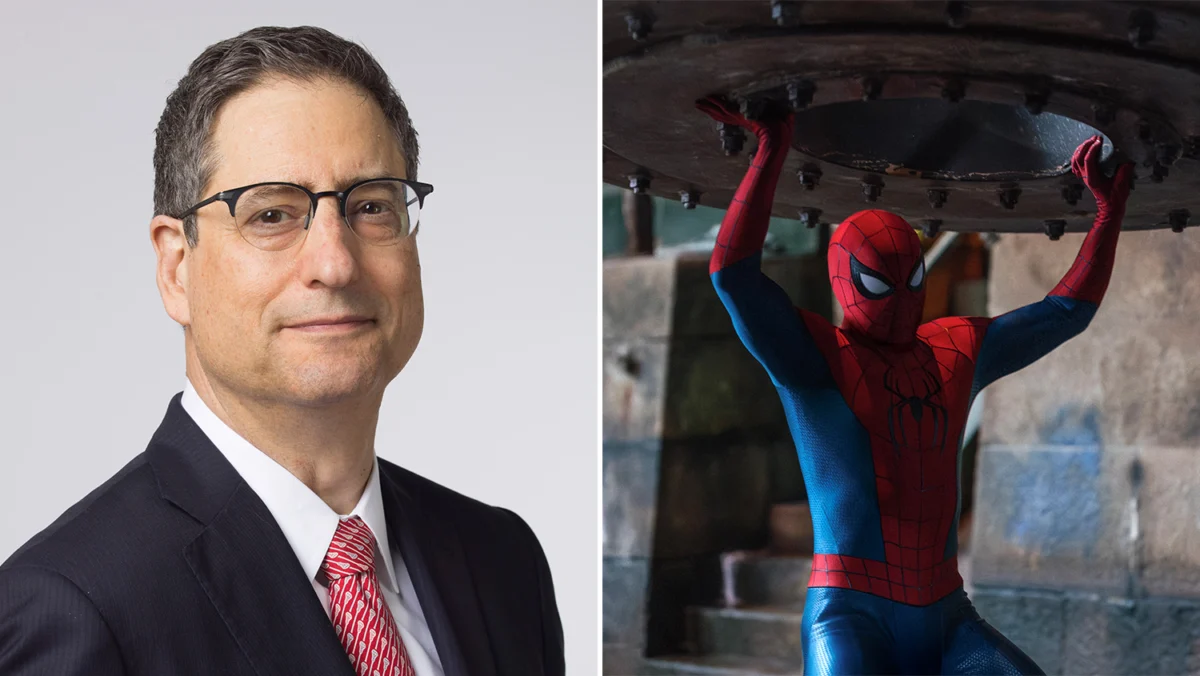
Helmed by Sony Pictures Motion Picture Group Chairman and CEO Tom Rothman, the studio is throwing its full financial and logistical weight behind the fourth installment of the Tom Holland-led Marvel Cinematic Universe (MCU) franchise. Despite massive commercial dominance—sitting just shy of a historic domestic milestone to become the first film ever to cross the $1 billion domestic threshold—the film faces an uphill battle against traditional Oscar prognosticators. Major awards predictors currently place the film far down the list, treating it as an unlikely dark horse.
Rothman and Sony are undeterred. Armed with critical acclaim (boasting a 90% "Fresh" score on Rotten Tomatoes among both critics and audiences) and a radically intimate narrative structure directed by Destin Daniel Cretton, the studio aims to prove that high-end commercial cinema deserves a coveted spot among the Academy’s 10 Best Picture nominees.
Chronology of the Franchise and the Campaign
The journey of the wall-crawler toward Academy recognition spans more than two decades, marked by technical triumphs and historical snubs:

- 2002–2007: Sam Raimi’s pioneering live-action trilogy establishes the modern superhero cinematic template. While Spider-Man 2 (2004) captures the franchise’s only competitive Oscar win to date (Best Visual Effects), the Academy entirely overlooks the genre for major artistic categories.
- 2012–2021: The Andrew Garfield reboot era and the subsequent integration of Tom Holland’s Peter Parker into the MCU (Homecoming, Far From Home, and the monumental No Way Home) continue to break box office records while routinely landing technical nominations primarily in Visual Effects and Sound, but failing to crack the Best Picture conversation.
- 2018–2023: Sony finds critical validation in the animated sphere. Spider-Man: Into the Spider-Verse wins the Academy Award for Best Animated Feature in 2019, followed by a Best Animated Feature nomination for its 2023 sequel, Across the Spider-Verse. However, live-action superhero cinema remains firmly boxed out of the top tier of awards consideration.
- Late 2025 – Early 2026: Spider-Man: Brand New Day premieres in theaters, shattering box office records and capturing the cultural zeitgeist. It becomes the highest-grossing film of the year and flirts with a historic $1 billion domestic gross.
- September 2026: Initial reports surface regarding Sony’s intent to mount an unconventional, high-stakes FYC (For Your Consideration) push, culminating in plans for a late-year theatrical re-release featuring unseen footage.
- November 2026: Tom Rothman officially confirms the studio’s global campaign strategy, scheduling a robust series of international screenings, tastemaker Q&As, and guild events beginning just before Thanksgiving.
Supporting Data and Box Office Metrics
To understand the scale of Sony’s ambition, one must examine the intersection of Spider-Man: Brand New Day’s unprecedented financial success and its unexpected critical alignment with traditional Oscar heavyweights:
- Box Office Dominance: The film stands just shy of $41 million away from cementing its status as the first domestic release in cinematic history to cross the $1 billion threshold domestically. Repeat viewings have driven unprecedented metrics, with audiences frequently returning to theaters two and three times.
- Critical Consensus: Holding a 90% "Fresh" rating on Rotten Tomatoes, Brand New Day sits shoulder-to-shoulder with traditional, heavy-hitting Oscar contenders of the 2026 awards cycle, such as The Odyssey and Project Hail Mary, which also occupy the 90s percentage bracket.
- The Pundit Disconnect: Despite matching the critical scores of traditional prestige dramas and high-concept sci-fi epics, aggregate Oscar prediction platforms like Gold Derby currently position Spider-Man: Brand New Day at No. 36, giving it a meager 0.46% statistical probability of securing a Best Picture slot—ranking below quirky comedies like The Sheep Detectives and just above I Love Boosters.
- Historical Precedent: In the entire history of the Academy Awards, only two films tied to the broader comic book and superhero ecosystem have successfully cracked the Best Picture race: Marvel’s Black Panther (2018) and Warner Bros.’ psychological drama Joker (2019). Neither operated within the strict framework of a sprawling, multi-film commercial franchise in quite the same fashion as Sony’s flagship property.
Official Responses and Studio Strategy
In an exclusive interview detailing the strategy, Tom Rothman pulled no punches regarding the elitist bias often found among awards prognosticators, while explaining why the expanded 10-film Best Picture slate was explicitly created for films of this caliber.
“The Academy is meant to recognize greatness. So, to be honest, I think it’s greatness. I think it’s received wisdom. If there aren’t people thinking about it, we’re gonna do what we can just to make people think about it,” Rothman stated. “I think it’s also incumbent upon studios who make these kinds of quality commercial films to get people to think about it, and here’s what I ask people when I walk around: ‘Are you telling me that there are 10 films this year that are better than this film?’”
Rothman acknowledged his own deep-rooted history in the independent and arthouse film sectors—affectionately noting his past affinity for prestige brands—arguing that his traditionalist sensibilities are precisely what fuel his belief in the film’s artistic merit.

“I’m an art film guy. I made my bones in the art film world, I’m Mr. Searchlight, right? You know, my whole career, I love art films… But I believe that the very reason [Best Picture] was extended from five to 10 was so that the Academy would have room to recognize really quality commercial filmmaking,” Rothman continued, pointing to the historical snub of Christopher Nolan’s The Dark Knight as the catalyst for the Academy’s structural expansion.
To break through the institutional inertia, Sony has enlisted specialized awards consultants and orchestrated a massive global campaign. Beginning prior to Thanksgiving, the studio will roll out a robust screening schedule featuring multiple FYC Q&A sessions with the film’s department heads and creative team.
Logistical hurdles remain: stars Tom Holland and Zendaya are heavily committed to competing 2026 projects, including The Odyssey and Dune: Part Three, while Holland is already locked into pre-production for a separate feature. Nevertheless, Rothman himself will spearhead tastemaker and voter screening events on both U.S. coasts, backed by an extensive international screening footprint spanning London, Paris, Madrid, Copenhagen, Sydney, Rome, Mexico City, Berlin, and Tokyo. Furthermore, an upcoming theatrical re-release featuring newly integrated footage is designed to lure Academy voters back into theater seats to experience the film on the big screen.
Implications for the Film Industry and the Academy
Should Sony succeed in landing Spider-Man: Brand New Day a spot among the top 10 Best Picture nominees at the 99th Academy Awards, the implications for Hollywood would be seismic.

For years, the relationship between major commercial intellectual properties (IP) and the Academy has been fraught with tension. Studios have frequently lamented that populist cinema is systematically ignored in favor of smaller, specialized dramas, while critics argue that popcorn blockbusters lack the nuanced storytelling required for top-tier recognition.
Rothman argues that Brand New Day completely subverts the traditional action-heavy formula associated with the genre, making it uniquely qualified to bridge this ideological divide.
“I think Academy members would be interested in this because it’s very significant from a storytelling movie. This is really the first of these kind of movies that I can think of that does not climax in a giant battle,” Rothman emphasized. “In this movie there is no giant action sequence at the end. The climax of this movie are two young people sitting on the edge of a bed, talking to each other, and sharing their deepest pain. This movie is melancholy in that way and beautiful.”
By highlighting the humanist direction of Destin Daniel Cretton—best known for helming the critically acclaimed indie drama Short Term 12—Sony is intentionally framing Brand New Day not merely as a corporate superhero product, but as a deeply personal character study. Rothman refers to it candidly as "the first superhero movie that’s really a super person movie."

If voting members look past surface-level genre biases and evaluate the craftsmanship, emotional resonance, and cultural footprint of the film, Sony’s gamble could pay off. By comparing its trajectory to Peter Jackson’s The Lord of the Rings trilogy—which famously culminated in a historic Best Picture sweep for The Return of the King—Sony hopes to prove that a beloved, commercial franchise can also represent the absolute pinnacle of cinematic achievement in a given year. The campaign has officially begun, and Hollywood’s biggest test of populist prestige is underway.