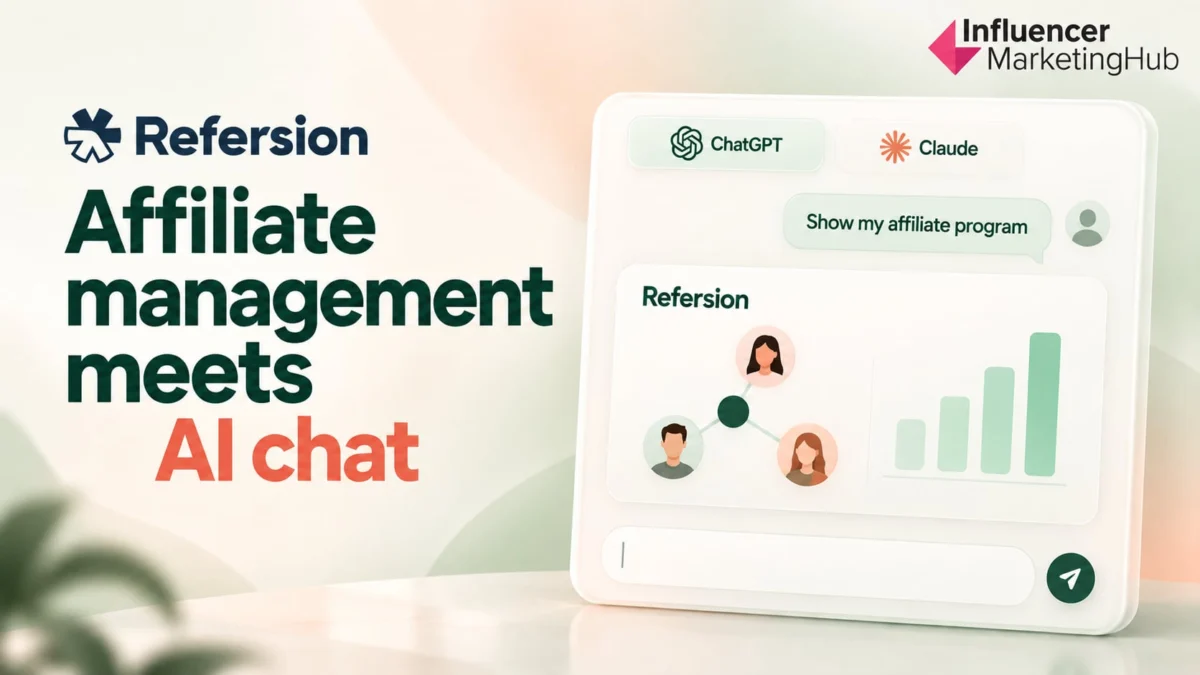
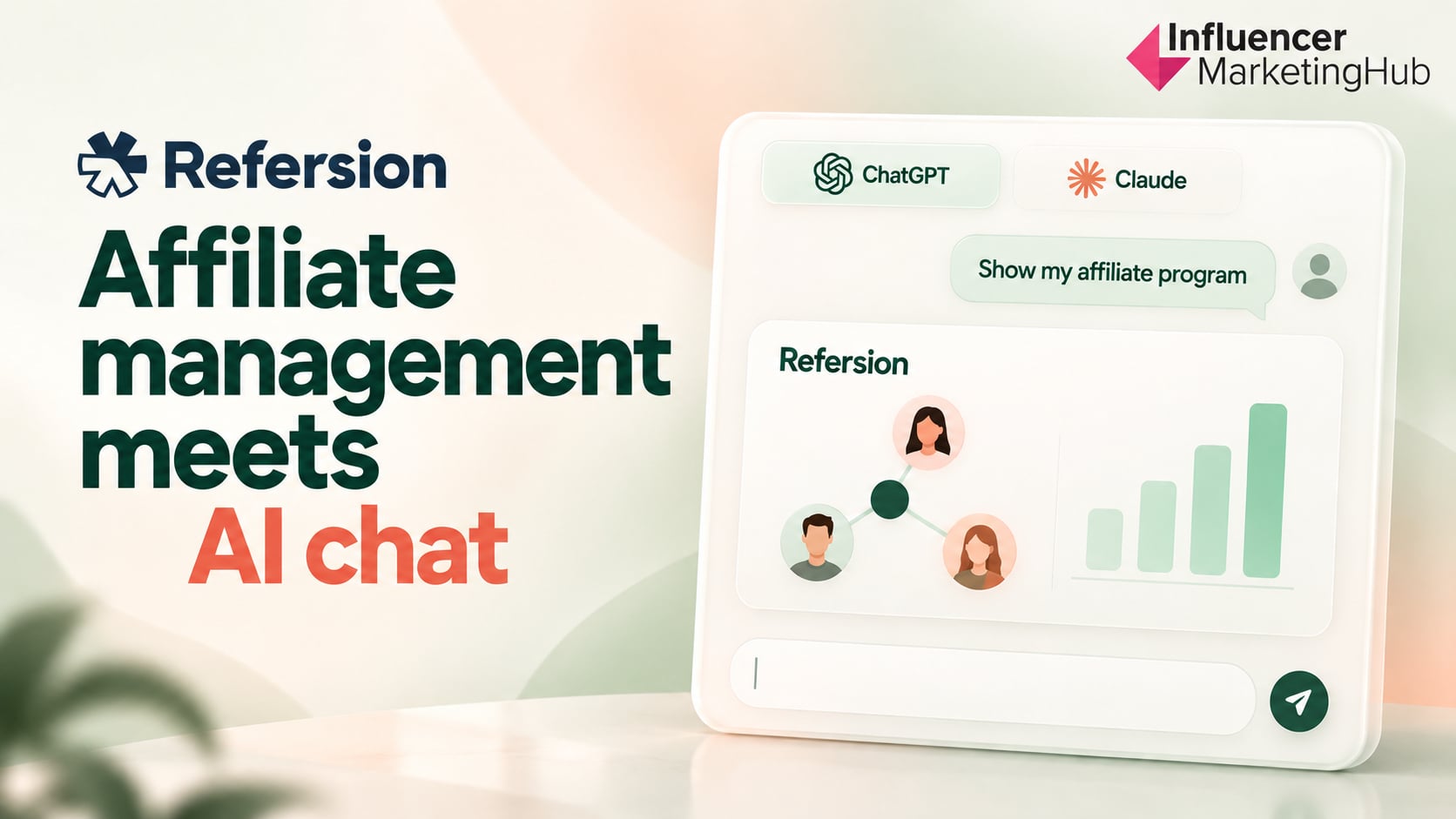
The newly released Model Context Protocol (MCP) server from Refersion empowers ecommerce teams and agencies to analyze live affiliate data and execute permitted operational workflows directly within conversational AI environments like ChatGPT and Claude.
Executive Summary and Main Facts
Affiliate marketing management is undergoing a significant paradigm shift. Refersion, a prominent player in affiliate and influencer marketing infrastructure, has officially launched a Model Context Protocol (MCP) server. This tool connects ecommerce merchants and digital marketing agencies directly to their affiliate programs through conversational AI assistants, eliminating the need to constantly navigate multi-layered dashboard interfaces.
By leveraging the open-standard Model Context Protocol and the robust architecture of Refersion’s modern v2026-08 API, users can now query live metrics—such as conversions, clicks, orders, and offer details—using plain, natural language. More importantly, when granted specific write permissions, the AI assistant can execute administrative tasks. These include approving pending conversions, manually crediting commissions, vetting prospective affiliates, and managing promotional offers across single or multiple merchant accounts.
Designed for efficiency without compromising operational security, the MCP server enforces strict permission boundaries, segregates read and write capabilities, and restricts access to sensitive infrastructure like user management and billing. As artificial intelligence continues to transition from a purely generative medium to an agentic, action-oriented workspace, Refersion’s implementation represents a major leap forward for programmatic commerce management.
Chronology of Development: From Traditional Dashboards to Agentic AI
The integration of artificial intelligence into ecommerce operations has evolved rapidly over the past several years, progressing from basic text generation and predictive product descriptions to deep data analysis and automated workflows.
1. The Era of Dashboard Fatigue
For decades, managing an affiliate marketing program required marketing managers and agency operators to constantly log into specialized software suites. Whether tracking Q3 revenues, auditing top-performing creators, manually crediting missing commissions, or onboarding new affiliate applicants, operators were forced to toggle between numerous browser tabs, reports, and administrative screens. This fragmented workflow frequently led to delayed responses, missed recruitment opportunities, and administrative bottlenecks.
2. The Rise of LLMs and Static Insights
With the mainstream adoption of Large Language Models (LLMs) like OpenAI’s ChatGPT and Anthropic’s Claude, marketing teams began exporting CSV files or copying dashboard metrics into AI chats to generate performance summaries, analyze trends, and draft outreach emails. While this saved time on analysis, it remained a one-way street. Users could ask questions about past data, but the AI could not take action, verify live databases, or execute administrative changes within the host platform.
3. The Advent of the Model Context Protocol (MCP)
The introduction of the Model Context Protocol established an open standard designed to securely bridge AI assistants with external data sources and software tools. Instead of relying on rigid, custom-coded plugins for every single application, MCP created a universal framework through which an LLM could understand available tools, map user requests to specific API endpoints, and execute authorized commands dynamically.
4. Refersion’s API Modernization and MCP Deployment
Recognizing the potential of agentic workflows, Refersion built its modern v2026-08 API foundation to be inherently modular. Every endpoint within this architecture functions as a potential tool for AI integration. Building upon this infrastructure, Refersion has now deployed its official MCP server (https://api.refersion.com/mcp). This release transforms conversational AI from a passive research partner into an active operational assistant capable of performing real-world tasks within live ecommerce ecosystems.
Supporting Data and Technical Architecture
Understanding how the Refersion MCP server functions requires a look under the hood at its underlying technology, data coverage, and cross-platform architecture.
The Technical Foundation
The MCP server relies on the open-standard Model Context Protocol, communicating directly with Refersion’s backend via the v2026-08 API. Each API endpoint maps cleanly to a discrete tool that an AI assistant can utilize when answering a prompt.
However, system security requires explicit human oversight during setup. For instance, in managed enterprise environments like ChatGPT workspaces, administrators must manually refresh and approve newly added tools before users can leverage them.
Scope of Capabilities at Launch
While Refersion’s API does not yet mirror every single action available in its full web dashboard, the launch version covers a vast array of core operational areas:
- Data Entities: Affiliates, conversions, offers, orders, clicks, promotion methods, webhook endpoints, and affiliate prospecting.
- Operational Actions: Issuing manual commission credits, crediting conversions by specific order IDs, updating conversion statuses, copying existing offers for seasonal campaigns, and drafting partner outreach messages.
Multi-Account Management for Agencies
Agencies managing multiple client storefronts often face logistical hurdles when deploying automation tools. Refersion addressed this by designing an account-switching flow within the MCP connection.
- Unified Authorization: Users can authorize multiple merchant accounts—including client seats where the agency holds team access rather than outright ownership—through a single connection.
- Contextual Isolation: The AI assistant operates within only one merchant account at a time. This deliberate design choice prevents accidental cross-client errors (such as applying an offer change meant for Brand A to Brand B). Users can ask the assistant to list available accounts, check the active store, or switch to another instantly without re-authenticating.
Comparison: While alternative platforms like Awin offer MCP tools designed for ranking and summarizing performance across an entire agency portfolio in a single overarching request, Refersion’s architecture prioritizes strict transactional clarity for individual storefront operations.
Granular Use Cases: From Queries to Programmatic Execution
The true value of the Refersion MCP server lies in its ability to bridge high-level data analysis with immediate, granular execution. Several key workflows highlight this capability:
1. Conversion Audits and Approvals
- The Scenario: A brand manager wants to clean up pending commissions before the end-of-month payout cycle.
- The AI Workflow: The manager prompts the assistant: "Find all pending conversions from the past week exceeding $200 and flag any orders that warrant a closer look." Once the assistant returns the filtered list and highlights anomalies, the manager—having granted write access—can simply instruct: "Looks good; approve the rest."
- The Caveat: Refersion explicitly warns that approval is the primary gateway to financial payout. Once a conversion is approved or denied, merchants cannot reverse the status independently and must contact Customer Success. Furthermore, manually crediting recurring subscription orders can permanently attribute future customer renewals to that specific affiliate, making human review of the AI’s proposed actions vital.
2. Streamlining Affiliate Recruitment and Onboarding
- The Scenario: An agency is running a seasonal spring campaign and needs to vet new creator applicants efficiently.
- The AI Workflow: The assistant can pull a list of recent affiliate applicants, complete with their promotional methods and custom registration questionnaire answers. The manager can review these profiles within the chat and command the assistant to approve selected candidates. Additionally, the user can prompt the assistant to identify prospective affiliates that match the brand’s niche and draft personalized outreach pitches for review.
3. Resolving Creator Support Tickets
- The Scenario: An influencer reports that a high-profile conversion failed to track correctly, threatening the partnership’s goodwill.
- The AI Workflow: Instead of opening multiple dashboard tabs to search through order logs, the manager asks the assistant to look up the specific order ID, verify the customer touchpoint, and credit the appropriate affiliate directly within the conversation thread.
Official Responses, Security Controls, and Governance
Integrating artificial intelligence into financial and commercial operations naturally raises valid concerns regarding data privacy, authorization creep, and destructive actions. Refersion has implemented a multi-layered security framework to address these vulnerabilities.
Granular Permission Splitting
When setting up the MCP server, users do not grant blanket access to their entire account. Instead, permissions are compartmentalized by subject area and strict operational thresholds:
- Read vs. Write Segregation: Having permission to view conversion data does not grant the AI assistant the authorization to approve or deny those conversions.
- Infrastructure Isolation: Critical administrative domains—including user management, account credentials, banking and payout settings, and billing information—are completely walled off and can never be exposed to or modified by AI assistants.
Tool Labeling and Confirmation Behavior
Refersion explicitly labels its API tools based on whether they read, modify, or delete data. This classification allows advanced AI assistants that support native confirmation prompts to pause and ask the user for verbal or click-through confirmation before executing destructive or financial changes.
However, Refersion notes that ultimate confirmation behavior depends heavily on the specific third-party AI assistant being used and its local settings. Consequently, Refersion’s server-side API permission limits serve as the most dependable and secure boundary for what the connection can achieve. Unverified third-party assistants are explicitly flagged on consent screens to alert administrators.
Broader Industry Implications and Future Outlook
Refersion’s entry into the MCP ecosystem is part of a broader, industry-wide movement toward agentic ecommerce operations. As affiliate platforms like Awin, CJ Affiliate, and Rakuten Advertising explore similar AI integrations, the definition of ecommerce management is shifting away from static software interfaces toward conversational command centers.
1. Lowering Technical Barriers for Small Teams
Historically, extracting complex multi-variable insights from affiliate networks required either custom data engineering work or tedious manual filtering. By enabling natural language queries over live API endpoints, tools like the Refersion MCP server democratize advanced data analytics, allowing lean direct-to-consumer (DTC) brands to operate with the analytical depth of enterprise-level organizations.
2. The Redefinition of Agency Efficiency
For digital marketing agencies managing dozens of client accounts, time spent on routine operational tasks—such as reviewing applicant forms, copying promotional offers, and auditing pending commissions—represents a significant drag on billable hours and strategic bandwidth. By enabling rapid context-switching and multi-account oversight via AI, agencies can scale their client rosters without a proportional increase in operational overhead.
3. The Imperative of "Human-in-the-Loop" Oversight
As AI assistants gain the capability to execute real-world commercial transactions, the governance challenge becomes paramount. Refersion’s emphasis on read-only default settings, strict permission boundaries, and mandatory human review for financial approvals underscores a critical industry truth: while artificial intelligence can accelerate analysis and draft execution, the ultimate accountability for commercial actions remains firmly human.
Getting Started with the Refersion MCP Server
For merchants and agencies looking to integrate their affiliate operations into their preferred AI assistant, the setup process has been designed for accessibility without requiring dedicated developer resources.
- Access Point: The Refersion MCP server is live and accessible at
https://api.refersion.com/mcp. - Configuration: Users simply input this endpoint address into a compatible MCP-enabled assistant (such as ChatGPT or Claude).
- Authentication & Scoping: Users sign in with their Refersion credentials, select the specific merchant accounts they wish to connect, and configure granular permissions.
- Best Practices: Refersion recommends that all new users initiate their setup with read-only access to familiarize themselves with the data querying capabilities before gradually enabling write permissions for operational workflows.
Note: The precise set of actions and tools available in any given environment will ultimately depend on the user’s specific Refersion plan and the administrative security settings configured within their AI assistant workspace.