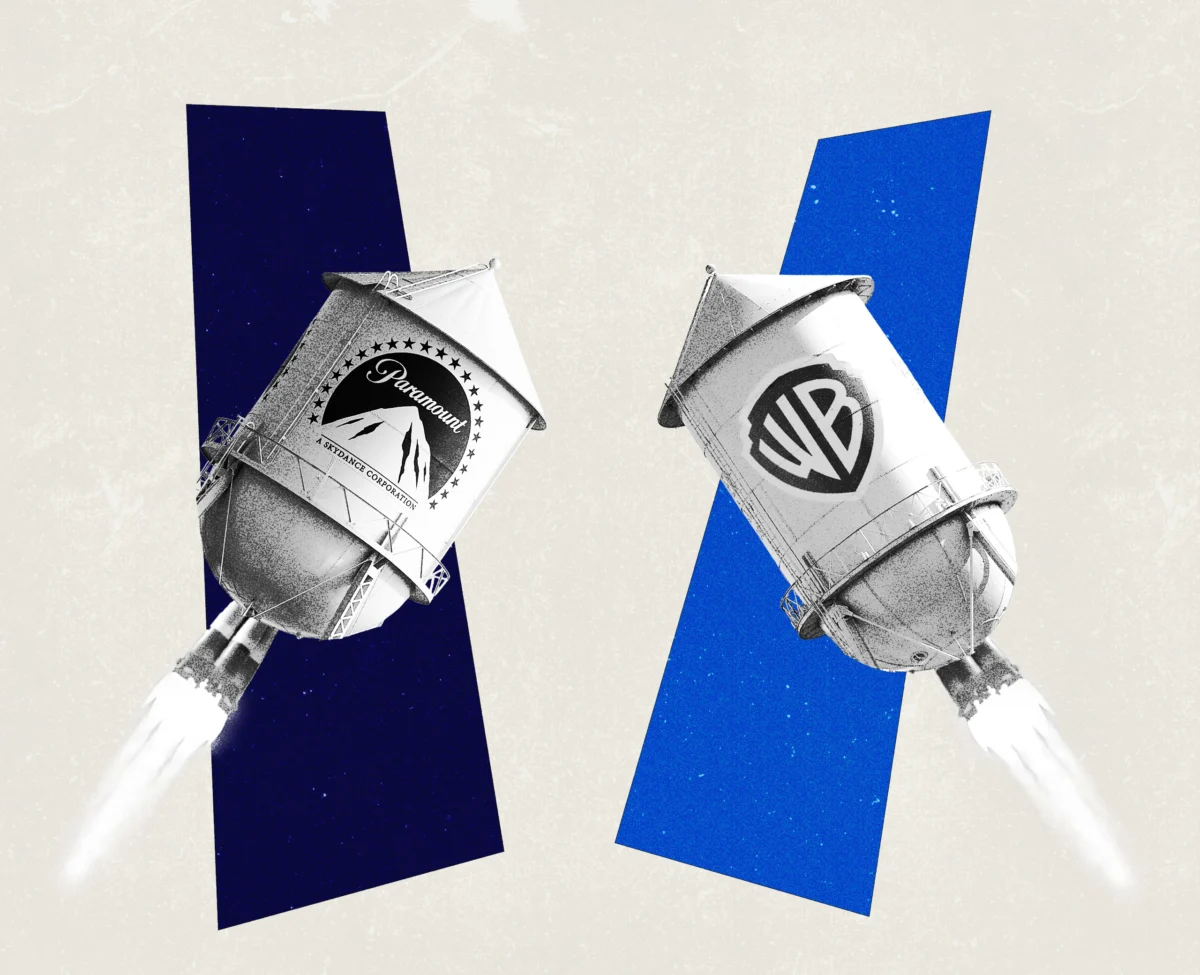
The landscape of American media is currently the site of an escalating, high-stakes collision between corporate ambition and state-level regulatory activism. At the center of this storm is the proposed mega-merger between Paramount Global, Skydance Media, and Warner Bros. Discovery (WBD)—a deal that promises to reshape the entertainment ecosystem, consolidate news powerhouses, and test the limits of antitrust enforcement in a post-federal-intervention era.
While the U.S. Department of Justice (DOJ) has signaled its blessing for the transaction, a formidable coalition of twelve state attorneys general has taken a stand, filing a federal lawsuit in the Northern District of California to block what they characterize as an "unlawful merger" that threatens the competitive health of the industry.
The Players and the Proposed Empire
At the helm of this consolidation is David Ellison, chairman of Paramount Skydance and scion of Larry Ellison, the billionaire founder of Oracle and a prominent benefactor of Donald Trump. The proposed transaction aims to unify not only the film production powerhouses of Paramount and Skydance but also their respective streaming services: Paramount+ and HBO Max.
However, the deal’s reach extends far beyond cinema. It would bring two of the most influential pillars of American television news—CBS News and CNN—under a single corporate umbrella. Reports from Axios suggest that Bari Weiss, the controversial head of CBS News who shares ideological alignment with the Ellisons, could potentially oversee CNN as well. This prospect has triggered widespread alarm among media critics, particularly following reports in the Wall Street Journal that Larry Ellison explicitly informed Donald Trump of plans for a significant “overhaul” of CNN should his son’s deal reach completion.
A Chronology of the Conflict
The regulatory path to this merger has been anything but linear.
- Mid-2026: The DOJ publicly closed its investigation into the Paramount-Skydance-WBD deal, offering a surprising endorsement. The department praised the merger for its potential to foster competition across the media ecosystem, a stance that drew immediate criticism from consumer advocates and labor unions.
- July 13, 2026: A coalition of twelve state attorneys general, spearheaded by California’s Rob Bonta and New York’s Letitia James, filed a federal lawsuit in the Northern District of California. Their argument is rooted in the belief that the merger will lead to higher consumer prices, diminished content quality, and a narrowed diversity of voices in the public square.
- Ongoing: While the companies press for a swift closing, legal experts suggest that the state-led challenge has the potential to stall the process significantly. The states have formally requested that Paramount Skydance halt all merger activities while the legal merits of the suit are weighed. Should the company refuse, the states are prepared to seek a temporary restraining order.
The Antitrust Landscape: The States Take the Lead
Historically, the federal government—specifically the DOJ and the Federal Trade Commission (FTC)—has acted as the primary bulwark against monopolistic corporate expansion. However, the current administration has largely retreated from this role, creating a power vacuum that state attorneys general have begun to fill.
This trend was first evidenced earlier this year when the DOJ abandoned its antitrust case against Live Nation/Ticketmaster. State regulators intervened, took up the mantle of the prosecution, and ultimately secured a significant victory. Experts view this as a potential blueprint for the current battle over the media giants.
"This thing is not remotely over," says Alvaro Bedoya, a former FTC commissioner under President Joe Biden and current senior adviser at the American Economic Liberties Project. "Paramount will tell you it’s inevitable. But as a former law enforcer, I see red flag after red flag."
John Newman, a former deputy director of the FTC and current law professor at the University of Memphis, characterizes the suit as a "very traditional antitrust case." He notes that while the industry expects a "media circus," the legal fundamentals remain clear: horizontal mergers—those between direct competitors—are historically the most difficult to justify in court.
Supporting Data and Financial Risks
Beyond the philosophical concerns regarding media consolidation, the sheer financial scale of the deal raises questions about long-term sustainability. The merger is expected to saddle the resulting entity with roughly $80 billion in debt.
Paramount Skydance has attempted to justify the deal by citing $6 billion in potential "synergies." However, financial analysts remain skeptical. Graham Smith, host of the financial podcast What’s the Big Deal?, labels this figure "crazy," suggesting that the only feasible path to such massive cost-cutting involves the mass adoption of AI and significant workforce reductions. "The only way to save money on that scale," Smith argues, "is to essentially pivot away from human-led production."
Official Responses and Legal Strategy
Paramount Skydance has remained defiant, dismissing the state challenge as a "fundamentally flawed application of the antitrust laws." The company maintains that the merger is a necessary response to the dominance of tech giants like Netflix and Amazon, arguing that only a larger, more integrated conglomerate can compete effectively in the modern streaming market.
To defend their position, the company has hired Jeffrey Kessler, a renowned antitrust litigator. Kessler maintains that the focus on newsroom consolidation is a distraction. "CBS News is a tiny part of the CBS network," Kessler stated, suggesting that the public opposition is less about antitrust law and more about political grievances regarding recent staffing changes at 60 Minutes.
Implications for Democracy and Journalism
The intersection of media power and political influence has become the central, if implicit, theme of this legal battle. While the merger is ostensibly a business transaction, its impact on the democratic process is profound.
Matt Stoller, director of research at the American Economic Liberties Project, notes that even if destroying the integrity of journalism is not David Ellison’s primary goal, it may be the inevitable byproduct. "Just because it’s our motivation to defend democracy doesn’t mean it’s David Ellison’s motivation to destroy it," Stoller said. "But that is what he’s doing. He’ll incidentally destroy democracy."
The potential for a drawn-out legal fight—potentially stretching for a year or more—would typically deter such a deal. Yet, as Professor Newman observes, this is not a typical corporate acquisition. "It’s the son of one of the richest men on earth buying himself a position of influence and power," Newman notes. "That weighs in favor of Paramount being willing to drag out a fight up to the appellate courts where another company might just walk away."
Conclusion: The "Wild Card" of Public Testimony
Perhaps the greatest threat to the merger’s success is not the legal filings, but the potential for the courtroom to become a stage for those whose work defines these media brands. Echoing the 2022 block of the Penguin Random House-Simon & Schuster merger, which succeeded in part due to the testimony of celebrity authors, legal experts believe the states might use the trial to humanize the impact of media consolidation.
"At the end of the day, it’s just persuading another person that your story is right," says Newman. If the states can successfully demonstrate that this merger risks the "breadth of voices and viewpoints" available to the public, the courts may find that the corporate pursuit of "synergy" is simply not worth the cost to the American media landscape.
As the legal proceedings unfold in the Northern District of California, the outcome remains a critical test for the future of competition policy, the autonomy of journalism, and the influence of wealth on the national discourse. For now, the merger stands in limbo—a testament to the enduring, if embattled, power of state-level oversight in an era of unprecedented corporate concentration.