
By CJR Staff
Published in partnership with Journalism 2050
Sign up for the daily CJR newsletter.
Main Facts
The Republic of Georgia stands at a perilous crossroads for press freedom. Following a controversial political transition in 2024 that brought a new party to power—founded by a billionaire oligarch with deep ties to Moscow—independent journalism in the Caucasus nation has been pushed to the brink of extinction. Journalists operating within Georgia now face a systematic, multi-pronged campaign of state-sponsored repression designed to silence dissent, obscure corruption, and realign the nation’s geopolitical trajectory away from the West.
The tactics deployed against the press range from direct physical intimidation to sophisticated bureaucratic sabotage. Reporters routinely encounter physical assaults on the streets, arbitrary arrests, crippling financial fines, and the systematic suspension of press credentials. Yet, the most devastating blow to the fourth estate has been economic. Under the guise of combatting "malign foreign interference," the Georgian government clamped down heavily on external funding and international grants directed at civil society and media organizations. This legislative stranglehold stripped many independent outlets of up to 90 percent of their operational budgets virtually overnight.
Faced with this existential threat, Georgian journalists have refused to surrender. In August 2025, more than twenty independent online media outlets united to launch "The Lights Must Stay On," a high-profile national campaign designed to raise public awareness of their collective struggle against creeping authoritarianism. This solidarity effort quickly evolved into a formal coalition known as Sinatle Media (meaning "Light Media"). Built on the premise that isolated outlets will be picked off one by one, Sinatle Media operates on a simple, vital objective: to keep independent journalism alive in Georgia through collective strength, resource sharing, and mutual defense.
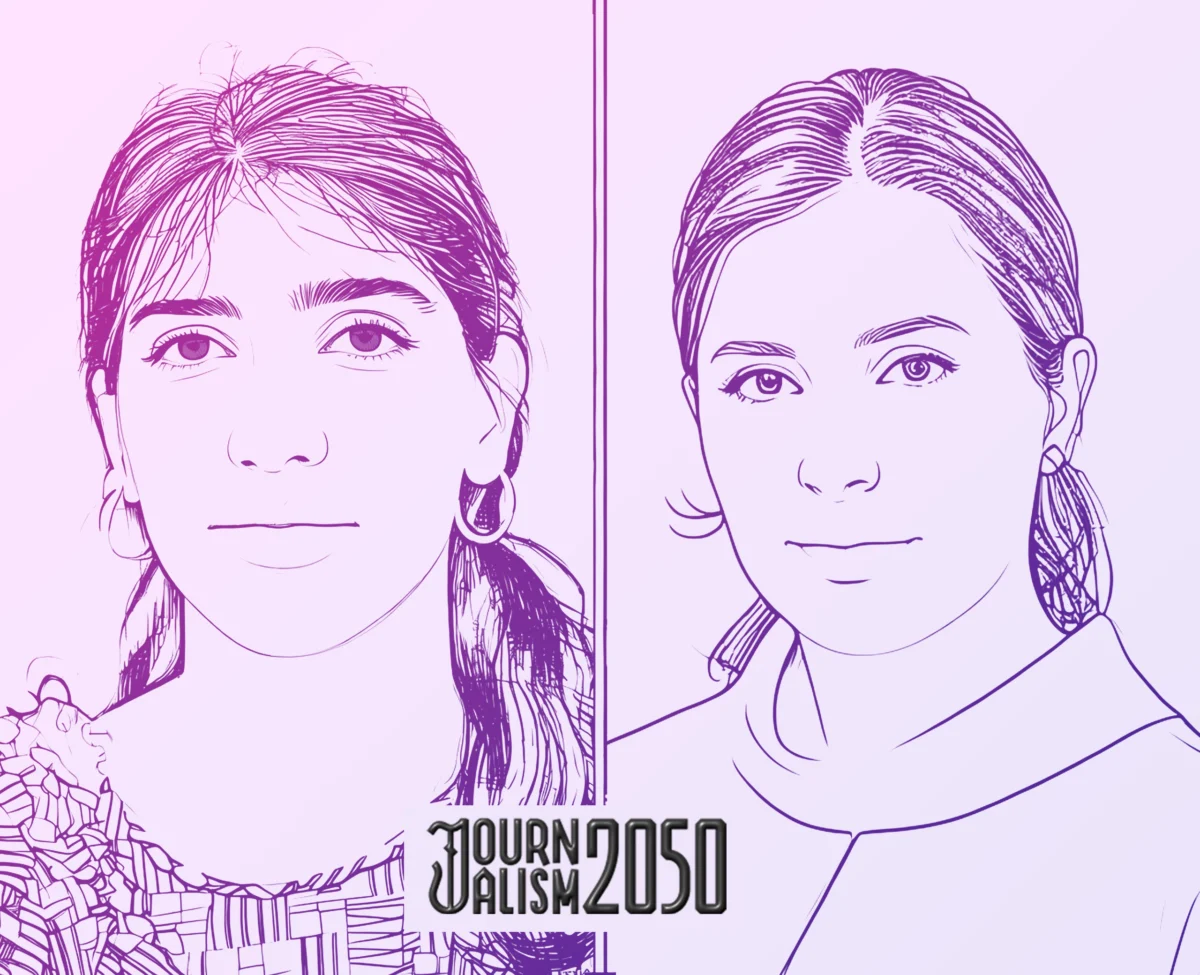
The crisis in Georgia is the focal point of a recent episode of Journalism 2050, recorded live at the prestigious Zeg storytelling festival in Tbilisi. Cohosts Emily Bell (director of Columbia University’s Tow Center for Digital Journalism and former digital publishing head at The Guardian) and Heather Chaplin (founding director of the Journalism + Design program at The New School) sat down with two frontline members of Sinatle Media:
- Lika Antadze, Executive Director of Chai Khana, a multimedia platform giving voice to underrepresented communities across the South Caucasus.
- Nino Bakradze, Editor and Cofounder of iFact, an uncompromising investigative media collective.
The conversation delves into the harsh realities of fighting a despotic regime, the dangerous vulnerabilities that modern media economics create for political exploitation, and—surprising to many—why a local flea market filled these embattled reporters with profound hope for the future.
Chronology of a Crisis: How Georgia’s Press Freedom Collapsed
To understand how Georgian journalism reached this precarious juncture, it is necessary to examine the rapid chronology of political capture and legislative erosion that has defined the nation’s recent history.
The 2024 Turning Point
The foundation for the current crisis was laid during the political shifts of 2024. A newly empowered ruling party, engineered and heavily influenced by a pro-Russian billionaire oligarch, seized control of the legislative and executive branches. Pledging a geopolitical pivot away from European integration and toward closer alignment with the Russian Federation, the administration immediately trained its sights on civil society and independent watchdogs, identifying them as the primary obstacles to its consolidation of power.
Escalation of Direct Harassment (Late 2024 – Early 2025)
As political opposition mounted, the state apparatus escalated its tactics against the press. Journalists covering anti-government protests or investigating high-level corruption found themselves directly targeted. Physical assaults by unidentified assailants—frequently operating with impunity—became routine. The judiciary was increasingly weaponized, utilizing arbitrary arrests and exorbitant administrative fines to bankrupt reporters and exhaust newsroom resources. Furthermore, state institutions began weaponizing accreditation processes, barring critical journalists from parliament, press conferences, and official briefings.
The Financial Chokehold (Mid-2025)
Recognizing that physical intimidation alone could not silence digital-native newsrooms, the government struck at the financial roots of independent media. Mimicking authoritarian playbooks seen elsewhere in the region, the regime enacted severe restrictions on foreign grants and philanthropic funding. Because Georgia’s domestic advertising market is heavily controlled by state-aligned corporate interests, independent media had long relied on international democratic foundations and grants to survive. When these funding streams were legally severed or crippled under the banner of sovereignty and anti-foreign interference laws, newsrooms lost up to 90 percent of their operating capital.
The Birth of Resistance: Sinatle Media (August 2025)
Rather than capitulating to financial ruin and systemic harassment, over twenty independent digital outlets chose solidarity. In August 2025, they launched "The Lights Must Stay On" campaign, projecting symbolic beams of light and broadcasting unified messages across their platforms. This public-awareness blitz laid the groundwork for the formal launch of Sinatle Media, creating a unified infrastructure for resource pooling, legal defense, and collaborative reporting.
Supporting Data: The Anatomy of Media Strangulation
The challenges facing Georgian journalists are not merely anecdotal; they are quantitatively staggering. Independent research and reports from international watchdogs paint a stark picture of an industry under siege:
- 90 Percent Budget Reductions: Following the state’s crackdown on foreign funding and grants, numerous independent outlets reported immediate, catastrophic budget cuts reaching up to 90 percent, threatening mass layoffs and total operational closures.
- 20+ Founding Outlets: "The Lights Must Stay On" campaign launched with an initial coalition of more than twenty independent online media organizations, demonstrating unprecedented cross-newsroom solidarity in a historically fractured media landscape.
- A Multi-Tiered Repression Model: Documentation from international human rights organizations highlights an exponential rise in at least five distinct categories of state-tolerated repression against journalists: physical violence, arbitrary judicial fines, targeted arrests, press accreditation revocations, and legislative financial blockades.
Official Responses and the Geopolitical Narrative
The Georgian government has consistently defended its restrictive measures through the rhetoric of national sovereignty, transparency, and the protection of local culture from external manipulation.
The Government’s Stance
Administration officials and parliamentary leaders have framed the restrictions on foreign funding as a necessary defense against "foreign agents" and outside political subversion. According to the ruling party’s narrative, grants provided by Western governments, philanthropic foundations, and international democracy-building organizations do not support independent journalism, but rather fund partisan political opposition and destabilization efforts. By cutting off these funds, the state argues it is merely asserting democratic self-determination and ensuring that public discourse remains free from external, un-Georgian influences. Furthermore, authorities have publicly dismissed reports of police brutality and harassment against reporters, characterizing physical altercations during protests as isolated incidents or claiming that journalists intentionally placed themselves in dangerous situations.
International and Civil Society Pushback
In stark contrast, Western governments, international press freedom watchdogs, and local civil society groups have condemned the Georgian government’s trajectory as a systematic betrayal of its democratic commitments and its stated aspirations for European Union integration. The United Nations, the European Union, and organizations such as Amnesty International have repeatedly urged Tbilisi to repeal its restrictive NGO and media legislation, warning that the stifling of independent voices violates fundamental human rights conventions. International journalism advocates emphasize that a vibrant, critical press is the cornerstone of any functioning democracy, and that the financial strangulation of Georgian newsrooms is a calculated effort to establish an information monopoly ahead of future electoral cycles.
Implications: The Fragile Future of Global Journalism
The crisis in Georgia carries profound implications that extend far beyond the borders of the South Caucasus. During their live conversation at the Zeg storytelling festival, Emily Bell, Heather Chaplin, Lika Antadze, and Nino Bakradze explored what the Georgian struggle reveals about the modern state of journalism worldwide.
1. The Vulnerability of Modern Media Economics
The situation in Georgia exposes a fatal vulnerability in contemporary journalism: its hyper-reliance on fragile funding models. In an era where digital advertising revenues are routinely captured by monopolistic tech platforms, and domestic advertising markets are easily captured by authoritarian governments or oligarchs, independent journalism has become structurally dependent on philanthropic and international grants. When authoritarian regimes learn to choke off these external lifelines, entire media ecosystems can be wiped out in a matter of months. This vulnerability serves as a terrifying blueprint for aspiring autocrats worldwide who wish to neutralize the press without resorting to overt, Soviet-style shutdowns.
2. The Power of Radical Solidarity
Despite the grim economic realities, the birth of Sinatle Media offers a masterclass in resistance. Antadze and Bakradze emphasized that survival in an authoritarian environment is impossible through competition; it requires absolute solidarity. By pooling their dwindling resources, sharing investigative findings, and presenting a united front to both the public and international allies, Georgian journalists have transformed isolation into collective power.
3. Finding Hope in Unexpected Places
Perhaps the most poignant moment of the Journalism 2050 live recording came when the guests discussed where they found hope amidst the gloom. Rather than pointing to high-level diplomatic interventions or breakthrough tech solutions, they pointed to everyday citizens—specifically citing a local flea market in Tbilisi. There, ordinary Georgians engaged directly with independent journalists, buying merchandise, offering grassroots financial contributions, and expressing heartfelt gratitude for their reporting. This grassroots reconnection demonstrated that the public recognizes the value of truth, even when their government tries to extinguish it.
As Lika Antadze and Nino Bakradze made clear, the lights in Georgian journalism may flicker, but through courage, collaboration, and unwavering public support, they refuse to go out.
Listen to the Episode
To hear the full conversation with Lika Antadze and Nino Bakradze, stream the podcast episode using the audio player above or visit CJR.
Credits:
- Producer: Sarah Myles
- Research: Samuel Earle
- Production Assistant: Hana Joy
- Art: Katie Kosma
- Music: Henry Crooks
Emily Bell is a frequent CJR contributor and the director of Columbia’s Tow Center for Digital Journalism. Previously, she oversaw digital publishing at The Guardian.
Heather Chaplin is the founding director of the Journalism + Design program at The New School.