In a move that has sent shockwaves through the American media landscape and reignited a fierce national debate over the limits of government power, the U.S. Department of Justice (DOJ) has issued grand jury subpoenas to four New York Times journalists. The delivery of these legal mandates—in some instances conducted by federal agents appearing directly at the reporters’ private residences—marks a significant and aggressive departure from decades of established norms regarding the protection of newsgathering.
The journalists—Julian E. Barnes, Eric Lipton, Tyler Pager, and Eric Schmitt—have been ordered to appear before a Manhattan grand jury on July 15. The timing of this legal pressure is particularly fraught; the subpoenas were authorized by U.S. Attorney for the Southern District of New York Jay Clayton, who is currently the President’s nominee for Director of National Intelligence. His confirmation hearing before the Senate Select Committee on Intelligence is scheduled for the very day these reporters are expected to testify, creating a surreal intersection of executive branch expansion and the erosion of independent oversight.
The Trigger: Security, Secrets, and the "Air Force One" Controversy
The origin of this confrontation lies in recent investigative reporting conducted by The New York Times. The paper published a detailed exposé revealing that President Trump had been advised by the Secret Service to depart a recent NATO summit aboard an older iteration of Air Force One, rather than the newer Boeing 747-8. A follow-up piece highlighted that the new, state-of-the-art aircraft was missing critical defensive countermeasures.
According to internal reports, the government’s reaction was immediate and heavy-handed. An FBI official allegedly pressured the Times to suppress the story and, more crucially, to identify the sources behind the leak. When the newspaper refused to compromise its journalistic ethics and its commitment to protecting its sources, the DOJ bypassed traditional investigative channels and moved directly to subpoena the reporters themselves.
This escalation has prompted a cascade of condemnation from civil liberties groups. Jodie Ginsberg, CEO of the Committee to Protect Journalists, categorized the move as an "extraordinary escalation" of state pressure. Bruce D. Brown, president of the Reporters Committee for Freedom of the Press, noted that the action shatters the "last resort" doctrine—the long-standing, albeit discretionary, practice of exhausting all other investigative leads before dragging journalists into a legal proceeding.
A Chronology of Declining Protections
The recent subpoenas are not an isolated incident but rather the culmination of a multi-year erosion of the "reporter’s shield." To understand the current climate, one must look at the systematic dismantling of protections that began several years ago:
- June 2021: The Times revealed that the DOJ had secretly seized the phone records of four of its reporters during the initial leak investigations of the first Trump administration. This signaled an early pivot toward more intrusive monitoring of the press.
- April 2025: In a pivotal policy reversal, then-Attorney General Pam Bondi formally rescinded the internal DOJ policy that had shielded journalists from subpoenas and record seizures. By removing these hurdles, the administration restored the broad discretion of prosecutors to compel testimony, effectively opening the floodgates for the current wave of litigation.
- January 2026: The conflict moved from the courtroom to the living room when FBI agents raided the home of Washington Post reporter Hannah Natanson. The seizure of her personal devices—including her smartphone, computer, and smartwatch—was a chilling reminder of how vulnerable individual journalists have become. Court documents later revealed that Natanson had established a network of over 1,100 confidential sources across 120 federal agencies, making her a high-value target for a government seeking to "plug" leaks.
- June 2026: The Department of Justice issued, and subsequently withdrew, subpoenas targeting national security reporters at both The Post and The Wall Street Journal, demonstrating that even when the government retreats, the threat of legal coercion remains a constant weapon.
- July 2026: The current crisis arrived as federal agents delivered subpoenas to the Times reporters at their homes, cementing a new reality where journalists are treated as witnesses for the prosecution rather than protected observers.
The Legal Reality: The "Branzburg" Shadow
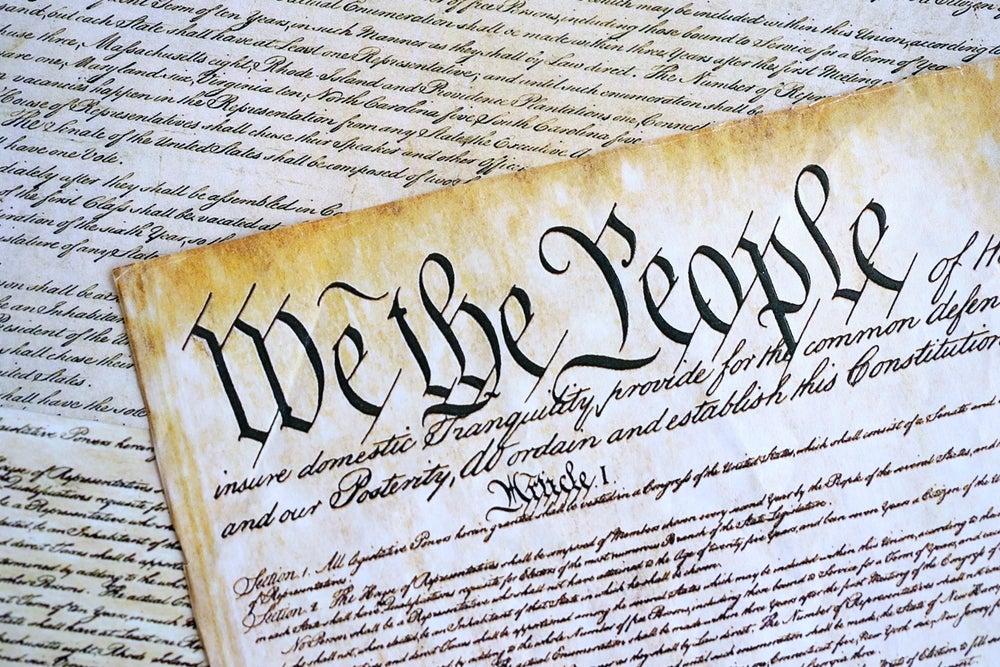
For many, the most startling aspect of this saga is the realization that journalists have no absolute constitutional right to refuse a federal grand jury subpoena. This legal reality stems from the 1972 Supreme Court decision in Branzburg v. Hayes. In a 5-4 ruling, the Court held that the First Amendment does not grant journalists a special privilege to refuse to testify before a grand jury.
While 40 states and the District of Columbia have enacted "shield laws" to protect reporters from being forced to reveal their sources, these protections are state-level only. They offer zero cover in a federal courthouse. A federal shield law—the PRESS Act—was introduced and passed the House with unanimous support in early 2024. However, it was ultimately killed in the Senate following a block by Senator Tom Cotton (R-Ark.), leaving journalists exposed to the whims of federal prosecutors.
For five decades, what kept the press safe was not the law, but departmental policy—specifically, the internal guidelines adopted in 1970 during the Nixon era. These guidelines required prosecutors to demonstrate that a subpoena was absolutely necessary and that all other avenues had been exhausted. As the events of the last year have demonstrated, these guidelines were merely "permissions" granted by the government, and as history shows, permissions can be revoked at any time.
Implications for Public Relations and Professional Identity
This legal crisis holds a profound lesson for public relations professionals, who often mistakenly view their own industry as shielded by similar First Amendment protections.
There has long been a push within the PR industry to adopt professional licensing, akin to law or medicine. Proponents, dating back to the "father of PR" Edward Bernays, argued that licensing would professionalize the field. However, the current assault on journalism proves why this would be a catastrophic mistake for the communications industry.
A license is a state-granted privilege. If the government has the power to issue a license, it inherently has the power to define the conditions of that license, monitor compliance, and, ultimately, revoke it. By remaining unlicensed, public relations practitioners and journalists maintain their independence from the state. They are not credentialed by the government because they exist to serve the public, not to facilitate state power.
The fragility of the press is a warning: when protections are discretionary rather than constitutional, they are inherently unstable. The PR industry must recognize that its freedom of speech is inextricably linked to the freedom of the press. If the government can compel a journalist to reveal a source, it can—through the same mechanisms—eventually target any professional who acts as a conduit for information.
Conclusion: The Necessity of a United Front
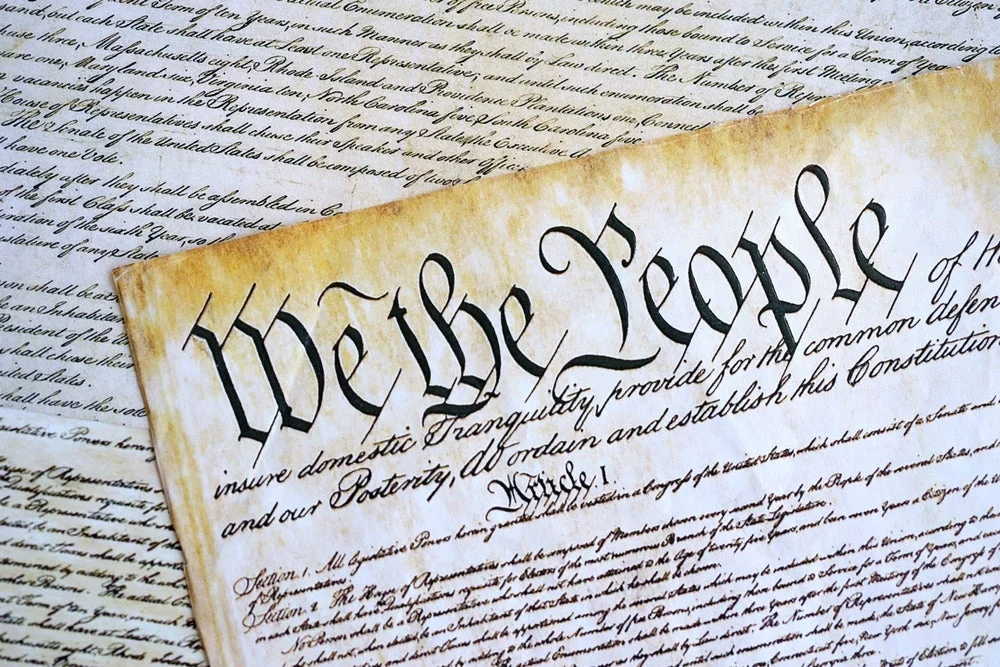
The current state of affairs is a structural issue that transcends partisan politics. As long as the government views the press as a repository of secrets to be mined rather than a protected entity under the First Amendment, no reporter is safe from the knock on the door.
The National Press Club has rightly characterized this as an "extraordinary assault" on the First Amendment, noting that the ultimate goal of these subpoenas is to silence sources and discourage whistleblowers from coming forward. When the government turns the press into an arm of its own investigative apparatus, it destroys the "check and balance" function that the Founders intended for the Fourth Estate.
The lesson for every professional—journalist or publicist—is clear: we are only as free as the protections we are willing to defend. The constitutional rights we enjoy are not self-executing; they require a robust, collective defense. If the industry allows the precedent of forced testimony to stand, it will not be long before the reach of the state extends even further, narrowing the scope of what is permitted to be said, reported, and shared in the public square.
The time for passive observation has passed. The defense of these four journalists is not merely about their specific reporting on Air Force One; it is about protecting the fundamental independence of every professional whose work relies on the free flow of information and the sanctity of the confidential source.