In the modern landscape of American politics, the concept of a "unified party" is increasingly becoming a political myth. According to new data from the Pew Research Center, a striking trend has emerged: most Americans do not feel perfectly aligned with the ideological leanings of their own political parties. While partisanship remains a powerful force in U.S. life, the internal ideological diversity—and the friction it causes—is defining the current electoral era.
A comprehensive survey of 5,103 U.S. adults, conducted between April 20 and April 26, 2026, reveals that both Democrats and Republicans harbor a complex, often critical, relationship with their political homes. As voters navigate their own positions on an 11-point ideological spectrum, many are finding that their party does not necessarily reflect their personal views, leading to a measurable decline in favorability among those who feel "out of step" with their party’s mainstream.
The Main Facts: A Disconnected Electorate
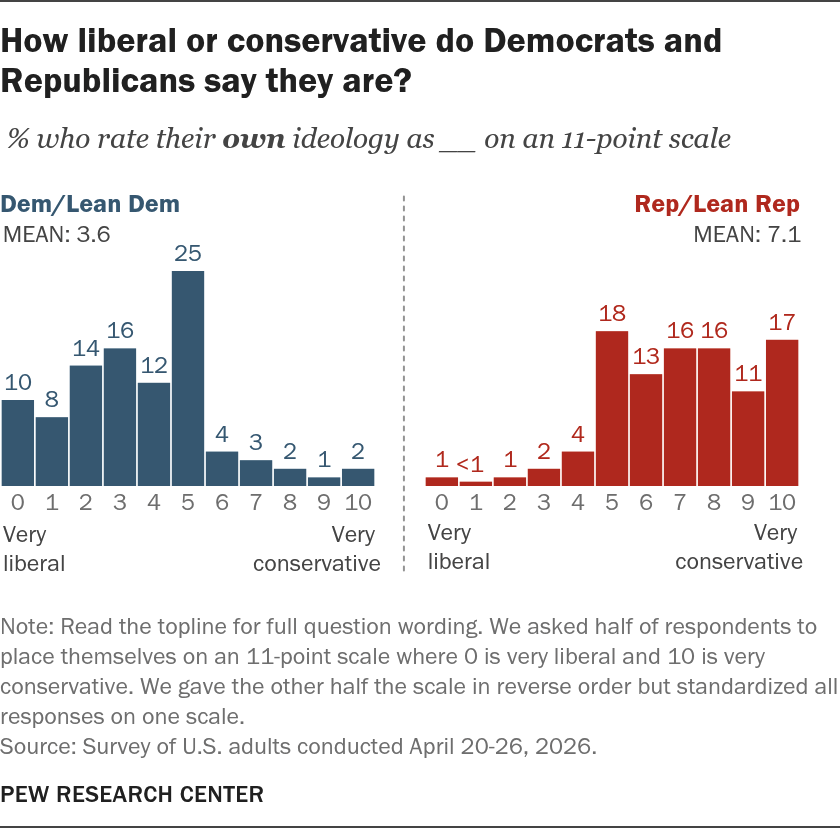
The core of the study utilized an 11-point scale, where 0 represents "very liberal" and 10 represents "very conservative." The results paint a picture of a polarized nation where the center is occupied, but not necessarily by those who feel their parties are meeting them there.
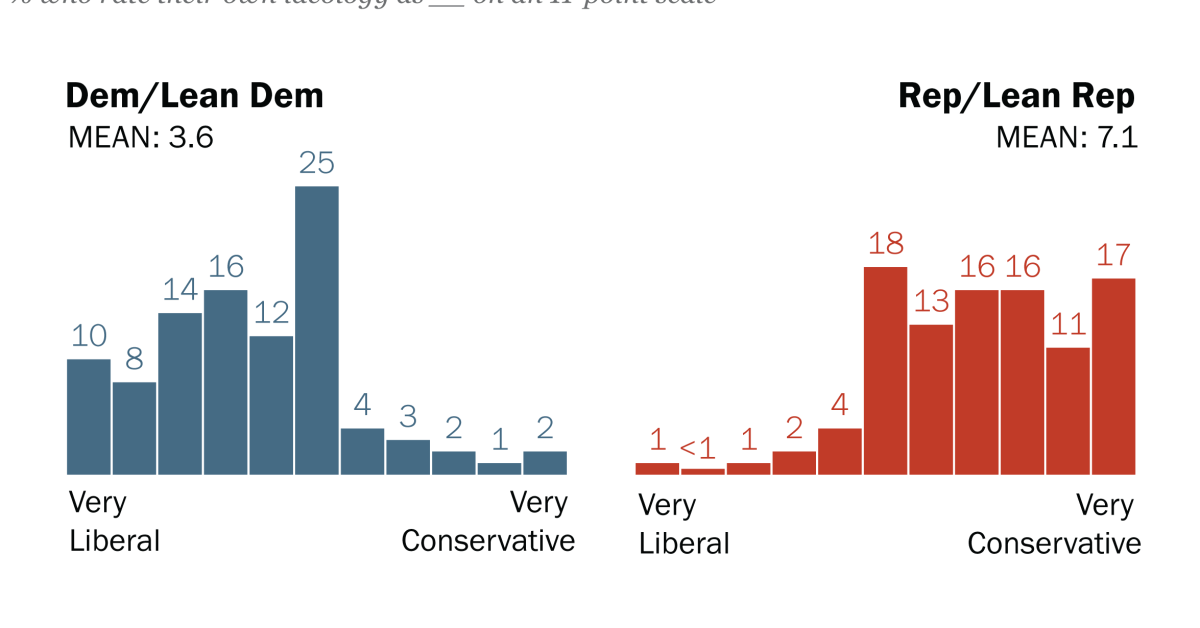
For Democrats and Democratic-leaning independents, the ideological center of gravity is firmly on the left. Roughly 60% of this coalition places themselves to the left of the midpoint (5). However, the average self-placement for Democrats is 3.6—a score that suggests a center-left orientation rather than a radical one.
On the other side of the aisle, Republicans and GOP-leaning independents show a similar, if mirrored, trend. Some 73% of this group identifies to the right of the center. Yet, their average placement of 7.1 indicates that while they are undeniably conservative, they also occupy a space that is not at the extreme edge of the scale.
The critical finding, however, is not just where these individuals stand, but how they feel about their parties. Only about a quarter of partisans in either camp assign their party the exact same ideological score they assign to themselves. This "ideological gap" serves as a barometer for internal party satisfaction; when voters perceive a mismatch between their own views and those of their party, their favorability toward that party drops.
A Chronology of Growing Polarization
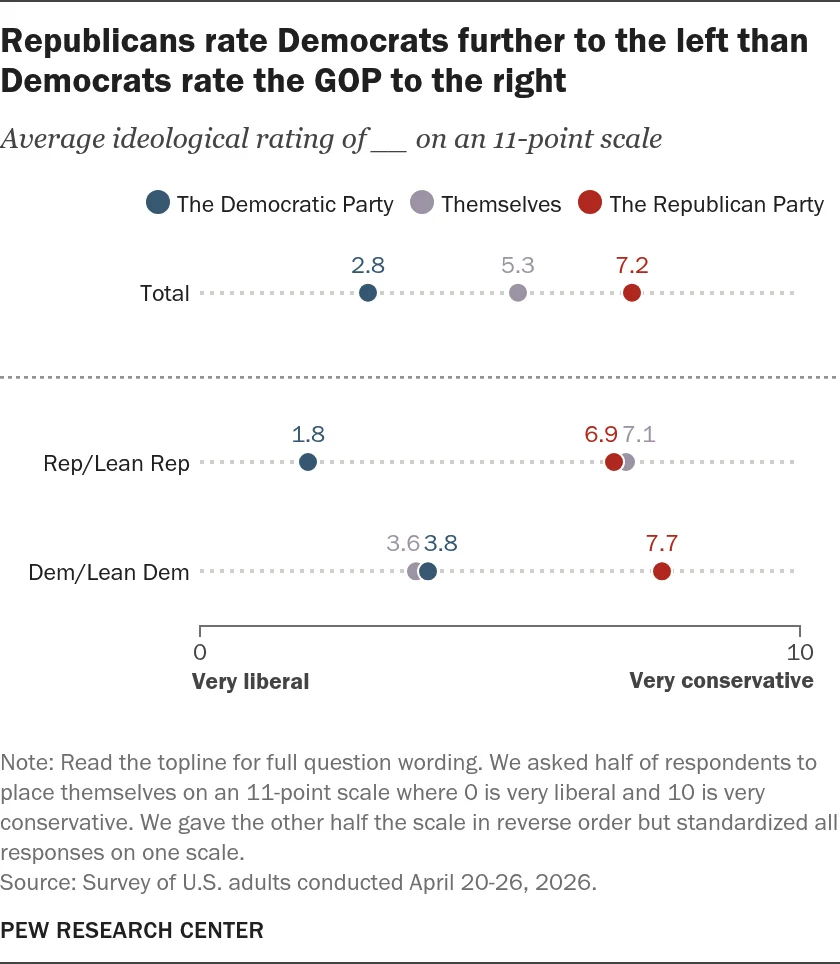
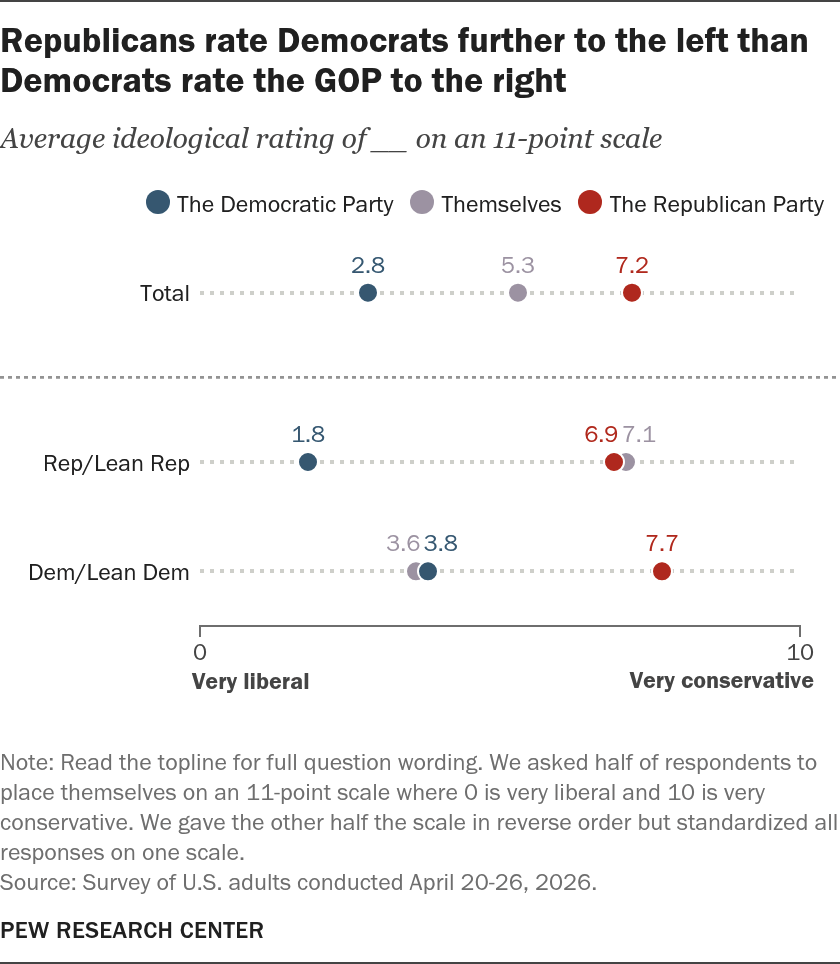
The ideological chasm between the two major parties is not a static phenomenon; it is one that has been widening for over a decade. Looking back to 2016, the average ideological rating of the Republican Party by the public was 6.9. Today, that number has drifted rightward to 7.2. Conversely, the Democratic Party, which was viewed as having an average ideological rating of 3.1 in 2016, is now perceived at 2.8 on the leftward scale.
This drift suggests that the "brand" of each party is being pulled further toward their respective ideological poles. While this may energize the base, the data suggests it creates friction for the moderate or heterodox members of the coalition who feel that the parties are moving away from them.
Supporting Data: Favorability and the "Ideological Gap"
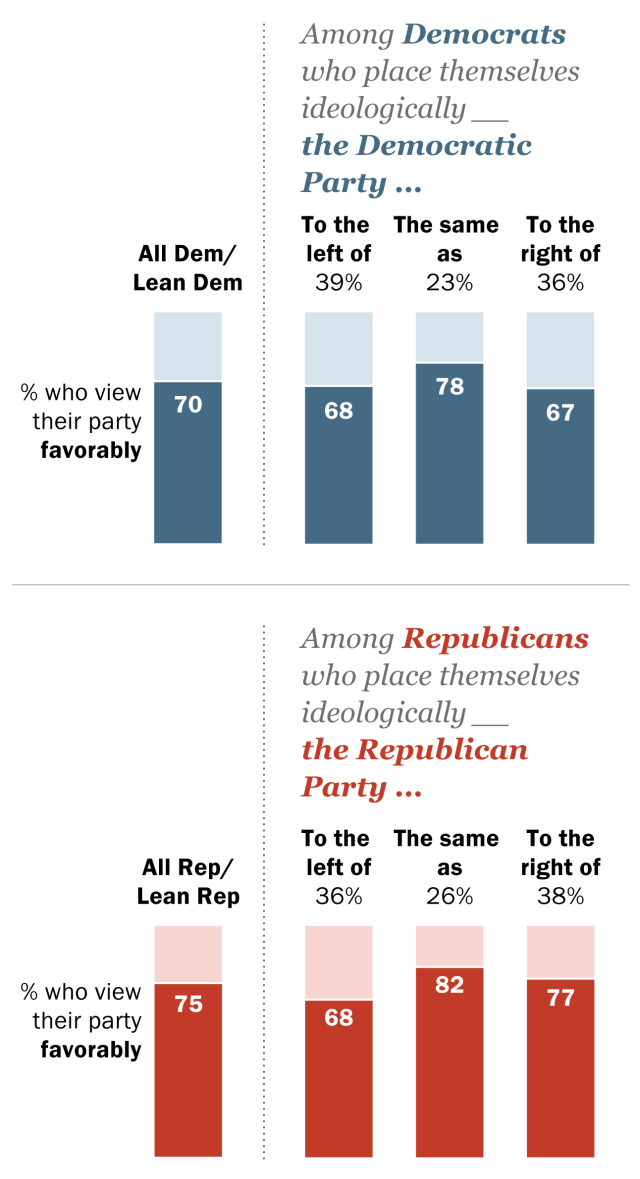
The link between ideological alignment and party favorability is statistically undeniable. The survey analyzed whether partisans felt they were "to the left," "to the right," or "in alignment" with their party’s perceived position.
Among Democrats, 78% of those who see their own ideology as identical to their party’s view the Democratic Party favorably. That number dips to 68% among those who perceive themselves as more liberal than their party, and 67% among those who consider themselves more conservative than the party.
The Republican data mirrors this trend with remarkable consistency. Among Republicans who feel their ideology perfectly matches the GOP, favorability stands at a robust 82%. This support drops to 77% for those who consider themselves more conservative than the party, and significantly further to 68% for those who identify as more liberal than the party.
These findings suggest that while partisan loyalty remains strong, the "base" is not a monolith. There is a distinct "penalty" for being out of sync with the party’s perceived ideological center, regardless of whether that dissonance comes from being too moderate or too extreme.
The View from the Other Side: Perception of the Opposition
Perhaps the most significant finding regarding inter-party perception is that partisans consistently view their opponents as being further from the center than they are themselves.
Republicans rate the Democratic Party at an average of 1.8 on the scale—a move toward the extreme left. Meanwhile, Democrats view the Republican Party at an average of 7.7 on the scale—a move toward the extreme right.
This perception gap creates a psychological distance that goes beyond simple policy disagreement. By casting the opposition as "extremists," partisans find it easier to justify their own party’s ideological drift. This "out-group" perception is a cornerstone of modern political rhetoric, where the perceived threat of the opposing party often overrides the internal frustrations voters might have with their own.
Implications for the Future of American Politics
The data from the 2026 survey suggests several critical implications for the trajectory of American governance:
1. The Challenge of Coalition Building
Political parties are historically coalitions of disparate groups. As these groups increasingly measure their own ideology against the party’s platform, the difficulty of maintaining a "big tent" becomes apparent. If a significant percentage of a party’s own voters view the party as being "too liberal" or "too conservative," party leadership faces a precarious balancing act. To appease the base, they may move further to the poles, but in doing so, they risk alienating the segments of their own party that are more moderate.
2. The Persistence of Negative Partisanship
The fact that Americans rate the opposing party as more extreme than they rate their own suggests that "negative partisanship"—voting against the other side rather than for one’s own—remains the primary driver of American politics. As long as voters feel that the "other side" is an existential threat, they are likely to stay within their party fold even when they are ideologically dissatisfied with the direction the party is taking.
3. The Myth of the "Unified" Party
The data serves as a corrective to the common media narrative that suggests parties are monolithic machines. In reality, the 2026 survey shows that the internal ideological landscape is messy, varied, and at times, discordant. Policy platforms, therefore, are likely to remain sources of internal contention rather than consensus.
4. The Impact on Voter Engagement
If a voter feels that their party does not represent their core beliefs, they may be less likely to donate, volunteer, or engage in the political process. This "quiet disengagement" among those who feel ideologically misplaced within their own coalition could have profound consequences for voter turnout and the long-term viability of the two-party system.
Conclusion: A Nation in Search of Alignment
The Pew Research Center’s 2026 analysis underscores a fundamental truth about the current American political climate: the vast majority of citizens are not perfectly mirrored by the institutions that represent them. While the ideological distance between the two parties has grown, the internal distance between voters and their parties remains a significant, if often overlooked, factor.
As the country moves forward, the ability of the Democratic and Republican parties to manage this internal ideological diversity will likely determine the success of their future electoral efforts. The data suggests that there is a clear reward for alignment—higher favorability and, presumably, stronger engagement—yet the parties seem caught in a cycle of moving toward the poles, potentially exacerbating the very disconnections that their voters are feeling.
Ultimately, the 2026 survey provides a roadmap for understanding why politics feels so fragmented. It is not just the conflict between the parties that defines our time, but the conflict within them—the ongoing, unresolved tension between where voters stand, and where their parties are headed.