of Conversational Search
By Staff Industry Reporter
Published October 27, 2026
11 min read
Main Facts
The digital marketing landscape is undergoing its most radical transformation since the invention of the search engine. Traditional Search Engine Optimization (SEO)—built on a foundation of keyword densities, meta tags, and blue-link rankings—is rapidly sharing the stage with a new paradigm: Generative Engine Optimization (GEO).
At the heart of this shift is the emergence of the AI visibility tool. Unlike legacy analytics platforms designed to track Google or Bing rankings, AI visibility tools are specialized software suites built to monitor, analyze, and optimize how a brand is perceived, cited, and recommended by major large language models (LLMs) and conversational engines, including OpenAI’s ChatGPT, Google Gemini, Perplexity, Anthropic’s Claude, and Microsoft Copilot.
As consumers increasingly bypass traditional search engine results pages (SERPs) in favor of direct, synthesized answers from AI assistants, brands face a sobering reality: if an LLM does not know your product, or worse, hallucinates negative information about it, your business effectively ceases to exist for a growing demographic of high-intent buyers.
Key takeaways from the current state of AI visibility include:
- The Shift from Keywords to Context: AI engines do not "rank" pages based on backlinks alone; they synthesize vast amounts of text to recommend solutions based on sentiment, authority, and contextual relevance.
- The Black Box Problem: Because LLMs generate responses dynamically rather than serving static lists, tracking visibility requires specialized scraping, sentiment analysis, and prompt-testing software.
- The Stakes Are Global: Enterprise brands are already reallocating significant portions of their digital marketing budgets from traditional SEO to AI visibility and brand reputation monitoring within LLM ecosystems.
Chronology of the Shift: From Search Engines to Answer Engines
To understand why AI visibility tools have become critical enterprise infrastructure, one must trace the rapid evolution of digital discovery over the past five years.
Phase 1: The Monopolized SERP (2020–2022)
For over two decades, digital marketing strategy was relatively straightforward. Brands optimized their websites for Google’s algorithm, secured high-authority backlinks, and fought for the top three spots on the first page of search results. Visibility was binary: you either ranked on page one, or you were invisible.
Phase 2: The Generative Disruption (November 2022–2023)
The launch of OpenAI’s ChatGPT in late 2022 fundamentally altered consumer behavior. Millions of users began turning away from keyword-based queries ("best CRM software for small business") to conversational prompts ("I run a 10-person real estate firm and need a CRM that integrates with Gmail and costs under $50 a user. What do you recommend?").
In this new era, users did not want ten blue links; they wanted a single, synthesized recommendation. Brands quickly realized that traditional keyword rankings did not guarantee a mention in an AI-generated paragraph.
Phase 3: The Rise of Conversational Portals (2024–2025)
As platforms like Perplexity and Google Gemini integrated real-time web browsing with conversational interfaces, search morphed into discovery. Consumers stopped browsing websites altogether, relying instead on AI agents to compare features, summarize reviews, and even complete transactions. Marketing agencies began experimenting with manual prompt testing—asking ChatGPT dozens of variations of industry questions to see if their clients were mentioned. However, manual tracking proved unsustainable due to the dynamic, personalized nature of LLM outputs.
Phase 4: The AI Visibility Industry Takes Shape (2026)
By 2026, the need for automated tracking culminated in the birth of the dedicated AI visibility tool market. Software developers began rolling out enterprise-grade platforms capable of running thousands of simulated prompts across multiple LLMs simultaneously, measuring brand share of voice, sentiment, and citation frequency in real-time.
Supporting Data and Market Dynamics
The transition from SEO to GEO is backed by a massive shift in consumer habits and digital ad spend. Industry analysts and early platform data illustrate the urgency of tracking AI visibility:
- The Fragmentation of Search: Recent digital behavior studies indicate that over 35% of information-seeking queries among users aged 18–44 now begin on an AI-powered conversational platform rather than a traditional search engine.
- The Citation Economy: Unlike traditional search, where a lower-ranked organic result might still get clicks, AI engines typically recommend between one and three brands per query. If a brand is not in the top tier of recommendations, its chance of capturing traffic drops precipitously.
- Hallucination Risks: Early audits of brand mentions within LLMs reveal that up to 12% of unmanaged brand citations contain outdated pricing, discontinued product features, or outright hallucinations regarding company policies.
- Budget Realignment: Enterprise marketing budgets are shifting. While SEO remains vital for foundational web traffic, over 40% of Chief Marketing Officers surveyed in late 2025 reported investing in specialized AI monitoring software or agency services dedicated to LLM positioning.
Official Responses and Industry Perspectives
Tech giants, marketing pioneers, and software developers have weighed in heavily on the advent of AI visibility tooling.
The Perspective from AI Providers
Representatives from leading AI firms emphasize that LLMs are designed to prioritize factual accuracy, user intent, and high-quality discourse.
"Our goal with conversational search is to connect users with the most trusted, relevant, and comprehensive sources available on the web," noted a product lead at a major generative AI developer. "We do not intentionally favor specific brands; rather, our models evaluate the collective consensus of the web ecosystem. If a brand wants better visibility in our outputs, they must build genuine authority, clear digital footprints, and transparent documentation that our crawlers can easily interpret and trust."
The Voice of Marketing Technologists
For digital marketers, AI visibility tools are viewed not as a loophole to game algorithms, but as essential lenses into an otherwise opaque digital ecosystem.
"Traditional SEO gave us Google Search Console and analytics dashboards that showed us exact impressions and clicks," says Nadica Naceva, a leading digital marketing analyst and author on emerging tech trends. "With AI engines, you are dealing with a moving target. An LLM’s response changes based on temperature settings, prompt phrasing, and recent training data updates. AI visibility tools bring order to the chaos, allowing brands to audit their digital reputation across Claude, Gemini, and ChatGPT in a single dashboard."
Implications for Brands, Marketers, and Consumers
The widespread adoption of AI visibility tools carries profound implications across the entire digital ecosystem.
1. The Death of Keyword Stuffing and the Rise of "Semantic Authority"
For years, black-hat SEO practitioners could manipulate search rankings through keyword repetition and low-quality backlink farms. Generative AI engines, however, rely on deep semantic understanding. They read content like human subject-matter experts. Consequently, AI visibility tools measure authority not by link counts, but by how deeply and accurately a brand is integrated into the broader knowledge graph of the internet. Brands must now invest in high-utility content, white papers, developer documentation, and public relations that establish undeniable industry authority.
2. Reputation Management Becomes Real-Time and Automated
Public relations has traditionally been a reactive discipline—addressing bad press after it hits major news outlets. In the age of LLMs, reputation management is proactive. If a negative forum thread on Reddit or an inaccurate review on a tech blog is ingested by an LLM during its next training or retrieval cycle, that negative sentiment can be parroted to thousands of potential customers daily. AI visibility tools flag these vulnerabilities instantly, enabling brand managers to correct the record across the digital ecosystem.
3. The New ROI: Share of Conversational Voice (SoCV)
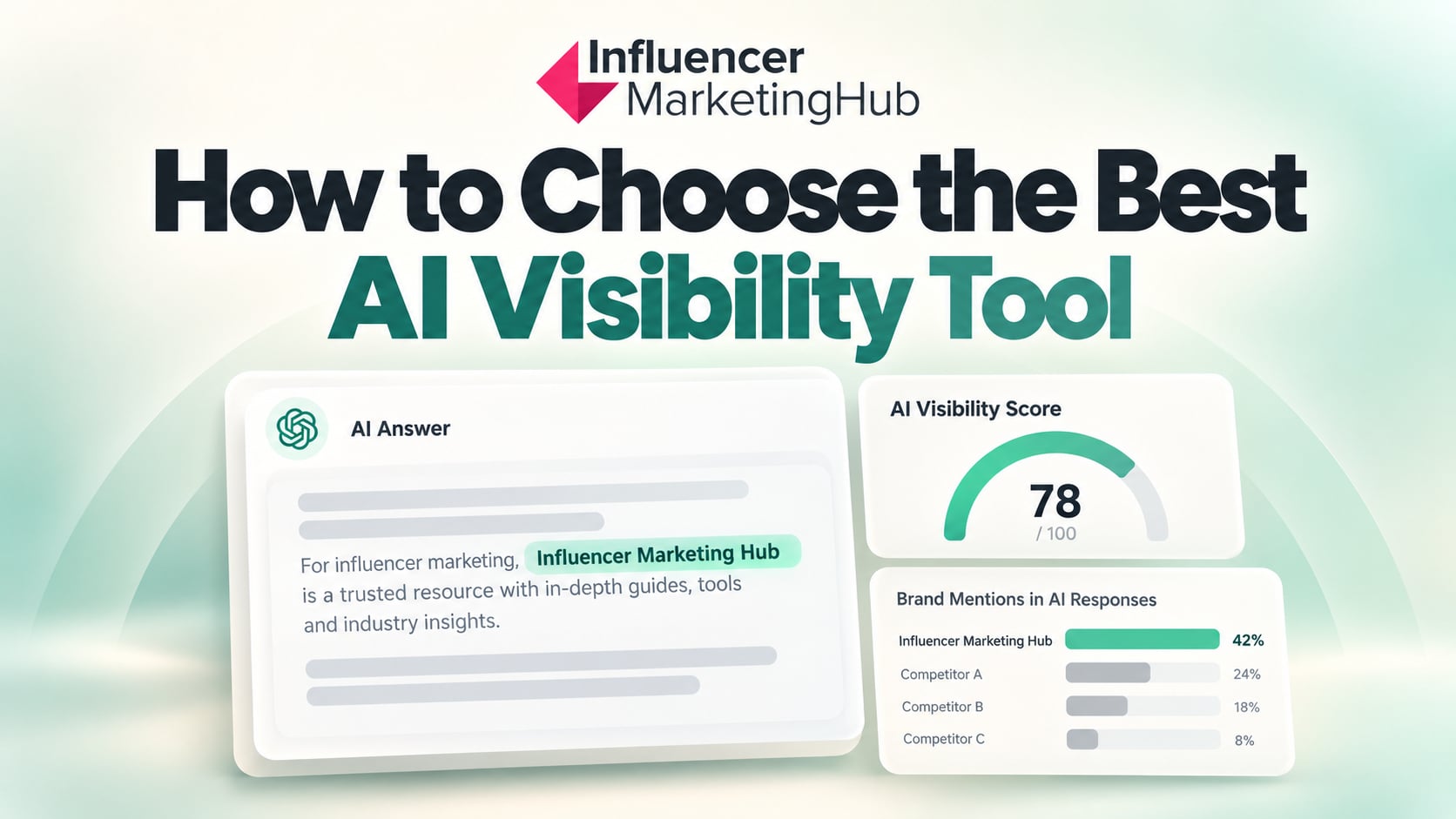
As traditional click-through rates (CTRs) become less indicative of brand health, marketers are introducing new key performance indicators (KPIs). Share of Conversational Voice (SoCV) measures how often a brand is recommended by AI engines relative to its competitors. High-performing brands are learning to optimize their digital assets so that when a user asks an AI assistant to compare industry leaders, their brand is not only mentioned first, but is framed with positive, accurate attributes.
4. What This Means for Consumers
For the everyday consumer, the rise of AI visibility tools is a double-edged sword. On one hand, it ensures that AI recommendations are increasingly comprehensive and grounded in verified data. On the other hand, as brands become more sophisticated at optimizing for LLMs, consumers must remain vigilant against sophisticated digital PR campaigns that masquerade as objective AI recommendations.
Looking Ahead
As we look toward the remainder of the decade, the boundary between search engine optimization and artificial intelligence optimization will continue to blur. AI visibility tools are no longer experimental novelties for tech-forward startups; they are becoming standard-issue enterprise software alongside CRM platforms and email marketing suites.
For businesses navigating this new frontier, the mandate is clear: visibility is no longer about shouting the loudest on a search engine results page. It is about building an undeniable, accurate, and authoritative digital presence that conversational AI engines can trust, understand, and proudly recommend to the world.