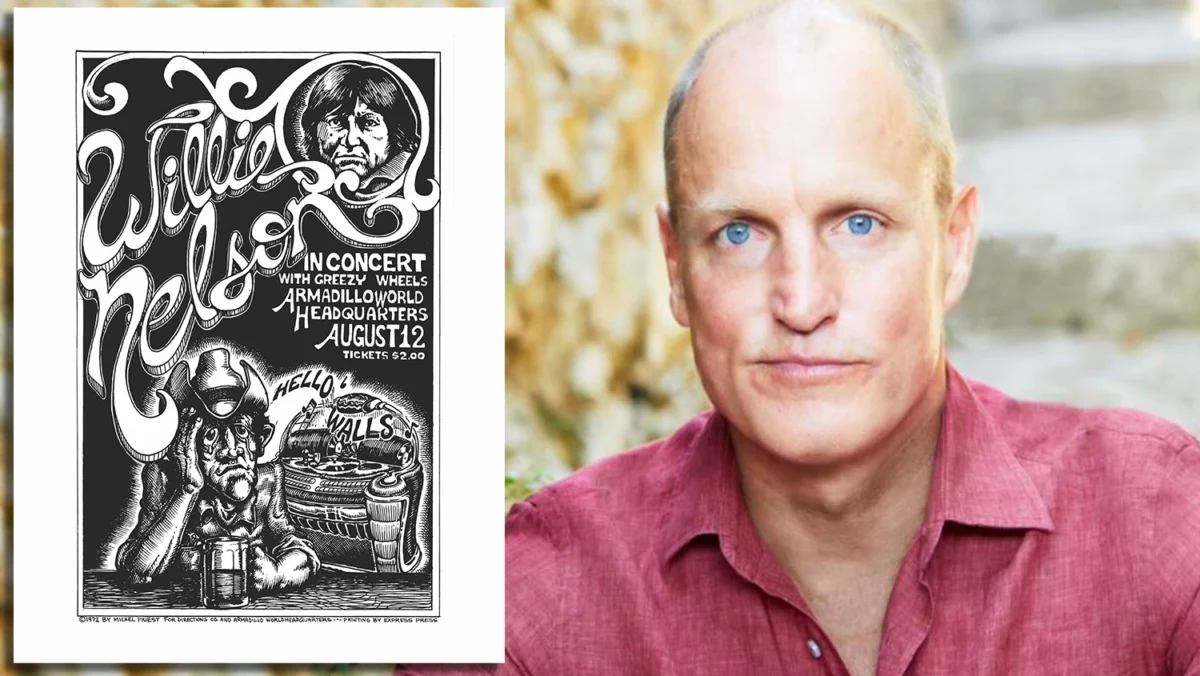
AUSTIN, TX — In a move that bridges the gap between Hollywood prestige and Texas counterculture, Academy Award nominee Woody Harrelson has signed on to produce a feature-length documentary chronicling the meteoric rise and enduring cultural legacy of the Armadillo World Headquarters (AWHQ). The project, currently in development, aims to provide an exhaustive look at the venue that served as the crucible for Austin’s transformation into the "Live Music Capital of the World."
The documentary will leverage an unprecedented treasure trove of recently restored archival materials, including more than 100 audio and video recordings captured within the venue’s cavernous walls during its 1970s heyday. For Harrelson, a Texas native with deep-seated roots in the Austin creative community, the project is more than a production—it is an act of cultural preservation.
Main Facts: A Cinematic Tribute to a Cultural Crossroads
The upcoming documentary is directed and edited by David Brodie and produced by a powerhouse coalition of industry veterans. Leading the production is MakeMake, the creative studio behind acclaimed projects such as The Greatest Night in Pop and the upcoming Lainey Wilson: Keepin’ Country Cool. The production team includes Angus Wall, Eve Kornblum, Kent Kubena, and Terry Leonard.
Joining Harrelson in the producer’s chair are Jeremy Plager and Ilya Bronchtein, who will serve as executive producers. The project also features Marcus Peterzell of Passion Point Collective—known for James Brown: Godfather of Soul—and Amy Slotnick, whose credits include the DJ AM documentary AS I AM.
The film’s primary draw is its exclusive access to the AWHQ archives. This collection includes "lost" footage of some of the most iconic figures in music history. The documentary is expected to feature snippets of performances by:
- Willie Nelson, whose 1972 performance at the venue is credited with birthed the "Cosmic Cowboy" movement.
- Bruce Springsteen, captured during his very first tour of Texas in 1974.
- Ray Charles, the high priest of soul, whose presence at the venue signaled its cross-genre legitimacy.
- Jerry Garcia, Linda Ronstadt, Talking Heads, Fats Domino, and Waylon Jennings, among many others.
“The Armadillo wasn’t just a music venue,” Woody Harrelson said in a statement. “It was where all kinds of worlds came together: artists, outlaws, hippies, students, dreamers, everyone under one roof. Careers got started there, genres mixed, and what really sticks with me is how it made people feel like they belonged. People came for the music, but what they found was each other.”
Chronology: From National Guard Armory to Global Legend
To understand the weight of Harrelson’s documentary, one must look at the timeline of the Armadillo World Headquarters, an institution that existed for only a decade but changed the course of American music history.
1970: The Birth of a Legend
In August 1970, Eddie Wilson and a group of partners moved into a derelict National Guard armory at 525 Barton Springs Road. The building was massive, hot, and lacked any traditional charm, but it provided a canvas for the burgeoning counterculture of Austin. It was named "Armadillo World Headquarters" as a nod to the humble Texas mammal and the "head" culture of the era.

1972: The Great Convergence
Before 1972, Austin’s music scene was segregated by lifestyle: the "rednecks" listened to traditional country at venues like the Broken Spoke, while the "hippies" listened to rock and psychedelic music. On August 12, 1972, Willie Nelson performed at the Armadillo for the first time. The event was transformative. It brought together long-haired youth and conservative ranch hands, creating a new subculture known as "Progressive Country" or the "Cosmic Cowboy" movement.
1974–1979: The Golden Era
During this period, the Armadillo became a mandatory stop for touring international acts. It was a place where a blues legend like Muddy Waters could share a bill with a punk-adjacent band like the Talking Heads. The venue was also famous for its poster art, created by the "Armadillo Art Squad" (including Jim Franklin), which helped define the visual aesthetic of the 1970s.
1980: The Final Note
Despite its cultural success, the Armadillo struggled with the financial realities of rising real estate values in Austin. On December 31, 1980, the venue held its final show, featuring Asleep at the Wheel and Commander Cody. The building was subsequently demolished to make way for a commercial office complex, but the "spirit of the ‘Dillo" remained a foundational myth for the city.
Supporting Data: The Power of the Archive
The documentary’s historical weight is supported by a massive digitization project. Producers revealed that the film relies on a restored archive consisting of:
- 100+ Multi-track Audio Recordings: High-fidelity captures of live sets that have never been commercially released.
- Restored 16mm and Video Footage: Snippets of candid backstage moments and high-energy performances that provide a "fly-on-the-wall" perspective of the 1970s.
- The Van Brooks Collection: Photography and media captured by Van Brooks, whose work documented the intimate relationship between the performers and the Austin crowd.
The inclusion of Bruce Springsteen’s 1974 set is particularly significant for music historians. At the time, Springsteen was a burgeoning East Coast star; his reception at the Armadillo proved that his brand of rock-and-roll had a universal appeal that could transcend regional boundaries.
Official Responses: Reawakening the ‘Dillo Brand
The documentary arrives at a time of significant brand revival for the Armadillo. The IP rights to the venue were recently acquired by a new Austin-based entity in partnership with the original founder, Eddie Wilson.
In 2024, the brand officially relaunched with a series of high-profile collaborations, including a partnership with the Major League Soccer team Austin FC. This relaunch included pop-up experiences and merchandise designed to introduce the venue’s history to Gen Z and Millennial residents who moved to the city long after the physical building was gone.
A spokesperson for the new AWHQ entity described the mission as "purpose-driven," stating: "The original Armadillo was a cultural crossroads. In 2024, we are reimagining that spirit to support local artists and venues, ensuring that Austin remains a place where the ‘weird and wonderful’ can thrive."

While the Harrelson-produced feature is the most high-profile cinematic project in the works, the venue’s history is also being explored in the short documentary Armadillo Man: The Trips of Jim Franklin, currently airing on PBS. This suggests a broader cultural hunger to document the "Old Austin" before it is entirely eclipsed by the city’s rapid tech-driven expansion.
Implications: Gentrification and the Digital Preservation of Soul
The announcement of the Harrelson documentary carries significant implications for the city of Austin and the music industry at large.
1. The Fight Against Cultural Amnesia
As Austin undergoes unprecedented growth and gentrification, many of the landmarks that defined its identity are disappearing. By producing this documentary, Harrelson and the MakeMake team are creating a digital monument. For a city that markets itself on its musical heritage, this film serves as the "receipts" for that claim, proving that the "Live Music Capital" title was earned in the sweat and beer-soaked halls of the 1970s.
2. The Prestige Documentary Trend
The involvement of Angus Wall and the MakeMake team indicates that this is not merely a local interest story. Following the success of The Greatest Night in Pop, there is a clear appetite for high-production-value music documentaries that explore specific, era-defining moments. This film has the potential to do for the Armadillo what Summer of Soul did for the Harlem Cultural Festival—reclaiming a lost chapter of history for a global audience.
3. Harrelson’s Evolving Legacy
For Woody Harrelson, this project reinforces his role as a cultural ambassador for Texas. While he is globally recognized for his roles in Cheers, True Detective, and The Hunger Games, his involvement in the AWHQ documentary highlights his commitment to the grassroots creative spirit of his home state. His quote about "belonging" suggests the film will focus on the sociological impact of the venue—how it functioned as a "third space" that bridged political and social divides.
4. A Template for Brand Revival
The dual track of a feature film and a brand relaunch (merchandise, pop-ups, sports partnerships) provides a new template for how defunct cultural icons can be brought back to life. It moves beyond nostalgia into a sustainable business model that supports contemporary arts while honoring the past.
As production continues, the music world waits to see the "lost" footage of a young Springsteen and a prime Willie Nelson. If the documentary succeeds, it will not only tell the story of a building but will explain why, forty-four years after its doors closed, the Armadillo World Headquarters still looms so large in the American imagination.