Main Facts
The vibrant, deeply idiosyncratic intersection of vinyl culture, heritage listening spaces, and modern improvisation in East Asia is set to take center stage in the upcoming feature-length documentary Tokyo in 33 RPM. Directed by filmmaker Tanmay Srivastava and backed by Synergy Pictures U.K., the project captures the beating heart of Tokyo’s legendary jazz ecosystem. Moving fluidly between generations, the film explores how a genre born in the American South found a permanent, highly unique home in Japan, evolving from imported novelty into an indigenous art form that continues to mutate and thrive today.
The documentary is slated for a high-profile presentation at the WAVES Film Bazaar, the dynamic industry market that runs concurrently with the prestigious International Film Festival of India (IFFI) in Goa. By showcasing the project to international sales agents, financiers, and festival programmers in Goa, the production team aims to solidify global partnerships ahead of its planned international festival run.
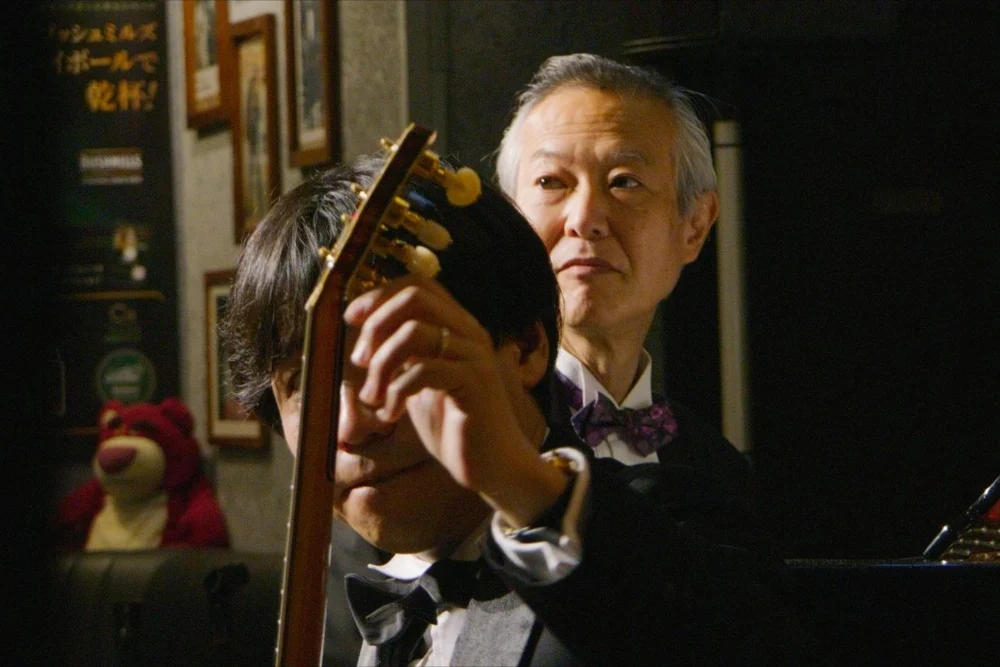
At its core, Tokyo in 33 RPM serves as both a cultural archive and an intimate portrait of obsession. The documentary bridges multiple worlds: the sweat-soaked clubs of working contemporary musicians, the hushed, reverent atmospheres of Tokyo’s legendary jazz kissa (specialized vinyl-listening cafés), and the private archives of dedicated record collectors who have chronicled the music for decades.
The production boasts an impressive roster of on-camera talent and cultural figures. Among them is renowned bassist Hino Kenji (widely known as Jino), whose lineage is deeply tied to Japanese jazz royalty as the son of legendary trumpeter Hino Terumasa, the nation’s most celebrated player of the instrument. Also featured is Lucas Minoru Poulshock—known simply as Mino—a versatile musician, Apple Music podcast host, and proprietor of a prominent listening bar who also serves as an executive producer on the project. They are joined by esteemed historian and record collector Hori Toru.
The documentary’s lens also captures specific cultural institutions that define Tokyo’s sonic landscape. The crew drops in on Masako, a historic jazz café in the trendy Shimokitazawa neighborhood that is now lovingly preserved and operated by its third generation of proprietors. Viewers will also be introduced to No Room for Squares, an innovative venue founded by Nakata Kohei. Musical performances and appearances by the Gentle Forest Jazz Band and the GCR Orchestra further round out the rich auditory tapestry of the film.
Behind the scenes, a robust international team drives the production. Srivastava is joined in the producer’s chair by Sky Cheema and Jackson McKeever. The executive producer tier comprises Poulshock, Paul Adrian, and Jade Kurian. Synergy Pictures U.K. and Double Drama Productions spearhead the production, with McKeever’s Lucky 18 attached as a key production partner. Additionally, Austin, Texas-based technology firm Latakoo serves as the official production and technology partner, facilitating seamless global media workflows for the transcontinental crew.
Chronology
The genesis of Tokyo in 33 RPM stretches back years, born from a fascination with Tokyo’s relentless kinetic energy contrasted against the meditative stillness found within its pocket-sized listening rooms. Director Tanmay Srivastava spent considerable time immersing himself in the city’s subcultures, recognizing that the story of Japanese jazz was not merely historical, but actively unfolding in real time.
The production recently marked a major milestone by completing its first intensive round of principal photography in Japan. From this initial footage, the editorial team has already assembled a compelling short-form proof-of-concept version alongside an official teaser trailer designed to give prospective buyers and festival programmers a visceral taste of the project’s visual and sonic aesthetic.
Following its current industry showcase at the WAVES Film Bazaar in Goa, the production timeline looks toward a final, extended block of filming. Cameras are scheduled to return to the streets, bars, and clubs of Tokyo from April 1 to April 22, 2027, to capture concluding sequences and wrap principal photography.
With the final shoot in the bag by late April, post-production will accelerate through May, targeting a final picture lock and project completion by June 2027. The producers are actively preparing the completed feature for submission to major global film festivals, eyeing an international premiere in the latter half of 2027.
Supporting Data and Context: The Phenomenon of the Jazz Kissa
To fully appreciate the scope of Tokyo in 33 RPM, one must understand the unique sociological ecosystem of the jazz kissa. Emerging in post-World War II Japan, these specialized coffee shops were born out of economic necessity and a deep, unyielding reverence for foreign art. During the postwar era, importing foreign vinyl records was prohibitively expensive for the average citizen. Consequently, entrepreneurs purchased rare imported jazz LPs and played them on high-end, custom-built sound systems in modest, acoustically treated spaces.
These venues established an unspoken social contract: patrons did not visit a jazz kissa to chat, flirt, or conduct business. They went to listen. Customers would sit in semi-darkness, nursing a single cup of drip coffee for hours, facing towering wall-mounted speaker cabinets as monumental jazz tracks washed over the room in pristine, uninterrupted analog fidelity. While digital streaming and modern nightlife have transformed Tokyo, these sanctuaries of deep listening have survived, handed down through generations of devoted curators who treat vinyl preservation as a sacred trust.
Tokyo in 33 RPM documents this continuity while simultaneously highlighting the friction and harmony between the old guard and the new wave. Japan has long possessed one of the most sophisticated, discerning jazz consumer bases on earth, often keeping American jazz legends afloat during lean decades through devoted record-buying habits and packed concert tours. By spotlighting figures like Jino, Mino, and Hori Toru, the documentary maps out a living lineage where traditional acoustic swing, modal explorations, and contemporary electronic-infused improvisations coexist within the same sprawling metropolis.
Official Responses and Creative Vision
The creative team behind Tokyo in 33 RPM has articulated a clear, humanist vision for the project—one that transcends genre fandom and speaks to universal themes of community, dedication, and the search for sanctuary in a hyper-accelerated world.
Director Tanmay Srivastava reflected on the duality of Tokyo that inspired the film:
"Tokyo is a city that never really slows down, but you can step into a small room where everyone has come for one reason: to listen. Outside those rooms, you meet musicians taking jazz in completely new directions. I wanted this film to bring both worlds together. That’s the Tokyo I found most interesting."
This sentiment is echoed by U.K. producer Sky Cheema, who emphasized that the documentary is designed to engage viewers who might not even own a single jazz record. The driving force of the narrative, according to Cheema, is the human element—the sheer depth of passion exhibited by the film’s subjects.
"Viewers don’t need any background in jazz to connect with the people in the film," Cheema noted. "Some have spent their lives playing the music. Others have built places where people can hear it properly. What matters is how much of themselves they’ve put into it. That’s what we want audiences to come away with."
The involvement of high-tech partners like Latakoo also underscores the modern, globally collaborative nature of independent documentary filmmaking today. By streamlining the transfer of high-resolution visual and audio assets between Tokyo, London, Austin, and festival markets like Goa, the production has ensured that its international crew can operate with maximum efficiency across multiple time zones.
Implications
The arrival of Tokyo in 33 RPM on the international festival and market circuit arrives at a time of surging global interest in analog culture, vinyl preservation, and immersive music documentaries. As audiences increasingly suffer from digital fatigue, projects that celebrate tactile, slower-paced cultural rituals—such as vinyl listening bars and physical record shops—enjoy immense resonance worldwide.
Furthermore, the documentary highlights the enduring, borderless nature of jazz. By examining how an art form rooted in the African American experience was recontextualized within the hyper-modernity of postwar and contemporary Japan, the film offers a masterclass in cultural synthesis. It proves that artistic expression does not simply cross borders; it takes root, mutates, and creates entirely new subcultural architectures.
For the international film community, the presentation of Tokyo in 33 RPM at the WAVES Film Bazaar marks a vital step in securing distribution channels and festival slots that will bring this idiosyncratic Japanese subculture to screens across the globe. As the production gears up for its final April 2027 shoot in Tokyo and a targeted completion date that summer, anticipation is building for a cinematic journey that promises to be as visually striking as it is sonically transcendent.