Main Facts
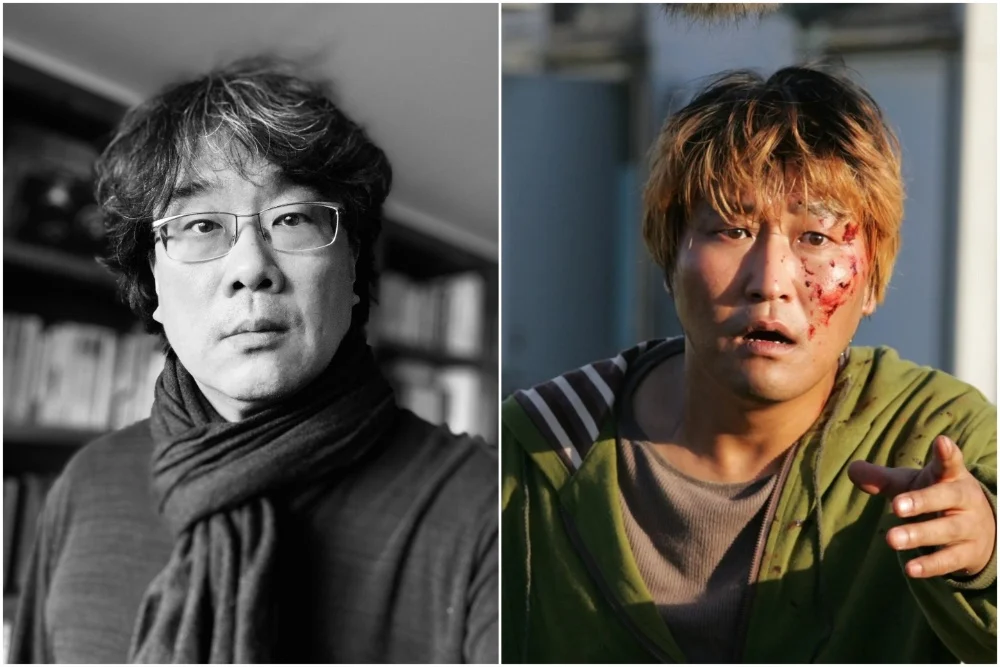
Two decades after redefining the monster movie genre, Academy Award-winning filmmaker Bong Joon Ho is diving back into the murky waters of the Han River. Magnolia Pictures has announced a nationwide theatrical re-release of Bong’s 2006 masterpiece, The Host, featuring a stunning new 4K restoration. The remastered film is scheduled to hit theaters across the United States on November 20, bringing the ecological thriller back to the big screen with an enhanced visual and auditory presentation.
As part of the special theatrical run, select screenings on November 21 and 23 will treat audiences to an exclusive, in-depth conversation between Bong and acclaimed British filmmaker Edgar Wright (Baby Driver, Shaun of the Dead).
Speaking with Variety ahead of the re-release, Bong reflected on the milestone with a mix of disbelief and perspective. “I can’t believe it’s been 20 years since the release of the film. Time flies,” the director mused.
However, the return of The Host is more than just a nostalgic trip down memory lane. In an era defined by global health crises, geopolitical turbulence, and rampant disinformation, Bong notes that the film’s central satire—focusing on official incompetence, institutional cover-ups, and fabricated public health threats—feels jarringly pertinent. Far from being a mere creature feature, The Host remains a biting critique of how authority figures manipulate public fear, a theme that has only gained traction in the twenty years since the film first premiered at the Cannes Film Festival.
Chronology: From 2006 Cannes Sensation to 2026 Remaster
To understand the weight of The Host and its journey to a 4K restoration, it is vital to trace the film’s historical and cinematic trajectory:
- The Early 2000s (Inception): Conceived during the global anxiety surrounding the 2002–2004 SARS outbreak, Bong Joon Ho began developing a story about a mutated creature spawned by toxic chemical dumping in Seoul’s Han River. He integrated sharp political undertones inspired by the Iraq War and fabricated weapons of mass destruction.
- May 2006 (Cannes Premiere): The Host makes its world premiere out of competition at the 2006 Cannes Film Festival, shot meticulously on Fuji film stock rather than Kodak to achieve specific, subtle color qualities crafted alongside cinematographer Kim Hyung-ku.
- July–November 2006 (Theatrical Run): Released in South Korea, the film shatters box office records, ultimately becoming a massive cultural phenomenon and a critical darling worldwide.
- 2019–2020 (The Global Breakthrough): Bong achieves unprecedented global acclaim with Parasite, making history at the 92nd Academy Awards by winning four Oscars, including Best Picture—the first non-English-language film to take home the top honor.
- Late 2020s (The 4K Restoration Project): Utilizing modern digital technology, Bong returns to his past work to remaster The Host. Because early digital effects from 2005 and 2006 predated 4K standards, the visual effects sequences undergo careful upscaling to ensure seamless integration with live-action elements.
- November 2025/2026 (The Re-release): Magnolia Pictures schedules the 4K restoration for a nationwide U.S. theatrical rollout on November 20, paired with filmmaker Q&As featuring Edgar Wright.
Supporting Data: Behind the Scenes of a Masterpiece
The Host was a monumental technical and creative undertaking for its time, relying on international collaboration to bring its terrifying amphibian-humanoid monster to life.
Visual Effects and Practical Craftsmanship
The physical incarnation of the monster was built by New Zealand’s world-renowned Weta Workshop, which constructed detailed physical models to guide the animators. Meanwhile, digital effects and animation were handled by The Orphanage. Because these visual effects were executed in 2005 and 2006—long before the advent of native 4K workflows—the remastering process required meticulous upscaling. Bong and his restoration team had to ensure that the decades-old CGI blended convincingly with the actors and their environments under the harsh lens of 4K clarity.
Despite spotting minor, lingering imperfections in the CGI during the restoration process, Bong elected to leave the film untouched in terms of content.
“I believe that the film is a record of what I was as a filmmaker at the time, and so I do not have any wishes to correct that,” Bong explains. “Just like we don’t edit or rewrite our journals, I feel like it should just be left as it is.”
He revealed that he experienced the same directorial temptation as Ridley Scott, who famously trimmed shots when re-releasing Alien in 1979. Bong admitted to having the impulse to snip one or two shots from The Host, but ultimately resisted the urge, choosing to keep his early creative vision entirely preserved.
Sound Design and Audio Upgrades
Sound has always been a cornerstone of Bong’s cinematic grammar. For the remaster, the audio work returned to Livetone, a Seoul-based sound facility where Bong has collaborated with the same sound supervisor for 25 years—a rare constant in a career where cinematographers and crew members frequently rotate.
The studio successfully preserved the original sound library used during the 2006 production. The creature’s terrifying vocalizations, which remain a standout element of the film’s immersive soundscape, were famously crafted by recording and processing the sounds of a sea lion, then masterfully layering them with a vocal performance by Korean actor Oh Dal-su. While Bong’s later works—from Okja (2017) onward, including Parasite—have been mixed natively in Dolby Atmos, the director noted that The Host could potentially be upgraded to the immersive format, though final decisions regarding the North American theatrical rollout format remain under wraps.
Casting and Plot Framework
The film follows Park Gang-du (played by frequent Bong collaborator Song Kang-ho), an indolent man running a modest snack kiosk along the banks of Seoul’s Han River alongside his eccentric family. The ensemble features Byun Hee-bong as the patriarch, Park Hae-il as the activist brother, and Bae Doo-na as the fiercely independent archer sister.
When a nightmarish creature emerges from the water, wreaking havoc on the riverbank, it snatches Gang-du’s beloved schoolgirl daughter, Hyun-seo (Ko A-sung). When authorities declare the monster the carrier of an unknown, fatal virus, the government quarantines the area. But when Gang-du receives a frantic phone call from a living Hyun-seo trapped within the sealed zone, he and his family resolve to break the quarantine and rescue her themselves.
Official Responses: Bong Joon Ho on History Repeating Itself
The thematic heart of The Host has always been political satire. Written during the SARS epidemic, the film features a crucial, scathing scene in which U.S. lawmakers and South Korean officials concede that the supposed killer virus spreading through the country does not actually exist. This sequence was designed by Bong as a direct allegory for the misinformation surrounding the launch of the Iraq War under the false pretext of weapons of mass destruction.
Reflecting on the state of the world two decades later, Bong notes with sobering clarity that humanity appears trapped in an endless loop of historical repetition.
“Now we’re in the thick of the Iran War and we’re still in the midst of an ongoing war, and whether it’s good history or bad history, it seems like we as a community, as a whole, are repeating our mistakes,” Bong says. “Although the film has stayed the same, the history is repeating itself and making the film relevant again.”
This resonance gives the 4K re-release an unexpected weight. Audiences walking into theaters in November 2026 will not merely be watching a slick creature feature; they will be witnessing a prescient warning about the fragility of truth and the dangerous elasticity of official narratives during times of crisis.
Implications: The Future of Bong’s Filmography
The restoration of The Host also sheds light on Bong’s broader philosophy regarding his catalog. Asked if he plans to remaster other older titles, the director dismissed the idea, noting that everything he has shot from Okja onward was captured natively in 4K and finished with state-of-the-art sound mixing. However, he has continued his exploration of alternate formats in other ways, having previously crafted stunning black-and-white versions of Mother and Parasite for specialized festival screenings and limited theatrical runs.
“I have great admiration for black-and-white films,” Bong remarks. “It’s a process that I enjoyed very much.”
Looking ahead, the director’s professional horizon points toward a thrilling homecoming. Following the completion of his upcoming animated feature Ally (produced by Neon), Bong previously confirmed to Variety that he intends to dive headfirst into a slate of crime and horror films. When asked if those plans remain intact, the Oscar winner offered an encouraging confirmation, summarizing his upcoming career trajectory with a simple, evocative sentiment:
“I want to return home.”
For cinephiles, the return of The Host in pristine 4K serves as both a celebration of Bong Joon Ho’s early cinematic genius and a haunting reminder of how little the world has changed. As the mutant creature of the Han River prepares to terrorize a new generation of moviegoers on November 20, it does so backed by the sobering realization that the monsters created by human folly are always the hardest ones to defeat.