Introduction and Main Facts
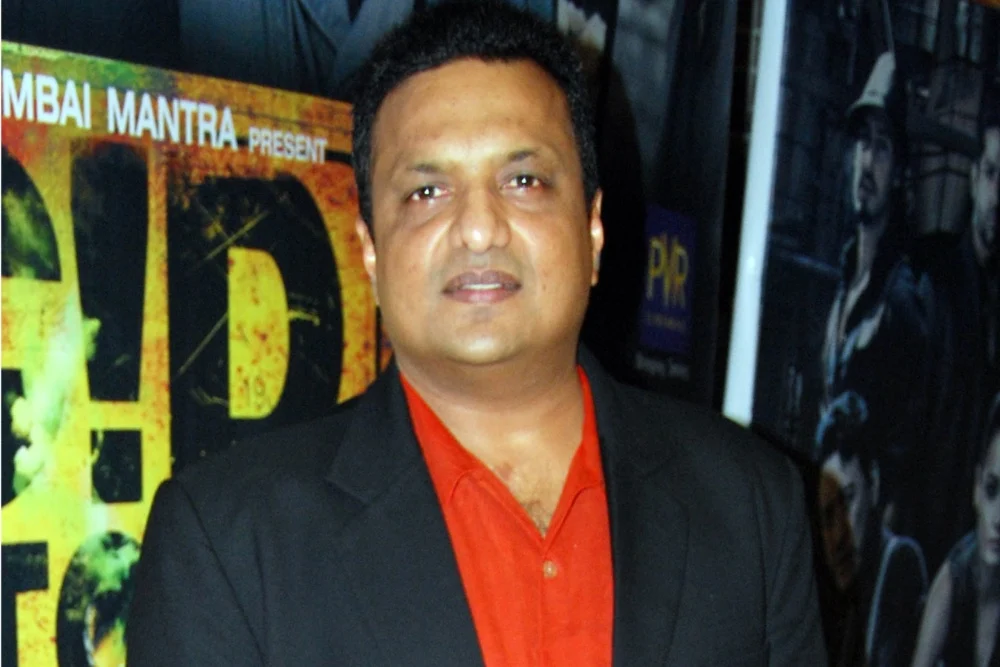
The Indian film industry is mourning the loss of Sanjay Gupta, a trailblazing filmmaker who fundamentally reshaped the aesthetic and narrative boundaries of mainstream Hindi-language cinema. Gupta, renowned for his slick, high-octane crime thrillers, gritty gangster sagas, and distinct visual style, passed away on October 30 at the age of 59. According to reports from the Press Trust of India (PTI) and confirmations from local law enforcement, the director died following a tragic accidental fall at his residence in the Versova neighborhood of Mumbai.
Director Milap Zaveri, a longtime friend and collaborator who penned the dialogue for Gupta’s iconic 2002 film Kaante, confirmed the tragic sequence of events to media outlets. "It is true that he passed away. He fell and hit his head," Zaveri stated.
Mumbai Police acted swiftly to investigate the circumstances surrounding the tragedy. Deputy Commissioner of Police Purushottam Karad informed the Free Press Journal that an accidental death report had been officially filed. According to police findings, members of Gupta’s family were asleep when the incident occurred late in the night, only discovering the grim reality the following morning. Authorities confirmed that there was no foul play suspected, and the family chose not to raise any formal complaints or suspicions regarding the circumstances of his death.
Gupta is survived by his wife and two children. His untimely passing has sent shockwaves through the Indian entertainment landscape, prompting an outpouring of grief, tributes, and reflections from peers, actors, and technicians who worked alongside him across a prolific three-decade career.
Chronology of a Cinematic Journey
Sanjay Gupta’s entry into the film industry in the early 1990s marked the beginning of a distinctive directorial trajectory. At a time when Bollywood was largely defined by sweeping romantic melodramas, family-centric sagas, and traditional song-and-dance numbers, Gupta carved out a niche for himself by introducing a glossy, adrenaline-fueled, Hollywood-indebted sensibility to Indian screens.
The Early Years and the Dutt Partnership (1994–2000)
Gupta made his feature directorial debut in 1994 with Aatish: Feel the Fire, an action drama starring Sanjay Dutt and Aditya Pancholi. The film set the tone for much of Gupta’s early career, which relied heavily on themes of brotherhood, betrayal, and high-stakes crime. He followed this with a series of action-thrillers throughout the late 1990s, including Ram Shastra (1995), Jung (1996), and Khauff (2000).
During this foundational period, Gupta forged a fiercely loyal and enduring professional relationship with superstar Sanjay Dutt. The actor would become Gupta’s cinematic alter ego, appearing in or being produced by Gupta across ten distinct cinematic projects. Their shared affinity for brooding, anti-hero narratives became a defining characteristic of Gupta’s early filmography.
The Breakthrough: Kaante and International Recognition (2002)
Gupta achieved a major career milestone in 2002 with the release of Kaante. An ambitious Los Angeles-set heist thriller, the film featured an ensemble cast of powerhouse performers, including Amitabh Bachchan, Sanjay Dutt, Suniel Shetty, Mahesh Manjrekar, Lucky Ali, and Kumar Gaurav. The plot followed a group of hardened expatriate criminals planning an audacious bank robbery on American soil.
The production of Kaante famously intersected with global history. As Gupta recounted in a 2002 interview with Rediff, the team was actively filming in Los Angeles when the tragic terrorist attacks of September 11 occurred, forcing the production team to drastically alter their location schedules and logistical plans.
Upon its release, Kaante drew intense international media scrutiny due to its striking thematic and stylistic similarities to Quentin Tarantino’s breakout 1992 indie masterpiece, Reservoir Dogs. Despite initial comparisons and debates over cinematic borrowing, Tarantino himself later expressed admiration for Gupta’s adaptation and execution during a 2007 interview covered by the Times of India. For his directorial efforts on the film, Gupta earned a prestigious Filmfare Award nomination for Best Director.
The Art of Adaptation and Controversy (2004–2015)
Gupta never made a secret of his cinematic influences, openly adopting a pragmatic and unapologetic approach to global storytelling. In his 2002 Rediff interview, addressing accusations of borrowing from international cinema, he famously stated that he was willing to "beg, borrow and steal from any medium" in his pursuit of a compelling narrative.
This philosophy guided several of his subsequent directorial and production ventures:
- Musafir (2004): Bore distinct structural similarities to Oliver Stone’s neo-noir thriller U Turn.
- Zinda (2006): Starring Sanjay Dutt and John Abraham, this grim revenge drama sparked international controversy due to its striking resemblance to Park Chan-wook’s acclaimed South Korean masterpiece, Oldboy. The controversy escalated when the South Korean production company Show East publicly announced in late 2005 that it was actively exploring legal remedies against the Hindi project.
- Jazbaa (2015): Rather than navigating legal gray areas, Gupta officially licensed and directed this slick crime thriller, adapting the South Korean hit Seven Days. The film notably marked the high-profile cinematic comeback of actress Aishwarya Rai Bachchan.
The Gangster Saga and Later Career (2013–2024)
Gupta expanded his filmmaking portfolio through his production banner, White Feather Films, backing gritty urban narratives such as Shootout at Lokhandwala (2007), the avant-garde anthology Dus Kahaniyaan (which he also directed), Acid Factory, and Pankh.
He returned to the director’s chair for the underworld epic Shootout at Wadala (2013). Functioning as a prequel to Lokhandwala, the film was drawn from investigative journalist S. Hussain Zaidi’s acclaimed nonfiction book Dongri to Dubai, cementing Gupta’s mastery over the biographical gangster genre.
In 2017, Gupta directed Kaabil, a poignant vengeance thriller starring Hrithik Roshan as a visually impaired man seeking justice, produced by Rakesh Roshan. His later career included the 2021 period crime drama Mumbai Saga, a T-Series co-production whose box office prospects were unfortunately crippled by theatrical closures during a renewed wave of COVID-19 infections. Up until his passing, Gupta remained active as a producer, notably overseeing Visfot (2024), a Hindi adaptation of the Venezuelan thriller Rock, Paper, Scissors.
Supporting Data and Industry Impact
Sanjay Gupta’s influence on Bollywood extends far beyond his filmography’s box office receipts; he fundamentally altered how Indian films were marketed, packaged, and presented to global audiences.
According to peer testimonials, Gupta was a pioneer in cinematic promotion. Acclaimed filmmaker Rahul Dholakia took to X (formerly Twitter) to praise Gupta’s distinct flair, noting that he was "maybe the first to present trailers and cut promos to pitch the film idea to actors and distributors." Before Gupta popularized the cutting of slick, high-concept theatrical trailers tailored to Western standards, Bollywood promotional materials were largely traditional and dialogue-heavy.
Key Professional Milestones:
- Total Directorial Credits: Over 12 feature films and anthology segments.
- Production Ventures: Spearheaded White Feather Films, producing landmark gritty action dramas across two decades.
- Major Accolades: Earned a Filmfare Award nomination for Best Director for Kaante (2002).
- Collaborative Legacy: Maintained a 30-year working relationship with top-tier talent, including a 10-film association with Sanjay Dutt.
Official Responses and Tributes
The suddenness of Sanjay Gupta’s passing prompted an immediate and emotional wave of condolences from across the Indian film fraternity. Colleagues, actors, and technicians remembered him not only as a visionary craftsman but also as a fiercely loyal friend and a vital, uncompromised voice in mainstream cinema.
Director Kunal Kohli shared his sorrow online, recalling a warm conversation he had shared with Gupta just weeks prior while serving together on an awards jury. "You had many more films and many years to go," Kohli wrote on X.
Sanjay Dutt, whose bond with Gupta defined both men’s professional trajectories, posted an emotional tribute to his longtime brother-in-arms:
"Gupts, my brother. I still cannot believe that you are gone. We have shared so much together, so many memories and so many years of friendship. You have always been family to me, and that will never change. I will miss you, our conversations and all the times we spent together."
Resul Pookutty, the Academy Award-winning sound designer for Slumdog Millionaire, expressed profound disbelief over the loss of his long-term collaborator:
"What a terrible and shocking news for me personally and our friends and family. 25 Years of working together. I’m not able to process this… we will miss you, one of the sanest voices from mainstream Hindi cinema… May your soul rest in eternal peace."
Implications and Unfinished Legacies
Sanjay Gupta’s death leaves a significant void in the landscape of Indian action and crime cinema. At a time when Bollywood is increasingly shifting toward pan-Indian commercial blockbusters and high-concept streaming thrillers, Gupta’s signature style—characterized by stylish neo-noir lighting, morally gray anti-heroes, slow-motion action sequences, and sharp banter—served as a direct bridge between classic 1970s underworld dramas and modern, slick filmmaking.
Beyond his completed works, Gupta’s sudden passing leaves behind tantalizing narrative possibilities. In the months leading up to his death, the filmmaker had been publicly discussing a long-awaited return to his most famous property, Kaante. Following the legal resolution of a prolonged intellectual property dispute between White Feather Films and Pritish Nandy Communications, Gupta appeared on the InControversial podcast earlier this year to announce that he had successfully cracked the foundational storyline for a sequel.
He revealed that Kaante 2 had been mapped out "at a very base level" and that he was actively preparing to sit down and pen the screenplay. While the sequel will now remain unwritten, the blueprints he left behind serve as a testament to a restless, ambitious creative mind that was constantly looking toward the next horizon.
Sanjay Gupta’s cinematic footprint remains indelible. He proved that Indian cinema could embrace global genre conventions without losing its distinct emotional core, inspiring a generation of filmmakers to look outward while staying rooted in the drama of the urban underworld.