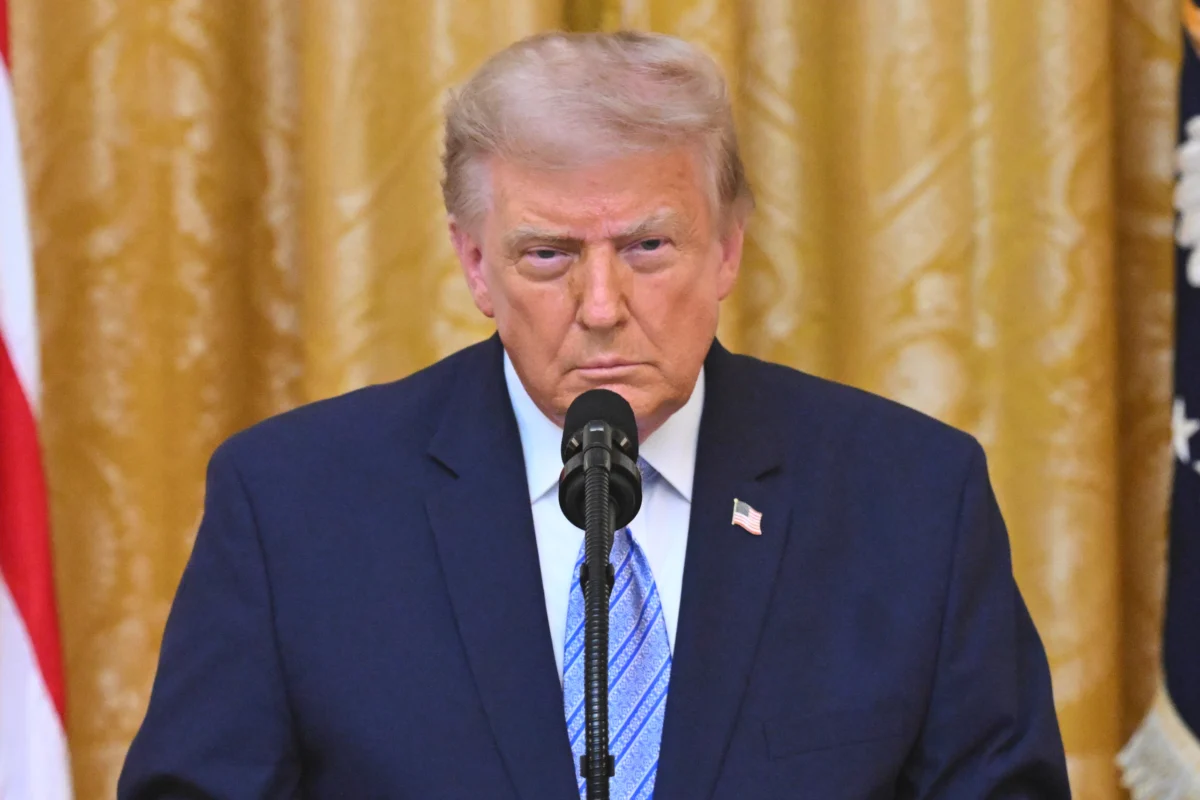
On May 15, as Air Force One traversed the skies returning from a high-stakes state visit to China, the atmosphere inside the press cabin shifted from routine to hostile. Donald Trump, emerging from the forward cabin to address the traveling press corps, turned a standard post-trip gaggle into a chilling indictment of the institution of journalism itself.
David E. Sanger, the New York Times White House and national security correspondent, posed a substantive question regarding the ongoing conflict in Iran. When Sanger questioned the utility of renewed bombing campaigns, citing a lack of political progress during the previous thirty-eight days of conflict, the President cut him off.
"No, I got, I had a total military victory," Trump retorted, pivoting rapidly from a discussion of foreign policy to a frontal assault on his interlocutor. "I actually think it’s sort of treasonous what you write. And you should know better, David. You know better. Your editors tell you what to write, and you should be ashamed of yourself. I actually think it’s treason."
This encounter was not an isolated outburst. It represented the latest escalation in a decade-long campaign by the former president to redefine dissent as disloyalty and journalistic scrutiny as a capital offense.
The Chronology of a Rhetorical Escalation
The branding of political opponents and the media as "traitors" has become a central, if increasingly erratic, feature of the Trumpian political lexicon. Since 2016, analysis by Roll Call indicates that Donald Trump has used the term "treason" or its derivatives in social media posts and public remarks more than fifty times.
A Pattern of Accusation
- The First Term: Early in his presidency, Trump’s accusations were often dismissed as hyperbole. However, as the frequency increased, publishers like A.G. Sulzberger of the New York Times felt compelled to issue warnings, noting that such rhetoric crosses a dangerous line in a democratic society.
- The "Seditious" Video: In the autumn of 2025, a group of Democratic lawmakers disseminated a video reminding military service members of their legal right to refuse unlawful orders. Trump responded by labeling the act "SEDITIOUS BEHAVIOR, punishable by DEATH!" While the subsequent push by the administration to secure a federal indictment against these lawmakers failed, the attempt signaled a shift from rhetoric to the weaponization of the Department of Justice.
- Operation Epic Fury: In March 2026, the White House issued an official press release attacking CNN for its reporting on the US-Israeli war on Iran. Trump echoed this on Truth Social, suggesting that outlets reporting "false information" should be brought up on charges for "TREASON."
- The Legal Threats: By June 2026, the animosity reached a new peak. Following a New York Times analysis that questioned the geopolitical efficacy of the Iran war, Trump declared the reporting "TREASONOUS" and vowed to add the article to his multi-billion dollar lawsuit against the newspaper.
The Constitutional Reality vs. Political Fiction
To the legal scholar, Trump’s misuse of the term "treason" is a profound perversion of the United States Constitution. Article III, Section 3 of the Constitution is uniquely precise: "Treason against the United States, shall consist only in levying War against them, or in adhering to their Enemies, giving them Aid and Comfort."
It is the only crime explicitly defined within the founding document, designed by the framers to be nearly impossible to prosecute specifically to prevent the very type of abuse currently on display. By casting a wide net over journalists, political rivals, and federal bureaucrats, Trump is not practicing law; he is practicing delegitimization.
As observers have noted, the objective is twofold: to bully news organizations into self-censorship and to erode the public’s trust in the "fourth estate." This strategy was laid bare in a 2016 admission to journalist Lesley Stahl, where Trump allegedly confessed that he attacks the press to ensure that when negative stories are written, "no one will believe you."
The Corporate Complicity
The impact of this rhetoric is beginning to manifest in the boardrooms of major media conglomerates. Fearing the wrath of the administration and the potential for regulatory retribution, some entities have begun to waver.
Recent reports from the Columbia Journalism Review highlight concerns regarding CBS News and its parent company, Paramount Skydance. There is mounting evidence that corporate leadership is seeking to "curry favor" with the Trump administration, a move that threatens the independence of news gathering. When news organizations prioritize corporate survival and access over the mandate of independent inquiry, the structural integrity of the American media landscape begins to fracture.
Implications: The Politics of Belonging
Beyond the legal incoherence of his claims, Trump’s frequent invocation of treason speaks to a more sinister social project. By labeling critics as "traitors," he is effectively delineating the boundaries of "political belonging."
In this worldview, the American body politic is a monolith that requires total, unquestioning allegiance to the leader. Anyone who deviates—whether by reporting on a failing war, questioning an executive order, or investigating corruption—is no longer a citizen with a right to dissent. They are defined as a "fifth column," a parasite, or an "enemy within."
This rhetoric serves a practical, albeit violent, purpose for his coalition. As the MAGA movement faces internal friction over issues like the Jeffrey Epstein files, the rising cost of living, and the logistics of political succession, the call to purge "traitors" acts as a binding agent. It provides a common enemy, shifting the focus from the failures of policy to the perceived treachery of the opposition.
Official Responses and the Defense of the First Amendment
Following the incident on Air Force One, the New York Times responded with a speed and clarity that underscored the gravity of the moment. In a statement issued via the @NYTimesPR account, spokesperson Charlie Stadtlander stated: "Reporting isn’t treason. It’s foundational to a free press and the work that America’s founders wrote the First Amendment to protect. We will continue this important, constitutionally protected work."
This response, while necessary, highlights a larger, existential question for the American public: Is the press capable of sustaining its role in the face of a sustained, state-sponsored campaign to define its existence as criminal?
The history of authoritarian states is littered with the slow degradation of the media. It rarely happens overnight; it happens through the steady, incremental normalization of labels like "traitor," "enemy," and "criminal." When the Commander-in-Chief repeatedly uses the power of his office to frame the pursuit of truth as an act of war against the nation, the threat is not merely to journalists, but to the very experiment of American democracy.
As the political climate continues to intensify, the reliance on an independent, fearless, and unbowed media has never been greater. The challenge for the coming years will be whether the press can withstand the pressure of being labeled a fifth column, or if the constant drumbeat of "treason" will eventually stifle the voices that keep power in check.
For now, the standoff continues—a test of whether the constitutional protections of the First Amendment are stronger than the populist rage of a leader who views accountability as an act of betrayal.