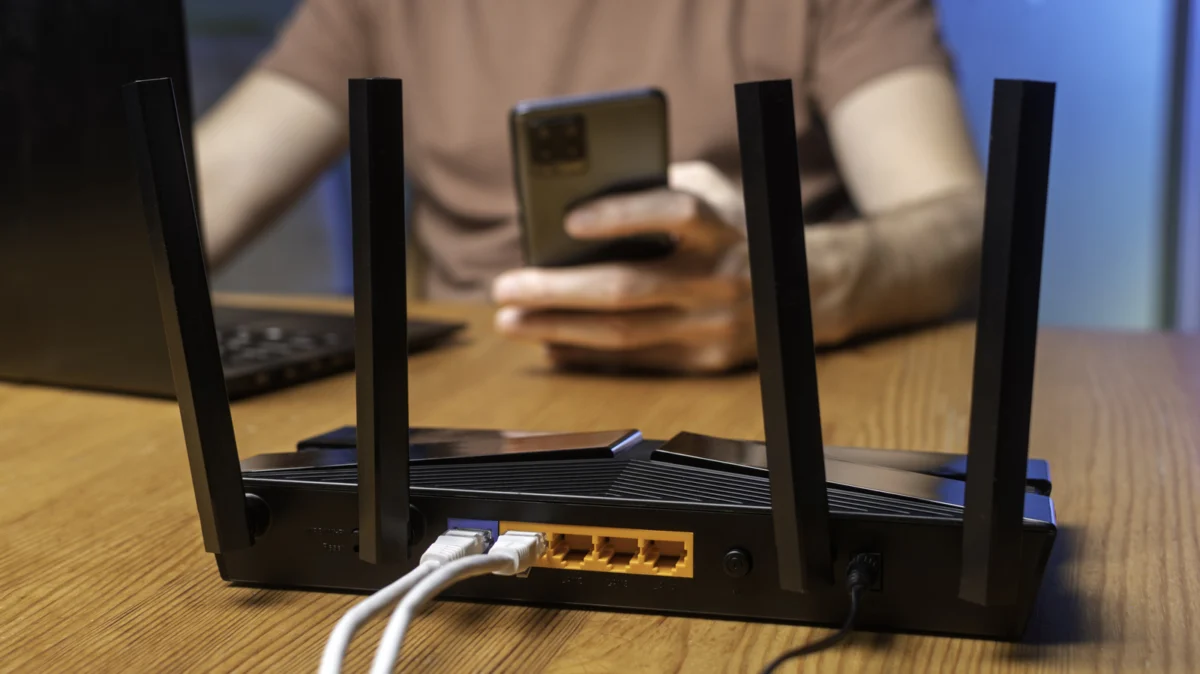
For decades, the wireless industry has been locked in a "speed race." Every iteration of the IEEE 802.11 standard—from the early days of 802.11b to the high-octane performance of Wi-Fi 7—has been measured primarily by how many gigabits per second it can push through the air. However, a fundamental shift is occurring. With Wi-Fi 7 already theoretically capable of reaching speeds of 23 Gbps—a threshold that far outstrips the needs of the average consumer—the industry is pivoting.
The next frontier is not about how fast your data travels, but whether it arrives without interruption. Enter Wi-Fi 8, officially designated as the 802.11bn standard, which is being engineered with one singular obsession: "Ultra High Reliability" (UHR).
Main Facts: The Shift to UHR
The current state of home networking is a paradox: we have gigabit fiber connections tethered to routers that often struggle to penetrate a single interior wall. Wi-Fi 7, while technologically impressive, has been plagued by early-adopter hurdles, including inconsistent stability, limited range, and sensitivity to physical interference.
Wi-Fi 8, currently under development with a target for final standardization in 2028, aims to dismantle these pain points. The core objective of 802.11bn is to transition from a "best-effort" delivery model to a deterministic, high-reliability framework. While marketing departments will undoubtedly highlight speed, the engineering reality is that Wi-Fi 8 is designed to manage high-density environments, such as apartment complexes and smart homes, where dozens of devices are constantly competing for limited airtime.
Chronology: The Road to 2028
To understand where we are going, we must look at the timeline of wireless evolution:
- 2024: The industry-wide rollout of Wi-Fi 7 begins. While impressive on paper, real-world deployment reveals the growing pains of high-frequency bands and complex modulation.
- Late 2024 – 2025: Networking giants like ASUS and TP-Link begin the "pre-standard" phase. Despite the official standard being years away, companies launch "Wi-Fi 8" routers based on initial draft specifications to capture the early-adopter market.
- 2026 – 2027: The IEEE 802.11bn task group continues refining the draft specifications, focusing on coordinated access points and spectral efficiency.
- 2028 (Projected): The official IEEE ratification of the Wi-Fi 8 standard occurs. This is the moment when "draft" devices become "legacy" devices, and true interoperability becomes the industry benchmark.
Supporting Data: Why Reliability Matters
The technical promise of Wi-Fi 8 is quantified by a 25% improvement across three critical performance metrics. These aren’t just arbitrary numbers; they represent the difference between a seamless video call and a frozen screen:
- Throughput for Weak Signals: By optimizing how data is encoded at the edge of a router’s range, Wi-Fi 8 aims to increase throughput by 25% for devices at the periphery of the network.
- Packet Loss Mitigation: Dropped packets are the primary culprit behind "stuttering" in real-time applications like cloud gaming or video conferencing. Wi-Fi 8 is designed to reduce these drops by 25% during handoffs between mesh nodes.
- Latency Reduction: In moments of high congestion—such as when multiple smart home devices are polling for data simultaneously—Wi-Fi 8 aims to lower latency by 25%, ensuring that the network remains responsive even under heavy load.
The Engineering Behind the Breakthrough
The secret sauce of Wi-Fi 8 lies in "coordinated access." In current Wi-Fi architectures, routers and access points share channels by "taking turns" in a manner that is often inefficient, leading to collisions and retransmissions.
Wi-Fi 8 fundamentally changes this by allowing compatible access points to communicate and coordinate their transmission schedules. In a mesh network, this means that your router and its satellites will act as a unified, synchronized orchestra rather than a collection of independent instruments. This coordination is particularly vital for the modern smart home, where IoT devices, security cameras, and high-bandwidth workstations must coexist without starving each other of bandwidth.
Official Industry Stances
The industry response to Wi-Fi 8 has been characterized by a mix of technological optimism and cautionary pragmatism. Networking manufacturers are keen to push the new standard to remain competitive, but they are also navigating the risks of "draft" hardware.
The Manufacturer’s Dilemma
Companies like ASUS and TP-Link have already debuted routers claiming Wi-Fi 8 compatibility. From a business perspective, this is a preemptive strike to remain at the cutting edge. However, the engineering reality is that these devices are built on "draft 1.0" or "draft 2.0" specifications.
"We are building for the future," says a spokesperson from a leading networking firm. "But consumers must understand that buying a Wi-Fi 8 router today is an investment in a vision, not a guarantee of the final 2028 standard."
Critics within the industry argue that marketing these devices as "Wi-Fi 8" creates consumer confusion. Because the standard is not finalized, there is a non-zero risk that the final hardware requirements (such as specific chipsets or antenna configurations) could deviate from the current draft, potentially rendering early "Wi-Fi 8" devices unable to take full advantage of the final, ratified feature set.
Implications for the Consumer
What does this mean for the person currently shopping for a router? The implications are twofold:
1. The Trap of Early Adoption
If you purchase a "Wi-Fi 8" router today, you are effectively a beta tester. Because both the router and the end-user device (your phone, laptop, or tablet) must support the same standard to unlock its benefits, a Wi-Fi 8 router will function only as a high-end Wi-Fi 7 (or even Wi-Fi 6E) device until your entire ecosystem is upgraded.
2. The Practicality of Placement
For the vast majority of consumers, the "reliability issues" currently blamed on older routers are actually issues of physics. No amount of signal processing can compensate for a router hidden inside a metal cabinet or buried behind a television.
Before upgrading to a theoretical, future-proof standard, users should consider the fundamentals:
- Centralization: Moving your router to a central, elevated location often provides a more significant performance boost than an expensive hardware upgrade.
- Mesh Deployment: If you live in a large home, a well-placed mesh system remains superior to a single, high-powered "super-router."
- Congestion Management: If you live in an apartment building, utilize tools to scan for the least congested frequency bands rather than assuming a newer standard will automatically solve the interference caused by your neighbor’s network.
Conclusion: A Measured Approach
Wi-Fi 8 represents a necessary maturation of wireless technology. By shifting the focus from the "top speed" of a single packet to the "total reliability" of the entire network, the 802.11bn standard will eventually solve the frustrating inconsistencies that define modern home networking.
However, the path to 2028 is long. While the industry is rightly excited about the technical breakthroughs promised by Ultra High Reliability, the average consumer should treat the current wave of Wi-Fi 8 marketing with a healthy dose of skepticism. For now, Wi-Fi 7 remains a robust choice for those who need performance today, while the rest of the world can comfortably wait for the technology to finish its incubation period. True reliability is worth waiting for; in the world of wireless networking, the fastest way to get there is often to be patient.