Main Facts: The Resurgence of a Notorious D&D Classic
More than two decades after its disastrous debut in 2001, one of the most infamous video game releases in PC history has quietly returned to digital storefronts. SNEG has launched a modernized re-release of Pool of Radiance: Ruins of Myth Drannor on both Steam and GOG. The new edition aims to strip away the technical nightmares that defined the original launch, delivering a stable version of a title that once shared space in gaming infamy alongside titles like Daikatana.
For contemporary role-playing game enthusiasts, this re-release represents a fascinating historical artifact. Originally developed by Stormfront Studios and published by SSI, Ruins of Myth Drannor was designed as a spiritual successor to the legendary Gold Box Dungeons & Dragons games of the late 1980s and early 1990s. However, its original launch is remembered less for its gameplay and more for a catastrophic software bug that deleted critical Windows system files upon uninstallation—a flaw that instantly cemented its status as a cautionary tale in software development.
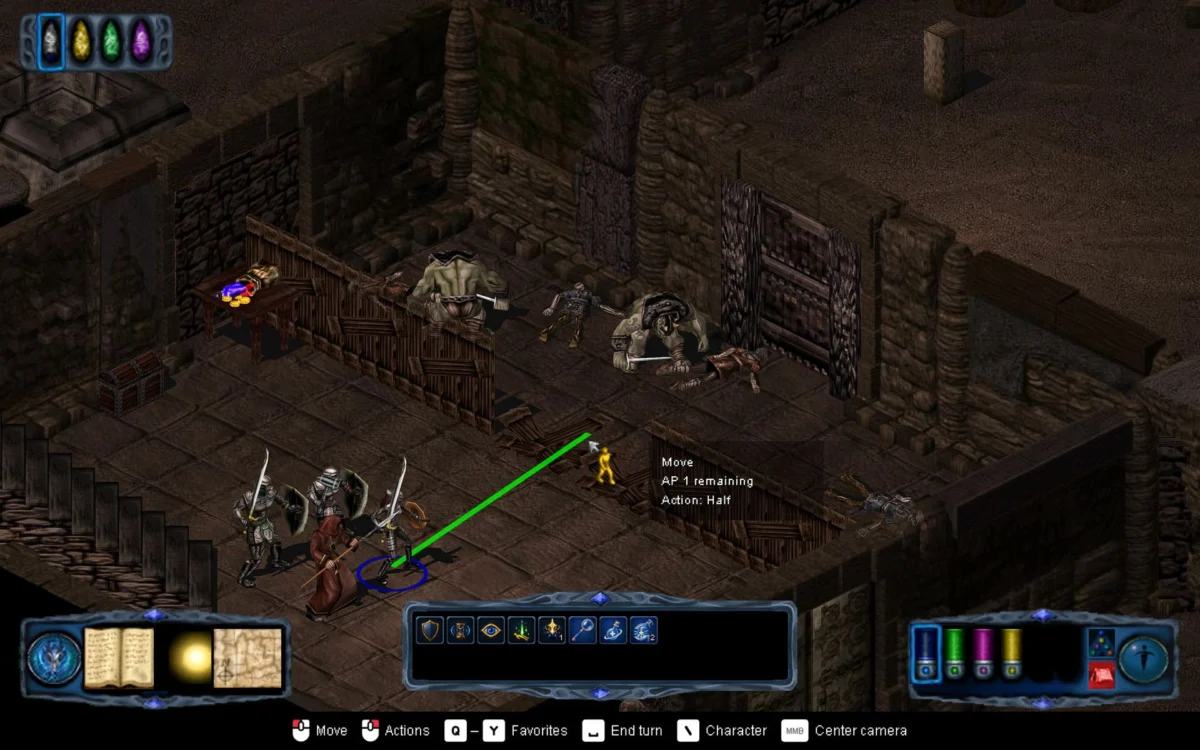
The newly released version addresses these historical scars comprehensively. Modern players can experience the game on Steam and GOG without fearing for their operating systems. The updated port introduces widescreen monitor support, integrated controller functionality, adjustable combat speeds, helpful tooltips, an intuitive action bar, and noticeably sharpened visual assets. For veterans who skipped the game out of fear and newcomers curious about early digital adaptations of tabletop rulesets, the barrier to entry has finally been removed.
Chronology: A Timeline of Trouble and Redemption
To understand the significance of the Ruins of Myth Drannor re-release, it is necessary to retrace the turbulent history of the title across two decades.
- 1988–1991 (The Golden Era): SSI releases the original Pool of Radiance and its sequels, establishing the beloved "Gold Box" format as the gold standard for digital Dungeons & Dragons adaptations.
- 2001 (The Catastrophic Launch): Pool of Radiance: Ruins of Myth Drannor launches to immense anticipation. Early buyers quickly discover a staggering array of bugs, including save-corrupting glitches, disappearing quest items, and the infamous uninstaller bug that deleted root system files. The backlash is fierce, drawing comparisons to Ion Storm’s troubled Daikatana.
- 2003 (The Competitor Arrives): Troika Games releases The Temple of Elemental Evil, offering a far more robust and faithful adaptation of the emerging D&D 3.5 ruleset, casting a long shadow over Ruins of Myth Drannor.
- 2010s (The Wilderness Years): The original game remains difficult to run on modern operating systems, relying heavily on community patches and dedicated fan fixes just to boot up on contemporary hardware.
- Present Day (The SNEG Rerelease): Publisher SNEG deploys a modernized port to Steam and GOG, complete with widescreen support, quality-of-life adjustments, and total elimination of the historic system-destroying bugs.
Supporting Data: Examining the Mechanics and Limitations
While the technical stability of the SNEG re-release is a welcome relief, examining the core design of Ruins of Myth Drannor reveals a game that was mechanically polarizing even without its bugs.
At its core, the game served as one of the earliest digital testbeds for the then-brand-new 3.0 edition ruleset of Dungeons & Dragons. For players accustomed to the eccentricities of AD&D 2nd Edition—such as Armor Class going down instead of up (where a negative number was optimal)—the 3.0 rules were a revelation. They introduced a streamlined system centered around rolling a twenty-sided die (d20) and adding modifiers to beat a fixed difficulty class. Much of the DNA found in modern fifth-edition ruleset adaptations can trace its lineage directly back to these foundational mechanics.
Despite utilizing this revolutionary rule framework, Ruins of Myth Drannor was notably limited in its implementation:
- Restricted Character Creation: Players could not select traditional wizard classes (limiting arcane spellcasting strictly to sorcerers) nor could they choose classic races like halflings or gnomes.
- Automated Progression: While players could choose which class to advance when leveling up, they lacked granular control over individual skill point distribution and feat selections.
- Pacing and Scope: The narrative casts the player not as the heroic vanguard sent into the ruined elven city of Myth Drannor, but as the "B-team" backup. Due to a magical portal mishap, players arrive too late to save the primary heroes, inheriting a grueling campaign to clear endless corridors of orcs, skeletons, and ghouls.
Comparative analyses highlight how quickly the game was outpaced. Just two years later, The Temple of Elemental Evil provided a deeply tactical, comprehensive realization of the 3.5 rules, making Ruins of Myth Drannor look rudimentary and slow-paced by comparison. The gameplay loop often consists of a methodical, drip-fed progression of experience points and gold, punctuated by the looming dread of a random critical hit from an orc dropping a party member in a single blow.
Official Responses and Industry Context
The gaming community’s reaction to SNEG’s release has been a mixture of nostalgic curiosity and pragmatic acceptance. Publishers and storefront coordinators have positioned the game not as a lost masterpiece awaiting rediscovery, but as a piece of digital archaeology that deserves to be playable without requiring an engineering degree.
Industry observers have noted a broader trend of publishers dusting off legally complex or historically neglected PC titles, ensuring they run natively on modern operating systems. SNEG, known for rescuing vintage titles from licensing and compatibility limbo, has received praise for doing the foundational plumbing work required to make the game function smoothly today.
Reviewers and critics who lived through the era have similarly tempered expectations. Rather than overhyping the narrative—which relies on a bog-standard fantasy plot involving an evil sorceress, a dracolich, and a corrupted magical pool—industry veterans have embraced the title for what it genuinely offers: low-stakes, turn-based comfort food gaming.
Implications: The Value of Preserving Flawed History
The return of Pool of Radiance: Ruins of Myth Drannor carries several significant implications for video game preservation, digital storefronts, and consumer expectations.
1. The Triumph of Preservation Over Perfection
Not every revived game needs to be an undisputed masterpiece. The market for vintage gaming thrives just as much on historical curiosity as it does on undisputed classics. By neutralizing the game’s infamous technical hazards, SNEG has proven that even deeply flawed, controversial titles deserve a stable home in digital archives. Preserving gaming history means safeguarding our failures alongside our triumphs.
2. The Comfort of "Junk Food" RPGs
In an era dominated by sprawling, hundred-hour open-world epics with cinematic production values, there is a distinct market appetite for undemanding, formulaic experiences. Ruins of Myth Drannor offers simple, frictionless pleasures: positioning a cleric to unleash a timely Turn Undead, outmaneuvering enemy spellcasters before they deploy area-of-effect spells, and managing tight corridors to protect vulnerable backline units. For players seeking a low-stakes guilty pleasure between heavy, demanding modern releases, this style of tactical dungeon crawling fills a unique niche.
Ultimately, Ruins of Myth Drannor will never escape the shadow of its catastrophic launch or its mechanical limitations. Yet, its return to Steam and GOG ensures that it can finally be judged on its actual merits rather than its apocalyptic reputation. For tabletop veterans and digital historians alike, having the game back—functional, stable, and bug-free—is a victory for preservation and a fascinating window into the evolution of digital D&D.