In the rapidly evolving landscape of wearable technology, the chasm between "premium" flagship devices and "budget" alternatives has historically been defined by a simple trade-off: features versus affordability. However, Zepp Health’s Amazfit brand has spent the last several years aggressively dismantling that dichotomy. By offering hardware that mirrors the design language of industry titans like Apple and Garmin at a fraction of the cost, Amazfit has carved out a massive, loyal user base. Yet, as the market matures, the true cost of these budget-friendly devices is becoming clearer.
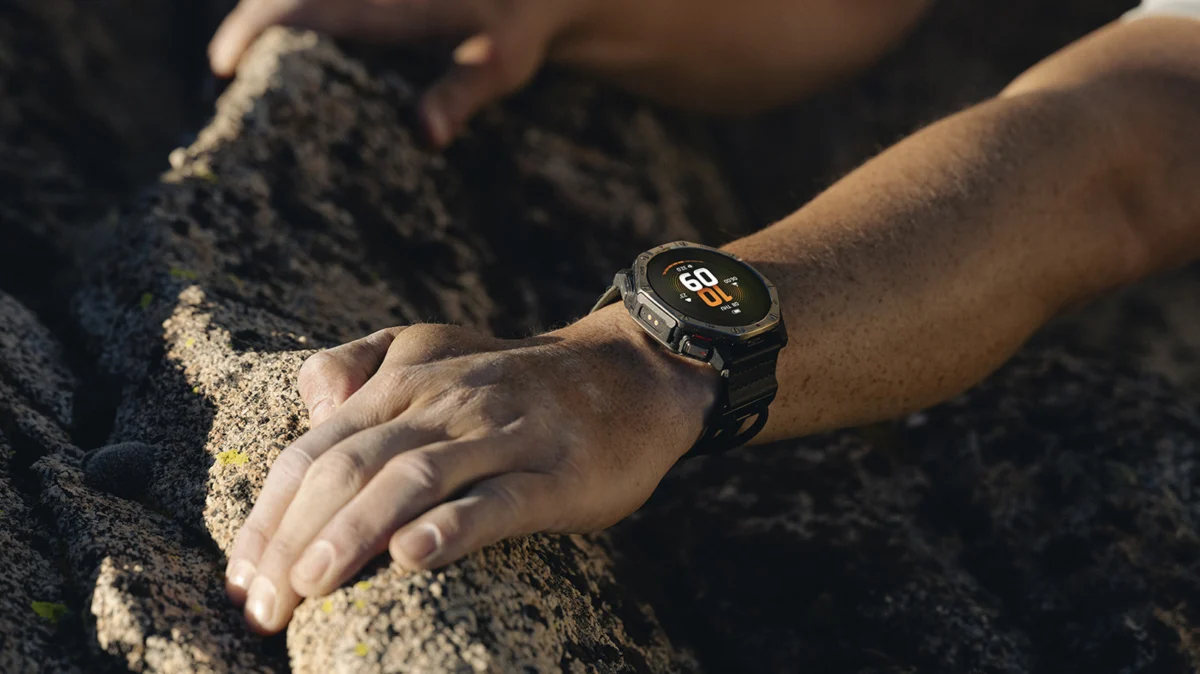
For many, an Amazfit watch—such as the popular Bip 6 or the rugged T-Rex 3—is the perfect entry point into the world of smart wearables. But for power users accustomed to the deep integration of Wear OS or watchOS, the transition to Zepp OS often comes with a steep learning curve and a specific set of limitations. This analysis explores whether these devices are truly the "best of both worlds" or merely a compromise for the cost-conscious consumer.
The Core Facts: What Defines the Amazfit Experience
At its most fundamental level, Amazfit occupies the space between a simple fitness tracker and a fully realized "smart" computer on the wrist. Unlike the Apple Watch, which serves as an extension of the iPhone, or the Samsung Galaxy Watch, which deeply integrates into the Android ecosystem, Amazfit relies on the proprietary Zepp OS.
Key Advantages
- Agnostic Ecosystems: Perhaps the most significant selling point for Amazfit is its cross-platform compatibility. Because it does not rely on Apple’s HealthKit or Google’s Wear OS framework exclusively, the devices pair seamlessly with both iOS and Android. This provides a rare degree of flexibility for users who frequently swap between mobile operating systems.
- Battery Longevity: While the average flagship smartwatch struggles to make it past 24 to 48 hours, Amazfit models often boast battery lives spanning 10 to 25 days. This is achieved through aggressive power management and a software architecture that avoids the heavy background processing of full-fledged operating systems.
- Hardware Design Diversity: Amazfit has mastered the art of "familiarity." From the square-faced, minimalist aesthetics of the Active 2 that echo the Apple Watch to the rugged, outdoor-focused chassis of the T-Rex series, there is a physical form factor for every user profile.
- Subscription-Free Health Data: In an industry where competitors increasingly lock advanced health analytics behind monthly paywalls, Amazfit maintains a "data-first" approach, offering comprehensive insights into heart rate, sleep architecture, and blood oxygen levels without requiring a recurring subscription.
Chronology: The Evolution of Zepp Health’s Strategy
To understand where Amazfit is today, one must look at the trajectory of Zepp Health, the parent company.
2015–2018: The Entry Phase
Initially entering the market as a partner for Xiaomi’s fitness bands, Amazfit quickly realized that the market hungered for standalone smartwatches. The brand focused on simple, high-battery-life trackers that prioritized step counting and basic sleep metrics.
2019–2021: The Design Pivot
During this period, the company shifted its focus toward aesthetics. Recognizing that consumers wanted their smartwatches to look like luxury timepieces, they released the GTS and GTR series. This period marked the introduction of AMOLED displays and a more refined, high-end build quality that began to turn heads in the tech journalism space.
2022–Present: The Software and AI Era
The current phase focuses on "Zepp Coach" and AI-driven insights. Rather than trying to compete with the App Store or Google Play, Amazfit has doubled down on proprietary health tracking, using machine learning to interpret complex physiological data—such as PAI (Personal Activity Intelligence) and recovery scores—to help athletes train smarter rather than harder.
Supporting Data: By the Numbers
When examining the technical specifications of current-generation Amazfit devices, a pattern of "constrained performance" emerges:
- Storage Limitations: The Amazfit Bip 6, for instance, operates with roughly 512MB of internal storage. While sufficient for the operating system and basic health logs, it severely restricts the user’s ability to download offline maps, store music, or run complex third-party applications.
- Support Cycles: Zepp Health generally commits to three years of security and software updates. In the consumer electronics world, this is a respectable middle ground, though it falls short of the five-to-seven-year support cycles seen in premium smartphone-linked wearables.
- Sports Mode Versatility: The inclusion of over 100 sports modes—covering everything from HIIT and strength training to niche activities like gardening and Tai Chi—demonstrates the brand’s commitment to granular data collection, even if the processing of that data remains internal rather than cloud-synced with third-party fitness hubs.
Official Responses and Industry Positioning
Zepp Health’s official position has remained consistent throughout their expansion: they are not trying to be a smartphone on your wrist. Instead, they position their products as "Health-Centric Wearables."
In various corporate briefings, the company has emphasized that the "limited" nature of their OS is actually a feature, not a bug. By stripping away the heavy background tasks required by web browsers, full-scale navigation apps, and third-party app stores, they preserve battery life and ensure that the primary function—monitoring the human body—is never interrupted by a system crash or a resource-heavy app.
Industry analysts, however, maintain a more nuanced view. Critics often argue that the lack of integration with major ecosystems (like Google Wallet or Apple Pay) is a hurdle that keeps Amazfit from becoming a "daily driver" for the average professional. The inability to use the watch for contactless payments remains the single most cited "dealbreaker" in consumer surveys regarding the brand.
Implications: The Trade-off for the Consumer
Choosing an Amazfit smartwatch requires a candid assessment of your own digital habits. The implications of this choice are twofold:
1. The "Productivity" Gap
If your goal is to leave your phone at home while you go for a run, Amazfit may fall short. Without a robust app ecosystem, you won’t have access to Spotify, Google Maps, or Uber. You are essentially carrying a highly sophisticated health monitor that happens to show notifications. For the user who wants to be "connected," this is a limitation. For the user who wants to be "distraction-free," it is a significant benefit.
2. The Longevity of Ownership
The three-year support cycle implies that your hardware will be effectively "legacy" by the time the next decade begins. While the watch will continue to function as a fitness tracker, the lack of security patches may eventually limit its ability to sync with the latest, more secure versions of Android or iOS. Consumers must view these purchases as mid-term investments rather than multi-year legacy devices.
3. The Future of AI Integration
The most exciting implication of the Amazfit ecosystem is the potential for Zepp Coach. Because Zepp Health owns the entire vertical—from the sensors to the cloud-based analytics—they are in a unique position to iterate quickly. Unlike a third-party app that must account for a thousand different watch models, Zepp can push firmware updates that fundamentally change how the sensors interpret data, effectively making the watch "smarter" over time without requiring a new purchase.
Final Verdict: Is it Right for You?
The Amazfit brand has successfully democratized the smartwatch, proving that you don’t need to spend $400 to track your heart rate, GPS coordinates, and sleep patterns with reasonable accuracy.
You should consider an Amazfit watch if:
- You prioritize battery life above all else.
- You want a stylish, durable device for fitness tracking without the "smartwatch bloat."
- You use both an iPhone and an Android phone and want a device that can switch between them seamlessly.
- You are tired of monthly subscriptions and want all your health data accessible for free.
You should look elsewhere (Garmin, Apple, or Samsung) if:
- You require contactless payments (NFC) for your daily commute or grocery shopping.
- You rely on a robust library of third-party apps (Spotify, Strava, Maps, etc.).
- You are a professional athlete requiring seamless integration with complex enterprise-grade training platforms.
Ultimately, the Amazfit experience is one of refined simplicity. It is not trying to replace your smartphone; it is trying to monitor your life while you use it. For the vast majority of users who want a health-conscious companion that looks good and stays charged for weeks, the trade-offs are not just acceptable—they are the foundation of a very compelling value proposition.