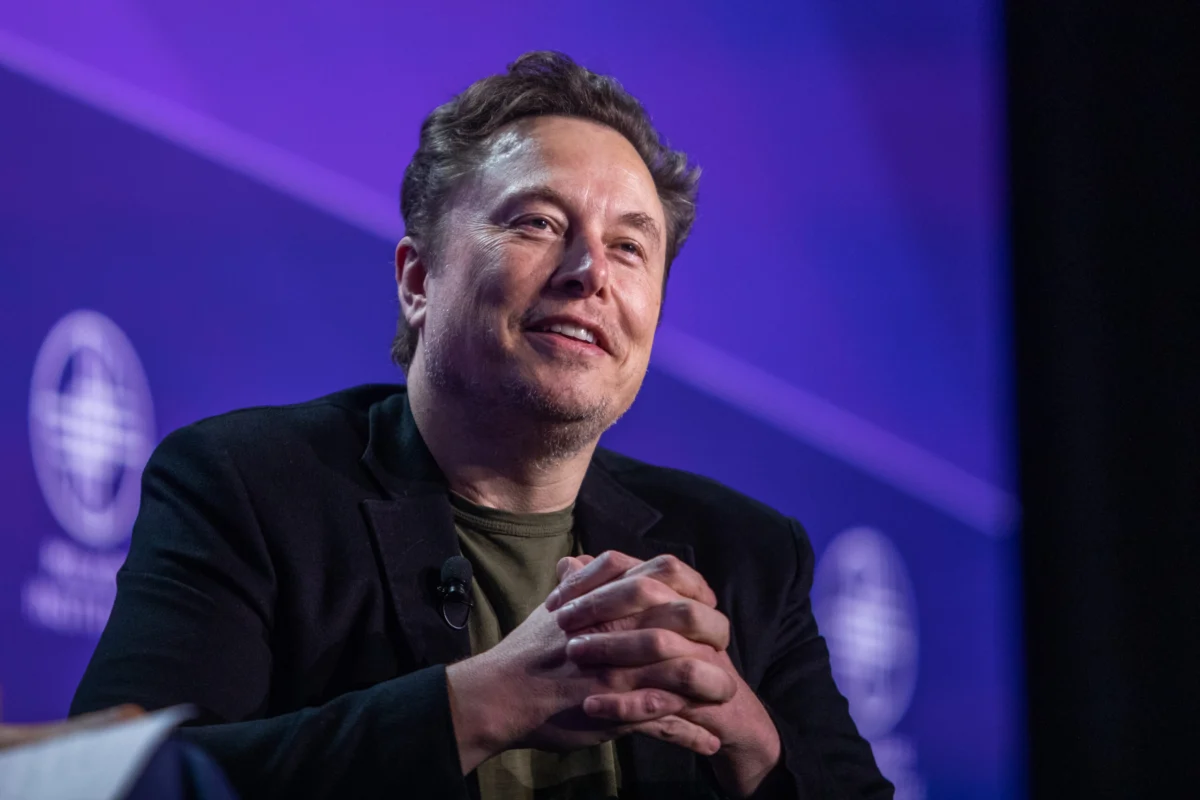
NEW YORK — Billionaire tech mogul Elon Musk offered a rare concession of political regret on Wednesday, admitting he feels "pretty foolish" after pouring nearly $500 million into the 2026 midterm elections in a failed bid to maintain Republican majorities. The heavy Republican investment ultimately ended in a sweeping Democratic rout, with the party recapturing control of both the House and the Senate.
Appearing virtually at the New York Times 2026 DealBook Summit from China—where he is currently traveling as part of an official American presidential delegation under Donald Trump—Musk spoke candidly with journalist Andrew Ross Sorkin. Beyond post-mortems on the American electoral map, the wide-ranging interview touched upon potential corporate megamergers between his own firms, high-profile tech industry scandals, geopolitical flashpoints involving Starlink, and a reevaluation of his personal political alignment.
Main Facts: The Midterm Fallout and Political Realignment
The centerpiece of Musk’s political commentary was his sprawling, ultimately unsuccessful financial intervention in the 2026 midterms. The world’s wealthiest individual spent close to half a billion dollars supporting conservative candidates nationwide. Among those expenditures was a massive $200 million war chest deployed specifically to defeat Democratic candidate James Talarico in a high-stakes Texas Senate race—an effort that ultimately failed when Talarico secured victory.
Reflecting on the dismal return on investment for the GOP, Musk offered a frank assessment:
"I feel pretty foolish about having spent so much money and not seeing much for it, or maybe it would have been much worse without that."
Despite wearing "Make America Great Again" (MAGA) hats and briefly leading the Department of Government Efficiency (DOGE)—an ad-hoc cost-cutting task force within the Trump administration during 2025 before exiting following a policy dispute—Musk pushed back against being permanently labeled part of the movement.
"I’m not sure what MAGA means," Musk told Sorkin, adding that if the term implies "blind adherence to a set of policies by the Republican Party, then I certainly don’t have that."
He criticized the modern political landscape as hyper-tribal, comparing voters’ loyalty to their political parties to tribal devotion for a hometown sports team. "A lot of people cannot see any good in the other party, and they cannot see any bad in their own party… they just won’t accept that there’s anything that the other team can do that’s good, or anything that their team can do that’s bad."
Despite his frustrations with the national Republican losses, Musk offered an optimistic view of state-level politics in Texas, expressing confidence in the newly elected governor, Democrat Gina Hinojosa. "I think [she] is going to be quite moderate. I don’t think she’s sort of a far-left governor, and based on everything I’ve heard about her, I think things will be fine in Texas with her as governor."
Chronology: From DOGE Exit to the DealBook Summit
To understand Musk’s current political and corporate posture, it is necessary to trace the timeline of his recent public engagements and policy entanglements:
- Early 2025: Musk serves as the head of DOGE, spearheading federal cost-cutting initiatives as a "special government employee" within the Trump administration.
- Mid-2025: Musk officially exits his role following friction and strategic disagreements with President Donald Trump and administration insiders.
- Late 2025: Tensions flare between Musk and major corporate advertisers on X (formerly Twitter), echoing his infamous 2023 DealBook appearance where he told advertisers—specifically calling out then-Disney CEO Bob Iger—to "Go fuck yourself" over platform boycotts.
- November 2026: Musk’s nearly $500 million political spending spree culminates in the 2026 midterm elections, which result in a decisive sweep by Democrats, handing them control of both chambers of Congress. Concurrently, Musk reveals that SpaceX and Tesla are exploring a potential corporate merger.
- Early December 2026: Nvidia CEO Jensen Huang resigns amid a sweeping personal scandal involving affairs with an employee and an alleged foreign intelligence asset. Musk publicly defends Huang, likening his ouster to "kicking Michael Jordan off your team."
- Wednesday, Dec. 2026: Appearing via videoconference from China at the New York Times DealBook Summit, Musk addresses his midterm regrets, corporate synergies, and Starlink’s restrictions on Ukrainian military drone operations.
Supporting Data: Capital, Corporations, and Conglomerates
The financial and operational scope of Musk’s enterprises remains staggering, intersecting directly with global technology, entertainment, and geopolitics.
1. Midterm Spending Breakdown
- Total Expenditure: Approximately $500 million total pumped into conservative and Republican campaigns ahead of the 2026 midterms.
- Texas Focus: $200 million dedicated strictly to unseating Senator-elect James Talarico.
- Result: Complete Democratic takeover of the U.S. House of Representatives and Senate.
2. Corporate Entanglements and Potential Mergers
- SpaceX and Tesla Convergence: Musk acknowledged that his two flagship companies are actively exploring a potential structural merger. Pointing to shifting technological overlaps that did not exist half a decade ago, Musk noted that any future combination relies entirely on whether the combined entity "executes better together and creates more value than if they’re apart"—a decision that would ultimately rest with shareholders.
- Skydance Investment: Earlier at the DealBook conference, Skydance CEO David Ellison confirmed that Musk is an investor in Skydance, the newly formed media giant resulting from the massive megamerger between Paramount and Warner Bros. Discovery.
Official Responses and Industry Reactions
Musk’s virtual appearance also served as a platform to address major international controversies and leadership crises across the tech sector.
On Nvidia and Jensen Huang
Addressing the sudden resignation of Nvidia CEO Jensen Huang following revelations of personal misconduct—including relationships with a company employee and an alleged Chinese spy—Musk offered a staunch defense of the semiconductor pioneer. Musk, who had previously suggested Huang be reinstated, used a sports analogy to describe the board’s decision:
"It was like kicking Michael Jordan off your team."
While conceding that Huang "certainly made some mistakes," Musk emphasized that the technological leader’s value to the artificial intelligence ecosystem vastly outweighed his personal indiscretions.
On Starlink Restrictions in Ukraine
Musk faced sharp questioning regarding Starlink’s controversial policy adjustments restricting satellite internet access for Ukrainian military forces amid the ongoing war with Russia. Defending the corporate boundary between civilian infrastructure and battlefield operations, Musk drew a hard line:
"From the beginning, I’ve said that Starlink is a civilian system. It is not meant to be used for offensive drone strikes that kill people… If you want to do that you need to do Starshield, which is a separate system that is controlled by the U.S. government."
He added pointedly, "Do not ask me as a private individual to make kill decisions that sometimes result in the loss of innocent lives, not just soldiers."
Implications: The Road Ahead for Musk, Politics, and Big Tech
Musk’s remarks at the 2026 DealBook Summit carry profound implications for the future intersection of technology, capital, and governance.
Politically, his admission of regret over his $500 million midterm investment signals a potential retreat from direct, high-dollar partisan electoral spending. Having tested the limits of hyper-partisan influence—and having experienced the friction of working inside the federal bureaucracy via DOGE—Musk appears to be recalibrating his public relationship with Washington. His critique of political tribalism suggests an effort to reposition himself as an independent technology pragmatist rather than an uncritical foot soldier for the Republican Party.
Operationally, the revelation that SpaceX and Tesla are exploring a merger could redefine the landscape of global automotive, aerospace, and energy markets. Combining the world’s leading electric vehicle manufacturer with the premier private space exploration and satellite communications firm would create an unprecedented corporate behemoth, concentrating immense technological and financial power under a single corporate umbrella.
Finally, Musk’s commentary on Nvidia and Starlink underscores the growing, often uncomfortable entanglement between private tech titans and geopolitical or ethical governance. Whether navigating the fallout of foreign intelligence entanglements in Silicon Valley or arbitrating the rules of engagement in active war zones, Musk continues to operate at the razor’s edge of global power—insisting on private autonomy while wielding influence that routinely shapes the course of nations.