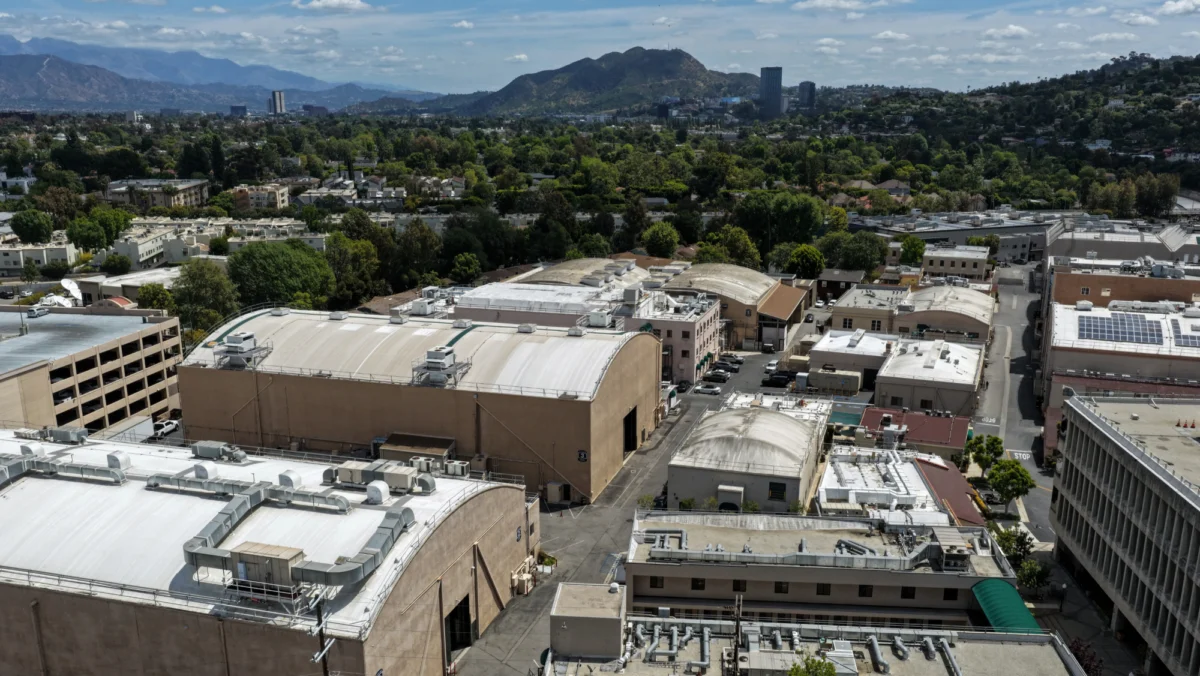
The shifting landscape of the entertainment industry has long been defined by the physical footprint of its major players. For years, the narrative was one of unchecked expansion, with streamers and studios scrambling to secure every available soundstage in Los Angeles. However, the current climate suggests a cooling-off period, underscored by Netflix’s stalled acquisition of the historic Radford Studio Center. As the streaming giant weighs its future in the heart of Tinseltown, the potential $330 million to $400 million deal has become a focal point for questions regarding production strategy, real estate investment, and the viability of owning versus leasing in a volatile economy.
Main Facts: The Stalled Ambition
Netflix’s proposed purchase of the legendary Radford Studio Center—a sprawling lot that has served as a cornerstone of Hollywood production—remains in a state of suspended animation. While industry observers initially viewed the move as a clear signal of Netflix’s intent to cement its physical roots in Los Angeles, the timeline has lengthened significantly.
Hudson Pacific Properties, the current owner of the facility, recently confirmed that the transaction is far from a done deal. During a quarterly earnings call, Hudson Pacific CEO Victor Coleman offered a blunt assessment: “Netflix has not closed the transaction, and they are not deciding to close it until sometime maybe later in the year. Or not.”
The uncertainty surrounding the acquisition is compounded by broader market pressures. Rising interest rates have made the financing of such a massive, nine-figure asset significantly more expensive than when the deal was first discussed in April. Furthermore, the decision-making process is taking place against the backdrop of historically low local production levels, forcing Netflix to reconcile its long-term infrastructure needs with a shift toward more cost-efficient filming locations outside of California.
Chronology of the Deal
The saga of the Radford Studio Center transaction has unfolded in a series of calculated, yet increasingly cautious, steps:
- April 2024: Initial reports emerge that Netflix is in serious talks to purchase the Radford Studio Center, a move interpreted as a pivot from being a major tenant to becoming a landlord.
- Mid-2024: Netflix enters a 90-day due diligence period to assess the property. During this time, the macroeconomic environment shifts, with borrowing costs rising as central banks maintain high interest rates.
- Late Summer 2024: Hudson Pacific discloses in a financial filing that it has terminated three soundstage leases in the first half of the year, signaling a reduction in the company’s dependency on non-owned properties and highlighting the volatile nature of the current leasing market.
- Current Status: The original due diligence period has been extended. While sources close to Netflix insist the deal is moving forward on an “agreed-upon timetable,” the public rhetoric from Hudson Pacific suggests the window of uncertainty remains wide open.
Supporting Data: The Cost of Infrastructure
The financial implications for both Netflix and Hudson Pacific are substantial. For Netflix, the calculation is a balance between the stability of ownership and the flexibility of leasing. The company currently leases over 700,000 square feet across three primary office buildings in Los Angeles—ICON, EPIC, and CUE—all of which are owned by Hudson Pacific. These leases are not set to expire until 2031, creating a long-term commitment that complicates any immediate move to vacate or downsize.
The Financial Pressure Cooker
The potential purchase price, estimated between $330 million and $400 million, carries a heavy premium in the current interest rate environment. Financing such an acquisition with debt is significantly more costly than it would have been at the start of the year. Additionally, the industry is seeing a cooling effect as major studios prioritize regions offering more generous tax incentives and lower labor costs, such as Georgia, New Mexico, or various international hubs.
The Portfolio Dilemma
Hudson Pacific’s own financial health is intrinsically tied to these negotiations. The company manages a 2.2-million-square-foot media portfolio that includes Sunset Gower, Sunset Las Palmas, and Sunset Bronson Studios. With a $1.1 billion loan recently extended for one year, the company is under pressure to solidify its relationship with its most important tenant. The clarity of the Radford deal is seen as a prerequisite for the company to finalize a long-term refinancing strategy.
Official Responses and Strategic Outlook
The dialogue between the two companies has been described as “fruitful” and “productive,” yet the lack of a finalized agreement leaves a void in the market.
Hudson Pacific CEO Victor Coleman has been vocal about the limitations of the Radford lot, specifically noting that it cannot replace the office footprint Netflix currently occupies in its other buildings. “The replacement of Radford for their existing office doesn’t fit the footprint as we’ve talked about in the past,” Coleman stated. However, he remains optimistic about the broader relationship, indicating that conversations regarding lease extensions beyond 2031 are progressing in a direction the company finds comfortable.
Conversely, sources close to Netflix maintain that the deal is on track, emphasizing that the extension of the due diligence period is a standard procedural step rather than a sign of a looming collapse. Despite this, the industry remains skeptical, with many real estate experts suggesting that the “everyone assumes it’s going to get done” sentiment is more a reflection of market hope than a confirmed reality.
Implications for the Future of Hollywood
The outcome of the Radford negotiations will have a ripple effect throughout the Los Angeles real estate market.
The Shift to Ownership
If Netflix moves forward, it would represent a fundamental change in the company’s real estate philosophy—moving from a pure tenant model to a vertically integrated studio owner. This would provide Netflix with greater control over its production pipeline but would also tether the company to a massive, depreciating physical asset in an era where digital content delivery is the priority.
The Competitive Landscape
The introduction of new, high-end infrastructure, such as the $450 million Echelon studio project on Santa Monica Blvd, adds further pressure to the market. With Netflix reportedly expressing interest in Echelon, it is clear the company is aggressively evaluating its options. The availability of modern, state-of-the-art facilities creates a "buy-or-upgrade" dilemma: does Netflix double down on historic lots like Radford, or does it pivot toward next-generation facilities that offer lower maintenance costs and higher technical efficiency?
The "Wait and See" Strategy
Ultimately, the stall at Radford reflects a broader hesitation within the entertainment industry. Studios are currently forced to balance the desire for physical prestige against the reality of a shrinking bottom line and the necessity of operational agility. The uncertainty hanging over Hudson Pacific’s portfolio—and the industry’s largest tenant—serves as a microcosm of the current Hollywood reality: the era of unchecked growth has passed, replaced by a period of strategic consolidation where every square foot, and every dollar, is being scrutinized with unprecedented intensity.
As 2024 draws to a close, the industry will be watching to see if the Radford deal is finalized, marking a new chapter for Netflix, or if it quietly dissolves—a casualty of the changing economics of global entertainment. Regardless of the outcome, the fact that such a major player is hesitating at the altar of real estate ownership suggests that the future of Hollywood production will be defined not by the size of the lot, but by the efficiency of the capital behind it.