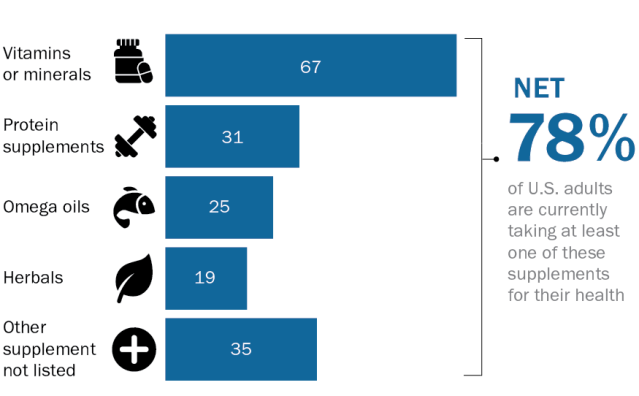
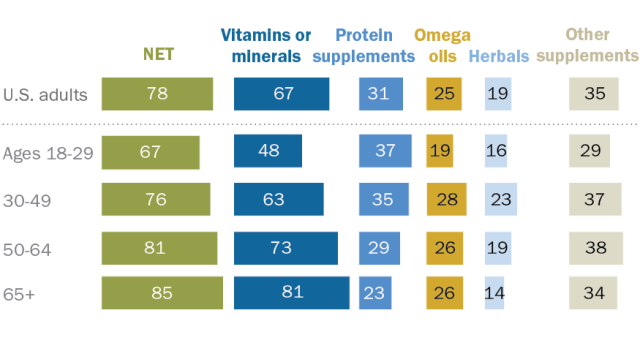
In an era defined by a hyper-focus on personal wellness, longevity, and the digital dissemination of health advice, the American medicine cabinet has undergone a significant transformation. A comprehensive new survey from the Pew Research Center reveals that roughly eight-in-ten U.S. adults (78%) are currently taking at least one dietary supplement, signaling a widespread reliance on vitamins, minerals, and other health additives to maintain or improve their well-being.
The findings, based on a representative study of 3,554 U.S. adults conducted between July 6 and July 12, 2026, illuminate a multi-billion dollar industry that has moved from the periphery of niche health food stores to the center of daily American life. For many, these products are not merely optional; they are viewed as essential pillars of a balanced health regimen.
The Dominance of Vitamins and Minerals
While the modern supplement market is vast—encompassing everything from exotic herbal extracts to high-tech sports performance powders—the foundation remains traditional. Vitamins and minerals, such as iron, calcium, and broad-spectrum multivitamins, are the undisputed leaders in the space. According to the data, two-thirds of all American adults (67%) report taking a vitamin or mineral supplement regularly.
Other categories, while popular, see significantly lower adoption rates. Approximately 31% of the population utilizes protein supplements, 25% take omega oils, and 19% incorporate various herbal remedies. Beyond these specific categories, 35% of respondents noted they are taking "other" supplements, a broad category that includes increasingly popular items like melatonin for sleep and probiotics for gut health.

A Growing Global Industry
The rise in personal supplement use reflects a broader economic reality. The global dietary supplement industry was valued at approximately $209.5 billion in 2025. This explosion of commerce is heavily fueled by the digital age, where social media "health influencers"—ranging from fitness coaches and nutritionists to lifestyle creators—frequently normalize the use of specific supplements to their millions of followers.
This, however, creates a complex landscape for the average consumer. As Americans turn to influencers for health guidance rather than traditional medical literature, the line between evidence-based nutrition and speculative marketing has begun to blur.
Chronology of the Modern Supplement Boom
To understand how we arrived at this point, one must look at the intersection of public health policy and the rise of digital wellness culture:
- Pre-2020s: Supplement use was largely confined to specific demographics, such as athletes, the elderly, or those with diagnosed nutrient deficiencies.
- 2020–2023: The global pandemic acted as a massive catalyst for immune-boosting products. Sales of Vitamin C, Vitamin D, and Zinc saw unprecedented spikes as the public sought to bolster health in the face of uncertainty.
- 2024–2025: The rise of "biohacking" and "wellness optimization" on platforms like TikTok and Instagram brought supplements into the mainstream for Gen Z and Millennials. Protein-centric diets—often dubbed "protein maxxing"—became a viral trend, driving record-high sales for protein powders and amino acid additives.
- 2026: Current data suggests the trend has stabilized into a consistent habit, with the majority of Americans now viewing the daily intake of a pill or powder as a non-negotiable part of their morning routine.
Age and Demographics: Who is Taking What?
The survey data highlights a distinct generational divide in how Americans approach supplementation. Older adults, particularly those aged 65 and older, are the most frequent users, with 85% reporting that they take at least one supplement. This is largely driven by the medical necessity of addressing age-related nutrient absorption issues, with 81% of this group specifically opting for vitamins or minerals.
Conversely, younger adults (ages 18–29) exhibit a different pattern. While they are less likely to take vitamins than their elders, they are significantly more likely to prioritize protein supplements. Roughly 37% of adults under 30 use protein additives, compared to just 23% of those over 65. This trend aligns with the cultural shift toward fitness, muscle recovery, and the "protein-maxxing" lifestyle currently dominating social media discourse.
Gender and socioeconomic status also play a role. Women (82%) are more likely than men (74%) to take supplements. Furthermore, higher-income earners (85%) are more likely to be regular supplement users than lower-income individuals (74%), suggesting that while supplements are ubiquitous, they remain a discretionary expense that correlates with financial stability.
Perceived Importance: Do They Actually Work?
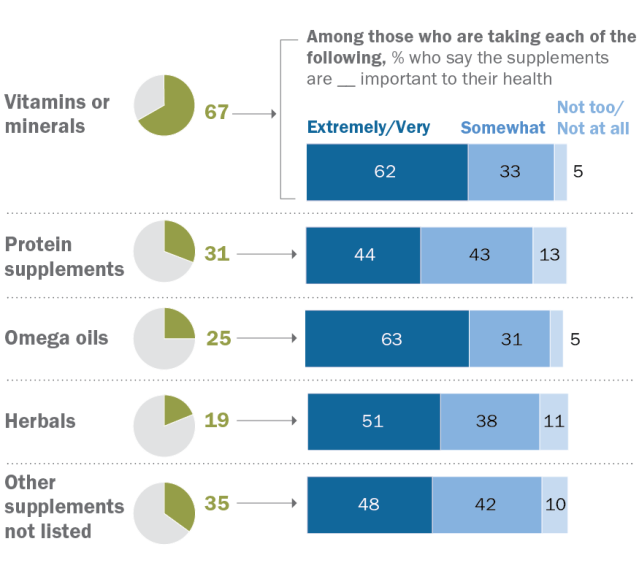
Perhaps the most telling finding in the Pew Research report is not the frequency of use, but the perceived value. Among those who take vitamins or minerals, 62% believe these products are "extremely" or "very" important to their health. Only 5% of users in this category believe they are not important at all.
This sentiment holds true across other categories as well. Users of omega oils are among the most convinced of their benefits, with 63% rating them as highly important. While medical professionals often caution that a balanced diet should be the primary source of nutrients, the consumer sentiment suggests a strong psychological and functional reliance on these products to fill the gaps in the modern American diet.
Professional Perspectives and Medical Caution
Despite the widespread enthusiasm among consumers, the medical community maintains a stance of measured skepticism. The American Medical Association (AMA) and other health organizations have frequently issued guidance noting that, for most healthy individuals, supplements are not a substitute for a whole-food diet.
Doctors often express concern regarding the lack of regulation and the potential for "over-supplementation." Unlike prescription medications, dietary supplements are not required to undergo the same rigorous clinical testing for safety and efficacy before hitting the market. This regulatory gray area often leaves consumers vulnerable to marketing claims that may not be supported by robust clinical evidence.
The debate persists: while many supplements provide essential support for specific populations (such as pregnant women, the elderly, or those with documented deficiencies), the "more is better" approach adopted by many casual users is a point of contention among researchers and public health advocates.
Implications for the Future of Healthcare
The widespread adoption of supplements has profound implications for the future of healthcare. If eight-in-ten Americans are self-prescribing, the traditional patient-provider relationship must evolve. Physicians are now tasked with navigating a landscape where their patients arrive with pre-conceived notions of health gained from influencers, often bringing their own complex, self-managed regimens of supplements to the exam room.
Healthcare providers now face the challenge of:
- Patient Education: Helping patients distinguish between evidence-based supplementation and marketing-driven trends.
- Safety Screening: Identifying potential interactions between over-the-counter supplements and prescribed medications.
- Holistic Management: Acknowledging that for many patients, the ritual of taking supplements is a key component of their self-care and mental health management.
As the industry continues to grow, the need for transparent, scientifically backed labeling and public health messaging has never been higher. While the American public has clearly embraced the supplement as a tool for health, the scientific community continues to emphasize that there is no substitute for a healthy lifestyle, physical activity, and a nutrient-dense diet.
Conclusion
The 2026 Pew Research Center survey paints a picture of a nation that is deeply invested in the proactive management of its own health. From the retiree taking a daily calcium supplement to the young adult shaking up a protein drink after a gym session, the "Supplement Nation" is a testament to the modern human’s desire for control over their biological longevity.
While the industry shows no signs of slowing down, the data serves as a reminder of the divide between personal health beliefs and medical consensus. As we move forward, the conversation between patient and provider, informed by the increasing accessibility of health information, will be critical in ensuring that this widespread, self-directed wellness movement results in actual, measurable health improvements rather than just expensive waste.

About the Research
This analysis was conducted by the Pew Research Center as part of its ongoing exploration of science and society. The survey was carried out via the American Trends Panel, surveying 3,554 U.S. adults from July 6 to July 12, 2026. For full methodology, topline results, and questionnaire details, please visit the official Pew Research Center archives.