In the modern media landscape, the role of a journalist is often bifurcated: one half is tasked with the profound responsibility of witnessing history in real-time, while the other navigates the high-speed, often reckless, currents of digital information distribution. Two recent incidents—one involving the courageous documentation of a tense public encounter and the other concerning the catastrophic omission of a single preposition—highlight the fragile nature of truth in our current era.
The Witness: Documenting Terror on the Metro
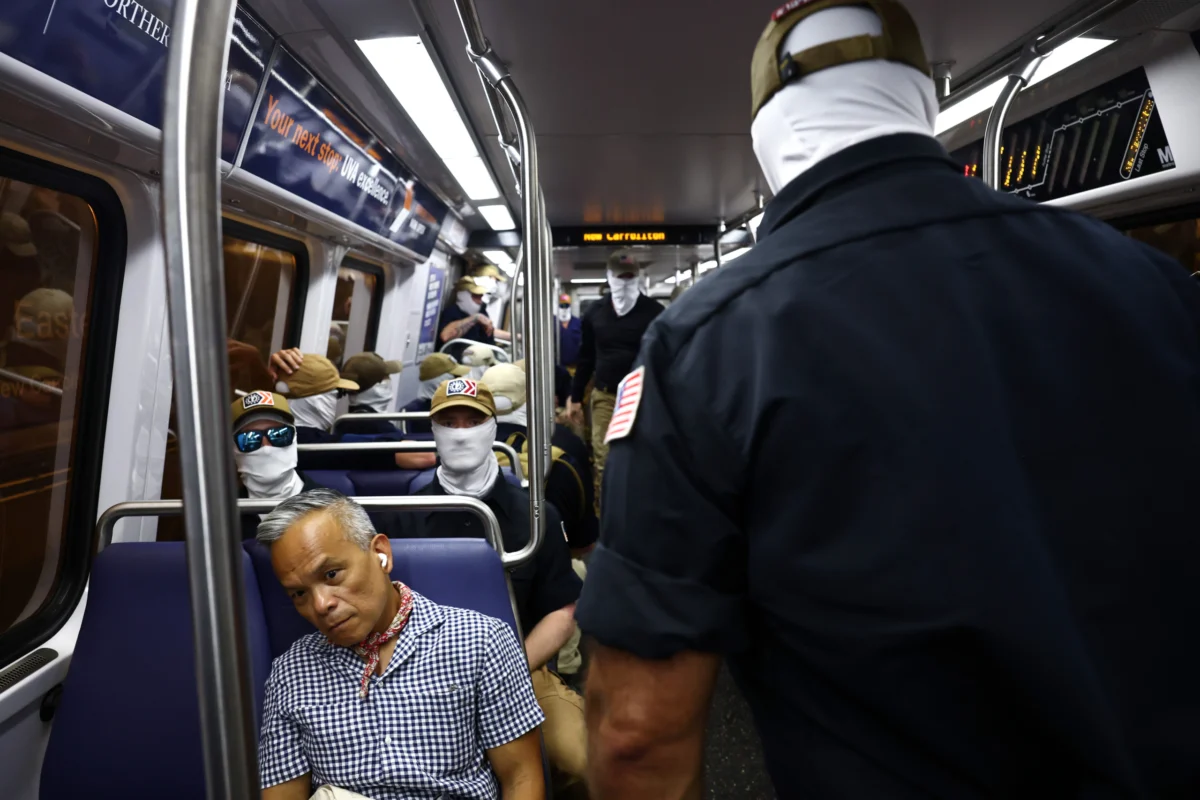
For many, the sight of a camera lens in a moment of crisis is an intrusion. Yet, for Roswell Encina, the presence of a photographer was a lifeline. On the Fourth of July in Washington, D.C., Encina, the president and CEO of the US Capitol Historical Society, found himself trapped in a crowded subway car with members of the white nationalist group Patriot Front.
The scene was captured by Finn Gomez, a twenty-three-year-old Getty Images intern. What started as a routine assignment—prowling the streets of the capital for feature photos—quickly evolved into an exercise in high-stakes photojournalism. Acting on a tip from his editor, Gomez tracked a large, masked cohort of demonstrators toward the Eastern Market Metro station.
A Chronology of the Encounter
Upon entering the subway car, Gomez found himself in the middle of a frightening tableau. Encina, a gay Filipino American man, was surrounded by the masked men. Despite the inherent danger, Gomez approached with a sense of professional empathy. He identified himself and asked for permission to document the scene.
"He understood from the get-go that I was there to document this," Gomez later reflected. For the next seven stations, until the train reached its terminus at New Carrollton, Maryland, Gomez snapped photos while silently transmitting them to his editors.
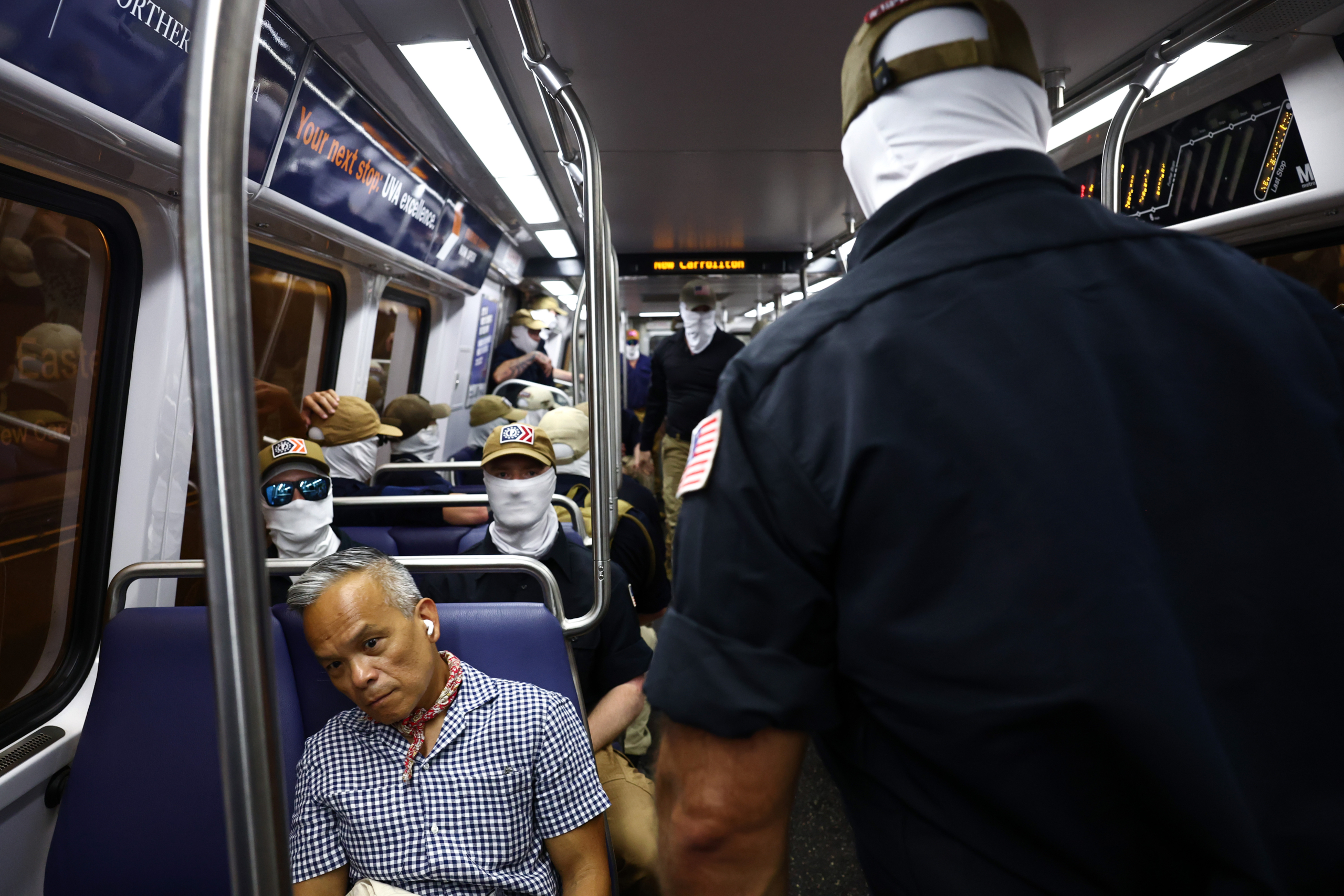
Encina, who later admitted to being "terrified" and unsure of the group’s motives, found solace in the photographer’s presence. In a subsequent post on Instagram, Encina described the experience as "unsettling," noting that the presence of the young journalist provided a sense of protection. He later told The Advocate that having someone there to witness the event served as a "quietly reassuring" shield against the intimidation of the group.
This interaction serves as a potent reminder that, far from being purely intrusive, professional journalism often acts as a necessary safeguard in a civil society. When independent reporting is under constant attack, the value of a witness who remains neutral yet present cannot be overstated.
The Danger of Omission: How a Single Word Fueled a Political Firestorm
While the Getty Images incident highlights the protective power of the camera, a separate incident involving a Federal Reserve working paper demonstrates the volatility of imprecise headlines. In the realm of digital media, a missing preposition can be the difference between objective analysis and a dangerous political narrative.
The Source Material: A Dense Economic Analysis
In March 2026, the Federal Reserve Bank of Dallas released a working paper titled, "The Impacts of Unauthorized Immigration on US Labor and Housing Markets: New Evidence from Administrative Microdata." The report, spanning sixty-five pages, was a nuanced look at the surge of immigration between 2021 and 2024.
The researchers found that while employment rates rose, the influx did contribute to housing and rental price inflation. Specifically, the authors concluded that roughly 30 percent of the rise in home prices—and 20 percent of the rise in rental prices—could be attributed to the influx of new residents.

The Misrepresentation
The trouble began on July 5, 2026. Fox Business published a report on the study, which was subsequently picked up by the New York Post. The Post condensed the findings into a headline that omitted the critical preposition "of," effectively claiming that the immigration surge "triggered 30% rise in home prices" rather than "30% of the rise."
This subtle, yet massive, linguistic error was amplified by the digital echo chamber. Within hours, the claim had reached millions. The misinformation was swiftly adopted by high-level political figures. Former President Donald Trump shared the Post’s framing on Truth Social, and Vice President JD Vance amplified the narrative on X (formerly Twitter), using the flawed data to bolster claims regarding mass deportation policies. The Department of Homeland Security and several high-ranking officials also cited the erroneous figure, creating a cascade of misinformation that overwhelmed attempts at correction.
Implications of the "Headline Trap"
The repercussions of the Post’s headline illustrate the "flaming torch in a vat of kerosene" effect of modern digital media. Despite attempts by numerate social media users to clarify the findings, the initial false claim had already achieved viral status.
The Correction Cycle
When reached for comment, a spokesperson for the New York Post did eventually oversee a correction to the online article. However, the original errant social media post remained active, continuing to accrue thousands of engagements per hour. When asked if the outlet would reach out to the public figures who had disseminated the misinformation to set the record straight, the spokesperson stated there would be "nothing additional" done.
Fox Business faced similar challenges. Their midday program, The Big Money Show, aired a segment promoting the inaccurate figures. When confronted, the network deleted the post from X and eventually issued a "full-throated correction" on air.

The Editorial Responsibility
The Wall Street Journal editorial board—a sister property of the Post—eventually weighed in, criticizing political figures for misusing the Fed study. Notably, the Journal failed to acknowledge that the confusion originated from their own sibling publication.
The incident highlights a critical vulnerability in modern discourse: the struggle to translate complex, jargon-heavy academic research into headlines that are both "punchy" and accurate. As one researcher noted, studies involving "heteroskedasticity-robust" data are rarely compatible with the brevity required for click-driven headlines. However, the failure to prioritize accuracy over brevity in this instance facilitated a nationwide political narrative built on a statistical falsehood.
Conclusion: Witnessing vs. Manufacturing
These two events, occurring within the same week, present a stark contrast in the current state of the media. On one hand, we see the traditional, vital role of the journalist as a witness—a professional who steps into the path of danger to provide an accurate record of events, providing comfort to the vulnerable and ensuring accountability.
On the other hand, we see the modern editorial failure—a process where speed and sensationalism override the foundational duty to be precise. The omission of the word "of" in the New York Post headline was not merely a typo; it was a structural failure that allowed misinformation to travel at the speed of light, reaching the highest levels of government before a correction could even be drafted.
As we look toward the future of the industry, the lesson is clear: the credibility of the fourth estate depends not just on the courage to witness, but on the rigorous discipline of the pen. In an era where independent reporting is under siege, the media must recognize that its power lies in its accuracy. Whether in a crowded subway car or a complex economic report, the truth is not just a standard to strive for—it is the only product that maintains the public’s trust.