Main Facts
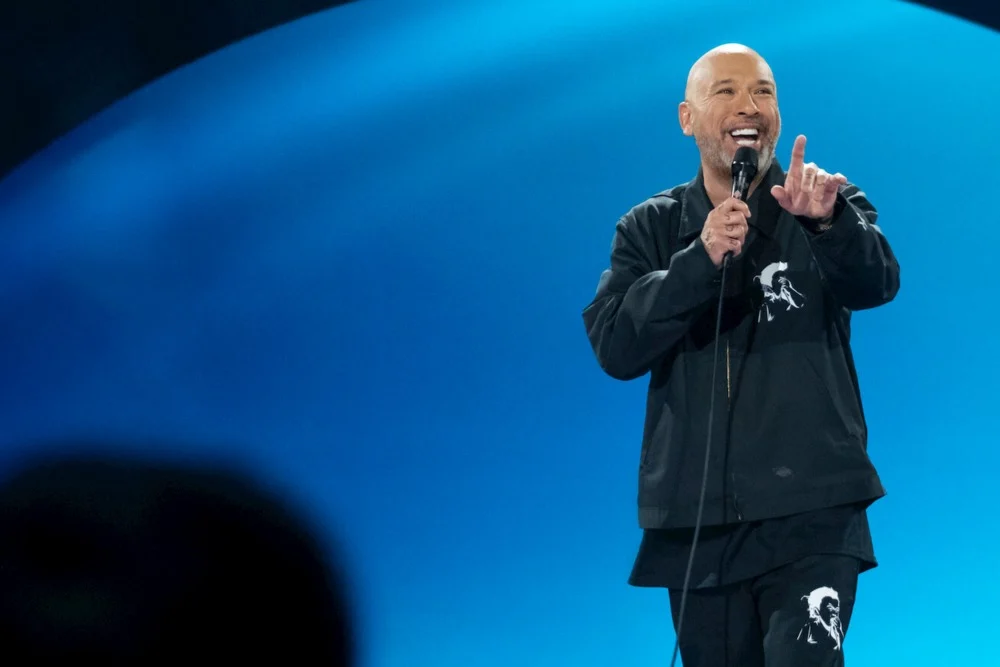
Comedian Jo Koy is making waves once again with his latest Netflix stand-up special, Jo Koy: Blue in the Face, which premiered on September 15. Marking the culmination of a lucrative two-special deal signed with the streaming giant in 2023—following his previous special, Live From Brooklyn—the project has quickly positioned itself as an awards season contender. Blue in the Face is currently under consideration for the Golden Globes in the Best Performance in Stand-Up Comedy on Television category, and it is slated to enter the Emmy race for Outstanding Variety Special (Pre-Recorded) next year.
Filmed across two sold-out arena shows in Stockton, California, the special is more than just a typical hour of stand-up. True to his meticulous behind-the-scenes control, Koy personally edited the project, cutting down more than four hours of raw footage from two separate performances into a tightly paced, 55-minute narrative. Beyond his streaming success, Koy’s career continues to expand across Hollywood, encompassing major feature films like Easter Sunday, voice work in the upcoming animated project Forgotten Island, and a deeply ingrained cultural legacy rooted in his upbringing by a resilient single mother.
Chronology: From Tagalog Misunderstandings to Global Stages
The Origin of "Jo Koy"
Long before filling arenas, Joseph Herbert was simply trying to find a fitting stage name. While performing at open-mic nights under his birth name, he struggled with how audiences and hosts stumbled over it. Inspiration struck accidentally over a meal at a Long John Silver’s on Maryland Parkway in Las Vegas. Sitting with his cousin Mona, Koy discussed his need for a new moniker when his Auntie Evelyn called out across the room, "Jo ko, eat!"
To English-speaking ears, it sounded like "Jo Koy." Years later, after adopting the stage name worldwide, Koy finally asked his aunt what it meant. She corrected him, explaining that she had never called him "Jo Koy." She was saying Jo ko, with ko meaning "my" in Tagalog—translating affectionately to "My Jo." Remembering the moment, Koy recalls breaking down in tears over the realization.
The Rise of a Comedy Heavyweight
Koy’s comedic style has long relied on observational humor centered heavily on his Filipino heritage, his family dynamics, and particularly his mother. His big breaks were decades in the making, built on the back of relentless touring across secondary and primary markets alike.
In 2023, Koy signed a major two-special deal with Netflix, kicking off with Live From Brooklyn. That special generated massive buzz, notably for an uncleared Notorious B.I.G. bit that resulted in a phone call from the legendary rapper’s mother, the late Voletta Wallace. Rather than issuing penalties, Wallace praised Koy for keeping her son’s legacy alive, ultimately granting him perpetual rights to use the iconic crown-wearing image of the Notorious B.I.G. on merchandise, with a portion of proceeds supporting the Wallace Foundation.
This momentum culminated in Blue in the Face, recorded in Stockton, California—marking Koy’s first-ever performance in the Central Valley city.
Supporting Data and Production Insights
Why Stockton?
While comedians traditionally favor massive coastal hubs like Los Angeles, New York, or the San Francisco Bay Area for filming specials, Koy deliberately chose Stockton to connect with an overlooked demographic. Researching the city prior to his arrival, he uncovered a rich, yet painful, history of Filipino immigration in the area. He found archival evidence of structural racism, including restaurants bearing "No Filipinos allowed" signs, segregated water fountains, and the displacement of the historic "Little Manila" neighborhood to make way for a freeway.
Koy originally intended to open his set by addressing this dark history head-on. However, plans changed the moment he stepped onto the stage and was greeted by an unexpected standing ovation from a deeply diverse crowd of white, Black, Latino, and Asian fans high-fiving one another.
"I saw this white guy high-five this Asian guy, and a Black guy was standing and this Black lady over here, Latinos over here and a Filipino right here," Koy recalled. "And I was just like, no, man, I’m not gonna do this… What happened in the past is the past, but look where we are now."

The Editing Bay and the Vision Behind the Special
Koy acts as his own editor, a rare practice in the upper echelons of stand-up comedy. Sifting through more than two hours of material per night, he spends days in the editing bay without sleep, carefully stitching together footage to avoid jarring audience cuts.
For Blue in the Face, the overarching theme was deeply personal: keeping one’s circle tight, removing toxic influences ("crabs in a bucket"), and celebrating the people who supported you along the way. The title itself was a happy accident, suggested by director Shannon Hartman to match a teal stage design Koy had initially hesitated to use.
Official Responses and Industry Perspectives
Steven Spielberg and the Creation of Easter Sunday
Koy’s bridge to major studio filmmaking came from an unexpected source: legendary director Steven Spielberg. After watching Koy’s Hawaii-based special, Comin’ in Hot, Spielberg expressed admiration for the comedian’s work, leading to a meeting at Amblin Entertainment and a subsequent deal with DreamWorks.
This partnership materialized into the theatrical feature film Easter Sunday, a semi-autobiographical comedy centered on family drama and holiday traditions. Despite navigating the unprecedented distribution landscape of the post-pandemic box office—competing against massive blockbusters like Top Gun: Maverick, Jurassic World Dominion, and Thor: Love and Thunder—the film successfully held its ground during its theatrical run.
The Indelible Influence of Mom
Koy’s mother remains the cornerstone of his material, celebrated for her fierce independence and unapologetic defense of her family. Among his most famous recounted anecdotes is a 1984 incident at a shoe store, where a store clerk mocked a young Koy and subsequently insulted his mother’s accent.
Rather than backing down, his mother fired back: "You’re making fun of my accent, huh? I speak two languages in your country, Tagalog and English. How many do you speak? One. You’re stupid."
This fierce maternal hustle extended to building a community from scratch in the United States, walking up to strangers at church and asking, "Pilipino ka? Pilipino rin ako," eventually organizing community potlucks that helped introduce traditional Filipino culture and food to broader American audiences decades before its mainstream popularity.
Implications for the Future of Stand-Up and Representation
Jo Koy’s continued success with Netflix and major studios signals a broader, shifting paradigm in Hollywood regarding cultural representation. By successfully anchoring mainstream projects in specific cultural experiences—whether it is exploring Stockton’s Filipino history in Blue in the Face, examining family dynamics in Easter Sunday, or diving into folklore in the animated feature Forgotten Island—Koy has proven that niche cultural narratives possess universal commercial appeal.
As Blue in the Face enters the conversation for top television accolades at the Golden Globes and the Emmys, it underscores a growing industry appreciation for self-produced, highly personal comedic storytelling. Koy’s trajectory from open-mic nights to arena-filling, self-edited streaming triumphs demonstrates that authenticity, resilience, and staying true to one’s roots remain the ultimate formulas for longevity in the entertainment industry.