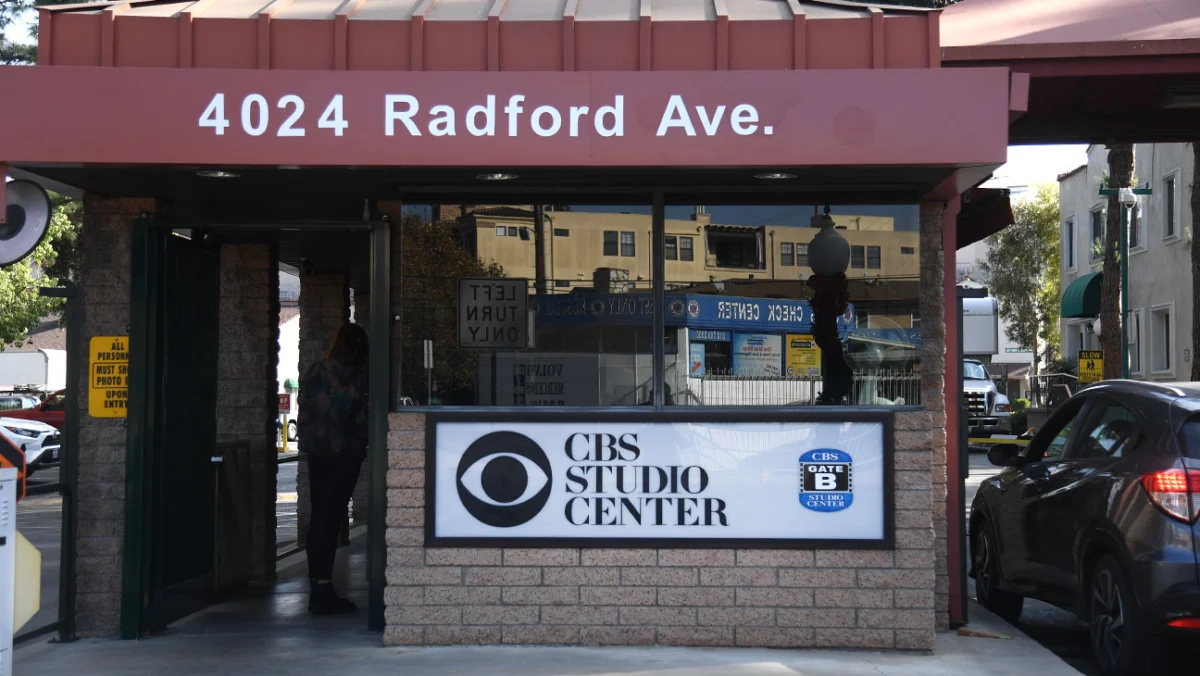
The landscape of Hollywood real estate is undergoing a seismic shift. Nine months after a Goldman Sachs-led lender group repossessed the historic 55-acre Radford Studio Center from Hackman Capital Partners, the iconic lot is officially heading to the auction block. This development marks the end of a turbulent period for the property and signals a major strategic pivot for Netflix, which is widely expected to emerge as the winning bidder.
The move comes as the Los Angeles production industry grapples with historic lows in filming activity, forcing a massive, industry-wide recalibration of asset values. If the sale proceeds as anticipated on November 24, Netflix will secure a cornerstone of the entertainment industry for a fraction of its previous valuation, fundamentally altering its physical footprint in the region.
The Chronology of a Financial Freefall
The narrative of Radford Studio Center is a microcosm of the "post-COVID" studio boom and the subsequent correction that has plagued the commercial real estate sector.
In 2021, Hackman Capital Partners, a firm known for aggressive expansion in the studio space, acquired the Radford lot for a staggering $1.85 billion. At the time, the demand for soundstages and production facilities was reaching a fever pitch, fueled by the streaming wars and a desperate need for content. Investors were betting on a permanent increase in production demand.
However, the market shifted rapidly. Rising interest rates, a cooling in the streaming sector’s growth, and the lingering impacts of the 2023 Hollywood labor strikes contributed to a precipitous decline in on-location filming. By early 2024, the financial pressure on the property became unsustainable. When lenders repossessed the asset earlier this year, it became clear that the valuation of $1.85 billion was a relic of a bygone economic climate.
Talks between Netflix and the Goldman Sachs-led lenders began in earnest, with reports suggesting a purchase price in the neighborhood of $400 million—a nearly 80 percent discount from the 2021 purchase price. While a deal was expected to close earlier this year, the timeline stalled, ultimately necessitating the formal foreclosure auction scheduled for November 24 in Pomona, California.
The Auction Mechanics and the "Mansion Tax" Factor
The auction is set against a backdrop of complex financial maneuvering. While the lenders are technically looking for an amount closer to the $1.3 billion debt load tied to the property, industry analysts agree that the final purchase price will almost certainly land significantly lower, potentially near the $400 million mark previously floated.
A key point of intrigue in these negotiations is the role of the City of Los Angeles’ "mansion tax" (Measure ULA). The tax imposes a 5.5 percent levy on property transfers valued above $10.9 million. On a property of this scale, the tax bill could exceed $22 million.
Sources familiar with the negotiations suggest that structuring the transaction as a foreclosure auction rather than a traditional private sale may offer strategic advantages. By having the lenders initiate the foreclosure and subsequently selling the asset to Netflix, the parties may be able to navigate the transfer in a way that avoids certain tax burdens and legal complications associated with a direct, high-value commercial sale. However, insiders maintain that the primary drivers of this structure are speed and the mitigation of risk, allowing Netflix to acquire the property without the burdensome administrative overhead of managing a foreclosure process themselves.
Implications for Netflix’s Production Footprint
For Netflix, the acquisition of Radford is not merely a real estate transaction; it is a consolidation strategy. For years, the streaming giant has operated as a "renter," anchoring its Los Angeles operations at Sunset Studios—owned by Hudson Pacific Properties—and maintaining a presence at Raleigh Studios.
Moving from Tenant to Owner
By transitioning to an owner-operator model at Radford, Netflix stands to gain three significant advantages:
- Cost Control: By eliminating rent payments on a massive portion of its production infrastructure, the company can hedge against future volatility in the commercial real estate market.
- Operational Consolidation: Scattering production across multiple third-party lots is inefficient. Owning Radford allows the company to bring its "anchor" productions under one roof, streamlining logistics, security, and equipment management.
- Long-Term Security: In an era where studio availability can fluctuate based on broader market health, owning a 55-acre campus ensures that Netflix will always have a base of operations regardless of external industry conditions.
However, the acquisition does not solve all of the company’s real estate needs. Netflix continues to maintain significant office footprints elsewhere in the city, and the Radford lot is primarily a production-focused campus rather than an administrative headquarters.
The Wider Industry Outlook: A Warning Sign?
The potential sale of Radford at a 78 percent discount compared to its 2021 valuation is a stark indicator of the state of the Los Angeles production market. As filming levels continue to plummet, the "flight of production" away from Southern California has become a primary concern for local stakeholders.
The uncertainty is not limited to Radford. Recent financial moves involving other Netflix-associated properties have sparked speculation about the company’s long-term commitment to its current office leases. For instance, the marketing of a loan secured by Netflix’s animation office on Vine Street—a 95,000-square-foot facility leased by the company through 2031—has raised eyebrows.
While the offering is for the debt and not the building itself, the timing is notable. The lease for the Vine Street facility expires in January 2031, just months before the expiration of Netflix’s major leases at Hudson Pacific’s EPIC, ICON, and CUE buildings in September 2031.
Is this a sign that Netflix is preparing for a "great migration" of its office workforce to a more centralized campus, or simply a standard business decision? A source close to the company maintains that "there have been no conversations with the landlord regarding a change in the lease at Vine," yet the coincidence of these dates has led some market observers to question whether Netflix is quietly evaluating its entire L.A. real estate portfolio with an eye toward consolidation.
Official Stance and Future Commitment
Despite the rumors and the shifting real estate strategy, Netflix remains steadfast in its messaging regarding its commitment to Los Angeles. In a statement released earlier this year, the company emphasized the city’s role in its global strategy:
"Los Angeles is an incredibly important place for film and television production, and we’re committed to keeping it one of our core production hubs in the US—supporting the city and the creative community that makes it such a vibrant place to work. With its diverse locations, deep bench of talent, experienced crews, best-in-class vendors and a wide variety of locations, the city offers everything we need to bring ambitious stories to life."
Regarding the current status of the Radford deal, a Netflix spokesperson confirmed that "the deal is progressing on the agreed-upon timetable and with the agreed-upon sets of milestone dates."
Conclusion: A New Era for Radford
As the November 24 auction date approaches, the eyes of the commercial real estate world and the entertainment industry remain fixed on Pomona. While there is a slim possibility that a private equity firm or an institutional investor could swoop in with a higher bid, the consensus is that Netflix is the only party with the specific need and the financial capacity to turn the Radford lot into a flagship campus.
If successful, this acquisition will serve as the final chapter in the Radford saga for Hackman Capital, and the first chapter for a new, owner-occupied era for Netflix. It is a deal that defines the current "re-pricing" of Hollywood—a moment where the exuberance of the streaming boom has finally given way to the cold, hard reality of asset management in a cooling market. Whether this signals a permanent retreat from leased spaces or a calculated optimization of costs, one thing is clear: the physical map of Hollywood is being redrawn, and the center of gravity is shifting toward those who own the land where the stories are told.